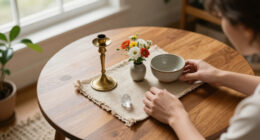
To keep your furniture safe, place your humidifier centrally on a flat, elevated surface like a table or shelf, keeping it 2-3 feet away from wooden items to prevent warping or water marks. Avoid direct contact with floors, electronics, or curtains, and make certain good airflow around the device. This setup promotes even moisture distribution while protecting your belongings. Keep these tips in mind, and you’ll discover more ways to optimize your humidifier’s placement for safety and efficiency.

Get books, candles and calm essentials delivered free — and shop member deals
- Fast, free delivery on millions of items
- Access to Prime Big Deal Days deals on October 6–7
- Prime Video, Amazon Music and more included
Key Takeaways
- Place the humidifier centrally in the room for even moisture distribution and to enhance air quality.
- Use flat, elevated surfaces like shelves or tables to prevent water damage and ensure stability.
- Keep the device at least a few feet away from electronics, curtains, and furniture to avoid moisture-related damage.
- Maintain a 2-3 foot distance from wooden furniture to prevent water marks and warping.
- Position in areas with good airflow, avoiding corners and stagnant spaces for consistent humidity.

Where should you place your humidifier for maximum benefit? The answer depends largely on optimizing air quality while guaranteeing your space remains safe for all your furniture. Ideally, you want to position your humidifier in a central location within the room to promote even moisture distribution. This helps improve air quality by reducing dry air that can cause respiratory discomfort and dry skin. Proper placement also enhances energy efficiency because the humidifier doesn’t have to work as hard to maintain the desired humidity level when positioned correctly. When it’s too close to walls or furniture, the device may struggle to disperse moisture evenly, leading to uneven humidity levels and increased energy consumption.
You should place your humidifier on a flat, elevated surface, such as a table or a sturdy shelf, rather than directly on the floor. Elevating it prevents potential water damage to floors and minimizes the chance of water splashing onto furniture or carpets. Keep it at least a few feet away from electronic devices, as excess moisture can cause damage or malfunctions. Also, avoid placing it near curtains or drapes; these can obstruct airflow and cause localized dampness, which might promote mold growth or damage delicate fabrics.
Positioning your humidifier away from furniture with wood finishes is essential to prevent water marks or warping. A good rule of thumb is to keep it at least two to three feet from wooden furniture, and never place it directly on polished surfaces that could absorb excess moisture. This not only protects your belongings but also helps maintain the device’s longevity. Additionally, avoid placing the humidifier near open windows or vents where drafts can disperse humidity unevenly or introduce dust and pollutants, negatively impacting air quality.
Another important consideration is the room’s airflow. Place your humidifier in an area with good circulation to promote even moisture distribution. This means avoiding corners or tight spaces where air can stagnate. Proper placement ensures that the humidity levels stay consistent, reducing the need for constant adjustments and conserving energy. When your humidifier is positioned correctly, it operates more efficiently, providing consistent comfort while using less electricity. Being mindful of air circulation can significantly enhance the device’s performance and longevity.
humidifier stand for safe placement
As an affiliate, we earn on qualifying purchases.
As an affiliate, we earn on qualifying purchases.
Frequently Asked Questions
Can I Place a Humidifier Directly on Wooden Furniture?
You shouldn’t place a humidifier directly on wooden furniture because it can cause damage over time. The moisture may lead to warping, staining, or surface deterioration. To protect your wooden furniture, always set your humidifier on a sturdy, waterproof surface or use a protective pad. This ensures proper surface protection while maintaining ideal humidity levels, keeping both your humidifier and furniture in good condition.
Is It Safe to Position a Humidifier Near Electronic Devices?
Think of your electronics as delicate dancers, and moisture damage as a rogue fog sneaking in. It’s not safe to position a humidifier near electronic devices because excess moisture can cause electrical safety hazards and short circuits. Keep your gadgets dry by placing the humidifier at a safe distance, ensuring the dance stays smooth and your devices remain protected from the sneaky threat of moisture damage.
How Does Humidifier Placement Affect Air Quality?
You realize that proper humidifier placement improves air quality by promoting good air circulation and reducing dry, stagnant air. When you position it correctly, it minimizes the risk of mold growth and prevents excess moisture that can harm furniture or encourage mold. By keeping the humidifier in a spot with good airflow, you guarantee cleaner air, better humidity balance, and a healthier environment for you and your home.
Can Placement Impact the Humidifier’s Efficiency?
Placement can markedly impact your humidifier’s efficiency—studies show proper positioning boosts output by up to 30%. When you place your humidifier carefully, it maintains ideal room humidity levels, helping prevent mold and dust mites. Keep in mind, good placement also makes humidifier maintenance easier, reducing mineral buildup and ensuring consistent performance. So, think about where you set it, and you’ll enjoy healthier, more comfortable air with less effort.
Are There Specific Spots to Avoid When Placing a Humidifier?
You should avoid placing your humidifier in room corners or tight spaces, as these areas can hinder proper airflow and reduce efficiency. Instead, position it in open spaces where mist can disperse evenly throughout the room. Keep it away from furniture or electronics to prevent moisture damage. By choosing a central, unobstructed spot, you guarantee ideal humidification and protect your belongings.
As an affiliate, we earn on qualifying purchases.
Conclusion
When placing your humidifier, think of it as setting a gentle breeze in your home—carefully positioned to keep everyone comfortable without causing harm. I once placed mine too close to my wooden furniture, and it caused some warping. Now, I follow the rules, and everything stays right where it should be. Proper placement isn’t just advice; it’s the secret to keeping your furniture safe and your air perfectly balanced.
As an affiliate, we earn on qualifying purchases.
As an affiliate, we earn on qualifying purchases.
Halloween Picks
halloween
As an affiliate, we earn on qualifying purchases.