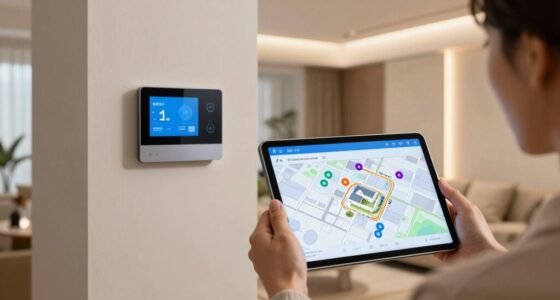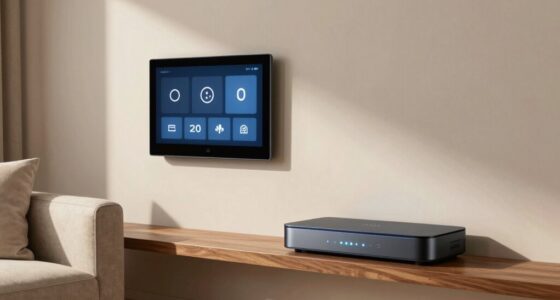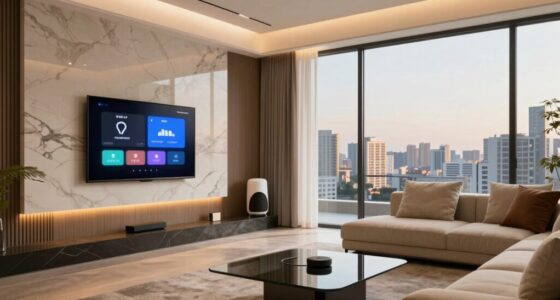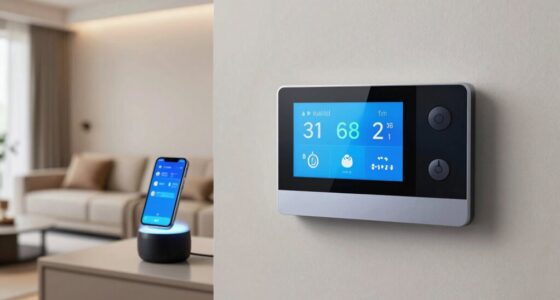
Smart home dashboards are centralized control panels that let you manage and monitor all your smart devices from a single, easy-to-use interface on your smartphone, tablet, or touchscreen. They simplify tasks like adjusting lights, thermostats, security cameras, and routines, all while providing real-time updates and alerts. These dashboards connect devices through Wi-Fi or protocols like Zigbee and Z-Wave, ensuring smooth automation and control. To discover how these systems can enhance your home, explore further.

Turn your quiet moments into listening time
- Thousands of audiobooks, podcasts and originals
- Listen on your phone, tablet or Echo — also offline
- Cancel anytime
Key Takeaways
- Smart home dashboards are centralized control panels that manage multiple devices via intuitive interfaces.
- They support real-time monitoring, automation, and remote access for convenience and security.
- Compatibility with various platforms (Apple HomeKit, Google Home, Alexa) ensures seamless device integration.
- Features include customizable layouts, status updates, alerts, and privacy controls for user-friendly operation.
- They utilize protocols like Wi-Fi, Zigbee, or Z-Wave, impacting device connectivity, speed, and power consumption.
Products Worth Considering

Levoit Core 600S-P Smart Air Purifier for Large Rooms

Samsung 42-Inch Class OLED S90F 4K Smart TV (2025)
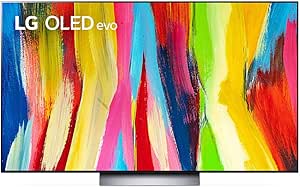
LG C2 Series 65-Inch OLED evo 4K Smart TV (OLED65C2PUA, 2022)
As an affiliate, we earn on qualifying purchases.
What Are Smart Home Dashboards?
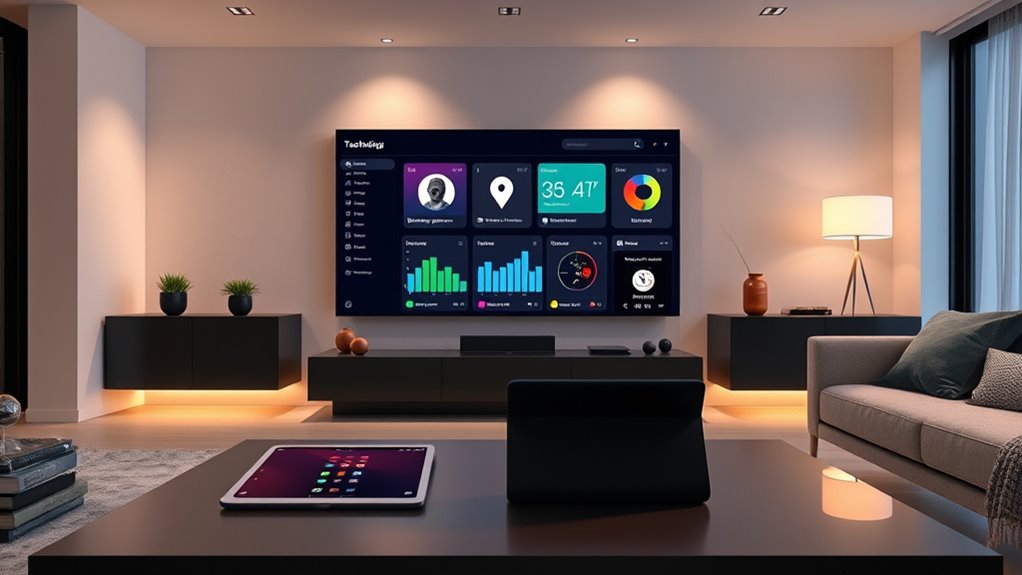
What exactly are smart home dashboards? They’re digital control panels that bring all your smart devices into one easy-to-navigate interface. Instead of juggling multiple apps for your lights, thermostat, security cameras, and other gadgets, a smart home dashboard consolidates everything in one place. You can view statuses, adjust settings, and monitor your home’s functions with a few taps or clicks. These dashboards are typically accessible via smartphones, tablets, or dedicated touchscreens. They simplify managing your smart technology, making it more intuitive and efficient. With a well-designed dashboard, you gain quick insight into your home’s systems, streamline your daily routines, and enhance overall convenience. Additionally, integrating features like high-resolution displays can significantly improve the clarity and usability of your dashboard. Incorporating filtration and sensor data can also help you better understand and optimize your home’s environment, especially as smart sensors become more advanced and widespread. Leveraging system integration allows for even more seamless automation and control, making your smart home truly intelligent. Furthermore, utilizing European cloud servers can enhance data security and ensure compliance with privacy standards, providing peace of mind for users concerned about their household information.
Core Features of Smart Home Dashboards

Smart home dashboards pack a range of features designed to make managing your devices straightforward and efficient. They centralize controls, allowing you to monitor and adjust multiple devices from a single interface. Customization is key—you can tailor layouts, icons, and widgets to suit your preferences. Real-time updates keep you informed about device statuses and alerts instantly. Automation features enable you to set routines, such as turning lights on at sunset or adjusting thermostats based on occupancy. Many dashboards also support device discovery, simplifying the process of integrating new smart devices into your setup. This feature often utilizes automatic detection, making it even easier to expand and adapt your smart home ecosystem. Additionally, privacy controls are often integrated to help you manage data sharing and storage preferences, ensuring responsible use of your information. Incorporating security features further enhances the safety of your smart home environment, providing peace of mind through monitoring and alerts. The table below highlights core features: Free Floating
How Do Smart Home Dashboards Work?
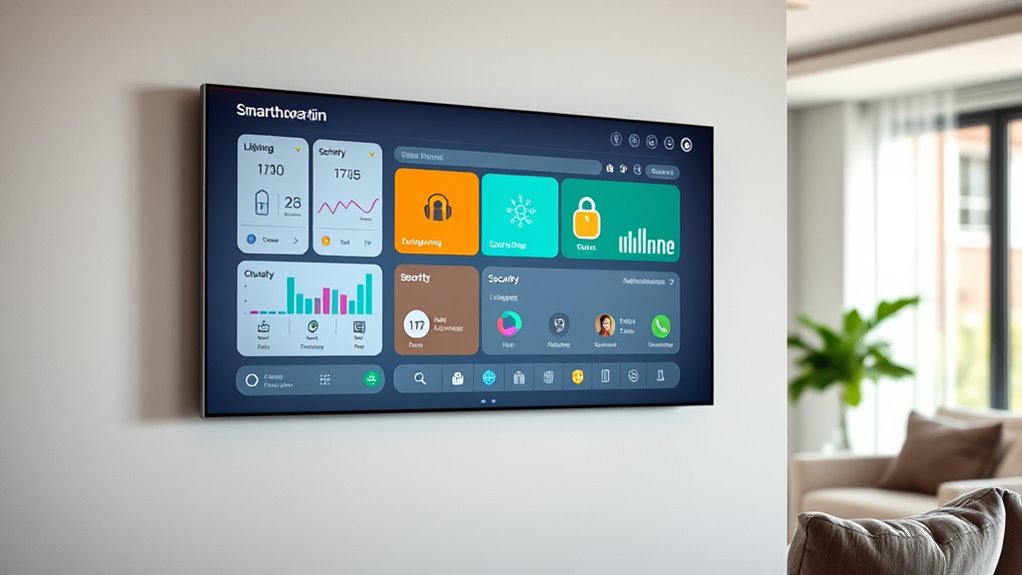
Smart home dashboards work by connecting all your devices through a centralized control system, making management simple. They communicate using data transfer methods like Wi-Fi, Bluetooth, or Z-Wave to keep everything synchronized. This setup allows you to monitor and control your smart home seamlessly from one interface. Proper integration of connected devices enhances system reliability and security, which is essential for effective Gold IRA Rollovers. Additionally, these dashboards often include user-friendly interfaces that simplify the management process for users of all experience levels. A well-designed dashboard also ensures system compatibility, enabling easy addition of new devices without disrupting existing setups, while privacy policies ensure user data remains protected during operation.
Centralized Control System
Ever wondered how smart home dashboards seamlessly coordinate your devices? It all comes down to the centralized control system. This system acts as the brain, integrating various smart devices like lights, thermostats, and security cameras into one unified platform. It communicates with each device, often through Wi-Fi or a dedicated hub, allowing you to control everything from a single interface. When you adjust a setting on your dashboard, the control system processes your command and relays it to the appropriate device. This setup ensures smooth operation, real-time updates, and synchronized responses. Personalized control is also possible through these systems, allowing for tailored automation to fit your daily routines. Additionally, a well-designed control system can adapt to different device types and protocols, simplifying the management of diverse smart home components. By centralizing control, you don’t need multiple apps or interfaces, making managing your smart home straightforward, efficient, and user-friendly. Moreover, these systems often incorporate smart home protocols that enable compatibility across various brands and technologies, further enhancing ease of use. A robust control system also enhances security and privacy, ensuring your data remains protected while maintaining seamless connectivity. Incorporating interoperability standards can further improve the integration of new devices over time.
Data Communication Methods
Have you ever wondered how your dashboard communicates with your devices so quickly and reliably? It all comes down to data communication methods. Most smart home dashboards use Wi-Fi, Zigbee, or Z-Wave protocols to connect with devices. Wi-Fi is common because it leverages your existing internet connection, providing fast data transfer. Zigbee and Z-Wave are low-power, mesh networks that enhance reliability and extend range by allowing devices to relay information through each other. When you tap a control on your dashboard, commands are sent via these protocols to your smart devices, which then respond almost instantly. These methods guarantee seamless, real-time updates and smooth operation. The choice of protocol impacts speed, range, power consumption, and compatibility, influencing your overall smart home experience. data communication methods are essential because they ensure efficient and reliable flow of information, which is vital for smooth operation.
Benefits of Using a Smart Home Dashboard
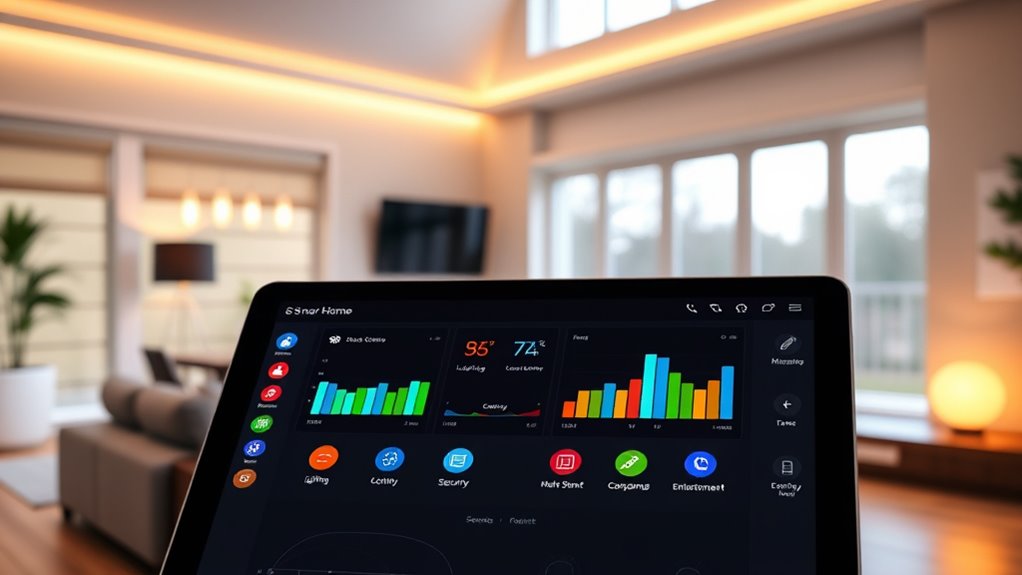
Using a smart home dashboard streamlines the way you manage your devices and systems, making daily routines more convenient and efficient. With everything in one place, you save time and reduce frustration. For example, you can:
- Instantly adjust your thermostat or lighting to set the perfect mood without juggling multiple apps.
- Monitor security cameras and view live feeds, keeping an eye on your home from anywhere.
- Receive real-time alerts for events like doorbell rings or smoke detection, allowing quick responses.
- Caregiver support systems integrated into your dashboard can help you monitor an aging loved one’s safety and health remotely. Incorporating connected home fitness technology can further enhance your wellness routine by providing real-time data on your physical activity and health metrics. Understanding network infrastructure is essential to ensure your smart devices function seamlessly and securely.
This centralized control helps you stay organized and in charge of your home environment. It minimizes the need for manual adjustments and simplifies complex routines, making your smart home truly responsive to your needs.
Popular Platforms and Compatibility
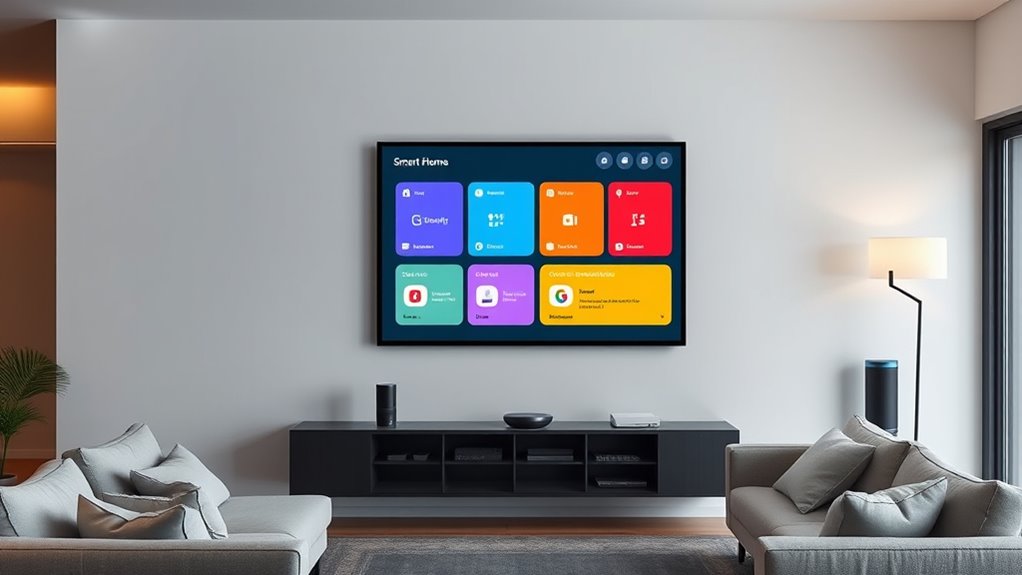
With so many smart home platforms available, compatibility becomes a crucial factor when choosing a dashboard. You want a system that seamlessly integrates with your existing devices, whether it’s smart lights, thermostats, or security cameras. Popular platforms like Apple HomeKit, Google Home, and Amazon Alexa each support different sets of devices, so checking compatibility is essential. Some dashboards are platform-specific, offering deeper integration, while others work across multiple ecosystems, giving you flexibility. Consider the devices you already own or plan to add, and ensure your chosen dashboard can connect to them reliably. Compatibility issues can lead to frustration, so prioritize dashboards that support your preferred platforms and devices for a smooth, unified smart home experience.
Tips for Choosing the Right Dashboard for Your Home
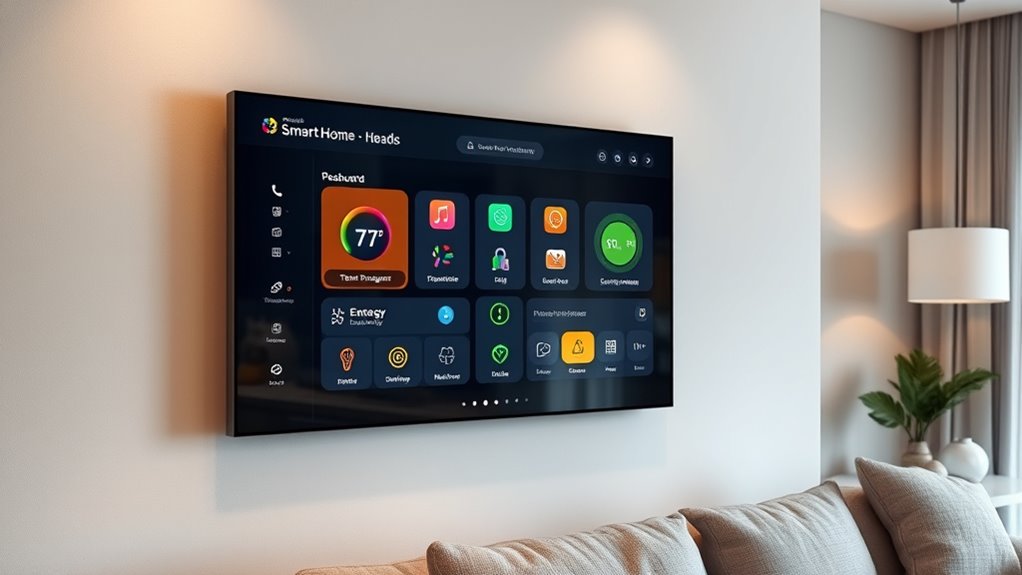
When selecting a smart home dashboard, make sure it’s compatible with your existing devices to avoid frustration later. You’ll also want an interface that’s easy to navigate so you can control your home effortlessly. Prioritizing these points helps guarantee your dashboard fits seamlessly into your daily routine.
Compatibility With Devices
Choosing a smart home dashboard that works seamlessly with your devices is essential for a smooth smart home experience. To confirm compatibility, start by verifying if the dashboard supports your specific devices, like smart lights, thermostats, or security cameras. Next, check if it integrates with your existing smart home ecosystem, such as Alexa, Google Home, or Apple HomeKit. Finally, consider whether the dashboard updates regularly to support new devices and standards. This way, you won’t face frustrating disconnects or outdated controls. Here are three key points to keep in mind:
- Compatibility with your current devices
- Integration with your preferred ecosystem
- Support for future device additions
Focusing on these factors helps you choose a dashboard that truly fits your home’s needs.
User Interface Simplicity
A user-friendly interface is essential for making your smart home dashboard easy to navigate and operate. When choosing a dashboard, look for clear layouts with intuitive controls. Avoid cluttered screens filled with unnecessary options—simplicity helps you find what you need quickly. Opt for large, easily recognizable icons and straightforward menus. Customizable dashboards allow you to prioritize the functions you use most. Touchscreen responsiveness should be smooth, so commands feel immediate. Consider dashboards that use consistent color schemes and minimal text to reduce confusion. The goal is to make everyday interactions seamless, so you spend less time figuring out controls and more time enjoying your smart home. A simple interface enhances usability, ensuring your smart home remains convenient and accessible.
Frequently Asked Questions
Can I Customize the Interface of My Smart Home Dashboard?
Yes, you can customize your smart home dashboard interface. Most platforms let you rearrange widgets, change colors, and add or remove controls to suit your preferences. You simply access the settings or customization menu, then drag and drop elements or select options to personalize the layout. With a few clicks, you’ll create an intuitive, user-friendly dashboard that makes managing your smart home effortless and tailored to your needs.
How Secure Are Smart Home Dashboards Against Cyber Threats?
Smart home dashboards can be quite secure if you take proper precautions. You should use strong, unique passwords, enable two-factor authentication, and keep your software updated regularly. Avoid connecting to unsecured networks, and consider using a VPN for added protection. While no system is completely invulnerable, these steps markedly reduce your risk of cyber threats, helping keep your smart home data safe and secure.
Do Smart Home Dashboards Support Voice Control Integration?
Yes, smart home dashboards often support voice control integration. You can easily connect them with voice assistants like Alexa, Google Assistant, or Siri. This allows you to control your devices hands-free, making managing your smart home more convenient. Just make certain your dashboard and voice assistant are compatible and properly set up. With voice control, you can turn on lights, adjust thermostats, or lock doors effortlessly, enhancing your home’s automation experience.
What Is the Average Cost of Setting up a Smart Home Dashboard?
The average cost of setting up a smart home dashboard ranges from $100 to $500, depending on the system complexity and devices you choose. You’ll need to factor in costs for the hub or controller, compatible smart devices, and installation or setup fees if you hire professional help. Keep in mind that some platforms are free, but hardware costs can vary based on features and brand preferences.
How Often Do Smart Home Dashboards Require Software Updates?
You’ll find your smart home dashboard updates roughly once a month, like changing the gears of a well-oiled machine. These updates come through notifications on your screen, revitalizing your interface with new features and security patches. Imagine your dashboard as a living map, constantly evolving to keep your smart devices running smoothly. Staying current ensures your home stays secure, efficient, and easy to control, so you can focus on enjoying your connected space.
Conclusion
A smart home dashboard acts as your modern-day oracle, simplifying control and monitoring of your connected devices. By understanding its features, workings, and benefits, you can select the perfect platform for your needs. Think of it as your digital butler—your trusted aide in managing your smart home effortlessly. Embrace this technology today, and enjoy a more convenient, efficient lifestyle—no need to summon a genie; your dashboard’s magic will do the trick.