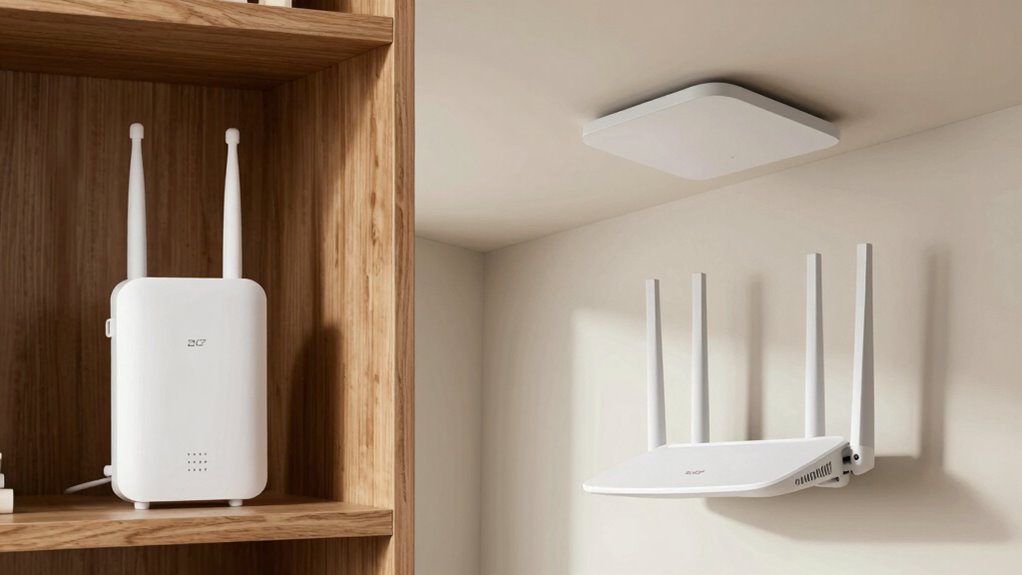

If you need a quick fix for a few dead zones, a Wi-Fi extender is cheaper and easier to set up, but it might create security issues and fragmentation, especially with many smart devices. For seamless coverage, security, and future-proofing, a mesh system is a better long-term investment, allowing easy expansion and reliable performance. Keep exploring to discover which option aligns best with your home needs and how to make the smartest choice.

Turn your quiet moments into listening time
- Thousands of audiobooks, podcasts and originals
- Listen on your phone, tablet or Echo — also offline
- Cancel anytime
Key Takeaways
- Choose extenders for quick, affordable fixes in a few dead zones; opt for mesh systems for seamless, whole-home coverage.
- Mesh networks provide a unified SSID, simplifying device connections and reducing connectivity issues.
- Mesh systems offer better security, automatic updates, and are more future-proof than basic extenders.
- Extenders may cause signal fragmentation, affecting smart home device performance and security.
- Invest in mesh systems for scalable, long-term coverage that adapts to expanding smart home needs.

When it comes to improving your home Wi-Fi coverage, understanding the difference between extenders and mesh networks is essential. Both solutions aim to eliminate dead zones and boost signal strength, but they do so in very different ways that can significantly impact your experience. If you’re considering expanding your Wi-Fi, you need to know which option best fits your needs, especially when it comes to smart home integration and signal security.
Wi-Fi extenders are simple devices that amplify your existing signal, rebroadcasting it to areas with weak coverage. They’re often less expensive and easier to set up, making them appealing if you just want to patch up a few dead zones. However, they can sometimes cause issues with signal security, especially if they aren’t configured properly, leaving your network vulnerable to hacking. Plus, extenders often create separate SSIDs, which can complicate device connections and slow down your network. If you have multiple smart home devices, this fragmented coverage can lead to connectivity hiccups, reducing the efficiency of your automation systems.
Wi-Fi extenders are affordable and easy to set up but may create security risks and fragmented network coverage.
On the other hand, mesh Wi-Fi systems are designed to create a seamless, single network across your entire home. They consist of a main router and multiple nodes that communicate with each other wirelessly, providing consistent coverage without the need for multiple SSIDs. This setup greatly benefits smart home integration — your devices can move freely from room to room without disconnecting, and the overall network remains stable. Mesh systems also prioritize signal security, employing advanced encryption protocols to protect your data and prevent unauthorized access. These features make them ideal for households with a lot of connected devices or those who prioritize security. Additionally, mesh systems are designed with network scalability in mind, allowing users to easily expand coverage as needed. They are also better at handling interference, which can be a common issue in densely populated areas with many Wi-Fi networks nearby. Furthermore, mesh systems often include automatic updates and security features that enhance overall network protection without requiring manual intervention. Moreover, their ability to adapt to future technological advancements makes them a more long-term investment for tech-savvy households.
Products Worth Considering

eufy Security Video Doorbell E340, Dual Cameras, 2K FHD, 8GB Local Storage

eufy Security Essential 7-Piece Alarm System

Ring Alarm 5-Piece Wireless Security System
As an affiliate, we earn on qualifying purchases.
Frequently Asked Questions
Can Extenders Improve Internet Speed or Just Boost Coverage?
Extenders mainly boost coverage, but they won’t necessarily improve your internet speed. They can help if bandwidth limitations or signal interference cause slowdowns, but often, extenders reduce your bandwidth, leading to slower speeds. If you want better speed along with coverage, a mesh network is a smarter choice. It manages bandwidth more efficiently and minimizes signal interference, giving you a more reliable and faster internet experience overall.
Are Mesh Networks More Secure Than Traditional Wi-Fi Extenders?
Mesh networks are generally more secure than traditional Wi-Fi extenders because they use advanced encryption protocols like WPA3, which protect your data better. Additionally, mesh systems often receive regular firmware updates that patch security vulnerabilities, unlike many extenders. This continuous security maintenance makes mesh networks a safer choice for your home or office, giving you peace of mind knowing your network is better protected against threats.
Do Mesh Systems Require Professional Installation?
Think of a mesh system like a well-orchestrated symphony—smooth and effortless. You don’t usually need professional installation; most mesh systems are designed for easy setup by yourself. They’re built to handle wireless interference and improve signal stability across your home. Just follow the clear instructions, place the units strategically, and you’re good to go. No need for a tech expert—your Wi-Fi will perform like a maestro.
How Do Extenders and Mesh Systems Handle Multiple Devices?
You’ll find that mesh systems handle multiple devices more efficiently because they create a unified network, reducing signal interference. Extenders can struggle with device compatibility and may cause dead zones or slower connections when too many devices connect. Mesh systems automatically prioritize devices and manage traffic smoothly, ensuring a faster, more reliable experience. With a mesh setup, you get better coverage and less hassle managing multiple devices than with traditional extenders.
Which Option Is Better for Large Homes With Thick Walls?
For large homes with thick walls, a mesh system is your best bet. It offers better coverage and seamless Smart home integration, ensuring all devices stay connected. Keep in mind, power supply considerations are vital—mesh nodes often require stable power sources, so plan placement accordingly. Extenders might seem easier, but they can create dead zones and reduce speed, making mesh networks the more reliable, future-proof choice for your home.
Conclusion
Remember, choosing between extenders and mesh is like selecting the right tool for the job—each has its place, but only one will truly make your Wi-Fi feel like a seamless, unstoppable force. Don’t be like Icarus soaring too close to the sun with a faulty fix; instead, pick what’s best for your home’s needs. With the right choice, your internet will soar smoothly, leaving dead zones behind and making connectivity your new mythic strength.