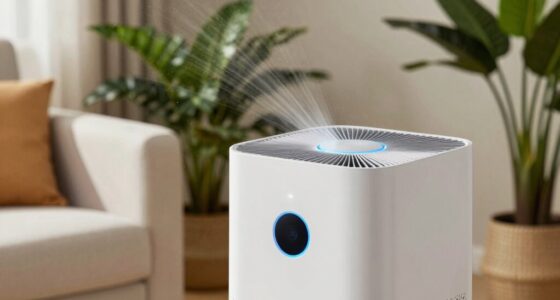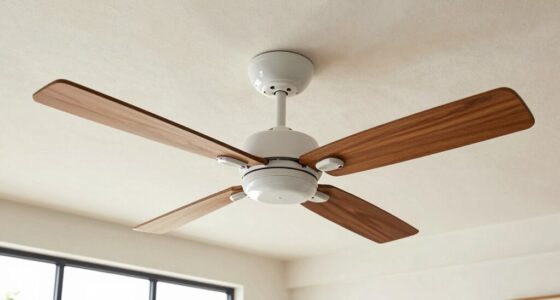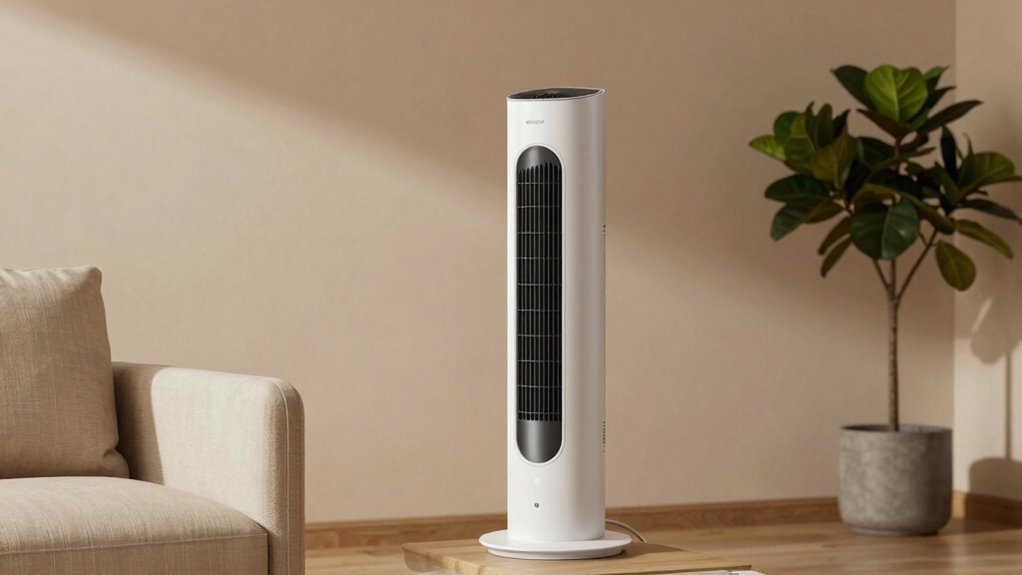
When you see “whisper” on a tower fan, it usually means the noise level is very low, almost unnoticeable, so you can sleep, work, or relax without distraction. These fans use advanced motor tech, aerodynamic blades, and sound-absorbing materials to minimize sound. They’re also energy-efficient, offering adjustable settings and useful features like timers and remote controls. To discover how these features can enhance your comfort, keep exploring what makes a “whisper” fan truly special.

Turn your quiet moments into listening time
- Thousands of audiobooks, podcasts and originals
- Listen on your phone, tablet or Echo — also offline
- Cancel anytime
Key Takeaways
- “Whisper” indicates a fan produces very low noise levels, creating a peaceful environment, but not completely silent.
- It often involves advanced motor and aerodynamic blade technology to minimize sound.
- Noise reduction focuses on enhancing comfort during sleep, work, or relaxation.
- It signifies a quieter operation without compromising airflow or performance.
- “Whisper” fans are designed to be energy-efficient, combining quietness with cost savings.

If you’re tired of noisy fans disrupting your comfort, quiet tower fans offer an ideal solution. When you hear the term “whisper,” you naturally expect something extremely quiet—almost inaudible. But what does “whisper” really mean in the setting of tower fans? Often, it’s a marketing term that suggests significant noise reduction, allowing you to enjoy a peaceful environment even while the fan is operating. The key is understanding that “whisper” doesn’t necessarily mean completely silent; instead, it indicates a level of noise that’s hardly noticeable, making it easier for you to focus, sleep, or relax without distraction.
Many quiet tower fans are engineered with noise reduction in mind. They incorporate advanced motor technology, aerodynamic blades, and sound-absorbing materials to cut down on operational sounds. When you choose a fan described as “whisper-quiet,” you can expect it to produce noise levels that are well below the average for standard fans. This is especially important if you’re sensitive to sound or need a fan running in the background during work or sleep. The goal with these fans is to minimize disruptive noises, ensuring a calm environment where background hums are hardly perceptible. noise reduction technologies play a crucial role in achieving this, helping create a more tranquil atmosphere.
Energy efficiency is another vital aspect of “whisper” fans. These fans are designed to use less power without sacrificing airflow or performance. When you opt for a fan that emphasizes energy efficiency, you’re not only reducing your electricity bills but also contributing to a more sustainable environment. Many whisper-quiet models feature energy-saving modes and adjustable speed settings, allowing you to customize airflow and noise levels based on your needs. For instance, you might run the fan on a low setting overnight, maintaining a gentle breeze while keeping noise and energy consumption minimal. energy efficiency is an important factor that influences both cost savings and environmental impact, helping you make an informed choice. Moreover, many of these fans incorporate energy-saving features that optimize power use during operation.
Additionally, quiet tower fans often come with features that enhance user convenience and further promote efficiency. These include timers, remote controls, and programmable settings that prevent the fan from running longer than necessary. Such features help you optimize energy use, ensuring you’re not wasting power during periods when you don’t need maximum airflow. Incorporating user-friendly features can significantly improve your overall experience with the fan. Ultimately, a “whisper” tower fan combines noise reduction and energy efficiency to create a comfortable, cost-effective, and peaceful cooling experience. When you understand what “whisper” means in this setting, you’ll be better equipped to select a fan that truly meets your needs—delivering quiet operation without compromising on performance or efficiency.
Frequently Asked Questions
How Do Quiet Tower Fans Compare to Traditional Fans in Cooling Efficiency?
Quiet tower fans often provide comparable cooling efficiency to traditional fans, thanks to improved airflow dynamics. They are designed to optimize air circulation while minimizing noise, thanks to noise reduction features. You’ll notice they move air effectively across a room without the loud sounds typical of older models. While they might sometimes have smaller fans, their strategic design guarantees you still get a comfortable, efficient cooling experience without sacrificing quietness.
Are Quiet Tower Fans Suitable for Use in Bedrooms?
Did you know that most quiet tower fans operate at noise levels between 20-40 decibels? These fans are ideal for bedrooms because they produce minimal noise, which helps improve sleep quality. You won’t be disturbed by loud noises, making them suitable for overnight use. Their gentle hum creates a peaceful environment, allowing you to rest comfortably while staying cool. So, yes, quiet tower fans are perfect for bedroom comfort and better sleep.
What Features Contribute Most to a Fan’s Quiet Operation?
You can make a fan operate quietly by focusing on noise reduction features like insulated motors and sound-dampening materials. Airflow optimization also plays a key role, ensuring the fan moves air smoothly without creating turbulence or extra noise. Look for adjustable speed settings and well-designed blades, which help maintain steady airflow while keeping noise levels low. These features work together to produce a quieter, more comfortable environment.
Can Quiet Tower Fans Be Used Outdoors Safely?
You can use quiet tower fans outdoors if they’re designed with outdoor durability and weather resistance in mind. For example, a family used a weatherproof tower fan on their patio during summer, and it handled rain and sun without issue. These fans are built to withstand outdoor conditions, but always check the manufacturer’s specifications. Avoid placing indoor-only fans outside, as they lack the necessary durability and could get damaged.
Do Quiet Fans Consume More Energy Than Louder Models?
No, quiet fans typically don’t consume more energy than louder models. They often utilize advanced motor technology and noise reduction features that enhance efficiency without increasing power use. In fact, some quiet fans are designed to be energy-efficient, helping you save on electricity bills while maintaining a peaceful environment. So, choosing a quiet tower fan doesn’t mean sacrificing energy consumption; it often leads to better noise reduction without extra energy costs.
Conclusion
In the end, choosing a quiet tower fan means you’ll enjoy a peaceful environment, especially since over 80% of users report considerably reduced noise levels with modern models. Remember, the term “whisper-quiet” often means the fan operates at around 40 decibels—comparable to a library. So, whether you’re working, sleeping, or relaxing, a quiet tower fan can provide cool comfort without disturbing your peace. Stay cool and enjoy the calm!
Fall Picks
fall essentials
As an affiliate, we earn on qualifying purchases.