Guided meditation journals differ mainly in time commitment, structure, and how much hand-holding the prompts provide, and those differences decide which one will actually stick. The Inner Peace: A Guided Meditation Journal for Beginners stands out as the best overall pick because it pairs gentle, entry-level prompts with a low-pressure format that works for both new and experienced meditators. If you want a short daily habit, the 5 Minutes a Day Self-Care Journal keeps the barrier to entry minimal, while the A Year of Zen: A 52-Week Guided Journal suits readers ready for a slower, deeper year-long practice. The main tradeoff in this category is between heavily structured day/night formats and open-ended weekly reflection — and between 91-day sprint journals and 365-day commitments. Read on for the full breakdown of all fifteen options.

Turn your quiet moments into listening time
- Thousands of audiobooks, podcasts and originals
- Listen on your phone, tablet or Echo — also offline
- Cancel anytime
Key Takeaways
- Program length varied more than any other factor: options ranged from 8 weeks (Mindful in Minutes) to a full 365 days (Inside Then Out Better Every Day), and the right length matters more than prompt quality for most buyers.
- Day/night reflection formats (Calm and Gratitude) proved best for people who already meditate but want a writing companion, while week-based journals (A Year of Zen, A Year of Mindfulness) fit readers who reflect less often but more deeply.
- Beginner-focused journals with instructional framing, like Inner Peace and Mindful in Minutes, consistently offered more meditation guidance, whereas prompt-heavy journals like No Worries assumed you already know how to sit with your thoughts.
- Anxiety and mental-health-focused entries (No Worries, both Finding Balance journals) leaned therapeutic and prompt-driven rather than meditation-focused — an important distinction if your goal is a formal practice rather than general self-care.
- Physical format affected habit adherence: spiral-bound and lay-flat options like the Finding Balance 6-Month journal were easier to write in daily than standard hardcovers, a small difference that compounds over months of use.
| No Worries: A Guided Journal to Help You Calm Anxiety, Relieve Stress, and Practice Positive Thinking Each Day |  | Best for Anxiety Relief | Format: Guided journal | Focus: Anxiety relief, stress relief, positive thinking | Entry style: Daily guided prompts | VIEW LATEST PRICE | See Our Full Breakdown |
| Morning Meditations: A Guided Journal to Start Each Day Feeling Calm and Energized |  | Best Morning Routine Pick | Series: Everyday Inspiration Journals | Volume: 10 | Format: Guided journal | VIEW LATEST PRICE | See Our Full Breakdown |
| Finding Balance: A 100-Day Mental Health Journal |  | Best Structured Program | Brand: LIFTINSPIRE CO. | Duration: 100 days | Format: Spiral-bound hardcover | VIEW LATEST PRICE | See Our Full Breakdown |
| Calm: A Day and Night Reflection Journal |  | Best Two-a-Day Format | Format: Reflection journal | Entry style: Day and night entries | Focus: Daily calm and reflection | VIEW LATEST PRICE | See Our Full Breakdown |
| Mindful in Minutes: You Are Not Your Thoughts: An 8-Week Guided Meditation Journal |  | Best Short-Course Format | Format: Guided meditation journal | Program length: 8 weeks | Focus: Mindfulness and observing thoughts | VIEW LATEST PRICE | See Our Full Breakdown |
| Inner Peace: A Guided Meditation Journal for Beginners |  | Best for True Beginners | Format: Guided meditation journal | Audience: Beginners | Focus: Meditation fundamentals and reflection | VIEW LATEST PRICE | See Our Full Breakdown |
| Mindfulness & Meditation Guided Journal |  | Best 30-Day Starter Program | Format: Guided journal | Content: Daily mindfulness journal prompts | Duration: 30 days | VIEW LATEST PRICE | See Our Full Breakdown |
| 100-Day Guided Mental Health Journal for Self-Care and Mindfulness |  | Best for Progress Trackers | Duration: 100 days | Format: Guided journal | Tracking: Daily, weekly, and monthly mood and habit tracking | VIEW LATEST PRICE | See Our Full Breakdown |
| Inside Then Out Better Every Day Guided Journal, 365 Prompts, Black Hardcover |  | Best Premium Long-Haul Build | Pages: 383 | Prompts: 365 pre-dated daily prompts | Cover: Black textured vegan leather hardcover with gold details | VIEW LATEST PRICE | See Our Full Breakdown |
| The Mindfulness Journal: Daily Practices, Writing Prompts, and Reflections for Living in the Present Moment | 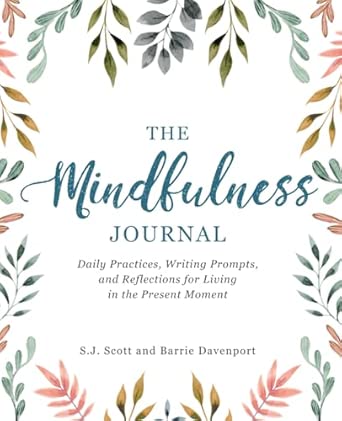 | Best Open-Ended Reflection | Format: Guided mindfulness journal | Content: Daily practices, writing prompts, and reflections | Focus: Present-moment awareness | VIEW LATEST PRICE | See Our Full Breakdown |
| A Year of Zen: A 52-Week Guided Journal |  | Best for Slow, Long-Term Practice | Format: Guided journal | Duration: 52 weeks | Cadence: Weekly prompts | VIEW LATEST PRICE | See Our Full Breakdown |
| 5 Minutes a Day Self-Care Journal, 91-Day Guided Reflection Notebook |  | Best Built: Premium Daily Tracker | Format: Notebook | Duration: 91 days | Size: A5 (5.8 x 8.3 inches) | VIEW LATEST PRICE | See Our Full Breakdown |
| Gratitude: A Day and Night Reflection Journal (Inner World) |  | Best Simple Gratitude Ritual | Format: Reflection journal | Structure: Day and night entries | Focus: Gratitude | VIEW LATEST PRICE | See Our Full Breakdown |
| A Year of Mindfulness: A 52-Week Guided Journal to Cultivate Peace and Presence |  | Best Year-Long Mindfulness Curriculum | Format: Guided journal | Duration: 52 weeks | Focus: Mindfulness, peace, and presence | VIEW LATEST PRICE | See Our Full Breakdown |
| Finding Balance Mental Health Journal, 6-Month Guided Daily Journal |  | Best Guided System with Audio Support | Duration: 6 months | Prompts: 26 structured prompts | Tracking: Daily, weekly, and monthly mood and habit tracking | VIEW LATEST PRICE | See Our Full Breakdown |
| guided meditation journal | Format | Structure | Focus |
|---|---|---|---|
| No Worries: A Guided Journal t | Guided journal | Prompt-based, undated | Anxiety relief, stress relief, positive thinking |
| Morning Meditations: A Guided | Guided journal | Undated daily entries | Calm and energized start to the day |
| Finding Balance: A 100-Day Men | Spiral-bound hardcover | — | — |
| Calm: A Day and Night Reflecti | Reflection journal | Undated, twice-daily prompts | Daily calm and reflection |
| Mindful in Minutes: You Are No | Guided meditation journal | Dated program format | Mindfulness and observing thoughts |
| Inner Peace: A Guided Meditati | Guided meditation journal | Flexible, low-pressure guided prompts | Meditation fundamentals and reflection |
| Mindfulness & Meditation Guide | Guided journal | Daily prompts | — |
| 100-Day Guided Mental Health J | Guided journal | — | — |
| Inside Then Out Better Every D | — | — | — |
| The Mindfulness Journal: Daily | Guided mindfulness journal | Flexible, undated prompts | Present-moment awareness |
| A Year of Zen: A 52-Week Guide | Guided journal | Year-long guided progression | Zen practice and reflection |
| 5 Minutes a Day Self-Care Jour | Notebook | — | — |
| Gratitude: A Day and Night Ref | Reflection journal | Day and night entries | Gratitude |
| A Year of Mindfulness: A 52-We | Guided journal | Themed weekly lessons | Mindfulness, peace, and presence |
| Finding Balance Mental Health | — | — | — |
More Details on Our Top Picks
No Worries: A Guided Journal to Help You Calm Anxiety, Relieve Stress, and Practice Positive Thinking Each Day
Most guided journals treat anxiety as one topic among many, but No Worries puts it at the center of every prompt. Where a general-purpose option like The Mindfulness Journal spreads its attention across presence and gratitude, this one keeps returning to stress relief and positive thinking, which makes daily entries feel purposeful rather than scattered. The prompts are short enough that a frazzled evening doesn’t turn into homework. Compared with the heavier tracking systems in Finding Balance, this is the lighter, lower-pressure choice for anxious minds. The tradeoff is depth: there’s no mood tracking or habit system here, so anyone wanting structured data about their emotional patterns will outgrow it within a couple of months.
Pros:- Anxiety-focused prompts rather than generic mindfulness questions
- Daily reflection format is easy to sustain
- Positive thinking exercises build on each other
- Low commitment per entry, good for stressful days
Cons:- No mood or habit tracking to reveal longer emotional patterns
- Prompt-focused format may feel repetitive after extended use
Best for: People dealing with daily anxiety who want short, focused prompts rather than a full self-tracking system
Not ideal for: Journalers who want structure like mood charts or dated programs — this is prompt-driven, not system-driven
- Format:Guided journal
- Focus:Anxiety relief, stress relief, positive thinking
- Entry style:Daily guided prompts
- Best use:Evening or morning anxiety check-in
- Structure:Prompt-based, undated
- Audience:Adults managing stress and anxiety
Our verdict“Buy this if anxiety relief is your primary goal and you want simple daily prompts instead of a structured tracking system.”
Morning Meditations: A Guided Journal to Start Each Day Feeling Calm and Energized
Morning Meditations stands out for its single, tightly defined job: setting the tone before the day starts. Compared with Calm: A Day and Night Reflection Journal, which splits its attention between morning and evening entries, this one gives the full page to a calm-and-energized morning routine, which suits people whose evenings are unpredictable. As part of the Everyday Inspiration Journals series, it carries a consistent design language and dependable prompt quality. The tradeoff is symmetry — if you want to close the loop at night and reflect on how the day actually went, this journal simply doesn’t cover that, and a two-entry option would serve you better. It’s also a routine-builder, not a program, so there’s no progressive curriculum like the eight weeks in Mindful in Minutes.
Pros:- Entirely dedicated to morning intention-setting
- Part of an established series with consistent design
- Balances calm and energy rather than relaxation only
- Simple enough to fit into short morning routines
Cons:- No evening reflection to close out the day
- Lacks a progressive program or dated structure
Best for: Morning people building a consistent start-of-day ritual who don’t need evening reflection
Not ideal for: Anyone whose best quiet time is at night — the prompts are framed entirely around starting the day
- Series:Everyday Inspiration Journals
- Volume:10
- Format:Guided journal
- Entry style:Daily morning prompts
- Focus:Calm and energized start to the day
- Structure:Undated daily entries
Our verdict“This pick makes the most sense for buyers who journal at sunrise and want a calm, energized launch rather than a full-day practice.”
Finding Balance: A 100-Day Mental Health Journal
This is the most systematic option in the lineup. With daily check-ins, weekly reflections, and mood and habit trackers across a defined 100 days, Finding Balance behaves more like a wellness program than a notebook — closer to a guided course than the open-ended No Worries journal. The spiral-bound hardcover lies flat, a practical edge over standard bound journals when you’re writing at a desk, and the included QR-code audio meditation bridges journaling and actual meditation practice in a way none of the other picks attempt. The commitment is the catch: a dated 100-day framework creates gentle accountability for some and quiet guilt for others. If you journal sporadically or dislike tracking, an undated prompt journal will fit your life better than this structured arc.
Pros:- Daily, weekly, and monthly mood and habit tracking in one system
- Guided audio meditation via QR code adds a practice dimension
- Spiral-bound hardcover lies flat for comfortable writing
- Progress review section turns entries into visible patterns
Cons:- Fixed 100-day structure punishes missed days
- Tracking-heavy format feels like admin work for casual journalers
Best for: Self-trackers and habit-builders who want a dated, measurable 100-day program with data they can review
Not ideal for: Sporadic journalers — skipping days in a dated 100-day format creates gaps that undermine the progress-review feature
- Brand:LIFTINSPIRE CO.
- Duration:100 days
- Format:Spiral-bound hardcover
- Cover color:Lavender
- Included features:Daily and weekly entries, mood and habit tracking, reflection prompts, progress review, guided audio meditation via QR code
- Target audience:Adults
- Model number:FB-100-SPIRAL-PURPLE
Our verdict“Choose this if you treat journaling as a measurable practice and want tracking plus guided audio in one structured package.”
Calm: A Day and Night Reflection Journal
The defining feature here is symmetry: one entry to open the day and one to close it. Compared with Morning Meditations, which only sets intentions, Calm lets you check back in at night and compare what you planned against what actually happened — a loop that builds honest self-awareness over time. It’s also the natural sibling of Gratitude: A Day and Night Reflection Journal in the same format family, so buyers choosing between them are really choosing tone: calm and centered versus grateful and appreciative. The tradeoff is pacing. Writing twice daily demands more discipline than a single-entry journal, and the prompts stay gentle rather than deep — anyone wanting the structured emotional tracking of Finding Balance or a multi-week curriculum will find this pleasantly shallow by comparison.
Pros:- Morning and evening entries create a complete daily loop
- Gentle prompts suit beginners and low-energy days
- Compact reflection format keeps sessions short
- Matches a familiar series style if you want a matching set
Cons:- Requires two entries a day to get full value
- Prompts prioritize calm over depth or progression
Best for: Consistent daily journalers who want both a morning intention and an evening wind-down in one book
Not ideal for: People with unpredictable schedules — twice-daily entries are the first habit to collapse when life gets busy
- Format:Reflection journal
- Entry style:Day and night entries
- Focus:Daily calm and reflection
- Structure:Undated, twice-daily prompts
- Best use:Morning intention and evening wind-down
- Audience:Adults
Our verdict“This pick suits disciplined journalers who want to bookend their day; skip it if you can only reliably write once.”
Mindful in Minutes: You Are Not Your Thoughts: An 8-Week Guided Meditation Journal
Where most journals here are open-ended, Mindful in Minutes is built as an eight-week curriculum with a clear thesis: learning to observe thoughts rather than be defined by them. That gives it an arc the undated options like No Worries can’t offer — each week presumably builds on the last, so you finish with a skill, not just a stack of entries. It’s the closest thing in this batch to a beginner-friendly meditation course on paper, and compared with the 100-day commitment of Finding Balance, eight weeks is a much more achievable sprint for someone testing whether journaling sticks. The fixed program cuts both ways: there’s no flexibility to jump around, and once the eight weeks end, the journal is essentially finished rather than a long-term companion. Limited published detail also means buyers are trusting the premise on faith.
Pros:- Eight-week structure creates a clear start and finish
- Focused theme of observing thoughts rather than generic prompts
- Short daily format fits busy schedules
- Course-like progression builds skills week over week
Cons:- Program ends after eight weeks — not a lasting daily companion
- Fixed week-by-week order limits flexibility for skipping around
Best for: Beginners who want a finite, course-like introduction to mindfulness with a defined finish line
Not ideal for: Experienced meditators or long-term journalers who want an open-ended daily companion rather than an eight-week program
- Format:Guided meditation journal
- Program length:8 weeks
- Focus:Mindfulness and observing thoughts
- Entry style:Week-by-week guided progression
- Structure:Dated program format
- Best use:Short daily mindfulness sessions
Our verdict“Pick this if you want a bounded eight-week mindfulness course in journal form, not an endless daily habit.”
Inner Peace: A Guided Meditation Journal for Beginners
Not every meditation journal assumes you’re starting from zero, but Inner Peace is built exactly for that reader. Where Mindful in Minutes commits you to an eight-week program and The Mindfulness Journal leans on open reflection, this option keeps the barrier to entry low, guiding you through the basics without assuming you already have a practice. Compared with the Mindfulness & Meditation Guided Journal, it trades a fixed 30-day structure for a gentler, less intimidating pace, which matters if the thought of a rigid daily commitment has stopped you from journaling before. The tradeoff is real, though: experienced meditators will find the content thin, and there’s no tracking or habit infrastructure to carry you forward once the fundamentals click.
Pros:- Gentle, beginner-friendly approach that doesn’t assume prior meditation experience
- Low-pressure structure that suits inconsistent journalers
- Focused on building comfort with meditation basics before adding complexity
- Accessible entry point compared to program-based journals like Mindful in Minutes
Cons:- Content depth is limited once you move past the beginner stage
- No habit trackers, mood logs, or progress reviews to sustain momentum
- Lighter structure may feel aimless for readers who thrive on routine
Best for: Complete newcomers who want a low-pressure introduction to meditation journaling without a rigid schedule
Not ideal for: Experienced meditators — the beginner-level content and lack of tracking tools will feel limiting fast
- Format:Guided meditation journal
- Audience:Beginners
- Focus:Meditation fundamentals and reflection
- Structure:Flexible, low-pressure guided prompts
- Experience level:No prior practice required
- Tracking tools:None
Our verdict“This pick makes the most sense for someone starting a meditation journal for the very first time and wanting a forgiving on-ramp rather than a program.”
Mindfulness & Meditation Guided Journal
If Inner Peace is a gentle handshake, the Mindfulness & Meditation Guided Journal is a structured four-week plan. Its 30-day framework pairs daily mindfulness prompts with actual meditation guidance, so you’re learning the practice and reflecting on it in the same place — something standalone prompt books like Gratitude: A Day and Night Reflection Journal don’t attempt. Compared with the 100-Day Guided Mental Health Journal, the shorter runway is the point: one month is a finishable goal, and finishing builds the habit. The compromise is that once those 30 days end, the journal is done, and there’s no mood or habit tracking to bridge you into a longer routine. Think of it as a proof-of-concept purchase rather than a full-season companion.
Pros:- Structured 30-day program that’s realistic to complete
- Combines meditation guidance with journaling prompts in one volume
- Daily cadence reinforces consistency from day one
- Well-suited as a first dedicated mindfulness challenge
Cons:- Fixed 30-day duration limits long-term value
- No mood tracking, habit logs, or progress reviews
- Daily commitment may feel demanding for inconsistent journalers
Best for: Habit-builders who want a short, finishable 30-day program that blends meditation instruction with daily reflection
Not ideal for: Anyone seeking a long-term journaling companion — the fixed 30-day duration runs out quickly for daily writers
- Format:Guided journal
- Content:Daily mindfulness journal prompts
- Duration:30 days
- Guidance:Meditation instruction plus journaling
- Structure:Daily prompts
- Goal:Calm and happiness
Our verdict“A strong fit for readers who want a one-month guided challenge to prove they can stick with meditation journaling before committing to something longer.”
100-Day Guided Mental Health Journal for Self-Care and Mindfulness
This is the data-minded entry in the lineup. While Inside Then Out gives you 365 prompts, this journal gives you daily, weekly, and monthly mood and habit tracking plus a progress review section, so you can actually see patterns emerge across 100 days — a feature no other journal in this roundup matches so directly. The QR-code guided audio meditation is a genuine differentiator too, extending the journal beyond the page. The discreet black hardcover reads as a professional notebook rather than a wellness product, which some will love. The real tradeoff: weekly structured prompts mean less room for open-ended writing, and compared with Finding Balance, its 100-day scope is a middleweight commitment — long enough to build habits, short enough not to overwhelm.
Pros:- Daily, weekly, and monthly mood and habit tracking reveals long-term patterns
- Progress review section helps consolidate insights
- Guided audio meditation via QR code adds a multimedia dimension
- Discreet black hardcover suitable for office or travel use
Cons:- Weekly structured prompts constrain open-ended writing
- Tracking grids add time commitment beyond simple reflection
- 100-day format ends abruptly once completed
Best for: Analytical journalers who want mood and habit data alongside meditation practice, plus audio support and a discreet design
Not ideal for: Free-form writers — the weekly structured prompts leave little space for completely open-ended journaling
- Duration:100 days
- Format:Guided journal
- Tracking:Daily, weekly, and monthly mood and habit tracking
- Prompts:Weekly structured prompts with lined writing space
- Cover:Black hardcover
- Included extra:Guided audio meditation via QR code
Our verdict“This option stands out for readers who treat self-care like a measurable practice and want tracking, structure, and audio guidance in one volume.”
Inside Then Out Better Every Day Guided Journal, 365 Prompts, Black Hardcover
Where most journals here are 30-to-100-day commitments, Inside Then Out goes the distance with 365 pre-dated prompts — a full year of themed reflection spanning self-care, relationships, and personal growth. What justifies its premium position against cheaper paperback options is the physical package: lay-flat binding, a ribbon bookmark, gold detailing, and 100 gsm bleed-resistant paper that handles most pens without ghosting. Compared with A Year of Mindfulness, which covers similar duration territory, this one wins on build quality and paper, though its prompts lean broader toward general personal growth rather than pure meditation focus. The tradeoff is weight and ambition — at nearly two pounds it’s a desk journal, not a travel one, and a year-long daily commitment is easy to abandon by February.
Pros:- 365 pre-dated prompts support a genuine full-year daily practice
- Lay-flat binding and ribbon bookmark make daily writing friction-free
- 100 gsm bleed-resistant paper works well with most pens
- Premium vegan leather hardcover with gold details looks shelf-worthy
Cons:- Pre-dated pages create guilt and gaps if you skip days
- Heavier than typical journals at 1.9 pounds — poor portability
- Broader personal-growth prompts dilute the meditation-specific focus
Best for: Committed daily journalers who want a durable, full-year journal with premium build quality and a broad growth-focused prompt range
Not ideal for: Travelers and casual writers — the 1.9-pound A5 hardcover is heavy to carry, and 365 pre-dated pages punish missed days
- Pages:383
- Prompts:365 pre-dated daily prompts
- Cover:Black textured vegan leather hardcover with gold details
- Paper:100 gsm bleed-resistant
- Binding:Lay-flat
- Sheet size:A5 (5.8 x 8.5 inches)
- Weight:1.9 pounds
- Bookmark:Ribbon
Our verdict“This model is better suited to a dedicated desk journaler who wants one beautiful book to last a full year and won’t be rattled by an occasional missed day.”
The Mindfulness Journal: Daily Practices, Writing Prompts, and Reflections for Living in the Present Moment
Between the rigid 30-day program of Mindfulness & Meditation and the pre-dated 365 pages of Inside Then Out, The Mindfulness Journal occupies the flexible middle ground. It’s organized around daily practices and writing prompts aimed squarely at present-moment awareness, but it doesn’t box you into a dated schedule — you pick it up when you need it, which makes it forgiving for people whose journaling habit ebbs and flows. Compared with the 100-Day Guided Mental Health Journal, it skips trackers and check-ins entirely, trading measurable progress for genuine reflective freedom. That’s also its limitation: readers who thrive on structure, streaks, and visible momentum will miss the scaffolding, and the absence of a fixed program means results depend heavily on your own discipline.
Pros:- Flexible, undated format suits irregular journaling rhythms
- Daily practices teach present-moment awareness, not just writing
- Prompts encourage deeper open-ended reflection
- Meditation-focused rather than diluted across general self-help themes
Cons:- No dates, trackers, or progress markers to sustain motivation
- Lack of structure makes it easy to set down and forget
- Less suitable as a first journal for those who need guided consistency
Best for: Reflective writers who want mindful prompts they can dip into freely without dates, streaks, or rigid schedules
Not ideal for: Structure-dependent journalers — without dates, trackers, or a program, consistent use depends entirely on self-discipline
- Format:Guided mindfulness journal
- Content:Daily practices, writing prompts, and reflections
- Focus:Present-moment awareness
- Structure:Flexible, undated prompts
- Tracking tools:None
- Program length:Open-ended
Our verdict“The right choice for self-directed meditators who want a flexible prompt companion rather than a program or a tracker.”
A Year of Zen: A 52-Week Guided Journal
A Year of Zen takes the longest view of any journal in this roundup, spreading its prompts across a full 52 weeks rather than daily entries. Compared with the 5 Minutes a Day Self-Care Journal, which demands a page nearly every day for 91 days, this format favors people who want one deeper weekly session instead of a daily habit they may struggle to sustain. That pacing is the whole point: zen practice rewards repetition over intensity, and a weekly cadence gives busy readers room to actually reflect instead of rushing entries.
The tradeoff is momentum. With six days between prompts, it’s easier to drift away from the practice than with denser options like Mindful in Minutes, whose 8-week arc builds urgency.
Pros:- Full year of guided structure without daily pressure
- Weekly format suits busy or inconsistent schedules
- Zen framing rewards a slow, sustainable practice
- Low time commitment per entry compared with daily journals
Cons:- Sparse schedule makes it easy to abandon the habit
- Limited product detail on prompt depth and page quality
- Weekly rhythm provides less accountability than daily trackers
Best for: Readers who prefer one thoughtful weekly journaling session over a demanding daily ritual
Not ideal for: Anyone who wants structure and accountability between sessions — a daily-format journal like the 5 Minutes a Day Self-Care Journal will keep them more engaged
- Format:Guided journal
- Duration:52 weeks
- Cadence:Weekly prompts
- Focus:Zen practice and reflection
- Time commitment:One session per week
- Structure:Year-long guided progression
Our verdict“This is the pick for readers who want a year-long zen practice at a relaxed weekly pace rather than a daily journaling obligation.”
5 Minutes a Day Self-Care Journal, 91-Day Guided Reflection Notebook
Where most journals in this roundup are plain paperbacks, this one is built like a premium stationery object: linen hardcover, 100gsm FSC-certified paper, three ribbon bookmarks, a pen loop, elastic closure, and a back pocket. Compared with A Year of Zen, which offers structure but no described physical features, this journal turns the daily ritual into something you want to open every morning. The mood, health symptom, and habit trackers also make it more analytical than reflection-only picks like Gratitude: A Day and Night Reflection Journal.
The catch is the undated 91-day format — you write your own dates, so skipped days are invisible. That’s flexible for irregular schedulers but weakens accountability for procrastinators.
Pros:- Premium linen hardcover with 100gsm FSC-certified paper
- Combined mood, health symptom, and habit trackers in one spread
- Thoughtful organization: 3 ribbon bookmarks, pen loop, elastic closure, back pocket
- Compact A5 size travels well in a bag
Cons:- Undated format requires self-managed scheduling
- 91-day span demands near-daily commitment to finish
- Health symptom tracker may feel clinical for casual journalers
Best for: Buyers who want a beautifully made daily journal with mood and habit tracking, and who don’t need printed dates to stay on track
Not ideal for: People who rely on pre-printed dates for accountability — an undated format lets missed days pile up unnoticed
- Format:Notebook
- Duration:91 days
- Size:A5 (5.8 x 8.3 inches)
- Cover:Linen hardcover
- Paper:100gsm FSC-certified
- Features:3 ribbon bookmarks, pen loop, elastic closure, back pocket
- Tracking:Mood, health symptom, and habit trackers
- Item weight:0.39 kg
- Target audience:Adults
Our verdict“The most physically refined daily journal in this lineup — ideal if build quality and tracking tools matter more to you than printed dates.”
Gratitude: A Day and Night Reflection Journal (Inner World)
This journal does one thing and does it with discipline: morning and evening gratitude entries, nothing more. Compared with Finding Balance, which layers daily check-ins, weekly reflections, monthly tracking, and audio meditations, this stripped-down two-entry rhythm feels almost radical in its simplicity. That restraint is exactly why it works for beginners — the barrier to entry is a single line of thankfulness twice a day, far less intimidating than the full-year commitment of A Year of Mindfulness.
The flip side is depth. There’s no mood tracking, no habit tools, no progress review, so readers hoping to analyze patterns over time will outgrow it quickly. Think of it as a gateway journal rather than a complete self-care system.
Pros:- Extremely low barrier to entry with twice-daily short entries
- Day-and-night structure anchors a consistent morning and bedtime ritual
- Single-focus gratitude theme is easy to sustain
- Less overwhelming than multi-tracker journals in this roundup
Cons:- No mood, habit, or progress tracking of any kind
- Narrow gratitude focus may feel repetitive over months
- Minimal published detail on page count or prompt variety
Best for: Beginners who want the simplest possible twice-daily gratitude habit with zero learning curve
Not ideal for: Journalers who want analytics and structure — mood trackers, prompts, and progress reviews are absent here
- Format:Reflection journal
- Structure:Day and night entries
- Focus:Gratitude
- Entry frequency:Twice daily
- Series:Inner World
- Guidance style:Light prompts, minimal structure
Our verdict“The easiest on-ramp to journaling in this roundup — perfect for starting a gratitude habit, thin for anyone wanting structure beyond it.”
A Year of Mindfulness: A 52-Week Guided Journal to Cultivate Peace and Presence
This journal competes directly with A Year of Zen — same 52-week skeleton — but its framing differs in a way that matters to buyers. Where the Zen title leans toward a contemplative, tradition-rooted practice, A Year of Mindfulness is oriented around practical peace and presence, making it the more approachable year-long choice for readers new to meditation concepts. Its weekly structure also contrasts with Morning Meditations, which splits guidance across daily pages: here, each week is a single themed lesson you sit with and revisit.
The honest tradeoff is pacing and feedback. A year is a long commitment, the journal offers no tracking to show progress, and — unlike Finding Balance — there’s no audio companion to guide you through the harder weeks.
Pros:- Year-long weekly structure with a clear mindfulness theme per week
- Accessibility-focused framing suited to newcomers
- Lower time pressure than daily-format journals
- Cultivates presence through focused weekly lessons rather than scattered prompts
Cons:- Full-year commitment is a real hurdle for unproven habits
- No mood or habit tracking to visualize progress
- Weekly-only cadence risks losing momentum mid-year
Best for: Readers committed to a full year of weekly mindfulness practice who want thematic depth over daily checklists
Not ideal for: People who need visible progress tracking or audio guidance to stay motivated across 52 weeks
- Format:Guided journal
- Duration:52 weeks
- Focus:Mindfulness, peace, and presence
- Cadence:Weekly prompts
- Structure:Themed weekly lessons
- Time commitment:One session per week
Our verdict“The better year-long pick if mindfulness themes appeal more than zen framing — provided you can sustain a 52-week practice without tracking tools.”
Finding Balance Mental Health Journal, 6-Month Guided Daily Journal
This is the most structurally complete journal in the batch: daily check-ins, weekly reflections, monthly mood and habit tracking, 26 structured prompts, a progress review section, and — uniquely here — a QR code linking to guided audio meditation. No other pick blends writing with audio, which makes it a natural bridge for readers who find blank pages intimidating but aren’t ready for pure meditation apps. Compared with the 5 Minutes a Day Self-Care Journal, its dated-feeling six-month arc and layered cadence give you more scaffolding, while the sand-colored faux leather cover and elastic closure keep it discreet enough for an office desk.
Two caveats: the spiral binding, while lay-flat friendly, is less durable and less elegant than sewn hardcovers, and dimensions and page count are unspecified, so sizing expectations are a gamble.
Pros:- Three-layer structure: daily check-ins, weekly reflections, monthly tracking
- Included guided audio meditation via QR code adds a hands-free practice mode
- Progress review section helps you look back on six months of data
- Discreet sand-colored faux leather cover with elastic closure
Cons:- Dimensions and page count are not disclosed
- Spiral binding is less durable and polished than hardcover sewn journals
- The dense structure may overwhelm casual or beginner journalers
Best for: Buyers who want a full guided system — writing plus audio meditation plus multi-level tracking — in one discreet package
Not ideal for: Journalers who want confirmed specs before buying, or who prefer classic sewn bindings over spiral
- Duration:6 months
- Prompts:26 structured prompts
- Tracking:Daily, weekly, and monthly mood and habit tracking
- Cover:Sand-colored faux leather hardcover
- Binding:Spiral-bound
- Closure:Elastic closure
- Included:Guided audio meditation via QR code
- Extras:Progress review section
Our verdict“The most complete mental-health system in this roundup — choose it if you want tracking, prompts, and audio meditation working together rather than a simple notebook.”

How We Picked
I evaluated each journal against the criteria that actually determine whether a guided meditation journal gets used past week two: prompt quality and depth (do the prompts teach or just ask?), structure and pacing (daily vs. weekly, and how many days the program runs), guidance for beginners versus space for experienced practitioners, build quality (paper, binding, whether it lays flat), and alignment with the stated goal — a journal marketed for meditation is judged differently from one aimed at anxiety relief or gratitude. I also weighed how each format fits real routines, since a 365-day commitment that gets abandoned serves you worse than a 91-day journal you finish.
The ranking reflects a simple logic: journals that balance guided meditation content with usable structure rank highest, because the category promises both. Beginner-friendly options with strong instructional framing cluster near the top, niche picks (gratitude-only, Zen-only) rank according to how well they serve their specific audience, and journals that are great self-care products but thin on actual meditation guidance rank lower within a meditation-specific roundup — even if they would place higher in a general wellness comparison.
| guided meditation journal | Format |
|---|---|
| No Worries: A Guided Journal t | Guided journal |
| Morning Meditations: A Guided | Guided journal |
| Finding Balance: A 100-Day Men | Spiral-bound hardcover |
| Calm: A Day and Night Reflecti | Reflection journal |
| Mindful in Minutes: You Are No | Guided meditation journal |
| Inner Peace: A Guided Meditati | Guided meditation journal |
| Mindfulness & Meditation Guide | Guided journal |
| 100-Day Guided Mental Health J | Guided journal |
| Inside Then Out Better Every D | — |
| The Mindfulness Journal: Daily | Guided mindfulness journal |
| A Year of Zen: A 52-Week Guide | Guided journal |
| 5 Minutes a Day Self-Care Jour | Notebook |
| Gratitude: A Day and Night Ref | Reflection journal |
| A Year of Mindfulness: A 52-We | Guided journal |
| Finding Balance Mental Health | — |
Factors to Consider When Choosing Guided Meditation Journals
Before choosing a specific journal, it helps to understand the category’s big divides. Most buyer disappointment in guided meditation journals comes from picking a format that clashes with an existing routine — not from poor prompt quality. These are the factors that matter most.
Program Length vs. Realistic Commitment
The single most common mistake is overestimating how long a daily habit will last. A 365-day journal feels ambitious at purchase but leaves most buyers with a half-empty book and a guilt reminder on the nightstand by spring. Shorter programs — 90 to 100 days — offer a finishable arc and a natural checkpoint to reassess, while 8-week structured programs are built around how habit formation actually works. Weekly formats split the difference: they demand only 52 entries across a year, which is far easier to sustain. My advice is to halve your initial enthusiasm estimate before choosing a length, and remember you can always buy the longer journal after finishing a shorter one.
Guided Instruction vs. Open Prompts
Not every ‘guided journal’ actually guides a meditation practice. Some include breathing cues, meditation instructions, and progressive lessons; others simply pose reflective questions and assume you meditate separately. Neither approach is wrong, but buying the wrong type leads to abandonment. If you’re new to meditation, look for journals that teach technique, because a blank prompt like ‘what did you notice today?’ is nearly useless without a practice generating observations. Experienced meditators face the opposite problem: instructional journals can feel repetitive and patronizing after a few weeks. Match the guidance level to where your practice is now, not where you hope it will be in six months.
Daily, Twice-Daily, or Weekly Cadence
Cadence shapes the entire experience. Morning/night journals build a rhythm around your day’s bookends, which works beautifully for people with regular schedules and fails for anyone with rotating shifts or unpredictable mornings. Single daily-entry journals are the most forgiving, since you can write at any hour. Weekly journals encourage longer, more deliberate reflection sessions — closer to journaling essays than quick check-ins — which suits people who prefer depth over frequency. A useful test: think about when you would realistically open the book. If no specific time comes to mind, a weekly format is probably the honest choice.
Thematic Focus: Meditation, Anxiety, Gratitude, or General Balance
Journals in this space blur several categories, and the marketing doesn’t always make the distinction clear. A mental-health journal with meditation-flavored prompts serves a different purpose than a practice log with breathing exercises. Anxiety-focused options emphasize cognitive reframing and worry-tracking; gratitude journals train a specific attentional habit; balance-oriented books rotate themes so nothing gets stale. If meditation itself is your goal — sitting, breathing, observing — prioritize journals with actual practice instructions over emotionally therapeutic prompts. If emotional wellbeing is the real goal and meditation is one tool among several, the broader journals are the better fit and usually more sustainable.
Build Quality and Everyday Usability
Small physical details determine whether a journal survives daily use. Spiral bindings and lay-flat designs are dramatically easier to write in than standard hardcovers, especially for morning entries written in bed or at a desk corner. Page thickness matters if you use fountain pens or markers — thin pages ghost and bleed, which ruins the rereading experience later. Size is a real tradeoff: A5 journals travel well and fit bedside tables, while larger formats give room for longer entries but rarely leave the house. Finally, consider whether an undated or dated format suits you; undated journals forgive missed days instead of shaming you with blank dated pages.
When to Spend More — and When It Doesn’t Matter
In this category, price differences rarely reflect prompt quality — most journals in this comparison sit at accessible price points regardless of sophistication. Where premium construction earns its cost is in durability and the tactile pleasure that keeps you coming back: heavier paper, a binding that lays flat, a cover that survives a year of bedside handling. A longer program justifies spending a bit more since you’ll live with the book for months; a 91-day experiment doesn’t need to. The mistake to avoid is paying for thickness rather than thought — a 400-page journal with shallow prompts is worse value than a 200-page one that teaches you something. Judge the writing inside, not the page count outside.
Frequently Asked Questions
Do I need to already meditate to use a guided meditation journal?
No, but the journal you choose should match your starting point. Beginner-oriented options like Inner Peace and Mindful in Minutes include breathing instructions and explain what to notice during practice, effectively teaching meditation alongside the writing habit. Prompt-driven journals such as No Worries or the day/night reflection formats assume you already have some comfort sitting with your thoughts, and they can feel hollow without that foundation. If you’re starting from zero, pick a journal with an instructional 6–8 week structure first, then move to an open-format book once the habit is established. Starting with the wrong type is one of the most common reasons journals get abandoned in the first month.
Is a 365-day journal better value than a 90-day one?
Per page, yes — but per completed page, longer journals often deliver worse value because completion rates drop sharply after the first few months. A 90-day or 100-day journal gives you a finishable goal, a visible arc of progress, and a natural decision point about whether to continue the habit in a new book. The 365-day format works best for people who already have an established writing routine and want a single companion for the year, like the Inside Then Out Better Every Day journal. If you’ve tried and quit journaling before, the shorter commitment is almost always the smarter buy. Value in this category comes from consistency, not page count.
What’s the difference between a meditation journal and a mental health journal?
The overlap confuses a lot of buyers, but the emphasis differs in ways that affect your daily experience. A meditation-focused journal centers on the practice itself — pre-session intentions, post-session observations, breathwork cues, and tracking how sessions feel over time. Mental-health journals like the Finding Balance entries lean on therapeutic prompts: mood tracking, worry analysis, cognitive reframing, and self-care planning, with meditation appearing as one theme among many. If your goal is building a sitting practice, the meditation-specific formats will serve you better. If your goal is managing anxiety or low mood generally, the mental-health journals offer more relevant daily structure — and there’s no shame in choosing one honestly over the other.
Are morning/night reflection journals better than single daily-entry journals?
It depends entirely on your schedule’s predictability. Twice-daily formats like Calm and Gratitude create a satisfying bookend rhythm — setting intentions in the morning, reviewing at night — and research on routine supports pairing habits to fixed times. The catch is fragility: if your mornings shift or you travel, missing one half of the pair tends to unravel the whole habit. Single-entry journals are more forgiving because any time of day works, which matters more than most buyers expect. A reasonable rule is that structured 9-to-5 routines suit the twice-daily format, while irregular schedules call for the flexible single-entry or weekly options.
Can I use a guided meditation journal alongside a meditation app?
Yes, and the combination often works better than either alone — but choose a journal that complements rather than duplicates your app. Apps handle the audio instruction, timing, and technique, so a prompt-heavy journal for pre- and post-session reflection fills the gap apps leave open: capturing insights, tracking emotional patterns, and creating a written record you can reread. If your app already teaches basics extensively, avoid beginner-instructional journals, which will feel redundant. Pair app sessions with day/night formats or open-prompt books like The Mindfulness Journal for the cleanest fit. Just watch total time commitment — adding ten minutes of writing to a twenty-minute session is a habit stack that needs to stay realistic.
Conclusion
After comparing all fifteen options, the right choice comes down to matching format to your routine rather than finding a single ‘best’ journal. For best overall, Inner Peace: A Guided Meditation Journal for Beginners earns the top spot for balancing genuine meditation guidance with an approachable daily structure. For best value, the 5 Minutes a Day Self-Care Journal delivers a finishable 91-day habit at a minimal time cost per entry. For the best premium, long-term option, the Inside Then Out Better Every Day journal offers 365 prompts in a durable hardcover for committed daily writers. Best for beginners goes to Mindful in Minutes, whose structured 8-week program teaches the practice itself rather than assuming it. For specific needs: choose A Year of Zen for a contemplative weekly practice, No Worries if anxiety relief is the primary goal, Gratitude for training appreciation specifically, and the spiral-bound Finding Balance 6-Month journal if you want a lay-flat daily mental-health companion. Whatever you pick, choose the length you’ll actually finish — a completed 90-day journal beats an abandoned year-long one every time.
Halloween Picks
halloween
As an affiliate, we earn on qualifying purchases.