

The best spirituality and meditation journals turn a scattered intention into a sustainable daily practice, and the options here range from fully guided daily prompts to open-ended trackers. My top pick is A Year of Zen: A 52-Week Guided Journal, because its week-by-week structure gives beginners a clear path without feeling restrictive. 40 Days: OT’s Meditation and Reflection Journal stands out for faith-based meditators who want a defined, time-boxed journey, while the Meditation Journal: Daily Meditation Tracking, Quotes on Mindfulness is the strongest choice for experienced sitters who mainly want to log sessions and track streaks. The core tradeoff in this category is guidance versus freedom: heavily structured journals keep motivation high but can feel prescriptive, while open layouts grow with your practice but demand more discipline. Keep reading for the full breakdown of all 11 journals and who each one suits best.

Turn your quiet moments into listening time
- Thousands of audiobooks, podcasts and originals
- Listen on your phone, tablet or Echo — also offline
- Cancel anytime
Key Takeaways
- Guided journals from the Day and Night Reflection series dominated the lineup by volume, but their identical formats mean buyers should choose based on theme (calm, gratitude, meditation) rather than features — the interior layouts are nearly interchangeable.
- A Year of Zen earned the top spot because it was the only journal offering a progressive, curriculum-like structure (52 themed weeks) rather than repetitive daily prompts, making it the best value per dollar of guided content.
- Experienced meditators should skip guided prompt journals entirely; the Meditation Journal with quote pages and tracking fields was the only option built around session logging rather than reflection writing.
- Buyers on a spiritual-but-not-religious path have far more options than faith-based buyers — only two journals (40 Days and the Morning Meditation prayer journal) explicitly serve a religious practice.
- Several journals in this price band use thin paper that shows ghosting with fountain pens; anyone using wet ink should budget for a ballpoint or pencil instead.
| A Buddhist Journal: Guided Practices for Writers and Meditators |  | Best for Tradition-Based Practice | Focus: Buddhist guided practices | Audience: Writers and meditators | Content: Prompts and exercises | VIEW LATEST PRICE | See Our Full Breakdown |
| Recharge: A Day and Night Reflection Journal |  | Best for Daily Ritual | Structure: Day and night reflection | Use pattern: Morning and evening | Focus: Energy, mindfulness, self-awareness | VIEW LATEST PRICE | See Our Full Breakdown |
| Meditation Journal: Daily Meditation Tracking, Quotes on Mindfulness, Consciousness, and Oneness, Black and Gold Design, 6″x9″ | 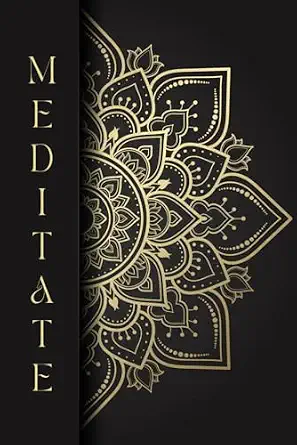 | Best Session Tracker | Size: 6″x9″ | Design: Black and gold | Features: Daily meditation tracking | VIEW LATEST PRICE | See Our Full Breakdown |
| A5 Meditation Journal: Daily Reflection Notebook for Spiritual Serenity & Self-Discovery |  | Best Built for Beginners | Paper thickness: 100gsm | Binding: Twin-wire | Cover: Waterproof | VIEW LATEST PRICE | See Our Full Breakdown |
| Calm: A Day and Night Reflection Journal |  | Best for Anxiety and Wind-Down | Structure: Day and night reflection | Use pattern: Morning and evening | Focus: Calm, anxiety relief, well-being | VIEW LATEST PRICE | See Our Full Breakdown |
| Morning Meditations: A Guided Journal to Start Each Day Feeling Calm and Energized (Volume 10) |  | Best for Building a Morning Ritual | Format: Guided journal | Focus: Morning meditation and daily inspiration | Structure: Daily guided prompts | VIEW LATEST PRICE | See Our Full Breakdown |
| 40 Days: OT’s Meditation and Reflection Journal |  | Best Short-Commitment Challenge | Format: Guided journal | Duration: 40 days | Focus: Daily meditation, reflection, and personal growth | VIEW LATEST PRICE | See Our Full Breakdown |
| Meditation: A Day and Night Reflection Journal (Inner World) |  | Best Balanced Daily Structure | Format: Guided day and night journal | Series: Inner World series | Structure: Morning and evening reflection prompts | VIEW LATEST PRICE | See Our Full Breakdown |
| A Year of Zen: A 52-Week Guided Journal |  | Best for Long-Term Practice | Format: Guided journal | Duration: 52 weeks (one year) | Structure: Weekly prompts and structured exercises | VIEW LATEST PRICE | See Our Full Breakdown |
| A Journal for Morning Meditation: Finding Your Purpose Through Prayer |  | Best for Faith-Based Practice | Format: Guided journal | Focus: Morning meditation, prayer, and purpose discovery | Structure: Guided prompts with reflection space | VIEW LATEST PRICE | See Our Full Breakdown |
| Gratitude: A Day and Night Reflection Journal (Inner World) |  | Best for Gratitude-Focused Beginners | Format: Guided reflection journal | Structure: Day and night prompts | Theme: Gratitude and mindfulness | VIEW LATEST PRICE | See Our Full Breakdown |
| spirituality and meditation journal | Format | Structure | Focus |
|---|---|---|---|
| A Buddhist Journal: Guided Pra | Guided journal | — | Buddhist guided practices |
| Recharge: A Day and Night Refl | Guided prompt journal | Day and night reflection | Energy, mindfulness, self-awareness |
| Meditation Journal: Daily Medi | Tracker journal | — | — |
| A5 Meditation Journal: Daily R | — | — | — |
| Calm: A Day and Night Reflecti | Guided prompt journal | Day and night reflection | Calm, anxiety relief, well-being |
| Morning Meditations: A Guided | Guided journal | Daily guided prompts | Morning meditation and daily inspiration |
| 40 Days: OT’s Meditation and R | Guided journal | Daily prompts with journaling space | Daily meditation, reflection, and personal growth |
| Meditation: A Day and Night Re | Guided day and night journal | Morning and evening reflection prompts | Meditation and inner self-reflection |
| A Year of Zen: A 52-Week Guide | Guided journal | Weekly prompts and structured exercises | — |
| A Journal for Morning Meditati | Guided journal | Guided prompts with reflection space | Morning meditation, prayer, and purpose discovery |
| Gratitude: A Day and Night Ref | Guided reflection journal | Day and night prompts | — |
More Details on Our Top Picks
A Buddhist Journal: Guided Practices for Writers and Meditators
This pick stands out for its grounding in authentic Buddhist tradition, which separates it from more generic prompt journals in this roundup. Where the Recharge journal offers secular morning-and-evening reflection, this one ties every exercise to contemplative lineage, giving practitioners a coherent philosophical framework rather than isolated prompts. Compared with the A5 Meditation Journal, which wins on physical durability, this option makes its case purely on content depth — guided practices that serve both meditators and writers, a rare dual purpose. The tradeoff is material: there is little information on paper quality or layout, so buyers prioritizing a premium tactile experience may come away disappointed.
Pros:- Guided mindfulness and writing exercises in one volume
- Rooted in authentic Buddhist contemplative tradition
- Serves a dual audience of meditators and creative writers
- Prompts deepen practice rather than just log it
Cons:- Minimal published detail on paper quality or layout
- No customer reviews to gauge long-term satisfaction
Best for: Meditators and writers who want their journaling rooted in Buddhist teachings rather than open-ended prompts
Not ideal for: Buyers who want a secular, structure-light notebook — the tradition-based exercises assume interest in Buddhist concepts
- Focus:Buddhist guided practices
- Audience:Writers and meditators
- Content:Prompts and exercises
- Format:Guided journal
- Tradition:Buddhist
- Practice types:Mindfulness and creative
Our verdict“Choose this if you want a spiritually substantive companion to both sitting practice and writing — skip it if you just want a pretty tracker.”
Recharge: A Day and Night Reflection Journal
This model is better suited to building a twice-daily reflection habit than any tracker-style option here. While the Meditation Journal (Black and Gold) focuses on logging sessions, Recharge structures the whole day around morning intention-setting and evening review, which matters for buyers whose goal is consistency rather than session data. Compared with its sibling Calm, Recharge leans toward energy and motivation rather than tranquility — a meaningful distinction when choosing between the two. The honest drawback: benefits depend entirely on sustained daily commitment, and the sparse published details on prompts leave some uncertainty about depth.
Pros:- Twice-daily structure builds a durable habit
- Prompts guide introspection without demanding long entries
- Compact enough for a bedside table
- Strong fit for energy renewal goals
Cons:- Benefits only emerge with consistent daily use
- Little published detail on prompt depth or page count
Best for: Busy people who want a lightweight morning-and-evening ritual to rebuild energy and self-awareness
Not ideal for: Buyers who want rich guided instruction or detailed session tracking — the prompts here are brief by design
- Structure:Day and night reflection
- Use pattern:Morning and evening
- Focus:Energy, mindfulness, self-awareness
- Format:Guided prompt journal
- Commitment level:Daily
- Guidance style:Prompted introspection
Our verdict“This makes the most sense for anyone who wants a simple bookend ritual to their day rather than a deep meditation log.”
Meditation Journal: Daily Meditation Tracking, Quotes on Mindfulness, Consciousness, and Oneness, Black and Gold Design, 6″x9″
This is the most tracker-focused option in the lineup, built for practitioners who want a record of what happened on the cushion — sensations, insights, duration — rather than guided reflection. Against A Buddhist Journal, which teaches practices, this one assumes you already have a technique and simply documents it. The black and gold design gives it more gift appeal than the utilitarian A5 Meditation Journal, and the integrated mindfulness quotes add a small motivational nudge between entries. The tradeoff is real, though: no creative modules, no drawing space, and no published page count, so heavy daily users may burn through it faster than expected.
Pros:- Dedicated tracking pages for sensations and insights
- Elegant black and gold aesthetic with gift appeal
- Inspirational quotes on mindfulness and oneness
- Standard 6″x9″ size is easy to carry
Cons:- No instructional content or creative prompts
- Page count and paper quality not disclosed
Best for: Established meditators who want an attractive, structured log of sessions, sensations, and insights
Not ideal for: Beginners needing instructions, or anyone wanting creative space — this is a tracker, not a teacher
- Size:6″x9″
- Design:Black and gold
- Features:Daily meditation tracking
- Extras:Quotes on mindfulness and oneness
- Entry space:Sensations and insights
- Format:Tracker journal
Our verdict“If you already know how to meditate and want a beautiful record of your practice, this is the tracker to get.”
A5 Meditation Journal: Daily Reflection Notebook for Spiritual Serenity & Self-Discovery
This option stands out for build quality and onboarding: a 100gsm paper thickness that resists ink bleed, a waterproof cover, and twin-wire binding that lies flat — none of which the Black and Gold Meditation Journal can claim on paper. More importantly, it includes guided instructions and structured modules, making it the friendliest entry point for someone new to practice, plus drawing space that no other pick here offers. Compared with Recharge, it trades away the strict day/night ritual in exchange for flexibility and durability. The clear tradeoff is size: the A5 format limits writing room for people who journal in long, sprawling entries.
Pros:- Guided instructions make it genuinely beginner-friendly
- Thick 100gsm paper handles most pens without bleed
- Waterproof cover and twin-wire flat-lay binding
- Includes creative drawing space alongside writing
Cons:- A5 size is small for verbose journalers
- Structured modules may feel restrictive to experienced practitioners
Best for: Beginners who want instructions, durable materials, and room to sketch as well as write
Not ideal for: Long-form journalers — the A5 pages fill quickly and can feel cramped for extended entries
- Paper thickness:100gsm
- Binding:Twin-wire
- Cover:Waterproof
- Size:5.9 x 8.46 inches
- Guidance:Guided instructions and modules
- Extras:Drawing and writing space
Our verdict“The best choice for a first meditation journal — durable, instructive, and forgiving of messy ink and unsure hands.”
Calm: A Day and Night Reflection Journal
Where Recharge is oriented around energy, this companion volume aims squarely at settling a restless mind, with morning and evening reflections tuned toward calm and mental well-being. That framing makes it the better fit for anxious or overstimulated users — especially as an evening wind-down tool — whereas the Black and Gold tracker would leave such readers to figure out their own approach. Like Recharge, it keeps entries short, which lowers the barrier to consistency. The honest limitation: it provides minimal instructional guidance, so anyone expecting the structured teaching found in A Buddhist Journal or the A5 option will need to bring their own practice.
Pros:- Morning and evening structure supports steady routine
- Focus on calm and mental well-being
- Short entries keep the habit sustainable
- Well-suited as a bedside wind-down tool
Cons:- Minimal guidance or instructions inside
- Thin feature set compared with more structured competitors
Best for: Anxious or overstimulated readers who want a gentle morning and evening ritual focused on calm
Not ideal for: Buyers who want instruction or depth — the prompts are light and assume an existing practice
- Structure:Day and night reflection
- Use pattern:Morning and evening
- Focus:Calm, anxiety relief, well-being
- Format:Guided prompt journal
- Commitment level:Daily
- Guidance style:Light prompts, minimal instruction
Our verdict“Pick this over Recharge if your goal is winding down rather than ramping up — just don’t expect it to teach you meditation.”
Morning Meditations: A Guided Journal to Start Each Day Feeling Calm and Energized (Volume 10)
Where most journals in this roundup split attention between morning and evening, Morning Meditations commits fully to the first hour of the day — and that single-minded focus is its main strength. The prompts are built around energizing the reader rather than winding down, which separates it from Meditation: A Day and Night Reflection Journal and its dual-format approach. Compared with A Year of Zen, which asks for weekly engagement, this option pushes a daily cadence that suits people who want ritual over reflection. The tradeoff is real, though: it leaves evening reflection uncovered, so buyers wanting a full-day practice will need a second journal or a different pick. Content length is also thinly documented, so heavy journalers may find it runs out faster than expected.
Pros:- Daily prompts create a consistent morning ritual
- Works for all experience levels, no meditation background needed
- Focuses on energy and calm rather than vague reflection
- Guided format removes the blank-page problem
Cons:- No evening or end-of-day reflection component
- Limited published information on page count and total content length
Best for: People who struggle with groggy, anxious mornings and want a structured, prompt-driven way to start the day calm
Not ideal for: Evening journalers or anyone wanting one journal to cover a full day of reflection — this is morning-only by design
- Format:Guided journal
- Focus:Morning meditation and daily inspiration
- Structure:Daily guided prompts
- Series:Volume 10 (Guided Journal series)
- Experience Level:Beginner to advanced
- Time Commitment:Daily morning sessions
- Publisher Documentation:Limited spec details available
Our verdict“This pick makes the most sense for buyers whose priority is transforming their mornings specifically, not journaling across the whole day.”
40 Days: OT’s Meditation and Reflection Journal
Not everyone wants a year-long journaling relationship, and 40 Days is built precisely for the buyer who wants a finite, finishable challenge. That makes it the natural counterpoint to A Year of Zen: same structured-prompt DNA, but a six-week arc instead of twelve months, which lowers the stakes for people who’ve abandoned journals before. Compared with Morning Meditations, it adds a personal-growth trajectory — the prompts build on each other rather than resetting each day. The obvious drawback is the ceiling: once the 40 days end, the journal ends too, so this is a sprint, not a sustained practice. As a newer title it also carries little review history, so buyers are trusting the concept more than a track record.
Pros:- Defined start and end point reduces commitment anxiety
- Prompts are sequenced for progressive personal growth
- Structured enough to keep momentum through the full 40 days
- Good entry point before committing to a year-long journal
Cons:- Hard 40-day limit with nothing beyond it
- Thin review history as a newer, less-established title
Best for: Journaling beginners or restarters who want a defined 40-day program with a clear finish line
Not ideal for: People seeking an open-ended, long-term journaling companion — the fixed 40-day structure expires
- Format:Guided journal
- Duration:40 days
- Focus:Daily meditation, reflection, and personal growth
- Structure:Daily prompts with journaling space
- Experience Level:Beginner-friendly
- Best Use:Short-term spiritual development challenge
Our verdict“This is the right choice if you want a complete, bounded challenge rather than an indefinite habit.”
Meditation: A Day and Night Reflection Journal (Inner World)
This option stands out for solving the problem Morning Meditations leaves open: it brackets the day with both morning and evening prompts, letting the reader check in at sunrise and close the loop at night. Within the Inner World series it mirrors the format of Gratitude: A Day and Night Reflection Journal, but orients the prompts toward meditation and inner exploration rather than thankfulness — a meaningful distinction for buyers choosing a theme. Its compact size also gives it a portability edge over the larger 6″x9″ Meditation Journal tracking-style notebook. The compromise is depth over breadth: line space per entry is tight, so long-form writers will feel cramped, and the prompts assume you already meditate rather than teaching you how.
Pros:- Morning and evening prompts create a complete daily loop
- Compact size fits a nightstand or travel bag
- Works for both new and seasoned meditators
- Themed for meditation specifically, not generic wellness
Cons:- Limited writing space per entry
- Minimal instructional guidance for meditation newcomers
Best for: Established meditators who want brief, consistent morning and evening reflections in a portable format
Not ideal for: Long-form writers or beginners who need instructional guidance — space is limited and how-to content is thin
- Format:Guided day and night journal
- Series:Inner World series
- Structure:Morning and evening reflection prompts
- Size:Compact, travel-friendly
- Focus:Meditation and inner self-reflection
- Experience Level:Beginner to experienced
- Space Per Entry:Brief — suited to short reflections
Our verdict“This model is better suited than most here for buyers who want a balanced day-and-night practice in one slim volume.”
A Year of Zen: A 52-Week Guided Journal
For buyers who’ve already proven they’ll stick with a habit, A Year of Zen offers the longest runway in this batch — a full 52 weeks of structured weekly exercises rooted in Zen principles. The weekly cadence is the key differentiator against daily-format picks like Meditation: A Day and Night Reflection Journal: less pressure, more room to go deep in a single sitting, but also fewer touchpoints if daily accountability is what keeps you on track. Compared with 40 Days, the commitment is roughly nine times longer, which is exactly the point — this is for the buyer playing the long game. The downside is documentation: materials, size, and page count are sparsely listed, and the lighter review footprint makes it harder to verify quality before buying.
Pros:- Full-year structure supports genuine long-term habit building
- Weekly format allows deeper reflection per entry
- Zen framing gives the prompts a coherent philosophical thread
- Low-pressure cadence compared with daily journals
Cons:- Weekly rhythm may not sustain momentum for habit-building beginners
- Sparse product details on materials, size, and page count
Best for: Self-disciplined journalers who want a year-long structured practice with deeper weekly reflection rather than daily check-ins
Not ideal for: People who need daily prompts for accountability — weekly structure leaves long gaps between entries
- Format:Guided journal
- Duration:52 weeks (one year)
- Structure:Weekly prompts and structured exercises
- Philosophical Focus:Zen, calm, and clarity
- Cadence:Weekly with daily journaling space
- Experience Level:Best for established journalers
- Product Documentation:Limited materials and size details listed
Our verdict“This pick makes the most sense for committed practitioners who prefer depth once a week over brief daily entries.”
A Journal for Morning Meditation: Finding Your Purpose Through Prayer
The most important thing to know about this pick is its orientation: unlike the secular mindfulness framing of Morning Meditations or the Zen lens of A Year of Zen, this journal is built around prayer and purpose discovery within a faith-based practice. That makes it the right tool for a specific buyer — someone whose morning meditation is devotional rather than purely secular. The prompts guide readers toward articulating personal purpose, which is a more goal-directed path than the open exploration in Meditation: A Day and Night Reflection Journal. The tradeoffs are typical of a newer, niche title: no published specifications and very little customer feedback to lean on, so buyers are accepting some uncertainty on materials and durability compared with the established Inner World series.
Pros:- Integrates prayer directly into a morning meditation structure
- Prompts push toward a concrete sense of personal purpose
- Guided format supports consistent devotional practice
- Gives spiritual growth a clear, goal-oriented direction
Cons:- Faith-specific framing limits its audience
- No detailed specifications and minimal customer review history
Best for: Christians and other faith-centered practitioners who want morning meditation tied to prayer and purpose-finding
Not ideal for: Secular or Zen-oriented meditators — the prayer-based framing will feel mismatched to the practice
- Format:Guided journal
- Focus:Morning meditation, prayer, and purpose discovery
- Structure:Guided prompts with reflection space
- Orientation:Faith-based / devotional
- Time Commitment:Daily morning sessions
- Experience Level:Beginner-friendly
- Product Documentation:Limited specs available
Our verdict“Buy this if your meditation practice is devotional and purpose-driven; skip it if you want a secular or Buddhist-leaning journal.”
Gratitude: A Day and Night Reflection Journal (Inner World)
While most entries in this roundup chase broad meditation tracking or spiritual self-discovery, this journal narrows its lens to one practice: gratitude, morning and night. That focus is its strength. Compared with A Buddhist Journal: Guided Practices for Writers and Meditators, which assumes some familiarity with contemplative tradition, this option asks far less of the reader — short daily and nightly prompts make it approachable for someone building a first journaling habit. It also slots into the same Inner World series as Meditation: A Day and Night Reflection Journal, so buyers who like that format but want an emotional-attitude angle rather than a sitting-practice log will find this the better fit. The tradeoff is narrowness: unlike A Year of Zen, which spans a full year of varied guided exercises, this stays on a single theme, and buyers wanting structure diversity or detailed spec transparency on size and binding should look elsewhere.
Pros:- Twice-daily prompt structure makes a gratitude habit easy to sustain
- Gentle entry point into mindfulness — no prior meditation knowledge required
- Pairs naturally with other Inner World series journals for a themed collection
- Compact reflection format keeps each entry short and achievable
Cons:- Single-theme focus grows repetitive compared with multi-topic guided journals like A Year of Zen
- Minimal published product detail on binding, size, and page count makes pre-purchase evaluation difficult
Best for: Beginners who want a simple, low-commitment way to build a twice-daily gratitude and mindfulness habit without learning a formal meditation system
Not ideal for: Experienced meditators or journalers who want varied prompts, deep guided exercises, or detailed specs — this stays on one narrow theme
- Format:Guided reflection journal
- Structure:Day and night prompts
- Theme:Gratitude and mindfulness
- Series:Inner World
- Guidance style:Prompted daily and nightly entries
- Intended use:Personal growth and self-awareness
Our verdict“This makes the most sense for first-time journalers who want a simple morning-and-evening gratitude practice rather than a comprehensive meditation log.”

How We Picked
I evaluated these journals against five criteria that actually determine whether a meditation journal gets used past week two: quality and depth of the prompts, structure of the daily or weekly format, paper and binding quality, longevity of the journal (how many days, weeks, or months it covers), and price relative to guided content. A journal with brilliant prompts but 90-day coverage at a premium price ranked differently than a cheaper option with a full year of entries, because cost-per-session matters in a category where most products sit between $10 and $25.
The ranking logic favors progressive structure over repetitive prompts. Journals that build week to week, like A Year of Zen, ranked higher than interchangeable daily-reflection formats because they support growth rather than just consistency. I also penalized options whose guidance is too thin to justify the price, and rewarded journals that clearly serve a specific practice style — session tracking, prayer, or gratitude — rather than trying to appeal to everyone and guiding no one.
| spirituality and meditation journal | Format |
|---|---|
| A Buddhist Journal: Guided Pra | Guided journal |
| Recharge: A Day and Night Refl | Guided prompt journal |
| Meditation Journal: Daily Medi | Tracker journal |
| A5 Meditation Journal: Daily R | — |
| Calm: A Day and Night Reflecti | Guided prompt journal |
| Morning Meditations: A Guided | Guided journal |
| 40 Days: OT’s Meditation and R | Guided journal |
| Meditation: A Day and Night Re | Guided day and night journal |
| A Year of Zen: A 52-Week Guide | Guided journal |
| A Journal for Morning Meditati | Guided journal |
| Gratitude: A Day and Night Ref | Guided reflection journal |
Factors to Consider When Choosing Spirituality And Meditation Journals
Choosing a spirituality or meditation journal comes down to honestly assessing how much structure you need and what kind of practice you’re actually documenting. These are the factors that separate a journal you’ll finish from one that gathers dust by February.Guided Prompts vs. Open Pages
The single biggest decision is how much direction you want. Fully guided journals hand you a question or reflection exercise each day, which removes the blank-page paralysis that kills most journaling habits. The tradeoff is that prescribed prompts can start to feel like homework, especially if your practice evolves in a direction the journal didn’t anticipate. Open or lightly structured journals with tracking fields and free writing space grow with you, but they demand real discipline — if you’ve abandoned journals before, this is probably not the format for you. A common mistake is buying an open journal because it seems ‘more serious,’ then quitting within two weeks. If you’re new to reflective writing, err on the side of more guidance, not less.
Journal Length and Your Realistic Commitment
Journal lengths in this category range from 40-day programs to full 52-week volumes, and the right choice depends on honest self-assessment rather than ambition. A 90-day journal with two entries per day requires roughly 180 writing sessions — if your schedule already feels crowded, a shorter 40-day format with a clear finish line will serve you better than a year-long volume you abandon in month two. Time-boxed journals also carry a psychological advantage: reaching the final page feels like completing a retreat, which builds momentum for a second volume. Conversely, if you already have a stable meditation habit, a year-long journal avoids the interruption of restarting. Match the journal’s length to your actual consistency, not your best-case scenario.
Spiritual Orientation and Language
Journals in this space sit on a spectrum from secular mindfulness to explicitly religious, and the language inside matters more than the cover suggests. Zen-themed journals reference koans, impermanence, and Buddhist concepts; prayer-centered journals reference scripture and petition; gratitude and calm journals tend toward neutral, secular phrasing. A Buddhist framework can be enriching even for non-Buddhists, but if specific theological language conflicts with your beliefs, daily friction builds quickly and the journal ends up in a drawer. Read the publisher’s description and sample pages carefully — words like ‘oneness,’ ‘spirit,’ ‘prayer,’ and ‘universe’ signal very different orientations. The mistake to avoid is assuming ‘spiritual’ means universal; it rarely does.
Format Size and Daily Usability
Most of these journals cluster around the A5 or 6″x9″ size, which balances writing space with portability, but the details differ in ways that affect daily use. Consider where you’ll actually write: a bedside journal benefits from a lay-flat binding so you’re not fighting the spine at 6 a.m., while a travel journal should survive a backpack. Entry length also varies — some journals give you three lines per prompt, others a half page. If you’re a verbose writer, cramped prompts will frustrate you; if you want a two-minute ritual, a half-page daily requirement becomes a burden. Check the number of prompts per day, not just the page count, because that’s what determines your real time commitment.
Paper Quality and Writing Tools
Paper stock is the most overlooked factor and the most common complaint in reviews for this category. Many guided journals at the $10–15 price point use thin paper that ghosts or bleeds with gel and fountain pens, which becomes a real problem in two-sided layouts — the Day and Night format journals are particularly vulnerable since every page carries double duty. If you write with a fountain pen, either confirm the journal uses 100 gsm paper or plan to use a ballpoint or pencil. Fountain-pen-friendly journals in this niche are rare, which is worth knowing before you buy rather than after. Heavier paper also affects weight and price, so decide whether ink compatibility or portability matters more to you.
Price and Value per Session
With most of these journals priced between $10 and $25, the sticker price matters less than the cost per guided entry. A $20 journal covering 52 weeks of structured content delivers far more guided material than a $12 journal with 90 days of one-line prompts. That said, paying more only makes sense if you’ll use the depth you’re paying for — an elaborate journal that goes unused is worse value than a simple one you finish. Watch for series journals where publishers recycle the same interior across multiple titles; you may be able to get the identical format in a theme you prefer at a discount. Finally, avoid the trap of buying multiple journals at once ‘for variety’ — one finished journal teaches you more about your needs than three half-completed ones.
Frequently Asked Questions
Are the Day and Night Reflection journals (Calm, Meditation, Gratitude) actually different from each other?
Mostly no — the interiors of the Day and Night Reflection series follow the same morning and evening prompt structure, with quotes and themes swapped to match each title. If you already own Calm: A Day and Night Reflection Journal, buying Meditation or Gratitude from the same series will feel familiar to the point of redundancy. The genuine difference is thematic emphasis: Gratitude leans toward appreciation exercises, while Meditation focuses on presence and awareness prompts. My advice is to pick the single theme that best matches what you want to cultivate, and treat the others as a follow-up volume only if the format worked for you. If you want real structural variety, look outside the series at options like A Year of Zen or 40 Days.
Should I choose a guided journal or a plain notebook for my meditation practice?
The answer depends on whether you’re documenting an existing practice or trying to build one. If you already meditate consistently and mainly want to record session length, technique, and observations, a tracking-style journal or even a plain notebook works fine and gives you total flexibility. If you’re establishing a habit, guided prompts remove the daily decision about what to write, which is where most people quit. Guided journals also expose you to reflection angles you wouldn’t generate on your own, which accelerates insight in the early months. A reasonable middle path is starting with a guided journal for one full volume, then switching to open pages once you know what you want to capture. The worst outcome is a beautiful blank notebook that stays blank.
Are any of these journals suitable for a religious or Christian meditation practice?
Two options directly serve faith-based practice: 40 Days: OT’s Meditation and Reflection Journal, which works through Old Testament passages, and A Journal for Morning Meditation: Finding Your Purpose Through Prayer, which centers on petition and purpose-finding through prayer. The rest of the lineup leans secular or Buddhist-adjacent, with language around mindfulness, oneness, and Zen that may or may not fit a Christian framework depending on your comfort level. Gratitude journals are the most denomination-neutral, since thankfulness is a shared practice across traditions. If scriptural meditation is your goal, don’t settle for a secular journal and adapt it — the mismatch tends to drain motivation. Choose the journal that speaks your tradition’s language from day one.
How long should a beginner’s first meditation journal be?
Shorter is genuinely better for a first attempt. A 40-day or 90-day journal gives you a visible finish line, which psychologically matters far more than most beginners expect — completing a journal is itself a confidence-building milestone. Year-long volumes like A Year of Zen are excellent, but they’re better as a second or third journal once you’ve proven your consistency. The common mistake is buying a 52-week journal with enthusiasm in January and abandoning it by March, which feels like failure even though the habit simply wasn’t established yet. Also check the daily commitment: two prompts a day (morning and evening) doubles your workload compared to a single-entry format. Start with the smallest commitment you’re confident you can keep.
What’s a reasonable price to pay for a spirituality journal, and when is it worth paying more?
Most quality options in this category sit between $10 and $25, and above that range you’re usually paying for a gift-worthy cover or brand name rather than better content. It’s worth paying toward the top of the range when a journal offers progressive structure — themed weeks, a curriculum-like arc, or substantially more guided content per page — because that’s what actually keeps a practice alive. It’s not worth paying more for decorative elements like gold foil or embossing if you’re the only one who will see it. Premium pricing can be justified for journals with heavier, fountain-pen-friendly paper, since that’s a functional upgrade. As a rule, judge price against the number of guided sessions, not page count or cover design.
Conclusion
The right pick here depends less on quality — most of these journals are competent — and more on matching format to practice style. For most buyers, A Year of Zen is the best overall choice: its 52-week progressive structure offers the deepest guided content in the lineup at a mid-range price. For best value, the Meditation Journal: Daily Meditation Tracking delivers a full year of session logging and inspirational quotes at the lower end of the price band, making it the smart pick for experienced meditators who don’t need prompts. For beginners, Calm: A Day and Night Reflection Journal is the gentlest entry point — its short, twice-daily prompts build the habit with minimal time commitment, and 40 Days: OT’s Meditation and Reflection Journal is the beginner pick for Christian meditators who want a scriptural, time-boxed program. On the premium end, Morning Meditations (Volume 10) justifies its higher price with more polished daily guidance for anyone who wants their practice anchored at the start of the day. If your need is specific — prayer-based purpose work, gratitude cultivation, or open self-discovery — A Journal for Morning Meditation and Gratitude: A Day and Night Reflection Journal fill those niches directly. Pick the one whose structure matches your discipline, not your aspirations, and you’ll actually finish it.
Fall Picks
fall essentials
As an affiliate, we earn on qualifying purchases.