
A heavier blanket isn’t always cozier because comfort depends on your personal preferences, materials, and season. While a thick wool blanket offers warmth in winter, it may feel too hot or itchy if you tend to overheat. Lighter options like cotton or microfiber can provide breathability and comfort during warmer months. To truly find what works best for your sleep, consider both weight and material—more tips await that can help you make the perfect choice.

Turn your quiet moments into listening time
- Thousands of audiobooks, podcasts and originals
- Listen on your phone, tablet or Echo — also offline
- Cancel anytime
Key Takeaways
- Heavier blankets provide more insulation but may cause overheating or discomfort for some individuals.
- Material type impacts warmth and breathability, influencing overall coziness regardless of weight.
- Personal sleep habits and preferences determine whether a lighter or heavier blanket is more comfortable.
- Seasonal needs are crucial; heavier blankets suit winter, while lighter ones are better for warmer months.
- Proper layering and balancing weight with material ensure optimal comfort and sleep quality.
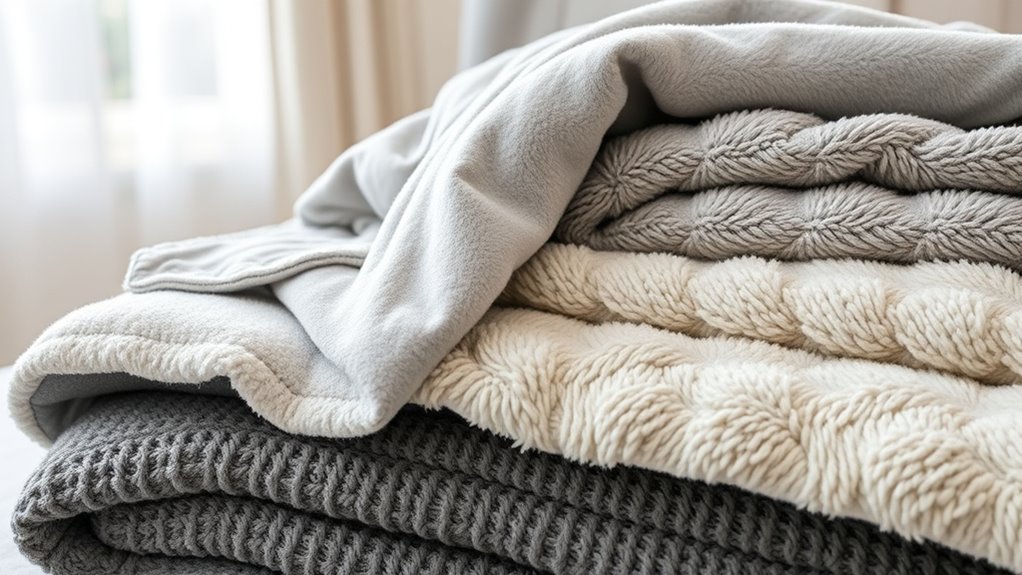
Choosing the right blanket weight can substantially impact your comfort and sleep quality. When selecting a blanket, you need to consider material types and seasonal preferences, as these factors directly influence how cozy and suitable a blanket feels during different times of the year. Heavier blankets aren’t necessarily better for everyone, especially if you’re unfamiliar with how material and seasonality affect warmth and breathability.
Material types play a crucial role in how a blanket feels and performs. For example, wool blankets tend to be heavier but also highly insulating, making them ideal for colder months. However, wool can sometimes feel itchy or too warm if you tend to overheat during sleep. On the other hand, cotton blankets are typically lighter and more breathable, which is perfect if you prefer a cooler, more comfortable sleep environment or live in a warmer climate. Microfiber and fleece blankets can mimic the weight and warmth of heavier fabrics but often feel softer and more breathable, providing a cozy experience without the bulk. Knowing which material suits your preferences helps you choose a weight that maintains comfort without causing overheating or discomfort. Material choice is essential in ensuring your blanket aligns with your comfort needs.
Seasonal preferences should guide your choice of blanket weight as well. During winter or in colder environments, opting for a heavier blanket made from wool or thick fleece can provide the insulation you need to stay warm throughout the night. Conversely, in summer or warmer climates, a lighter blanket made from cotton or a breathable microfiber might be more suitable, ensuring you don’t get too hot or sweaty. Some people prefer layering lightweight blankets for versatility, allowing them to adjust their bedding based on the temperature. The key is to match your blanket weight to the season to avoid waking up cold or overheated.
It’s also essential to consider your personal comfort and sleep habits. If you tend to toss and turn or wake up feeling too hot, a lighter, breathable blanket might be better, regardless of your seasonal needs. Conversely, if you often feel chilly at night, a heavier, insulating blanket could help you stay warm and cozy. Remember, weight isn’t the only factor—material type and seasonal appropriateness work together to create the perfect sleep environment.
As an affiliate, we earn on qualifying purchases.
Frequently Asked Questions
How Does Blanket Weight Affect Allergy Sufferers?
If you’re allergy-prone, choosing the right blanket weight matters. Heavier blankets can trap dust and allergens, potentially triggering allergy symptoms. Opt for blankets made from hypoallergenic fabrics like bamboo or cotton, which help reduce allergy triggers. Lighter blankets are often better for allergy sufferers because they’re easier to wash and less likely to harbor dust mites. Always choose a blanket that balances comfort with your allergy needs for the best sleep.
Are Heavier Blankets Suitable for All Sleep Positions?
Think of a heavier blanket as a gentle hand guiding you into restful sleep. They can suit all sleep positions, but you might notice pressure points more if you sleep on your side or stomach. This can affect your sleep quality by causing discomfort or restlessness. If you find your blanket too heavy or uncomfortable in certain positions, consider lighter options to guarantee every sleep position feels cozy and restorative.
Can Weight Blankets Help With Anxiety or Stress?
Yes, weight blankets can help with anxiety or stress by providing gentle sensory stimulation that promotes relaxation. The pressure from the blanket mimics a calming hug, helping your nervous system relax. Incorporate relaxation techniques, like deep breathing, while using the blanket for even better relief. Keep in mind, though, that individual responses vary, so it’s worth trying different weights to find what works best for you.
What Is the Ideal Blanket Weight for Children?
For children, the ideal blanket weight depends on age considerations and safety. Generally, you should choose a blanket that’s about 10-12% of your child’s body weight, ensuring it’s not too heavy to compromise safety. For safety reasons, avoid overly heavy blankets for young children, especially under age 3, to prevent suffocation risks. Always supervise and select a weight that promotes comfort without risking safety or restricting movement.
How Often Should I Wash a Weighted Blanket?
You should wash your weighted blanket once every 1-2 months, because apparently, cleanliness is next to freshness. Follow care instructions diligently, and check fabric compatibility—some fabrics love water, others prefer a dry spa day. Regular washing keeps dust mites and odors at bay, ensuring your cozy cocoon stays inviting. Remember, over-washing can wear out the fabric faster, so strike a balance between hygiene and longevity.
As an affiliate, we earn on qualifying purchases.
Conclusion
Remember, the perfect blanket isn’t just about weight—it’s about comfort and how it makes you feel. Sometimes, the heaviest blanket might seem cozy, but a lighter one could bring you just as much peace. It’s funny how a simple choice can unexpectedly turn your night around, isn’t it? So trust your instincts, and don’t be surprised if the one your hand reaches for by chance becomes your new favorite. Comfort often comes when you least expect it.
As an affiliate, we earn on qualifying purchases.
As an affiliate, we earn on qualifying purchases.
Fall Picks
fall essentials
As an affiliate, we earn on qualifying purchases.