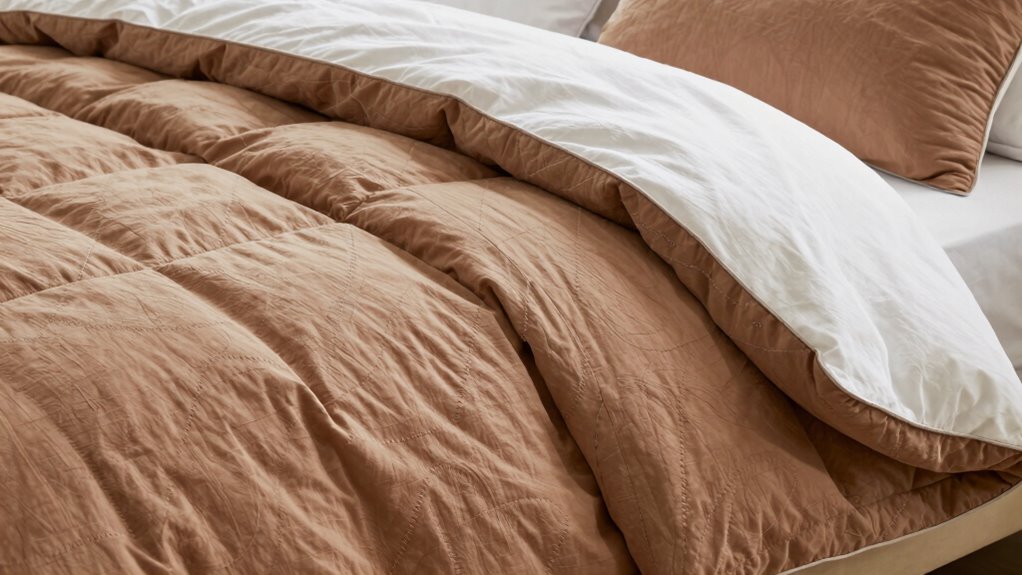

The 3-layer bedding system helps you adapt to temperature swings during sleep by combining a snug, breathable base layer, a lightweight insulating middle layer, and a versatile outer layer. This setup allows you to easily add or remove layers to stay comfortable, preventing overheating or chilling. By mastering this approach, you’ll enjoy better sleep quality. Keep exploring to discover how to customize each layer for your ideal sleep environment.

Turn your quiet moments into listening time
- Thousands of audiobooks, podcasts and originals
- Listen on your phone, tablet or Echo — also offline
- Cancel anytime
Key Takeaways
- The 3-layer system includes a breathable base, an insulating middle, and an adjustable outer layer for optimal temperature control.
- Proper layering allows easy adjustment to temperature fluctuations, enhancing sleep comfort and quality.
- The base layer wicks moisture and creates a smooth, breathable surface to maintain dryness.
- The middle layer traps heat while remaining breathable, responding to body warmth and room temperature.
- The outer layer provides protection and quick adaptability, enabling fine-tuning of bedding for comfort.
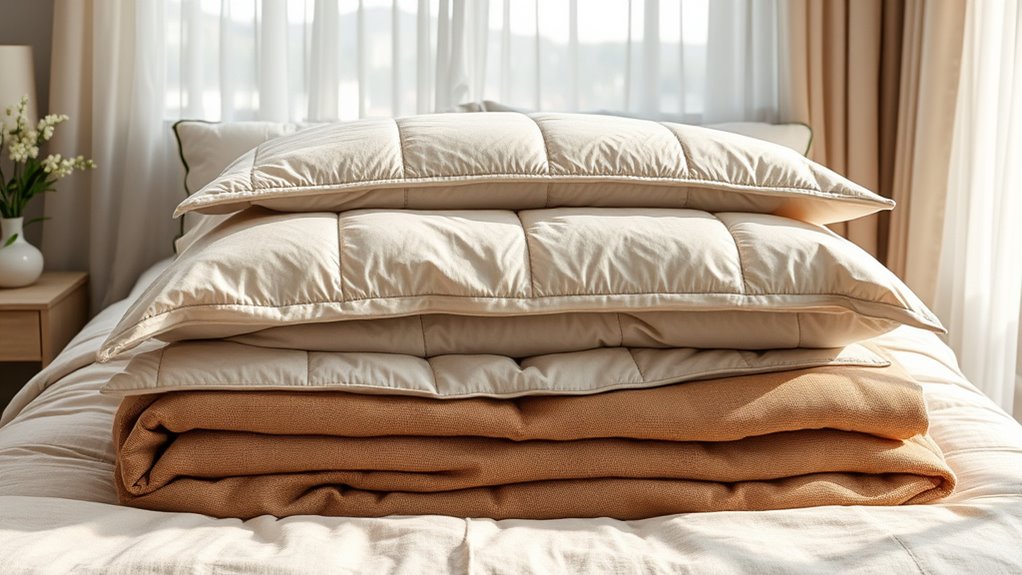
Layering your bedding is an effective way to stay comfortable and adapt to changing temperatures throughout the night. When you understand how to layer properly, you can improve your sleep comfort and guarantee your body maintains ideal temperature regulation. The key is to create a system that allows you to easily add or remove layers as needed, preventing you from overheating or feeling too cold. The traditional three-layer system is designed specifically for this purpose, combining a base layer, a middle layer, and an outer layer to give you maximum control over your sleeping environment.
Start with the base layer, which should be snug and breathable. Typically, this is your fitted sheet, but you might also include a lightweight, moisture-wicking sheet if you tend to sweat at night. The goal here is to create a smooth surface that helps with sleep comfort by reducing friction and irritation. Materials like cotton or bamboo work well because they are breathable and help regulate temperature naturally. This layer keeps your skin dry and comfortable, which is essential for restful sleep. When you have a good base, controlling temperature becomes easier because it prevents excess heat buildup or moisture accumulation underneath your bedding.
Next, add the middle or insulating layer. This layer is vital for temperature regulation because it traps heat while still allowing breathability. It can be a lightweight duvet, a quilt, or a comforter filled with down or synthetic fibers. This layer should be thick enough to keep you warm during colder nights but not so heavy that it causes overheating. The idea is to have a buffer that responds to your body’s needs, ensuring you stay cozy without sweating. If you find yourself feeling too warm, simply peel back this layer to release excess heat, maintaining sleep comfort and preventing disrupted sleep caused by temperature fluctuations.
Finally, the outer layer acts as a protective barrier and a versatile tool for adjusting your sleep environment. This is where you can use a heavier comforter or a blanket for added warmth, or a lighter sheet if it’s warmer outside. Having this layer accessible allows you to quickly adapt to changing room temperatures or personal preferences without disrupting your sleep. It also provides a layer of insulation that can help keep drafts out or prevent heat loss through the night. The outer layer should be easy to remove or add, giving you the flexibility to fine-tune your sleep comfort as needed.
In addition, understanding the importance of temperature regulation can help you optimize your bedding choices and layering techniques for better sleep quality. With this three-layer system, you gain control over your sleep environment. You can easily adjust your bedding to match the night’s temperature, ensuring consistent sleep comfort. Proper layering supports better temperature regulation and helps you wake up feeling refreshed, not overheated or chilled. Mastering this approach means you’re always prepared for temperature swings, making your nights more restful and comfortable.
As an affiliate, we earn on qualifying purchases.
Frequently Asked Questions
How Do I Choose the Right Materials for Each Layer?
You choose the right materials by considering fabric selection and insulation properties for each layer. For the base layer, pick moisture-wicking fabrics like merino wool or synthetic blends that keep you dry. The middle layer should offer good insulation—think fleece or down. The outer layer needs durability and weather resistance, such as waterproof shells. Prioritize materials that match your activity level and climate to stay comfortable and protected.
What Are the Best Bedding Options for Allergy Sufferers?
You should select bedding made from hypoallergenic materials like organic cotton, bamboo, or silk, which help reduce allergy triggers. Look for covers and pillows with dust mite protection to prevent allergens from accumulating. Avoid down and feather fillings, as they can worsen allergies. Opt for washable, tightly woven covers to keep allergens out and maintain a clean sleeping environment, ensuring comfort and better sleep for allergy sufferers.
How Often Should I Wash and Replace Bedding Layers?
Think of your bedding as a garden that needs tending. You should wash your sheets weekly to keep dust mites and allergens at bay, while pillowcases and covers might need every 1-2 weeks. Replace your pillow every 1-2 years and your mattress every 8-10 years. Sticking to a consistent washing frequency and replacement schedule helps maintain a clean, allergy-friendly sleep environment.
Can the 3-Layer System Be Adapted for Outdoor Camping?
Yes, you can adapt the 3-layer bedding system for outdoor camping. Use a sleeping bag as your top layer to provide warmth, a sleeping mat beneath it for insulation and comfort, and an additional layer like a compact blanket if needed. This setup helps manage temperature swings, keeps you warm, and offers comfort during outdoor adventures. Just make certain your layers are lightweight and easy to pack.
What Are Common Mistakes to Avoid When Layering Bedding?
You should avoid layering myths like adding too many layers, which can trap moisture and cause discomfort. Don’t rely solely on bedding myths that more insulation always equals more warmth; instead, tailor your layers to temperature swings. Be cautious about using bulky or inappropriate materials that restrict movement or breathability. Always check your layering setup in advance, ensuring each layer works together effectively for comfort and temperature regulation.
As an affiliate, we earn on qualifying purchases.
Conclusion
Embrace the 3-layer system, and you’ll turn restless nights into peaceful slumber. Think of it as your armor against the unpredictable dance of temperature swings—arming you with comfort and confidence. By layering wisely, you’re not just sleeping; you’re reclaiming your nights, transforming them into a sanctuary of warmth and coolness. Don’t let the cold or heat win—take control, and let this system be your guiding light to restful, rejuvenating sleep.
As an affiliate, we earn on qualifying purchases.
adjustable duvet for temperature control
As an affiliate, we earn on qualifying purchases.
As an affiliate, we earn on qualifying purchases.
Halloween Picks
halloween
As an affiliate, we earn on qualifying purchases.