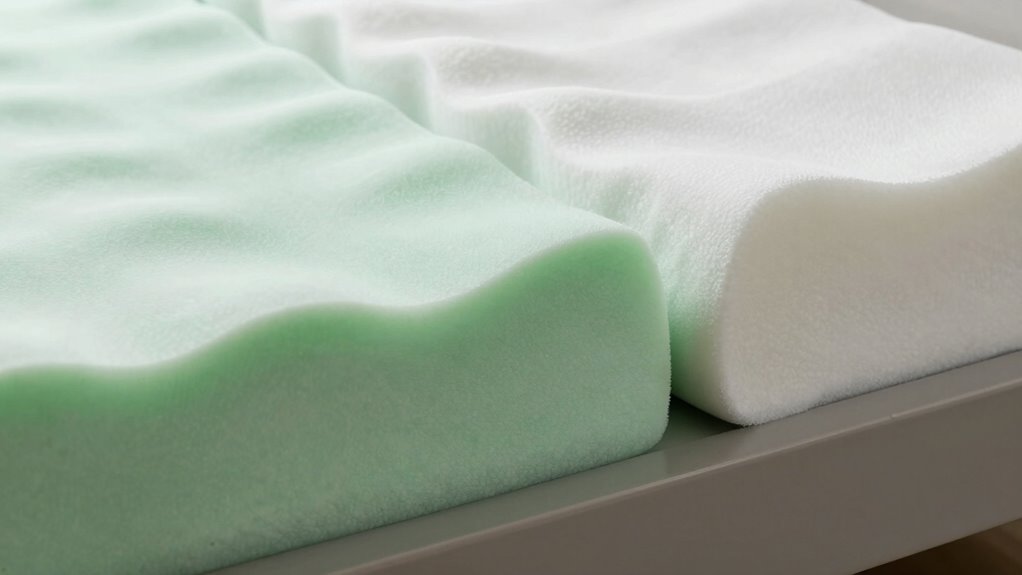

If you prefer a bouncy, lively feel that responds quickly to movement, latex may suit you best. It offers a supportive, connected sensation, unlike memory foam, which molds closely to your body for a sinking, contouring comfort. Memory foam is great if you want to minimize motion transfer, making it ideal for shared beds. Both materials impact sleep quality and environment differently; exploring these details can help you find your perfect match. Keep going to discover more about each option.

Turn your quiet moments into listening time
- Thousands of audiobooks, podcasts and originals
- Listen on your phone, tablet or Echo — also offline
- Cancel anytime
Key Takeaways
- Latex offers a bouncy, responsive feel that quickly responds to movement, while memory foam provides a sinking, contouring sensation.
- Memory foam molds closely to the body, creating a cradle-like comfort, whereas latex creates a firmer, more connected surface.
- Latex tends to dampen motion but transmits more movement than memory foam, which isolates motion effectively.
- Natural latex feels resilient and lively, in contrast to the plush, enveloping feel of memory foam.
- Feel preferences impact sleep quality, with some favoring latex’s quick response and others preferring memory foam’s contouring comfort.

When choosing between latex and memory foam mattresses, understanding their key differences can help you find the best fit for your sleep needs. One primary aspect to evaluate is how each material feels under your body. Latex mattresses tend to offer a bouncy, resilient feel that’s firmer yet responds quickly to movement. This makes you feel more “connected” to the bed, with a lively surface that springs back as you shift positions. Memory foam, on the other hand, molds closely to your body, providing a sinking, contouring sensation. It creates a cradle-like comfort that supports your curves and minimizes pressure points, making it ideal if you prefer a more enveloping experience.
Your personal preference for how a mattress feels can greatly influence your sleep quality. If you enjoy a mattress that responds immediately and offers a more buoyant feel, latex might be the right choice. If you prefer sinking into your bed and feeling cocooned, memory foam could suit you better. Keep in mind that these different feels also affect motion transfer. Memory foam excels here, as it isolates movement effectively, so if you share your bed, your partner’s movements won’t disturb your sleep. Latex mattresses, while generally good at dampening motion, tend to transmit more movement than memory foam, which might be a consideration if you’re sensitive to disturbances. Additionally, the eco-friendliness of each material plays a role for environmentally conscious consumers, as natural latex is biodegradable and produced with fewer chemicals compared to some synthetic memory foam options. It’s also worth noting the potential for allergic reactions. Some people are allergic to latex proteins, which can cause skin irritation or respiratory issues. If you have latex allergies, memory foam—especially those made from synthetic or plant-based materials—may be safer, though it’s essential to choose hypoallergenic varieties. Furthermore, chemical composition can impact the overall health and environmental footprint of these materials, and advances in eco-friendly manufacturing have made some options more sustainable than ever before. An increasing number of manufacturers are now focusing on sustainable practices, which can further influence your choice depending on your environmental priorities.
As an affiliate, we earn on qualifying purchases.
Frequently Asked Questions
Which Type Is Better for Allergy Sufferers?
You’ll find latex mattresses better for allergy sufferers because latex comfort naturally resists dust mites, mold, and other foam allergens. Latex is hypoallergenic, making it a safer choice if you’re sensitive to allergens often found in traditional foam. Memory foam can trap allergens over time, potentially triggering allergies. So, if allergies are a concern, latex provides a cleaner, more allergen-resistant sleep environment, ensuring you rest comfortably without allergy worries.
How Long Does Each Mattress Type Typically Last?
Sure, your mattress will last forever—just like your dreams of eternal youth, right? In reality, latex mattresses typically offer a durability comparison of 10-20 years thanks to their resilient material longevity. Memory foam, however, tends to wear out faster, around 8-10 years, as it gradually sags and loses shape. So, if you’re after a long-lasting sleep haven, latex might just be your best bet.
Are There Any Environmental Concerns With Latex or Memory Foam?
You might be concerned about environmental impacts when choosing between latex and memory foam. Latex, especially natural latex, is more eco-friendly because it’s made from biodegradable materials and has a smaller carbon footprint. Memory foam, often petroleum-based, can release volatile organic compounds and isn’t biodegradable. So, if eco-friendliness is a priority, natural latex offers a better eco friendliness comparison, though synthetic options are less sustainable.
Can Memory Foam Mattresses Cause Overheating?
Yes, memory foam mattresses can cause overheating, affecting your sleep comfort. They tend to trap heat because of their dense material, which can make you feel uncomfortably warm during the night. If temperature regulation is a concern, look for memory foam with cooling gels or breathable covers. These features help improve airflow, keeping you cooler, and enhancing overall sleep quality.
Is One Type Easier to Maintain and Clean?
If you want easier maintenance, latex mattresses are your best bet, as they resist dust mites and require less frequent cleaning. For example, a person switching from memory foam found latex simpler to keep fresh. When comparing durability and comfort levels, latex tends to last longer and maintains shape better, making it more convenient for long-term use. Memory foam, meanwhile, may need more regular cleaning to preserve its comfort.
As an affiliate, we earn on qualifying purchases.
Conclusion
Choosing between latex and memory foam is like picking between a lively dance partner and a gentle hug — it all depends on what feels right for you. Latex offers a bouncy, responsive experience, while memory foam cradles you like a soft cloud. Think about what kind of sleep sensation you crave, and let that be your guiding star. Whichever you pick, you’re ensuring nights filled with comfort and restful dreams.
As an affiliate, we earn on qualifying purchases.
hypoallergenic memory foam mattress
As an affiliate, we earn on qualifying purchases.
As an affiliate, we earn on qualifying purchases.
Halloween Picks
halloween
As an affiliate, we earn on qualifying purchases.