
To find the best sit-stand ratio, start with a balanced approach like 50:50 or 60:40 and listen to your body. Gradually increase standing time as you get comfortable, adjusting based on how you feel and your work tasks. Set up an ergonomic workspace and use timers to remind you to switch positions regularly. Keep monitoring your comfort and energy levels to optimize your routine and improve long-term health. Continuing this way helps you develop a sustainable, flexible habit.

Turn your quiet moments into listening time
- Thousands of audiobooks, podcasts and originals
- Listen on your phone, tablet or Echo — also offline
- Cancel anytime
Key Takeaways
- Aim for balanced sit-stand ratios like 50:50 or 60:40 to reduce musculoskeletal issues and improve circulation.
- Start with a 1:1 or 2:1 ratio, gradually increasing standing time as your body adapts.
- Adjust ratios based on personal comfort, energy levels, and work demands to maintain productivity and health.
- Incorporate ergonomic workspace setup and movement breaks to support proper posture and prevent fatigue.
- Regularly monitor, review, and tweak your routine to optimize comfort, prevent strain, and sustain sustainable habits.
Products Worth Considering

Shark Rocket Pet Plus Corded Stick Vacuum, Bordeaux, HV322

Sonos Era 100 SL Compact Microphone-Free Speaker, Black

Shark Navigator Robot Vacuum with 30-Day Self-Empty Base, White (AV2110S)
As an affiliate, we earn on qualifying purchases.
Understanding the Benefits of Alternating Postures

Alternating between sitting and standing throughout the workday offers significant health benefits and can boost your productivity. When you switch positions regularly, you reduce the risk of developing musculoskeletal issues and improve circulation. Standing helps prevent the stiffness and discomfort caused by prolonged sitting, which can lead to back pain and poor posture. It also encourages movement, keeping your energy levels higher and your focus sharper. Additionally, changing your posture can decrease fatigue and mental fog, making it easier to stay engaged with tasks. Incorporating proper ergonomics into your routine can further optimize these benefits. By integrating these posture shifts into your routine, you’re not only supporting your physical health but also enhancing your overall work performance. Recognizing the importance of workplace ergonomics can help you implement these practices more effectively. Regular movement breaks can further reduce discomfort and promote sustained focus during long work periods. Furthermore, being mindful of natural movement patterns can help prevent repetitive strain injuries and improve your overall comfort.
Implementing a variety of plant-based workplace accessories, such as ergonomic mats or supportive sit-stand desks, can also contribute to a healthier environment.
Common Sit-Stand Ratio Guidelines to Consider

Generally, experts recommend a sit-stand ratio of about 60:40 or 50:50 to balance movement and rest. However, you should adjust these ratios based on your comfort, work demands, and health goals. Finding the right balance helps you stay productive while reducing strain. Incorporating ergonomic principles into your routine can further enhance comfort and support overall well-being. Paying attention to body positioning can also help prevent discomfort during prolonged periods of sitting or standing. Additionally, using adjustable furniture allows for greater flexibility in maintaining proper posture throughout your day. Being mindful of workstation setup can optimize your health and efficiency during long work sessions.
Typical Ratios Recommended
When establishing a sit-stand routine, it’s important to follow common guidelines that promote comfort and productivity. Many experts recommend starting with a 1:1 or 2:1 sit-to-stand ratio, such as sitting for 30 minutes and standing for 15 to 30 minutes. This helps you avoid fatigue and maintain focus. For beginners, a 1:1 ratio is often easiest to implement, gradually increasing standing time as your body adapts. More advanced users might aim for a 2:1 ratio, standing longer while still taking regular breaks. The goal is to balance movement and rest, reducing strain without sacrificing efficiency. Incorporating proper posture during both sitting and standing can further enhance comfort and reduce the risk of musculoskeletal issues. Additionally, understanding digital literacy can support your efforts to create a healthier work environment at home. Being mindful of ergonomic setup is also essential to prevent discomfort during both sitting and standing periods. Recognizing the importance of musculoskeletal health can motivate you to maintain consistent and effective routines. Paying attention to movement variety can help prevent repetitive strain injuries and promote overall well-being. Remember, these ratios serve as starting points, and adjusting based on how you feel is key to creating a sustainable, comfortable routine.
Adjusting for Personal Needs
Since everyone’s body responds differently, it’s important to adjust sit-stand ratios based on your personal needs and comfort. Start by listening to your body’s signals: 1. If you feel stiff or tired after sitting, increase your standing time. 2. If standing causes discomfort or fatigue, add more sitting periods. 3. Track your energy levels throughout the day to identify patterns. 4. Adjust based on your work tasks—more standing during active tasks, more sitting during concentrated work. Incorporate best home security systems into your daily routine to ensure safety and peace of mind. Your ideal ratio balances movement and rest, preventing strain and fatigue. Remember, flexibility is key—regularly tweak your schedule until it feels natural and sustainable. Pay attention to how your body reacts, and adapt accordingly for maximum comfort and health benefits. Recognizing ergonomic principles can help optimize your sit-stand routine for better posture and comfort. Additionally, understanding vetted ergonomic guidelines can further enhance your setup for long-term well-being. Being aware of biomechanical factors can also aid in preventing musculoskeletal issues over time. Regularly reviewing personal ergonomic assessments ensures that your setup remains aligned with your changing needs.
Assessing Your Personal Needs and Work Environment

To find the best sit-stand ratio, start by evaluating your daily tasks to see how much standing or sitting each requires. Next, analyze your workspace layout to identify areas that support comfortable switching between positions. Additionally, incorporating supportive ergonomic features can help improve comfort and reduce fatigue during long periods of work. Considering your personal comfort needs is essential to customize your setup for ideal productivity and well-being. Incorporating ergonomic design principles can help optimize your workstation for health and efficiency, especially by selecting appropriate adjustable furniture that promotes movement and flexibility.
Evaluate Your Daily Tasks
Evaluating your daily tasks is essential to determine the appropriate sit-stand ratio for your work routine. Consider the types of activities you perform:
- Are you typing or coding, which require focus and precision?
- Do you frequently participate in phone calls or meetings?
- Are you reviewing documents or reading lengthy reports?
- Do your tasks involve physical movement, like organizing or sorting?
Analyze Workspace Layout
Evaluating your workspace layout is essential for creating an ergonomic environment that supports your sit-stand routine. Start by assessing the placement of your desk, monitor, keyboard, and mouse. Ensure these components are at comfortable heights to prevent strain. Consider the reach distances for frequently used items and whether your space allows for easy movement between sitting and standing positions. Check for clutter or obstacles that might hinder movement or cause discomfort. Adequate lighting is also vital; it reduces eye strain and improves focus. Take note of electrical outlets and power sources to guarantee your equipment is easily accessible. By analyzing these elements, you identify potential adjustments that make switching between sitting and standing seamless and comfortable, supporting your overall ergonomic health.
Identify Personal Comfort Needs
Understanding your personal comfort needs is essential for creating an effective sit-stand routine. To do this, evaluate your work environment and your body’s signals. Consider these factors:
- How often do you feel discomfort or fatigue during the day?
- Are there specific tasks that require sitting or standing longer?
- What is the natural position that helps you concentrate and stay energized?
- How much space do you have to switch between sitting and standing comfortably?
Gradually Transitioning to a New Routine

Changing your sit-stand routine gradually helps your body adjust smoothly and reduces discomfort. Start by replacing a small portion of your sitting time with standing, like 15-30 minutes per hour. Increase this gradually over days or weeks, listening to how your body responds. This slow transition helps prevent fatigue and soreness, making the change sustainable. To visualize the process, consider this simple plan:
| Week | Sit-Stand Breakdown |
|---|---|
| 1 | 75% sitting, 25% standing |
| 2 | 60% sitting, 40% standing |
| 3 | 50% sitting, 50% standing |
| 4+ | Adjust based on comfort |
Patience guarantees your muscles adapt without strain, creating a comfortable, lasting routine.
Tips for Setting Up an Ergonomic Sit-Stand Workspace
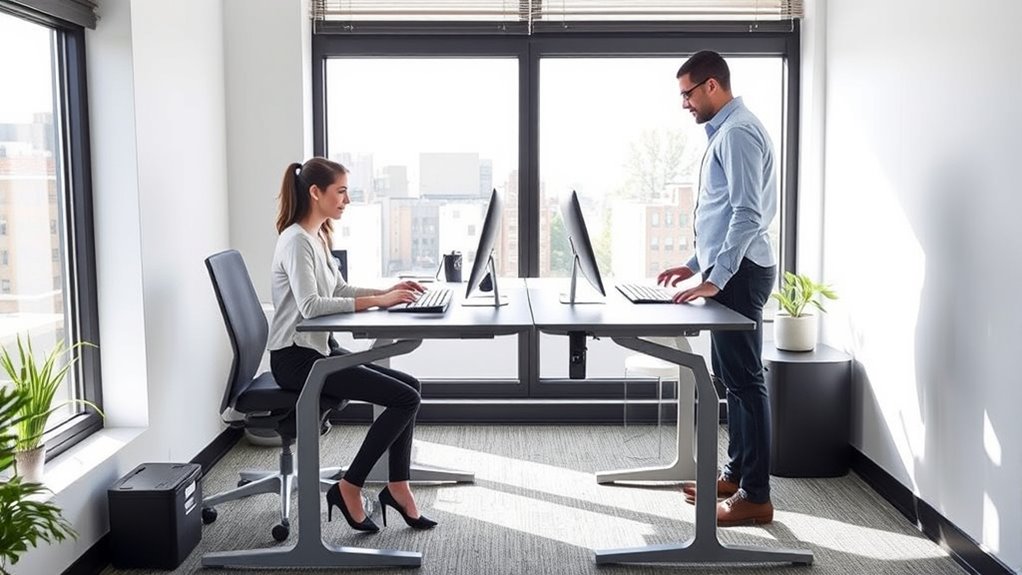
Setting up an ergonomic sit-stand workspace starts with ensuring your equipment is properly adjusted to support good posture. First, position your monitor so the top of the screen is at eye level, about 2-3 inches above your seated eye line. Second, adjust your chair to keep your feet flat on the floor, with knees at a 90-degree angle. Third, set your keyboard and mouse so your elbows stay close to your sides, forming a 90-degree angle. Fourth, raise or lower your desk or stand to keep your wrists straight and shoulders relaxed. Make sure your standing surface is stable and at a comfortable height. Proper adjustments help prevent strain, promote comfort, and support your productivity throughout the day.
Incorporating Movement Breaks Into Your Day

To boost your productivity and reduce discomfort, it’s important to schedule regular movement breaks throughout your day. Try setting timers for specific intervals, like every 30 minutes, to stand up and stretch or walk around. Incorporating active break ideas, such as simple stretches or quick walks, helps keep your body energized and focused.
Scheduled Movement Intervals
Incorporating scheduled movement breaks into your day is essential for maintaining energy and focus. Setting specific intervals helps you avoid prolonged sitting and keeps your body active. Imagine your day broken into these simple segments:
- Every 30 minutes, stand up and stretch your legs.
- After every hour, take a quick walk around your workspace.
- Mid-morning and mid-afternoon, pause for a brief movement break.
- Before lunch, perform light stretching or short exercises.
These intervals prevent stiffness, boost circulation, and improve concentration. Use timers or reminders to stay disciplined, ensuring movement becomes a regular part of your routine. Consistency is key—scheduled movement intervals keep you energized and support your overall sit-stand strategy.
Active Break Ideas
Adding variety to your movement breaks can make them more enjoyable and easier to stick with. Try simple activities like stretching your arms and legs or walking around your workspace. Incorporate quick exercises such as jumping jacks, lunges, or torso twists to energize your body. Stand up and do a few squats or calf raises to target different muscle groups. Use resistance bands or light weights for mini strength routines. Incorporate brief mindfulness or deep-breathing sessions to refresh your mind. Switch between standing, walking, and stretching to keep your breaks dynamic. Even just a few minutes of varied movement can boost circulation, improve focus, and reduce fatigue. The key is to keep it engaging and easy to fit into your workday.
Monitoring and Adjusting Your Sit-Stand Schedule

Monitoring and adjusting your sit-stand schedule is essential to find the right balance for your comfort and productivity. To do this effectively, track how you feel during different periods and note any discomfort or fatigue. Consider these steps:
- Record your sitting and standing times daily, noting energy levels and focus.
- Identify patterns where fatigue or discomfort peaks, signaling a need to adjust.
- Gradually increase standing intervals if you feel comfortable, avoiding sudden changes.
- Regularly review your schedule, making tweaks to optimize your comfort and efficiency.
Using Reminders and Tools to Stay on Track
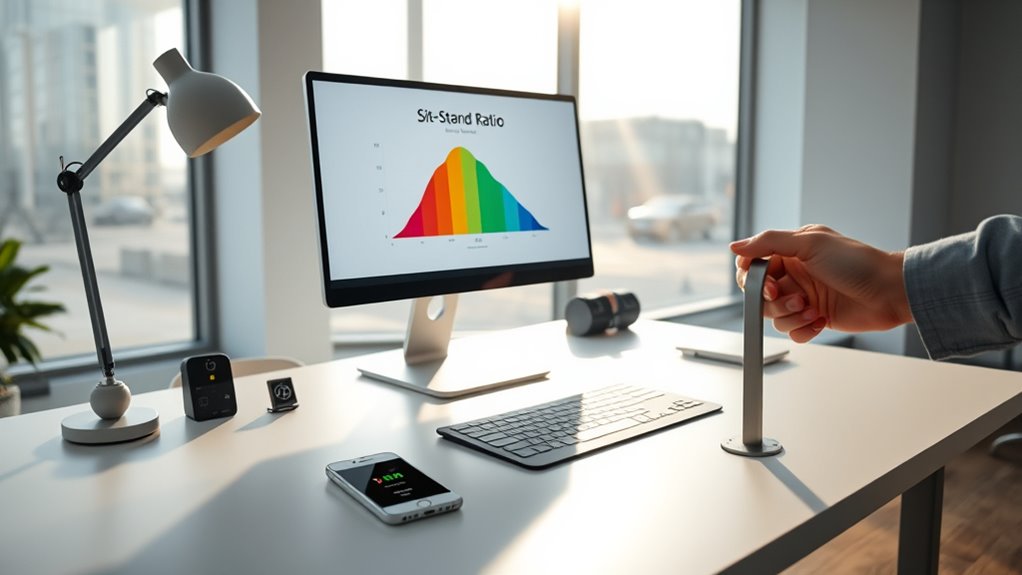
To keep your sit-stand routine consistent, leveraging reminders and tools can make a significant difference. Set alarms or notifications on your phone or computer to prompt you to change positions at regular intervals. Use apps designed specifically for health and productivity, which can track your sit-stand ratio and remind you when it’s time to move. Visual cues like sticky notes or desk timers also serve as effective prompts. These tools help you stay mindful of your schedule and prevent prolonged sitting. Consistent reminders reinforce good habits and ensure you don’t forget your plan, especially during busy or distracting moments. By integrating these reminders into your day, you create a structured approach that supports a balanced sit-stand routine.
Overcoming Challenges and Staying Consistent

Maintaining a consistent sit-stand routine can be challenging, especially when distractions or fatigue set in. To stay on track, try these strategies:
- Set specific times for standing and sitting to create a predictable pattern.
- Break tasks into smaller chunks so switching positions feels manageable.
- Use visual cues, like alarms or sticky notes, to remind you to change positions.
- Track your progress daily to see your improvements and stay motivated.
When fatigue hits, take deep breaths or stretch briefly to boost energy. Avoid multitasking during transitions, so you stay mindful of your posture. Remember, consistency builds habit, and small adjustments make a big difference over time. Stay committed, and you’ll find it easier to overcome obstacles.
Long-term Health and Productivity Benefits

Adopting a consistent sit-stand routine can lead to significant long-term health and productivity benefits. You’ll reduce risks of back pain, improve circulation, and boost focus throughout your day. Over time, these small adjustments compound, leading to better posture, increased energy, and decreased fatigue. Imagine your day as a balance of movement and stillness:
| Sit Duration | Stand Duration | Focus Level |
|---|---|---|
| 60 minutes | 30 minutes | Moderate |
| 45 minutes | 45 minutes | High |
| 30 minutes | 60 minutes | Very High |
| 50 minutes | 40 minutes | High |
| 40 minutes | 50 minutes | Moderate |
Frequently Asked Questions
How Do I Determine My Optimal Sit-Stand Ratio?
To determine your ideal sit-stand ratio, start by paying attention to how you feel during the day. If you notice discomfort or fatigue, try alternating every 30 to 60 minutes. Experiment with different ratios like 1:1 or 2:1, and adjust based on your comfort and productivity. Listen to your body, and gradually increase standing time as you build strength and endurance.
Can Adjusting My Sit-Stand Ratio Improve My Posture?
Yes, adjusting your sit-stand ratio can improve your posture. When you stand more often, it reduces the strain on your lower back and shoulders caused by prolonged sitting. By incorporating regular standing periods, you engage different muscles and promote better alignment. Start by gradually increasing your standing time, listen to your body, and maintain good ergonomics. This simple change helps prevent discomfort and supports overall spinal health.
What Are Signs I’M Overdoing It With Sitting or Standing?
If you’re overdoing it with sitting or standing, you might notice persistent aches, tingling, or numbness, much like a cramp that won’t go away. You may feel fatigue in your legs, back pain, or stiffness after prolonged periods. Headaches or eye strain can also signal you’re pushing too hard. Listen to your body—if discomfort persists, it’s time to adjust your routine, take breaks, and switch positions more often.
How Long Should I Stay in Each Position During Transitions?
You should aim to stay in each position for about 30 to 60 minutes during shifts. Listening to your body is key—if you start feeling discomfort, stiffness, or fatigue, switch positions sooner. Regularly changing your posture prevents strain and promotes circulation. Remember, gradual adjustments help your muscles adapt better, so don’t rush the process. Prioritize comfort and movement, and you’ll maintain better posture and overall well-being.
Are There Specific Exercises to Complement Sit-Stand Routines?
You can incorporate exercises like seated leg lifts, standing calf raises, and gentle stretches to complement your sit-stand routine. These movements help strengthen muscles, improve flexibility, and reduce stiffness. Try doing seated leg lifts while at your desk to engage your thighs, or calf raises during breaks to boost circulation. Incorporating these simple exercises into your routine supports overall mobility and makes your sit-stand shifts more effective.
Conclusion
So, you’ve nailed the perfect sit-stand routine—only to realize that sitting all day wasn’t so bad after all. Ironically, finding the right balance isn’t about sticking rigidly to ratios but about making small, mindful adjustments. Remember, even the best plan can falter if you forget to listen to your body. So go ahead, stand up, sit down, and enjoy the healthy chaos of your new ergonomic adventure—just don’t forget to breathe.