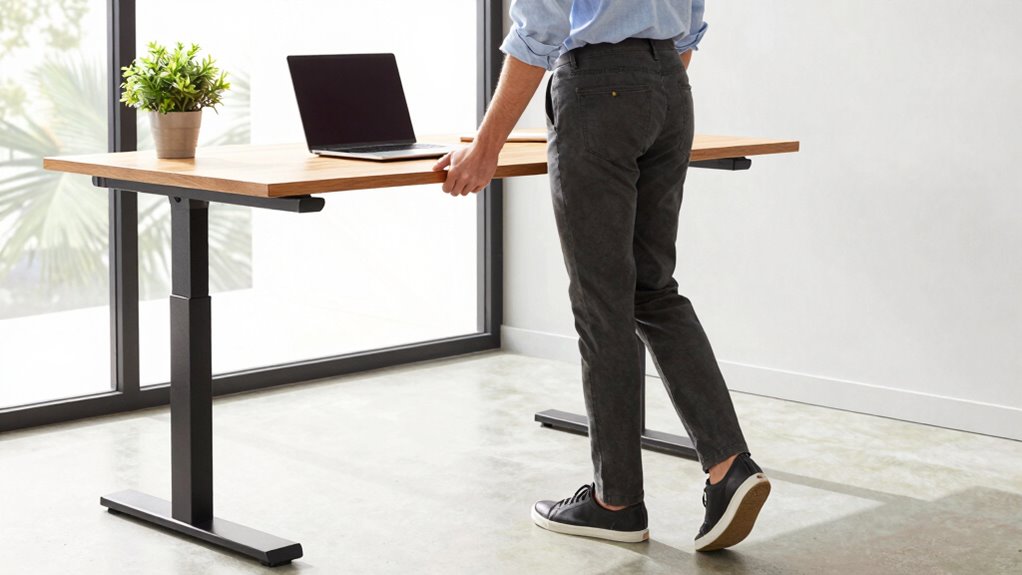

To shift smoothly to a standing desk, start by evaluating your workspace and adjusting your setup for ergonomic comfort. Gradually increase your standing time, aiming for short periods, and incorporate regular movement breaks to prevent fatigue. Adjust your desk and accessories to support proper posture, and listen to your body’s signals. Building a routine and tracking progress helps make standing a habit. Continue exploring these strategies to guarantee a comfortable, sustainable switch.

Turn your quiet moments into listening time
- Thousands of audiobooks, podcasts and originals
- Listen on your phone, tablet or Echo — also offline
- Cancel anytime
Key Takeaways
- Gradually increase standing time starting with 15-30 minute intervals to prevent discomfort and build endurance.
- Optimize ergonomic setup by adjusting monitor height, desk, and accessories for comfort and proper posture.
- Incorporate movement breaks and stretching to improve circulation and reduce fatigue during standing periods.
- Establish consistent routines using reminders, visual cues, and goal tracking to reinforce the standing habit.
- Monitor body responses and adjust standing duration or setup to prevent soreness and ensure sustainable transition.
Assessing Your Workspace and Equipment
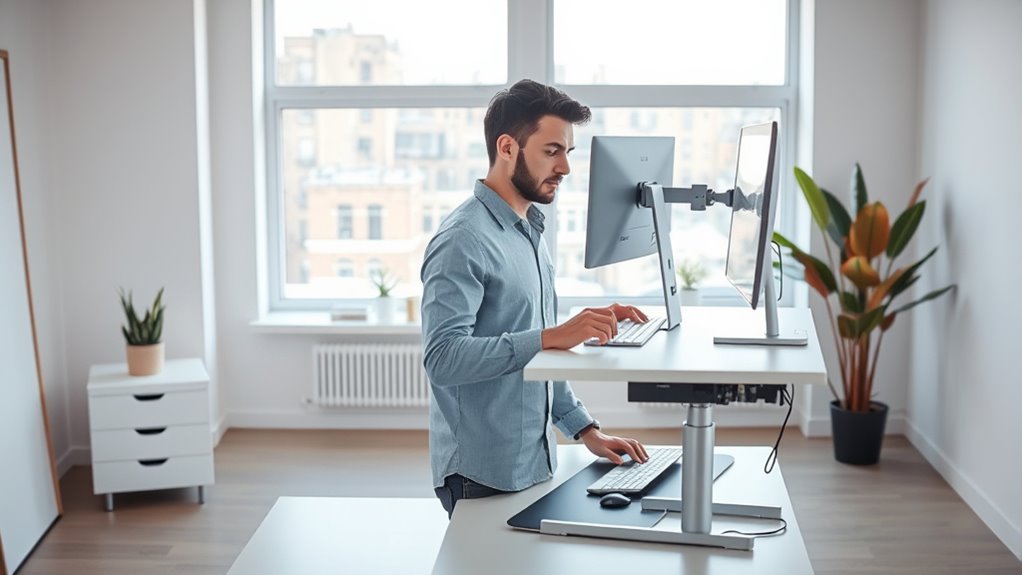
Before shifting to a standing desk, you need to evaluate your current workspace and equipment. Check if your desk surface is large enough to accommodate your monitor, keyboard, and mouse comfortably. Ascertain your monitor is at eye level to avoid neck strain; you might need a monitor stand or riser. Consider your chair and whether it’s adjustable or supportive enough for sitting periods. Measure your available space to confirm it can fit the standing desk comfortably without clutter. Think about your power outlets and cable organization—poor setup can cause frustration. Also, identify if your current desk height is adjustable or if you’ll need additional accessories. Making these assessments helps create a safe, ergonomic environment that supports your transition smoothly. Additionally, evaluating the ergonomic features of your workspace can prevent discomfort and promote productivity during your switch to standing. Ensuring your workspace is properly organized and free of hazards is essential for a successful ergonomic setup. Incorporating adjustable accessories can further enhance comfort and ease of transition. When assessing your workspace, consider workspace ergonomics to optimize comfort and efficiency. Moreover, consulting with professionals or utilizing architectural solutions can help tailor your workspace for optimal ergonomic benefits.
Establishing a Gradual Standing Schedule
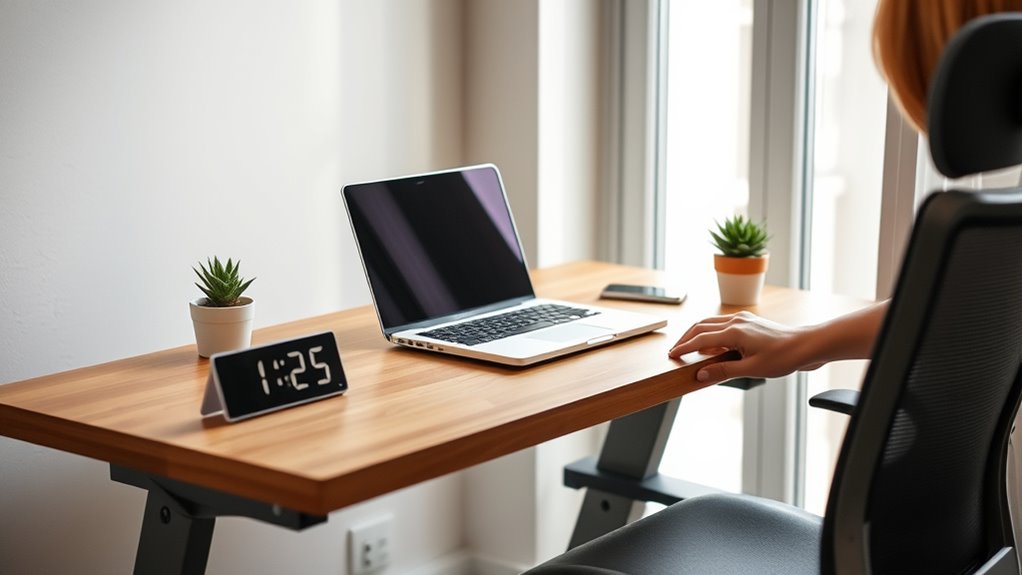
Once you’ve set up your workspace and equipment properly, the next step is to introduce standing gradually into your routine. Start by standing for short periods, like 15 to 30 minutes, a few times a day. Pay attention to how your body feels and adjust as needed. Use a timer or reminders to help you stick to your schedule. Don’t switch from sitting to standing all at once; instead, gradually increase your standing time each week. This slow progression helps your muscles and joints adapt, reducing discomfort and fatigue. Incorporating ergonomic principles techniques can help ease the transition and prevent stiffness. Being aware of posture correction strategies can also improve comfort during your standing periods. Additionally, incorporating herbal remedies known for their anti-inflammatory effects can support joint health during this adjustment. It’s also beneficial to monitor your overall musculoskeletal health to prevent strain or injury. Be patient and consistent, and listen to your body. Over time, these small adjustments will build a sustainable standing habit without overwhelming you.
Incorporating Movement Breaks Throughout the Day
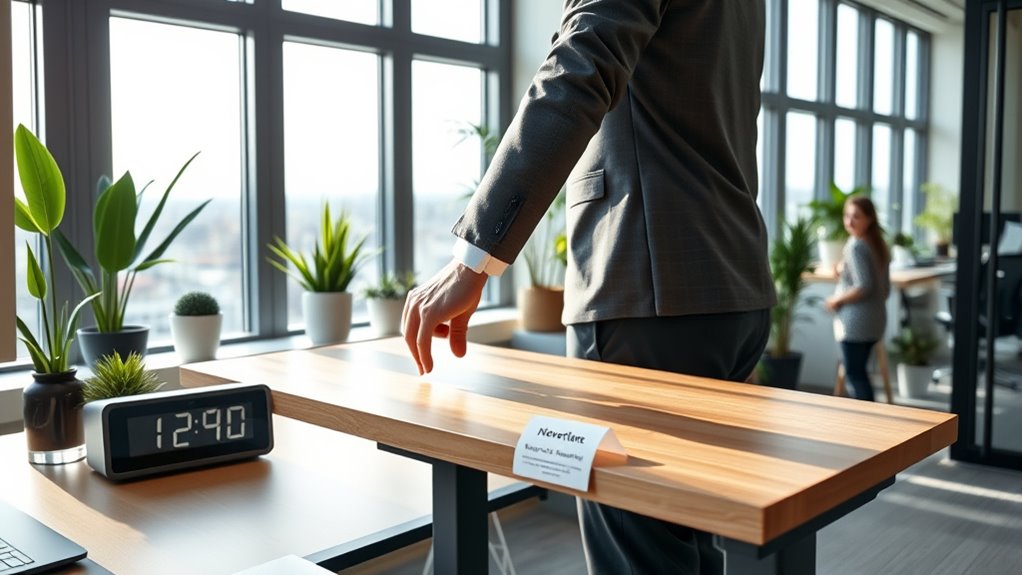
Incorporating movement breaks into your day is essential for maintaining energy and reducing strain from prolonged sitting. Regularly stepping away from your desk refreshes your muscles and sharpens focus. To make this easier, set alarms or timers as reminders to stand, stretch, or walk briefly. These breaks prevent stiffness and boost circulation, helping you stay engaged. Imagine feeling more alert, less sluggish, and confident in your productivity. Here’s a visual reminder of how movement impacts you:
| Stiffness | Fatigue | Focus |
|---|---|---|
| Discomfort | Low energy | Sharp mind |
| Tension | Sluggishness | Clarity |
| Restlessness | Burnout | Motivation |
Adjusting Your Desk to Find the Optimal Height
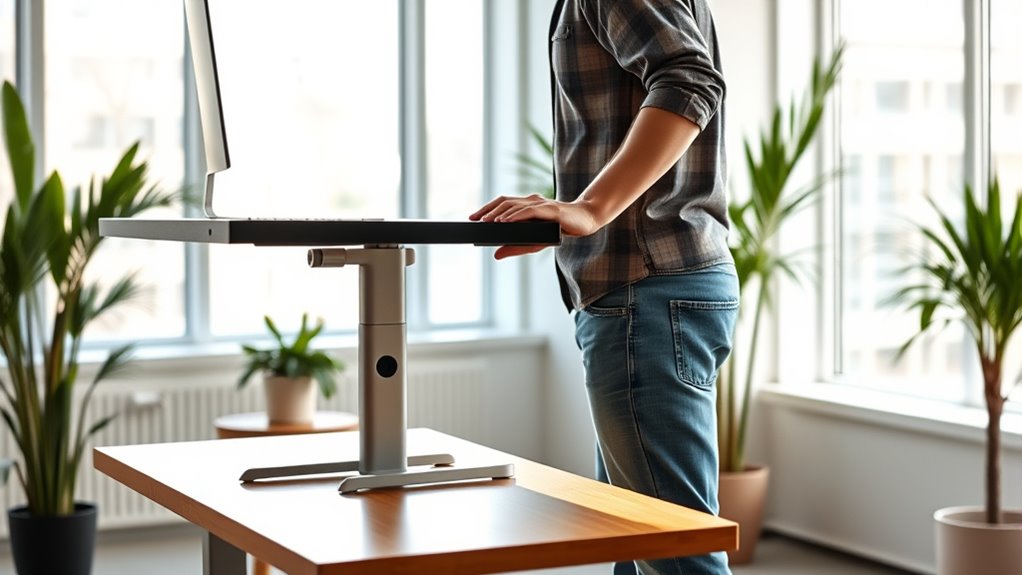
To work comfortably, your desk height needs to be just right. Make sure your keyboard and mouse are level with your elbows, so your arms stay relaxed. Also, align your monitor so the top is at eye level to prevent neck strain. Additionally, ensuring proper ergonomic setup can help reduce discomfort and improve your overall sleep quality by promoting better posture throughout the day. Using load‑planning tools can assist in accurately assessing your workspace needs and optimizing your ergonomic arrangement. Proper workstation adjustment can further enhance comfort and prevent repetitive strain injuries. Being aware of your net worth can also motivate you to invest in ergonomic equipment that enhances your workspace. Incorporating ventilation considerations can improve airflow and comfort during long working hours.
Correct Desk Height
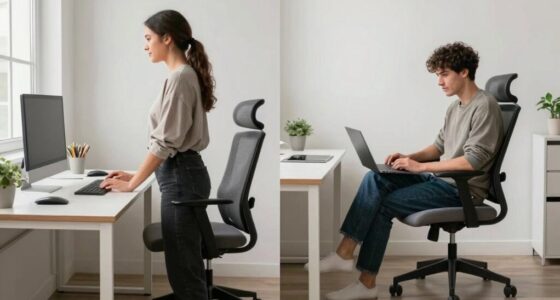
Finding the correct desk height is essential for maintaining proper posture and preventing discomfort during your workday. To identify this, stand naturally with your arms at a 90-degree angle when resting on the desk. Your elbows should be close to your sides, and your forearms should be parallel to the floor. Adjust the desk so that your wrists are straight and not bent up or down. Your keyboard should be at a height that allows your shoulders to relax and avoid tension. Keep your feet flat on the floor, with knees roughly at hip level. Proper desk height ensures comfort, reduces strain on your neck and shoulders, and supports long-term ergonomic health during standing work. Ensuring your ergonomic setup aligns with these principles can help prevent repetitive strain injuries and promote better overall health. Additionally, regularly reassessing your desk height as you change positions can further enhance comfort and prevent fatigue. Incorporating ergonomic principles into your setup can also improve overall productivity and reduce the risk of discomfort over time. Remember that adjustable desks can provide greater flexibility to maintain optimal posture throughout your work session.
Monitor Alignment Tips
Ever wonder how to position your monitor for maximum comfort and productivity? Start by placing the top of your screen roughly at eye level, so your neck stays straight when looking forward. Keep the monitor about an arm’s length away, ensuring you don’t strain your eyes or lean forward. Tilt the screen slightly upward or downward to reduce glare and find a comfortable viewing angle. If you use multiple monitors, align their heights so your eyes move smoothly between screens without tilting your head. Adjust the monitor’s height and angle until you feel relaxed, with your shoulders down and back straight. Proper Monitor alignment minimizes neck and eye strain, helping you stay focused and comfortable throughout your workday. Maintaining ergonomic workspace setup principles can further enhance your comfort and productivity. Regularly adjust your setup as your posture or workspace changes to sustain optimal comfort, especially when incorporating adjustable equipment designed for ergonomic benefits. Additionally, periodically review and fine-tune your setup to adapt to any changes in your work habits or physical comfort.
Using Supportive Accessories for Comfort
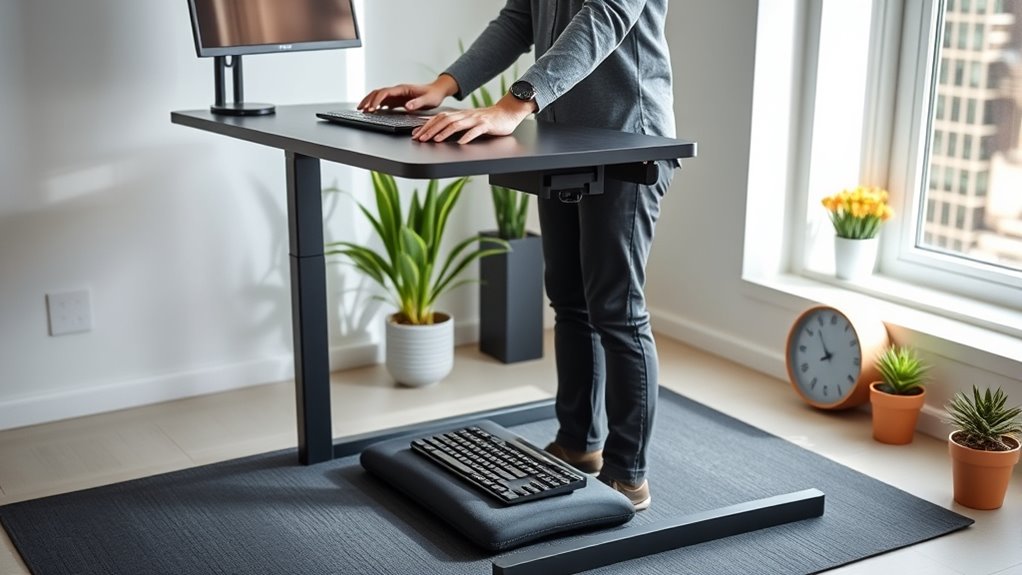
Using supportive accessories can particularly enhance your comfort as you shift to a standing desk. An anti-fatigue mat reduces pressure on your feet and legs, helping you stand longer without discomfort. Consider a cushioned footrest to shift your weight periodically, preventing fatigue and promoting better circulation. A supportive wrist pad can keep your wrists in a neutral position while typing or using a mouse, reducing strain. Ergonomic shoe inserts provide additional cushioning, making standing more comfortable over extended periods. Adjustable monitor arms or stands ensure your screen remains at eye level, reducing neck strain. Incorporating these accessories helps you maintain proper posture and minimizes discomfort, making your transition smoother and more sustainable. Remember, comfort accessories support your body’s needs as you adapt to standing while working.
Listening to Your Body and Recognizing Signs of Fatigue

Since your body gives signals when it’s time to rest or adjust, paying close attention to these cues is essential during your shift to a standing desk. You might notice discomfort, stiffness, or aching in your legs, back, or feet. Dizziness, blurred vision, or tingling sensations can also indicate fatigue or strain. If you feel a sudden urge to sit or shift your position frequently, it’s a sign you need to take a break or change your posture. Ignoring these signals can lead to soreness or even injury. Regularly check in with your body, and don’t push through discomfort. By recognizing these signs early, you can make timely adjustments—such as sitting down briefly or stretching—to stay comfortable and prevent fatigue from escalating.
Building Consistency and Making It a Routine

To build consistency, start by setting daily reminders to prompt you to stand. Break your goals into small, achievable steps and track your progress to stay motivated. These habits will help turn standing into a regular part of your routine.
Establish Daily Reminders
Establishing daily reminders is essential for building consistency and turning your standing desk habit into a routine. These prompts keep you mindful and prevent slip-ups. Use technology like phone alarms or calendar alerts to signal when it’s time to stand. Consistency is key; the more you respond to reminders, the faster standing becomes second nature.
| Reminder Type | Implementation Tip |
|---|---|
| Visual cues | Place sticky notes or signs nearby |
| Digital alerts | Set recurring alarms on your device |
| Routine pairing | Link standing with another daily activity |
| Accountability buddy | Share your goals with a coworker |
Fill your day with these cues, and standing will become an effortless part of your routine.
Set Achievable Goals
Setting achievable goals is essential for building consistency and turning your standing desk habit into a lasting routine. Start by defining small, manageable targets, like standing for 15 minutes every hour or switching between sitting and standing at specific times. These goals should feel realistic, so you stay motivated rather than overwhelmed. As you meet each milestone, you’ll build confidence and reinforce the habit. Remember, progress doesn’t happen overnight, so be patient and celebrate small wins along the way. Adjust your goals if needed, ensuring they challenge you without causing frustration. By setting clear, attainable objectives, you create a solid foundation for making standing a natural part of your workday. This approach helps you stay committed and consistent over the long term.
Track Your Progress
How can you tell if you’re making progress with your standing desk routine? The key is tracking your daily habits. Keep a simple journal or use an app to log the hours you spend standing vs. sitting. Notice patterns—are you increasing standing time gradually? Pay attention to how you feel. Do you notice less fatigue, improved focus, or reduced discomfort? Celebrate small wins, like standing for 30 minutes longer each day. Consistent tracking helps you stay accountable and highlights areas needing adjustment. Over time, you’ll see clear evidence of your progress, making it easier to stay motivated. Remember, building a routine takes patience, but with diligent tracking, you’ll seamlessly integrate standing into your workday and enjoy the benefits.
Evaluating Your Progress and Making Adjustments
To guarantee your shift to a standing desk is successful, regularly evaluating your progress is essential. Pay attention to how your body feels after each standing session, noting any discomfort or fatigue. Track your standing duration and compare it to your initial goals, adjusting as needed to prevent strain. If you notice persistent aches, consider lowering your standing time or improving your posture. Sometimes, minor tweaks like adding anti-fatigue mats or stretching breaks can make a big difference. Don’t be afraid to experiment with different setups or schedules until you find what works best. Regular assessments help you stay motivated and avoid burnout. Making informed adjustments ensures your transition remains comfortable, sustainable, and beneficial in the long run.
Frequently Asked Questions
How Long Should I Initially Stand Each Day?
You should start by standing for about 15 to 30 minutes each hour, gradually increasing as your body adjusts. Initially, aim for 1 to 2 hours a day, breaking it into shorter intervals. Listen to your body—if you feel discomfort, sit down and rest. Over time, you can extend your standing periods, but always prioritize comfort and proper posture to avoid strain.
What Are the Best Ergonomic Practices for Standing Desks?
You should keep your monitor at eye level and your elbows at a 90-degree angle to guarantee comfort. Keep your feet flat on the ground, and shift your weight evenly to avoid strain. Use an anti-fatigue mat if needed, and take regular breaks to move. This way, you reduce discomfort and prevent injury, making your standing desk experience both productive and comfortable.
How Can I Prevent Foot and Leg Pain?
To prevent foot and leg pain, make sure to change positions frequently and use a cushioned mat to reduce pressure. Keep your feet flat on the ground and shift your weight from one leg to the other every so often. Wear supportive shoes, stretch your legs regularly, and avoid standing still for long periods. Taking these steps helps reduce discomfort and promotes better circulation.
Are There Specific Exercises to Complement Standing Desk Use?
Yes, there are specific exercises you can do to support standing desk use. Incorporate calf stretches to relieve tension, ankle rolls to improve circulation, and leg lifts to strengthen muscles. Regularly shifting your weight and doing gentle squats can also prevent stiffness. These exercises help reduce discomfort, boost circulation, and keep your legs and feet healthy while you work standing up. Make them part of your routine for better comfort.
How Do I Stay Motivated During the Transition?
Did you know that people who set clear goals are 50% more likely to stick with new routines? To stay motivated during your progression, remind yourself of these benefits, like improved posture and energy. Break the process into small, achievable steps, celebrate each milestone, and keep your workspace inspiring. Visualize the positive changes, and stay consistent—soon, standing will feel natural and rewarding.
Conclusion
Embracing your standing desk journey is like tending a delicate garden—you nurture it with patience, listen to its needs, and adjust as it grows. Each small step builds a sturdy foundation for better health and productivity. Keep your awareness sharp, and don’t be afraid to adapt. With time, you’ll see your workspace flourish, symbolizing your commitment to well-being and resilience. Stay steady, and let your efforts blossom into lasting change.
Halloween Picks
halloween
As an affiliate, we earn on qualifying purchases.