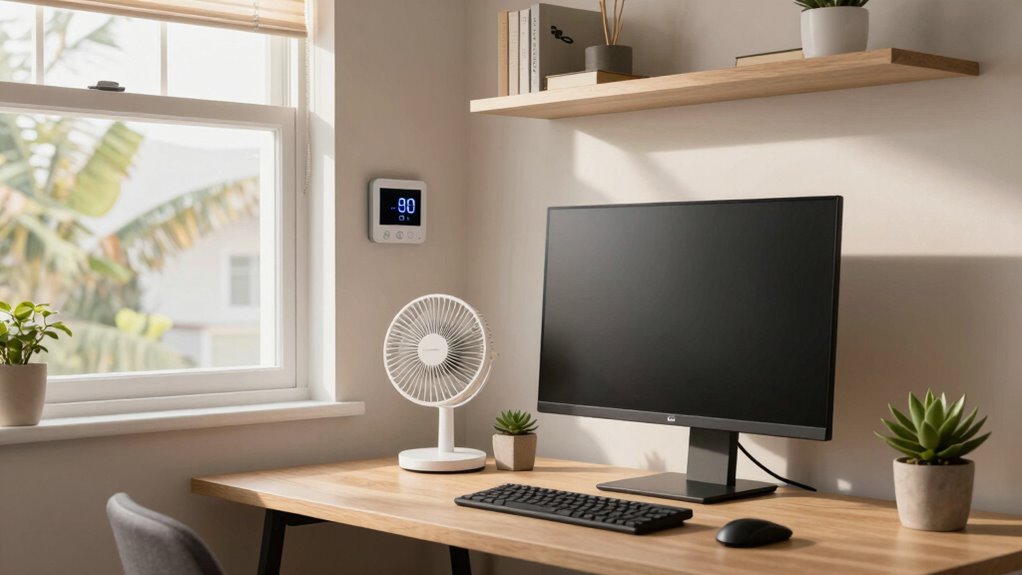

To manage heat in your home office, position your desk away from direct sunlight and use window treatments like shades or reflective films to block heat. Promote airflow by opening windows on opposite sides and using fans, especially during cooler parts of the day. Choose energy-efficient cooling devices like fans or portable ACs, and keep your workspace clutter-free for better ventilation. Staying hydrated and maintaining good habits helps, and exploring more tips can keep your space comfortable year-round.

Turn your quiet moments into listening time
- Thousands of audiobooks, podcasts and originals
- Listen on your phone, tablet or Echo — also offline
- Cancel anytime
Key Takeaways
- Use cross-ventilation by opening windows on opposite sides and position fans for optimal airflow.
- Block direct sunlight with blinds, curtains, or reflective window films to reduce indoor heat gain.
- Choose energy-efficient cooling devices like fans or portable AC units and automate their operation for efficiency.
- Arrange furniture away from heat sources and elevate the workspace to cooler, lower-level air.
- Keep indoor air fresh and cool by regular ventilation, using window screens, and maintaining electrical safety.
Products Worth Considering

Dyson Ball Animal 3 Corded Upright Vacuum

Coway Airmega 250 Air Purifier for Large Rooms

Philips Hue Bridge Pro Smart Lighting Hub
As an affiliate, we earn on qualifying purchases.
Optimize Your Workspace Layout
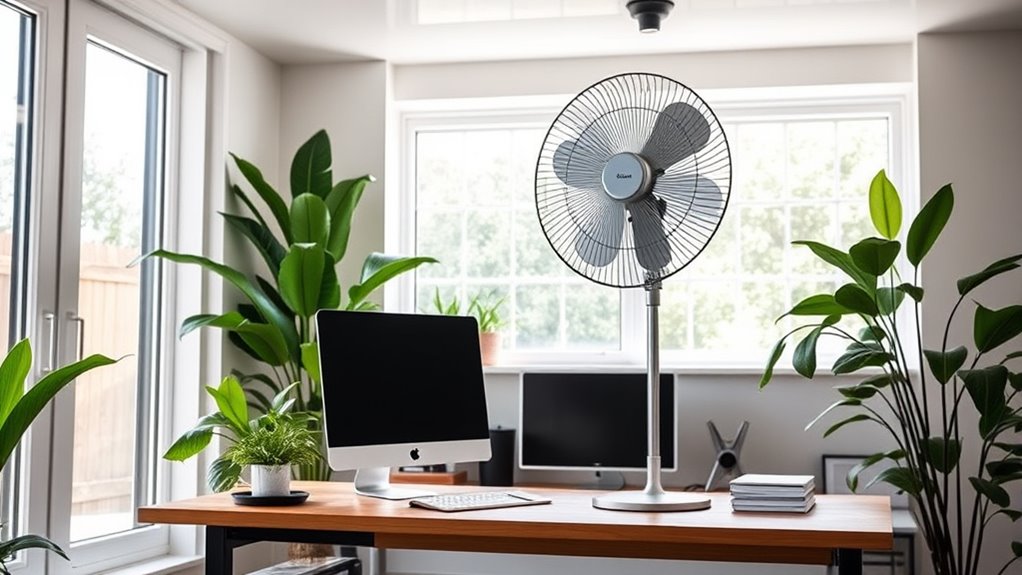
To effectively manage heat in your home office, you need to optimize your workspace layout. Position your desk away from direct sunlight and heat sources like radiators or appliances. Use furniture arrangements that encourage airflow, such as placing your desk near windows or open spaces. Keep clutter to a minimum to prevent heat buildup and ensure better air circulation. Elevate your workspace slightly off the ground if possible, as cool air tends to settle at lower levels. Consider placing your computer and electronic devices in shaded areas to prevent additional heat from accumulating. Free floating furniture arrangements can help improve airflow throughout the space. By thoughtfully arranging your furniture and equipment, you create a cooler, more comfortable environment that helps regulate temperature naturally. Incorporating simple organization strategies can further enhance airflow and reduce heat retention in your workspace. Additionally, understanding how airflow dynamics impact heat distribution can guide you in creating an optimal layout for temperature regulation, especially when considering air circulation patterns to prevent hot spots. Recognizing the importance of proper ventilation can significantly improve heat dissipation and maintain a comfortable temperature in your home office.
Use Natural Ventilation and Fans
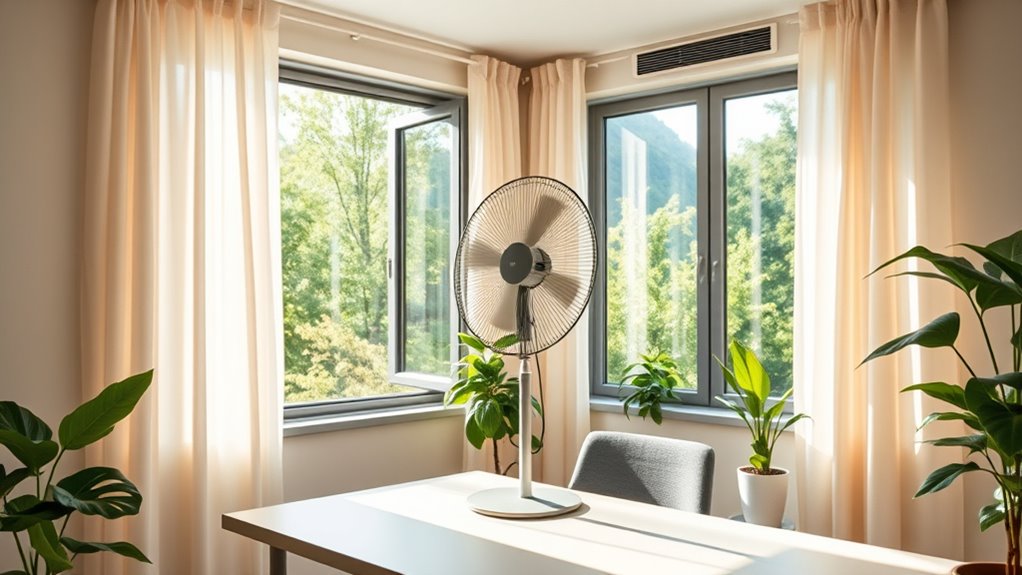
Harnessing natural ventilation and fans can markedly reduce heat buildup in your home office. Open windows during cooler parts of the day to allow fresh air to flow in and push warm air out. Cross-ventilation is especially effective if you open windows on opposite sides of your space. Using ceiling fans or portable fans helps circulate air, making the room feel cooler even without lowering the temperature considerably. Position fans to create a breeze that moves across your workspace. If outdoor air is too hot or humid, consider using fans to enhance airflow without relying solely on ventilation. Remember to turn off fans when not needed to conserve energy. Combining natural airflow with strategic fan use keeps your home office comfortable and helps prevent overheating. Proper air circulation is essential for maintaining a comfortable indoor environment and can be optimized through effective window placement and fan positioning. Additionally, incorporating automated fan controls can further optimize airflow for energy efficiency and comfort. Utilizing upfitting fundamentals such as adjustable vents or automatic window openers can also enhance natural ventilation in your space. Employing smart home technology can help automate and fine-tune ventilation strategies for improved comfort and efficiency. Incorporating trustworthy information about ventilation options ensures you choose effective methods for your space.
Manage Sunlight and Window Treatments
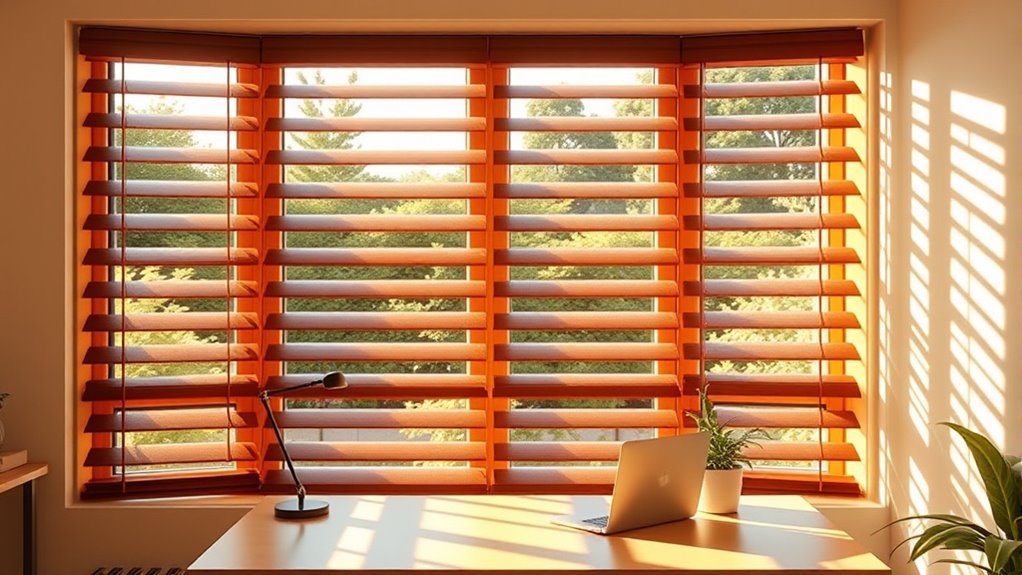
Managing sunlight and window treatments plays a key role in controlling indoor heat levels. By strategically opening and closing blinds, curtains, or shades, you can block strong sunlight during peak hours, reducing heat gain. Consider installing reflective window films or light-colored curtains to reflect sunlight away from your space. Using adjustable window coverings allows you to tailor light and heat entry throughout the day, preventing rooms from overheating. Tightly sealing gaps around windows further minimizes unwanted heat transfer. Keep in mind that window treatments also offer privacy and glare reduction, boosting comfort while managing temperature. Regularly cleaning and maintaining your curtains and blinds ensures peak performance. Additionally, innovative European cloud servers can support smart home systems that automate window treatments for optimal temperature management. Incorporating window insulation techniques can further improve heat control by reducing thermal leaks. Properly selecting and installing insulating window coverings enhances overall energy efficiency and comfort. Implementing these heat management strategies ensures a more comfortable and energy-efficient home office environment. With these simple adjustments, you’ll effectively regulate indoor heat, making your home office more comfortable and energy-efficient. To optimize your setup, exploring UST projectors and ALR screens can also help create an environment that minimizes heat from electronic devices while enhancing comfort.
Incorporate Cooling Devices Wisely
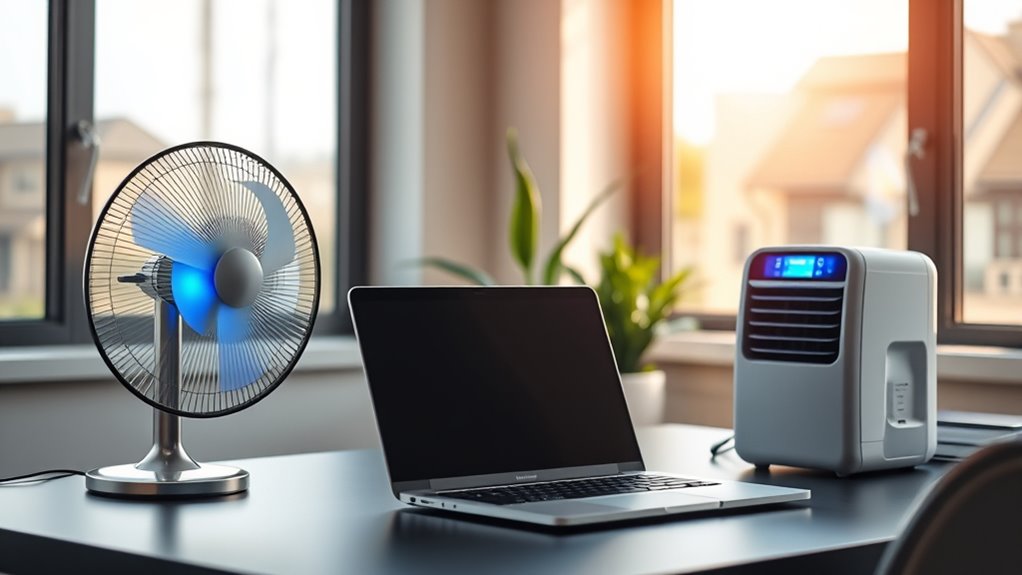
Incorporating cooling devices into your home office can considerably reduce indoor temperatures, but using them wisely guarantees maximum efficiency. Start by selecting the right device for your space—fans, air purifiers, or portable air conditioners—based on your needs and room size. Use timers or adjustable thermostats to prevent overcooling and conserve energy. Position fans to promote airflow without creating hot spots or drafty areas. Avoid running multiple devices simultaneously, which can waste energy and create noise. Remember to clean filters regularly to maintain performance. If possible, turn off cooling devices when not in use, especially during cooler parts of the day. Additionally, understanding modern vehicle technology can help you make more informed decisions about energy-efficient cooling options. Incorporating smart home tech can further optimize your cooling strategy by automating device operation based on occupancy and temperature patterns. Employing energy management systems can also help you monitor and optimize overall energy use, ensuring your workspace remains comfortable and cost-effective. Being aware of climate considerations can guide you in choosing the most appropriate cooling solutions for your specific environment. This balanced approach ensures comfort while keeping energy bills manageable and your workspace cool.
Choose Appropriate Office Equipment
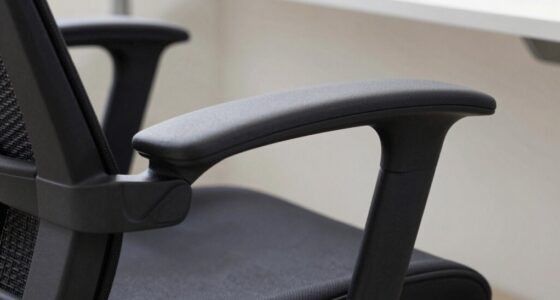
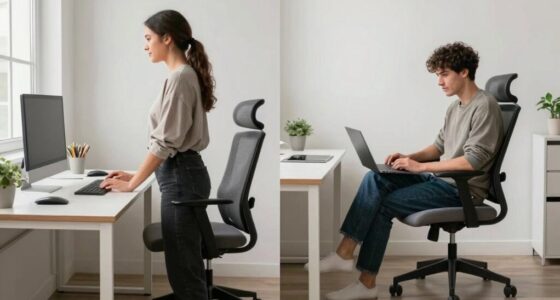
Choosing the right office equipment is essential for staying comfortable and productive in a home workspace. The equipment you select impacts heat levels and overall comfort. For example, opt for a desk and chair with good ventilation to prevent overheating. Consider a laptop stand or ergonomic accessories that promote better posture and reduce strain. Use a compact monitor or all-in-one device to minimize clutter and improve airflow around your workspace. Additionally, choose lighting options like LED bulbs that emit less heat and save energy. Keep these in mind: proper ventilation is crucial to prevent heat buildup during long working hours. Incorporating ventilation systems can further enhance airflow and reduce heat in your home office. Being mindful of electrical safety practices when setting up your equipment ensures your workspace remains both comfortable and secure. Selecting suitable equipment helps maintain a comfortable environment, preventing heat buildup and boosting productivity. Regularly inspecting your electrical wiring can prevent potential hazards and improve overall safety.
Maintain Good Habits for Staying Cool
To stay cool, make sure you drink water regularly throughout the day. Good ventilation also helps keep the air fresh and comfortable. By combining these habits, you can maintain a cooler and more productive home office. Considering power backup options can also prevent disruptions during heatwaves or power outages, ensuring your workspace remains comfortable.
Stay Hydrated Regularly
Staying hydrated is essential for keeping your body cool and functioning properly during hot days. When you’re working at home, it’s easy to forget to drink enough water, but staying well-hydrated helps prevent headaches, fatigue, and dehydration. Make it a habit to sip water regularly throughout the day. Keep a water bottle nearby so you can take quick, frequent drinks. Remember, beverages like herbal tea or diluted fruit juices also count. You can also:
- Set reminders to drink every hour
- Add slices of lemon or cucumber for flavor
- Avoid excessive caffeine, which can dehydrate you
- Opt for water-rich foods like watermelon or celery
Staying consistent ensures your body stays cool, alert, and energized, helping you stay productive during hot days.
Use Proper Ventilation
When the weather heats up, keeping your living space properly ventilated is key to staying cool. Open windows during the cooler parts of the day, like early mornings and evenings, to let revitalizing air circulate. Use fans strategically to create airflow, directing cooler air into your workspace and pushing warm air out. Avoid blocking vents or windows, as these can trap heat. If possible, install window screens to keep insects out while you ventilate. Cross-ventilation is especially effective—open windows on opposite sides of your home to create a breeze. Regularly revitalizing the air prevents stuffiness and helps regulate indoor temperature. Good ventilation not only cools your space but also improves air quality, keeping you comfortable and alert during work.
Frequently Asked Questions
What Are the Best Plants to Naturally Cool a Home Office?
You should choose plants like snake plants, pothos, and spider plants to naturally cool your home office. These plants thrive indoors, require minimal maintenance, and help purify the air while providing evaporative cooling. As you care for them, they release moisture that can lower temperatures slightly, making your workspace more comfortable. Plus, their lush greenery adds a calming vibe, boosting your productivity and well-being.
How Can I Prevent Heat Buildup From Electronic Devices?
Imagine your electronic devices as tiny heaters, their warmth rising like gentle steam. To prevent heat buildup, you should keep devices well-ventilated, placing them on cooling pads or stands to allow airflow underneath. Regularly clean vents to prevent dust clogging, and avoid stacking devices. Use power strips with switches to turn off unused electronics, helping maintain a cool, comfortable workspace and preventing overheating.
Are There Specific Materials That Help Insulate or Cool a Workspace?
Yes, you should consider using materials like reflective insulation, which bounces heat away, or breathable fabrics that promote airflow. Cork or cork composite panels can also help insulate your workspace, keeping temperatures stable. Additionally, incorporating materials like ceramic tiles or cooling gels can absorb and dissipate heat effectively. These options help regulate your environment, making it more comfortable and preventing heat buildup from electronic devices.
What Temperature Should My Home Office Ideally Be Maintained At?
You should aim to keep your home office around 68-72°F (20-22°C) for ideal comfort and productivity. Did you know that working in a room that’s too hot or cold can reduce efficiency by up to 20%? To maintain this temperature, use a thermostat, fans, or air conditioning as needed. Staying within this range helps you stay focused and comfortable throughout your workday.
How Can I Reduce Noise-Related Heat From External Sources?
You can reduce noise-related heat from external sources by sealing gaps around windows and doors to block sound and prevent warm air from entering. Installing double-glazed windows or adding heavy curtains also helps insulate against noise and heat. Using outdoor sound barriers or planting shrubs creates a natural shield. Additionally, consider placing a fan or air purifier to improve airflow and maintain a cooler, quieter environment.
Conclusion
By applying these tips, you can create a comfortable home office environment. For example, imagine adjusting your desk near a window for natural airflow, using a fan, and installing blackout blinds. These small changes help keep your space cool and productive, even during hot days. Stay mindful of your habits and equipment choices, and you’ll maintain a invigorating workspace that boosts your focus and comfort all year round.