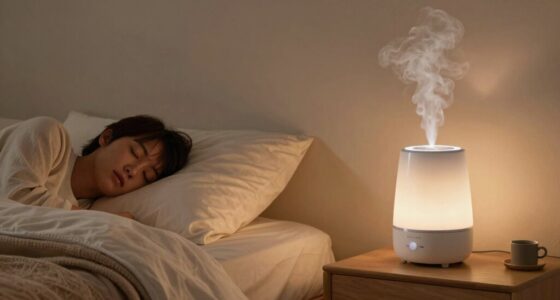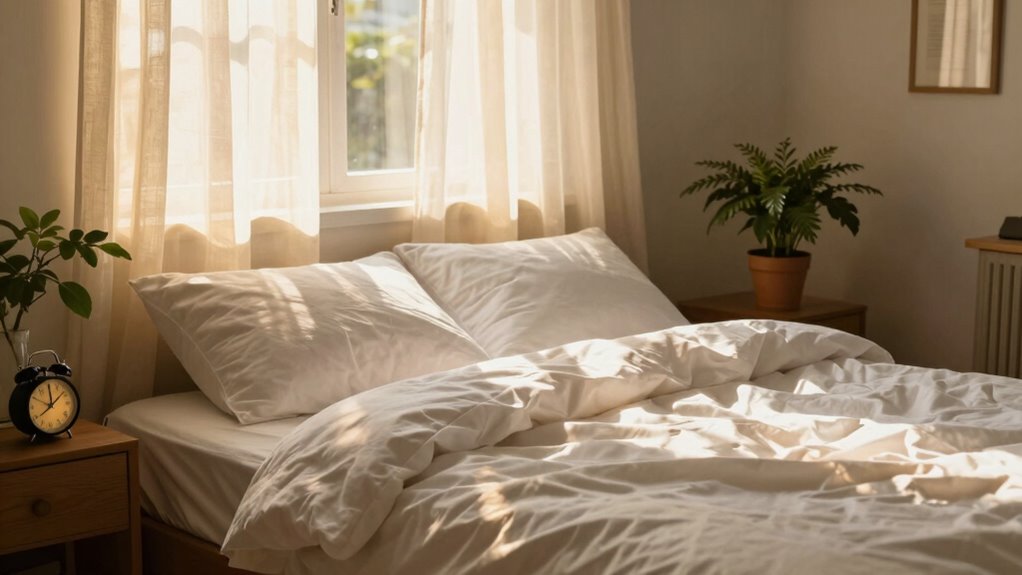

To improve your sleep tonight, get natural daylight exposure during the day by spending at least 20-30 minutes outside in the morning, which helps reset your internal clock and boosts mood. During the day, keep your environment bright with natural light or use a light therapy device if needed. In the evening, dim artificial lights, especially blue light, to signal your body it’s time to wind down. Keep exploring for more tips on optimizing your lighting habits.

Get books, candles and calm essentials delivered free — and shop member deals
- Fast, free delivery on millions of items
- Access to Prime Big Deal Days deals on October 6–7
- Prime Video, Amazon Music and more included
Key Takeaways
- Get at least 20-30 minutes of natural morning sunlight to reset your circadian rhythm and promote alertness during the day.
- Spend time outdoors during daylight hours, especially in the morning, to enhance mood and improve sleep quality.
- Use light therapy devices if natural sunlight is limited, ensuring consistent exposure to full-spectrum bright light.
- Dimming artificial blue light in the evening supports melatonin production and prepares your body for sleep.
- Maintain regular daylight exposure during the day and minimize light at night to reinforce natural sleep-wake cycles.

Exposure to natural daylight is essential for maintaining your overall health and well-being. Your body relies on the natural light-dark cycle to regulate your internal clock, known as your circadian rhythm. When this rhythm stays in sync, you feel alert during the day and sleepy at night, making it easier to fall asleep and wake up refreshed. However, modern lifestyles often limit your exposure to sunlight, disrupting this delicate balance. Without enough natural light, your circadian rhythm can become misaligned, leading to sleep difficulties and other health issues. This misalignment is particularly problematic during the darker winter months, when shorter days can trigger symptoms of seasonal affective disorder (SAD). People affected by SAD often experience fatigue, low mood, and changes in sleep patterns, all linked to reduced daylight exposure. That’s why making an effort to get outside during daylight hours can have a significant impact on your sleep quality and overall mental health.
To harness the benefits of natural light, aim to spend at least 20 to 30 minutes outdoors each day, preferably in the morning. Morning sunlight is especially effective at resetting your circadian rhythm, signaling your body that it’s time to wake up and stay alert. If you work indoors or live in an area with limited sunlight, consider using a light therapy box. These devices simulate natural daylight and can help regulate your internal clock, especially during the winter months when sunlight is scarce. Consistent exposure to bright light during the day helps reinforce your circadian rhythm, making it easier to fall asleep at night and wake up feeling rested. It also combats the symptoms of seasonal affective disorder by boosting your mood and energy levels. Natural light is a crucial factor in this process, influencing your biological processes more effectively than artificial lighting.
Beyond just the timing, the quality of daylight matters. Natural sunlight contains full-spectrum light, which influences your biological processes more effectively than artificial lighting. When you’re outside, your body responds by releasing hormones like serotonin, which lifts your mood, and regulating melatonin, the hormone responsible for sleep. During the evening, dimming your exposure to artificial light, especially blue light from screens, supports your circadian rhythm and promotes better sleep. By prioritizing daylight exposure during the day and reducing light at night, you help your body maintain its natural rhythm, making it easier to fall asleep quickly and deeply. Remember, your body is designed to respond to natural light cues; ignoring them can throw off your sleep cycle and overall health. So, take advantage of daylight whenever you can—your sleep and mood depend on it.
Frequently Asked Questions
How Does Artificial Light Affect My Circadian Rhythm?
Artificial light can disrupt your circadian rhythm by suppressing melatonin production, making it harder to fall asleep. It also affects your mood regulation, leading to potential feelings of stress or depression. When you’re exposed to artificial light, especially in the evening, your body thinks it’s daytime, delaying sleep. To improve your sleep, limit screen time before bed and use dim, warm lighting in the evening.
Can Evening Sunlight Exposure Improve Sleep Quality?
Yes, evening sunlight exposure can improve your sleep quality by aiding melatonin regulation. When you get some natural light before sunset, it helps signal your body to wind down and maintain a healthy sleep cycle. Plus, this exposure can boost your mood, making you feel more relaxed and positive. Just spend a little time outside in the evening, and you’ll notice better sleep and an uplifted mood.
What Are the Best Times to Get Daylight for Sleep?
You should aim for outdoor exposure in the morning, ideally within the first hour of waking. Morning sunlight helps regulate your circadian rhythm, making it easier to fall asleep at night. Spend at least 20-30 minutes outside to get the benefits. If mornings aren’t possible, seek bright outdoor light during midday. Consistent morning sunlight exposure boosts your sleep quality and overall well-being.
Does Geographic Location Influence Daylight Exposure Benefits?
Think of your geographic location as the stage where daylight plays out differently. Your latitude impact means higher latitudes have shorter, dimmer days in winter, affecting your natural light exposure. Urban lighting can mimic daylight but often disrupts your circadian rhythm. So, yes, your location influences how much natural light you get and how effectively you can use it to improve sleep. Adjust your routines accordingly for better rest.
How Do Seasonal Changes Impact Sleep and Daylight Exposure?
Seasonal changes, like winter’s shorter days, can cause seasonal affective disorder, making you feel more tired and less motivated. Daylight savings shifts your clock, affecting your exposure to natural light and disrupting your sleep patterns. To combat this, seek morning sunlight during winter and adjust your schedule accordingly. Proper light exposure helps regulate your circadian rhythm, improving sleep quality despite seasonal variations.
Conclusion
By prioritizing daylight exposure, you can turn your sleep quality around like a switch flicking on, illuminating your nights with restful sleep. Just as sunlight brightens a room, natural light helps reset your internal clock, making it easier to fall asleep and wake refreshed. So, step outside today, soak in that light, and watch as your sleep improves, shining as brightly as a summer sunrise. Your better night’s sleep is just a daylight boost away.
Halloween Picks
halloween
As an affiliate, we earn on qualifying purchases.