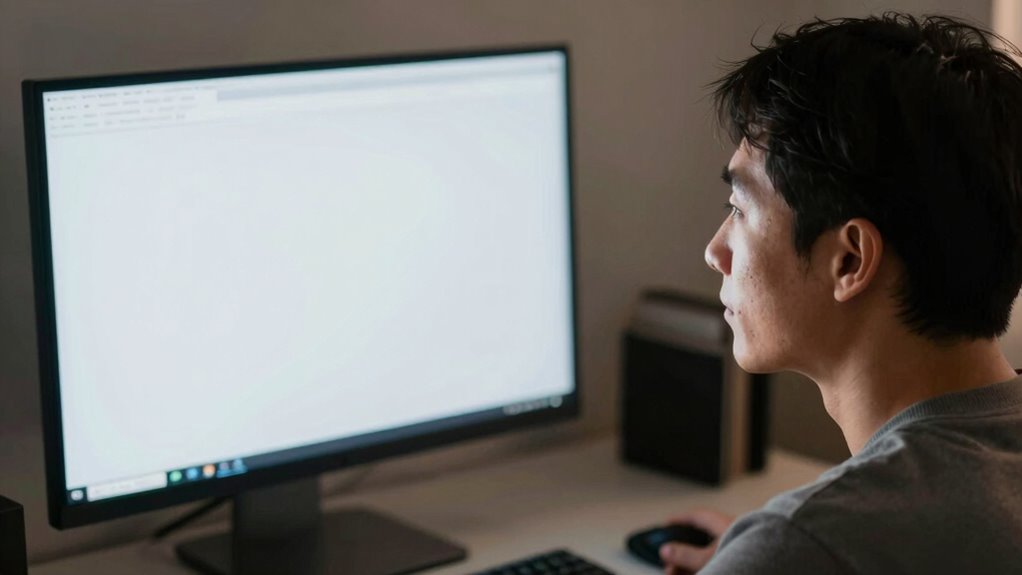

To improve your eye comfort, keep your monitor about 20–30 inches away, roughly an arm’s length, and position it slightly below eye level for natural viewing. Make certain the screen is free from glare and set your brightness to match ambient light. Adjust resolution for clarity and take regular breaks, like the 20-20-20 rule, to prevent fatigue. Staying mindful of these tips will help you work comfortably, and if you continue exploring, you’ll find even more ways to protect your eyes.
Key Takeaways
- Keep the monitor about 20–30 inches from your eyes to reduce strain and maintain comfort.
- Position the top of the screen at or just below eye level for natural viewing.
- Ensure the monitor’s glare is minimized by adjusting lighting and tilt.
- Use larger screens with higher resolution to ease text readability and reduce eye effort.
- Take regular breaks using the 20-20-20 rule to prevent eye fatigue and maintain comfort.

WALI Single Monitor Mount for 13-34 inch Screens, Adjustable Gas Spring Single Monitors Arm, Regular Screen up to 32 inch, 26.4lbs, Computer Monitor Stand for Desk, VESA 75/100mm (GSMP001N), Black
Compatibility: The WALI Single Monitor Arm is designed to fit most flat or curved LCD/LED screens ranging from…
As an affiliate, we earn on qualifying purchases.
As an affiliate, we earn on qualifying purchases.
Optimal Monitor Placement for Visual Comfort
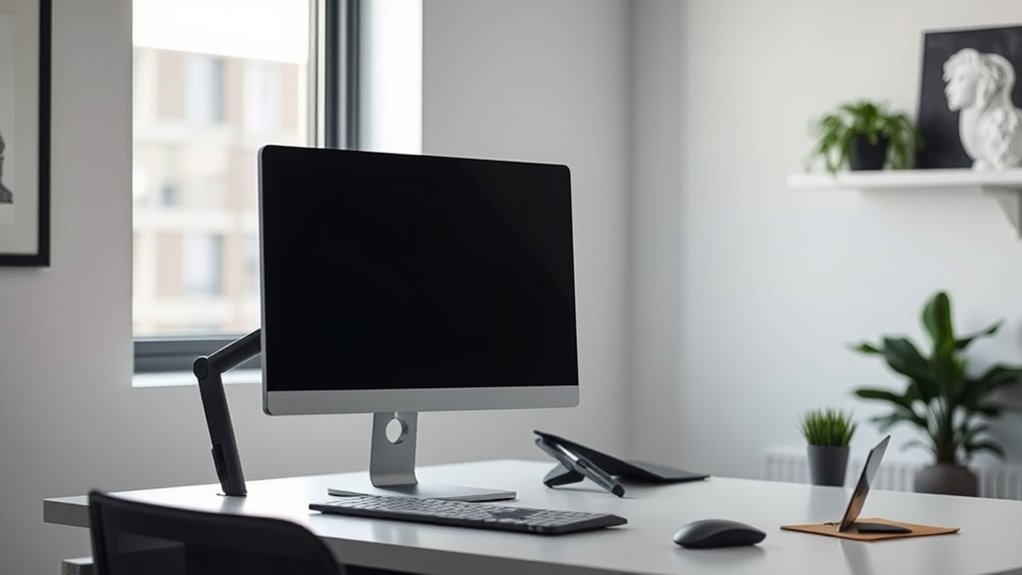
To guarantee your eyes stay comfortable during extended screen time, it’s essential to position your monitor correctly. Start by placing the top of the screen at or just below your eye level so your gaze naturally falls downward. Ensure the monitor is directly in front of you, about an arm’s length away, to reduce neck strain and maintain a comfortable viewing angle. Tilt the screen slightly upward if needed, so you’re looking slightly down at it. Keep the monitor free of glare by avoiding reflections from windows or overhead lights. Use a stable surface to prevent movement and maintain consistent positioning. Proper placement minimizes eye strain, encourages good posture, and helps you work longer without discomfort. Incorporating connected technology such as adjustable mounts or smart lighting can further enhance visual comfort and reduce fatigue, especially when integrated with ergonomic accessories designed for personalized adjustments. Additionally, utilizing adaptive lighting systems can adjust brightness and color temperature in real-time to match ambient conditions, further supporting your eye health. Using monitor calibration tools can also optimize display settings for reduced eye strain during prolonged use. Regularly taking visual breaks can also help reduce eye fatigue and promote overall eye comfort during long periods of screen use.

WALI Computer Monitor Stand for Desk, Adjustable Laptop Riser, Desk Monitor Stand Underneath Storage for Office, Home, School Supplies (STT003), 1 Pack, Black
Design: The monitor stand for the desk has a large 14.6 x 9.3 inches metal shelf that fits…
As an affiliate, we earn on qualifying purchases.
As an affiliate, we earn on qualifying purchases.
Recommended Distance Between Eyes and Screen

Maintaining the right distance between your eyes and the screen is essential for reducing eye strain. Generally, you should sit about an arm’s length away from your monitor, roughly 20 to 30 inches. This distance helps prevent your eyes from constantly adjusting focus, which can cause fatigue. If the screen is too close, your eyes work harder to focus, leading to discomfort; if it’s too far, you may strain your eyes trying to read small text or details. Adjust your position so that the top of the screen is at or slightly below eye level, ensuring a natural head position. Keep this distance consistent to minimize eye strain and promote comfort during long periods of screen use. Regularly check your setup to maintain this ideal distance and proper ergonomics to support overall eye health. Being mindful of visual ergonomics can further enhance your comfort and prevent long-term eye issues. Additionally, incorporating cybersecurity measures such as screen filters can help reduce glare and protect your eyes from harmful blue light. Maintaining awareness of screen brightness and adjusting it appropriately can also reduce eye fatigue during extended use.

SightPro 24 Inch 16:9 Computer Privacy Screen Filter for Monitor – Privacy Shield and Anti-Glare Protector
【Privacy Filter Dimensions】- Width: 20 15/16" (532 mm), Height: 11 13/16" (299 mm), Diagonal: 24" (609.6 mm) -…
As an affiliate, we earn on qualifying purchases.
As an affiliate, we earn on qualifying purchases.
Effects of Screen Size and Resolution on Eye Strain

Larger screens can reduce eye strain by making text and images easier to see without squinting or leaning forward. Higher resolution screens deliver sharper text and clearer images, minimizing eye effort. To optimize your viewing experience:
Larger, high-resolution screens make viewing easier and reduce eye strain.
- Choose a screen with a resolution that matches its size for crisp visuals.
- Avoid overly large screens that require excessive head or eye movement.
- Ensure text size is appropriate; too small can cause eye fatigue.
- Use screens with high pixel density for better detail and less blurriness.
- Proper display calibration can further enhance viewing comfort and image quality.
- Adjust your screen brightness to match ambient lighting for a more comfortable viewing experience. Additionally, reducing blue light emission from screens can help decrease eye strain during prolonged use. Moreover, selecting screens with adaptive refresh rates can further improve comfort by reducing flickering and smoothening motion.
- Regularly taking screen breaks helps prevent cumulative eye strain during extended use.
Balancing screen size and resolution helps your eyes work less hard. When text and images are clear and appropriately sized, you won’t need to strain or adjust your position constantly. This reduces fatigue and promotes comfortable, sustained viewing.

livho High Tech Blue Light Glasses – Advanced Blue Light Blocking Computer Glasses – Screen Fatigue & UV Protection
Elevate your screen time comfort with these stylish women's/men's eyewear frame blue light blocking glasses, designed to reduce…
As an affiliate, we earn on qualifying purchases.
As an affiliate, we earn on qualifying purchases.
Tips for Adjusting Brightness and Contrast Settings

Adjusting your brightness and contrast settings correctly can considerably reduce eye strain and improve your viewing comfort. Start by setting your screen brightness to match the ambient light in your environment—neither too bright nor too dim. If your display looks washed out or overly dark, tweak the contrast to enhance clarity without causing glare. Use built-in calibration tools or reference images to fine-tune these settings for natural-looking colors and sharpness. Avoid setting the brightness too high, which can cause eye fatigue, or too low, which strains your eyes trying to see details. Remember, the goal is a comfortable balance that makes content clear without overwhelming your eyes. Regularly adjusting these settings guarantees a more comfortable and eye-friendly viewing experience. Maintaining proper screen calibration can further optimize your display for comfort and clarity, especially when you utilize brightness and contrast adjustments tailored to your specific device and environment. Additionally, periodically reviewing your monitor settings ensures sustained visual comfort during extended use. Incorporating regular breaks into your viewing habits can also help prevent eye strain and maintain overall eye health. Being aware of the recommended display standards can guide you in achieving optimal viewing conditions.
Incorporating Regular Breaks and Eye Exercises
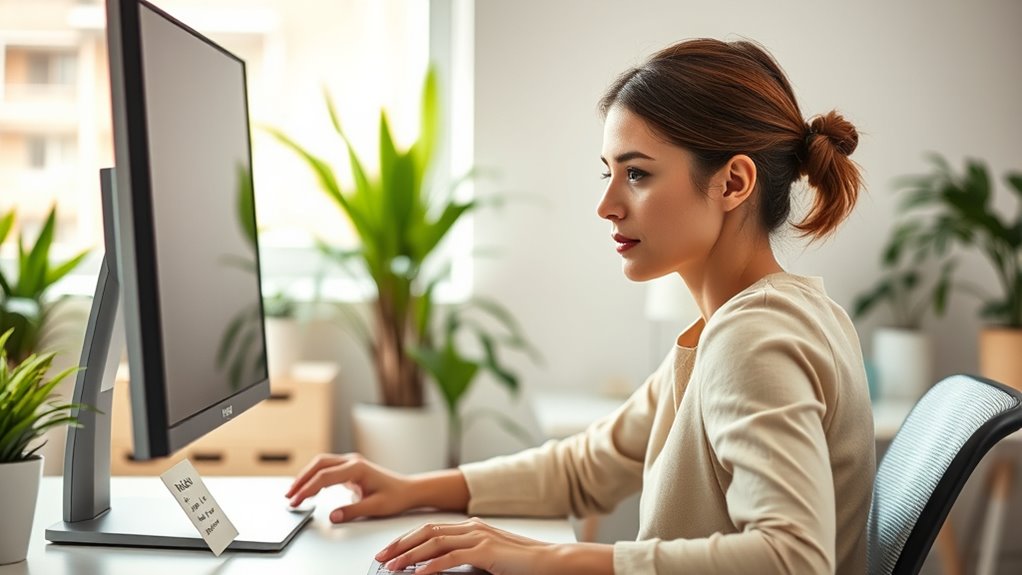
Since extended screen time can cause eye fatigue, taking regular breaks and performing eye exercises is essential for maintaining eye health. Here’s how you can do it effectively:
- Follow the 20-20-20 rule: every 20 minutes, look at something 20 feet away for at least 20 seconds.
- Blink frequently to keep your eyes moist and reduce dryness.
- Roll your eyes in circular motions to relax eye muscles.
- Focus on distant objects periodically to reduce strain from close-up focus.
- Consider the benefits of natural lighting in reducing eye strain and creating a more comfortable viewing environment.
These simple habits help prevent eye strain, improve comfort, and maintain good vision over time. Incorporate them into your daily routine to protect your eyes during long hours in front of screens.
Frequently Asked Questions
How Does Ambient Lighting Influence Monitor Distance Recommendations?
Ambient lighting influences your monitor distance because in dim environments, your eyes strain more, so keeping your screen closer can cause fatigue. Conversely, in bright settings, you might need to sit farther away to reduce glare and eye discomfort. Adjusting your monitor distance based on ambient light helps you maintain visual comfort, preventing eye strain and headaches. You should find a comfortable balance that matches your lighting conditions for ideal eye health.
What Are Signs of Eye Strain Caused by Improper Monitor Positioning?
You might notice eye strain signs like headaches, blurred vision, or dry eyes. If your eyes feel tired or sore after using your monitor, it’s a clear indicator you may need to adjust your positioning. You could also experience neck or shoulder pain, which often results from poor screen placement. Pay attention to these symptoms, and reposition your monitor to reduce strain and improve comfort during long work sessions.
Can Ergonomic Accessories Improve Eye Comfort During Extended Monitor Use?
Yes, ergonomic accessories can considerably improve your eye comfort during long monitor sessions. Adjustable monitor stands let you position your screen at eye level, reducing strain. Anti-glare filters minimize reflections, while blue light glasses cut down on harmful light exposure. These tools help you maintain proper posture, lessen eye fatigue, and enhance overall comfort, so you can work longer without discomfort or fatigue.
How Do Age-Related Vision Changes Affect Optimal Monitor Distance?
As you age, your eyes may need a closer or farther monitor distance due to presbyopia or other vision changes. You should adjust your screen to a distance where text remains clear without straining your eyes, typically around arm’s length. Regular eye check-ups help determine your ideal distance, and using proper lighting reduces eye fatigue. These adjustments help maintain comfort and visual clarity during extended monitor use.
Are There Specific Monitor Types Better Suited for Reducing Eye Fatigue?
Yes, you should choose monitors with features like adjustable brightness, flicker-free screens, and blue light filters to reduce eye fatigue. IPS panels offer better color accuracy and wider viewing angles, helping your eyes stay comfortable during long use. Consider ergonomic designs that allow you to adjust height and tilt, ensuring proper posture. These options help lessen eye strain, especially if you spend many hours in front of your screen.
Conclusion
To keep your eyes comfortable, you need to pay attention to monitor distance and settings. Find that sweet spot where your eyes don’t strain or water, and make adjustments as needed. Remember, sitting too close or ignoring breaks can lead to trouble down the road. It’s better to nip issues in the bud now than deal with bigger problems later. Take care of your eyes today, and they’ll serve you well for years to come.