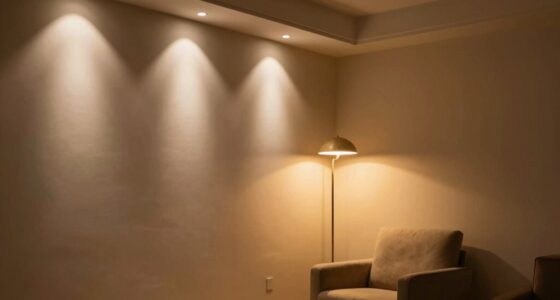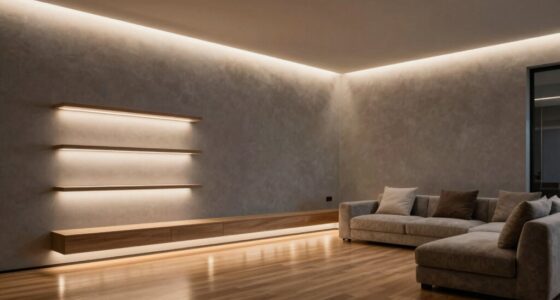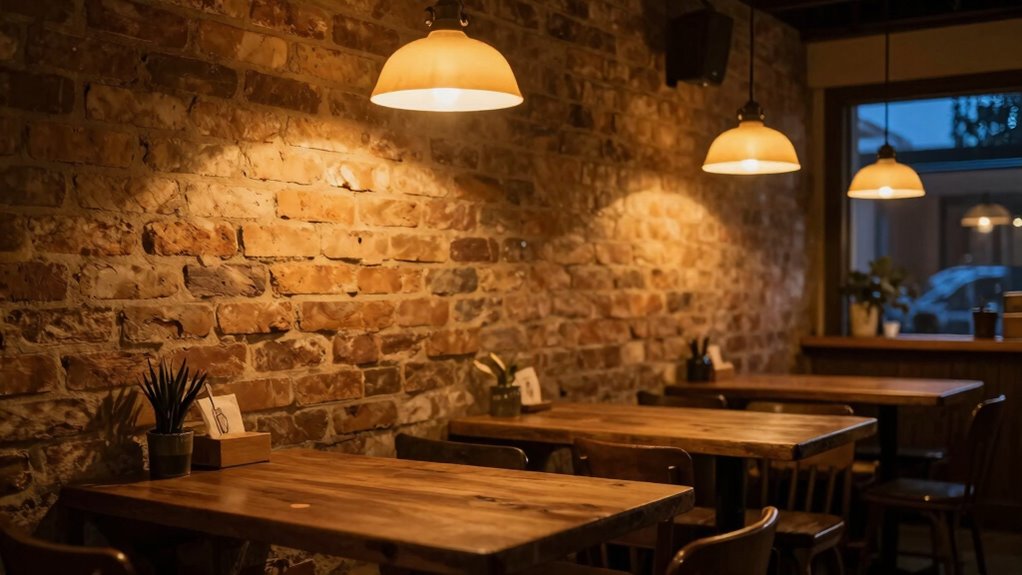

Lighting temperature profoundly impacts your mood and space ambiance. Warm light (around 2700K-3000K) creates cozy, inviting environments that relax you and promote comfort. Cool light (4000K-5000K) boosts alertness and focus, ideal for work areas or tasks requiring concentration. Choosing the right temperature can help shape how you feel and enhance your environment’s vibe. If you want to discover how to match lighting to your mood perfectly, there’s more to explore below.
Key Takeaways
- Warm lighting (2700K-3000K) creates cozy, relaxing atmospheres that promote comfort and tranquility.
- Cool lighting (4000K-5000K) enhances alertness and focus, boosting productivity and mental clarity.
- Lighting temperature influences mood by fostering feelings of intimacy with warm light or energy with cool light.
- Properly layered lighting with adjustable temperature settings can optimize environment mood and emotional well-being.
- Selecting the right color temperature based on space purpose supports relaxation or alertness, positively affecting emotional states.
Understanding Color Temperature and Its Measurement
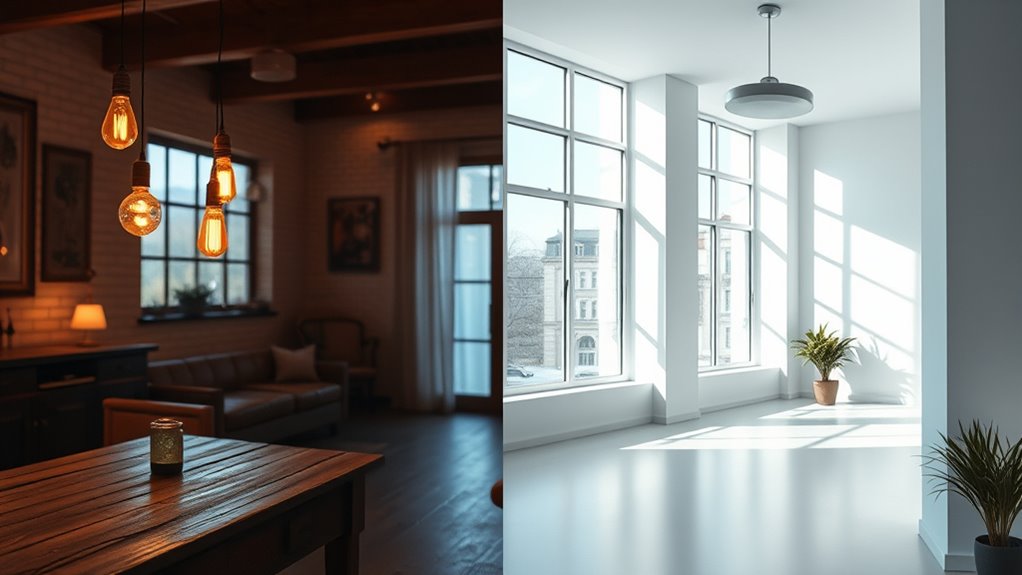
Understanding color temperature and its measurement is essential for choosing lighting that sets the right mood. Color temperature is measured in Kelvin (K), indicating whether light appears warm, neutral, or cool. Lower Kelvin values, like 2700K, produce warm, yellowish light that creates a cozy atmosphere. Higher values, such as 5000K or above, emit cool, bluish light suited for task lighting or workspaces. When selecting bulbs or fixtures, check the Kelvin rating to match your desired ambiance. Keep in mind that color temperature influences how colors appear in a space and how you feel within it. By understanding these measurements, you can better tailor your lighting to suit specific activities or moods, ensuring your environment feels just right. Additionally, considering lighting safety and proper installation can help maintain a safe and effective lighting setup. Knowing how to interpret color temperature ratings can further enhance your lighting choices and overall space design, especially when coordinating with other home cinema elements for a cohesive atmosphere. Proper understanding of halal standards may also influence the selection of environmentally friendly and ethically sourced lighting options.
Warm Lighting: Creating Cozy and Relaxing Spaces
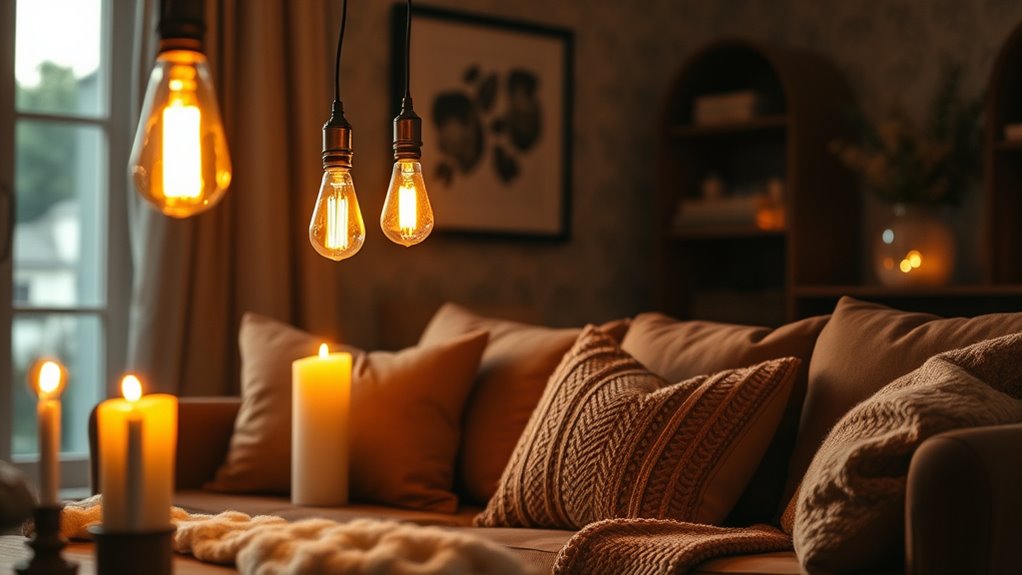
Warm lighting creates a soft glow that instantly makes your space feel more inviting. It enhances room warmth, making relaxation effortless. Plus, the cozy ambiance can boost your mood and help you unwind after a long day. Additionally, choosing the right lighting temperature can improve your overall well-being by supporting better sleep and reducing eye strain. Incorporating eco-friendly lighting options from sustainable travel experiences can further enhance your space’s environmental impact and create a more conscious living environment. Using Free Floating lighting fixtures can also help distribute light evenly and add a modern touch to your decor. Being mindful of safer riding habits in your lighting choices can contribute to a more comfortable and secure environment. Exploring cutting‑edge gadgets like smart lighting systems can optimize your lighting experience and elevate your space’s ambiance.
Soft Glow Effects
Soft glow effects achieved through warm lighting instantly transform a space into a cozy, inviting haven. When you use warm-colored bulbs or fixtures that diffuse light gently, the atmosphere becomes soothing and intimate. These soft glows reduce harsh shadows and create a sense of comfort, perfect for relaxing evenings or intimate gatherings. You can enhance this effect with dimmable lights, allowing you to adjust brightness to suit the mood. Incorporating lamps with fabric shades or decorative fixtures further softens the illumination, adding texture and visual interest. The key is to avoid overly bright or cold lighting, which can feel stark. Instead, aim for gentle, warm illumination that envelops your space, making it feel welcoming and tranquil. Paying attention to lighting quality ensures that the ambiance remains cozy and enhances the beauty of your fine rugs. Using essential oils for relaxation, such as lavender or chamomile, can further enhance the calming atmosphere and create a truly serene environment. Properly selecting and controlling lighting color temperature is essential for maintaining this warm, soothing effect throughout the space. Additionally, integrating lighting design principles can help you optimize the overall mood and comfort. Choosing the right lighting fixtures can also influence the distribution and softness of light, ensuring a harmonious environment.
Enhancing Room Warmth
To create a truly inviting atmosphere, focus on enhancing the warmth of your room through carefully chosen lighting. Use warm-colored bulbs with a color temperature around 2700K to 3000K, which emit a soft, amber glow. Incorporate multiple light sources, like table lamps, floor lamps, or string lights, to layer the lighting and avoid harsh shadows. Dimmers are a great addition, allowing you to adjust brightness according to your mood and activity. Keep fixtures simple and cozy, such as shaded lamps or vintage-inspired designs, to reinforce the feeling of comfort. Additionally, consider using warm-toned lampshades or curtains to diffuse light further, creating a gentle, inviting ambiance. These choices help your space feel more relaxed, intimate, and welcoming. Incorporating lighting design principles can further optimize the mood and overall ambiance of your room. Proper lighting placement can also enhance comfort and reduce eye strain, making your space more enjoyable. Understanding the impact of light quality on mood can help you select the best fixtures for your desired atmosphere. For example, the brightness level of your lighting can significantly influence how cozy or energizing your space feels.
Mood-Boosting Ambiance
Ever wonder how to effortlessly create a cozy, relaxing space that lifts your mood? Warm lighting is your secret weapon. By choosing bulbs with a soft, amber glow, you instantly transform any room into a comforting haven. This type of lighting reduces stress and encourages relaxation, making your space feel inviting and safe. Use dimmable fixtures to adjust brightness based on your mood or activity, whether winding down with a book or sharing a quiet dinner. Incorporate warm-colored lamps or candles to enhance the effect. The key is to create layers of gentle light that soothe your senses. Proper lighting design can further enhance the mood and ambiance of your space. Adjusting lighting temperature to match the desired atmosphere is an essential aspect of creating mood-boosting environments. Incorporating layered lighting helps you customize the ambiance and further supports a cozy atmosphere. For optimal comfort, consider lighting placement to evenly distribute warmth and avoid harsh shadows. Additionally, selecting the right lighting temperature plays a crucial role in establishing the desired mood. With warm lighting, you foster an environment that feels cozy and uplifting, perfect for unwinding or simply enjoying a peaceful moment.
Cool Lighting: Enhancing Alertness and Focus

Cool lighting can boost your cognitive performance, helping you stay sharp and productive. It also improves visual clarity, making tasks easier to see and focus on. When you need to stay alert and wakeful, cool lighting is a powerful tool to enhance your concentration.
Boosts Cognitive Performance
Research shows that cool lighting can considerably boost your cognitive performance by increasing alertness and focus. When you work under bright, blue-toned light, your brain stays more engaged. To maximize these benefits, consider:
- Maintaining a well-lit workspace to reduce fatigue and keep your mind sharp.
- Using cool lighting during critical tasks like studying or problem-solving to enhance concentration.
- Limiting exposure to warm lighting in high-focus moments, as it can promote relaxation and reduce alertness.
Improves Visual Clarity
When you work under cool lighting, your visual clarity improves because the higher color temperature helps your eyes distinguish details more sharply. This type of lighting reduces eye strain during tasks requiring focus, making small text or fine lines more visible. The clarity boost allows you to perform detailed work more efficiently and with less fatigue. Consider the following benefits:
| Benefit | Explanation |
|---|---|
| Sharp contrast | Enhances differentiation of objects and text |
| Reduced glare | Minimizes reflections that obscure details |
| Clearer color perception | Accurate color recognition for precise tasks |
| Less eye strain | Less fatigue during prolonged focus periods |
| Faster recognition | Quicker identification of fine details |
Promotes Wakefulness
Cooling your lighting environment can markedly boost your alertness and focus throughout the day. Cool lighting, with its bluish tones, signals your brain that it’s daytime, helping you stay awake. To maximize this effect:
- Use LED or fluorescent bulbs in your workspace to create a crisp, energizing atmosphere.
- Keep your environment well-lit during work hours to prevent drowsiness and maintain concentration.
- Incorporate natural daylight whenever possible, as it naturally promotes wakefulness and alertness.
This type of lighting inhibits melatonin production, which makes you feel sleepy, keeping you sharp. By choosing cooler light temperatures, you support your focus, productivity, and overall wakefulness, especially during long work sessions or early mornings.
The Psychological Effects of Different Lighting Temperatures
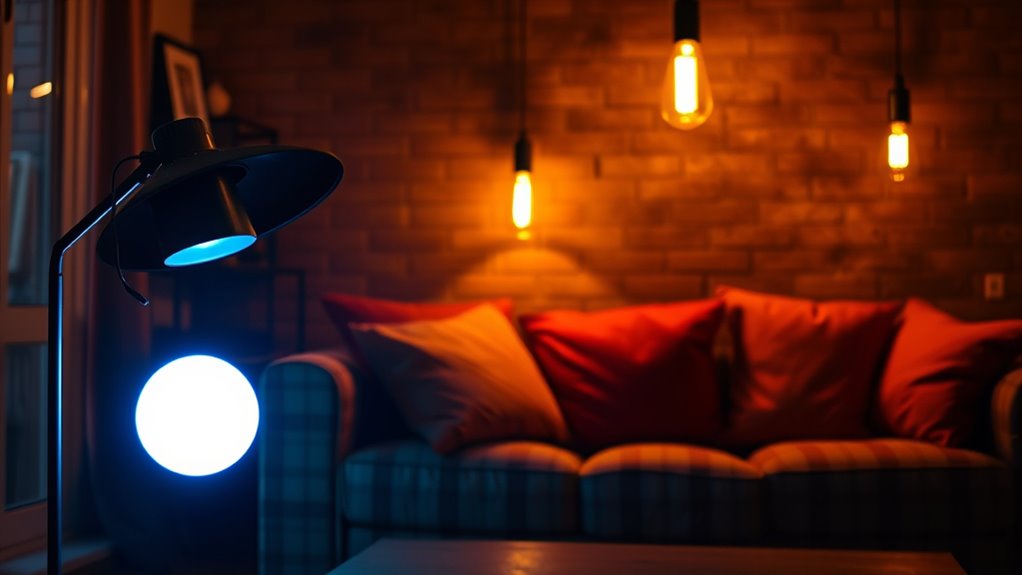
Lighting temperature profoundly influences your mood and mental state, shaping how you feel in a space. Warm lighting, with its yellowish hue, tends to create a cozy, relaxing atmosphere, helping you unwind and feel comfortable. It can reduce stress and promote feelings of intimacy, making it ideal for bedrooms or living rooms. Conversely, cool lighting, with its bluish tone, energizes you and enhances alertness, which can boost focus and productivity. It’s often used in workspaces or areas where you need to stay attentive. Neutral lighting strikes a balance between the two, offering a natural feel that minimizes mood swings. Your choice of lighting temperature can impact your emotional well-being, influencing everything from relaxation to motivation throughout your day.
Practical Applications of Lighting Temperature in Various Settings
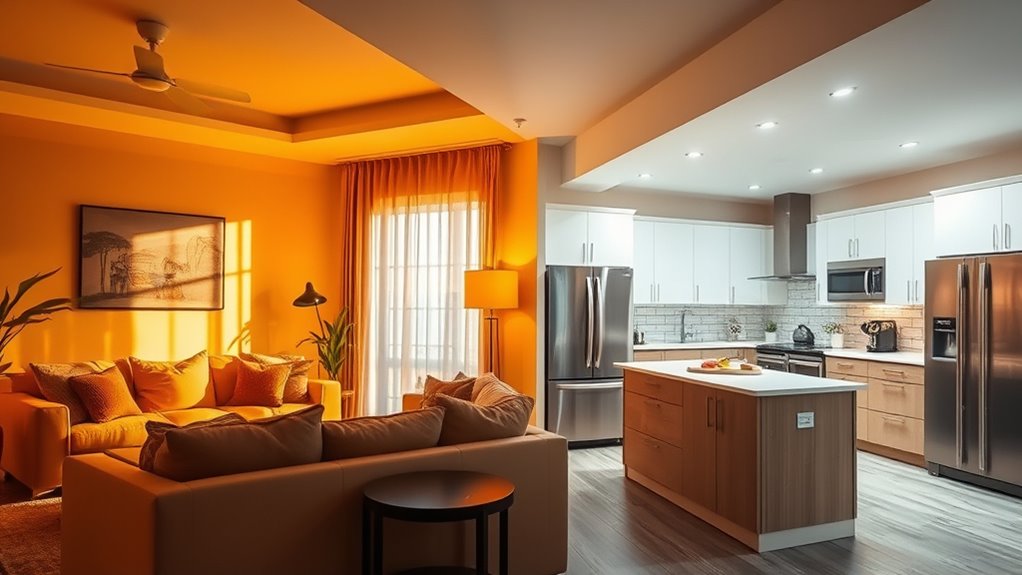
Choosing the right lighting temperature can transform different spaces to suit their intended purpose. In residential areas, warm light (around 2700K-3000K) creates cozy atmospheres perfect for relaxing or dining. In offices, cooler light (4000K-5000K) boosts alertness and focus, making work more efficient. For retail environments, a balanced approach enhances product appearance and attracts customers. To apply this effectively:
- Use warm lighting in living rooms and bedrooms for comfort.
- Opt for cooler lighting in workspaces to improve concentration.
- Combine different temperatures in retail to highlight products and create ambiance.
Matching lighting temperature to the setting enhances functionality and mood, making spaces more inviting and effective. Knowing these practical applications helps you create environments tailored to specific needs.
Tips for Choosing the Right Lighting Temperature for Your Environment

Selecting the right lighting temperature starts with understanding how different tones influence the mood and function of a space. If you’re creating a cozy environment, opt for warm white lights around 2700K to 3000K, which evoke comfort and relaxation. For tasks that require focus, such as cooking or working, cooler temperatures between 4000K and 5000K provide clarity and alertness. Consider the purpose of each room and the atmosphere you want to cultivate. Don’t forget to balance brightness with tone—dimmer warm lights create intimacy, while brighter cooler lights energize. Experiment with dimmable fixtures to adjust as needed. Ultimately, choosing the right lighting temperature aligns with your space’s function and the mood you aim to set.
Frequently Asked Questions
How Does Lighting Temperature Affect Energy Consumption?
Changing your lighting temperature doesn’t substantially impact energy consumption. Cooler (bluish) and warmer (yellowish) lights use similar amounts of energy, especially if you’re using LED bulbs. If you switch to energy-efficient LEDs, you’ll save power regardless of the color temperature. So, focus on choosing energy-efficient bulbs and managing your lighting usage, rather than worrying about temperature, to reduce your overall energy consumption effectively.
Can Lighting Temperature Influence Sleep Patterns?
Yes, lighting temperature can influence your sleep patterns. Cooler, blue-toned light in the evening suppresses melatonin production, making it harder for you to fall asleep. Conversely, warmer, yellow-toned light promotes relaxation and signals your body that it’s time to wind down. To improve your sleep, you should use warmer lighting in the evening and avoid bright, blue light before bed.
What Are the Best Lighting Options for Outdoor Spaces?
You should choose warm, soft outdoor lighting to create inviting, cozy spaces. Use string lights, lanterns, or solar-powered lamps that emit gentle glows, encouraging relaxation and conversation. Opt for adjustable fixtures to control brightness and ambiance, and consider weather-resistant options for durability. By selecting lighting that’s both functional and charming, you enhance safety and atmosphere, making your outdoor area perfect for evening gatherings or quiet nights under the stars.
How Does Color Temperature Impact Color Accuracy in Photography?
Color temperature directly affects color accuracy in photography by influencing how true-to-life colors appear in your images. If you use lighting with a mismatched temperature, your photos may look unnatural or have a color cast. By adjusting your camera settings or using proper lighting with the correct color temperature, you guarantee that colors are rendered accurately, giving your photos a consistent and realistic look.
Are There Health Risks Associated With Specific Lighting Temperatures?
Like a knight in shining armor, you might wonder if certain lighting temps pose health risks. Generally, high color temperatures, like blue-rich daylight, can cause eye strain or discomfort if you’re exposed for long periods. On the other hand, very warm lighting might lead to poor sleep or fatigue. To stay safe, balance your exposure, take breaks, and use appropriate lighting for your activities.
Conclusion
So, next time you pick your lighting, remember—warm bulbs turn your home into a cozy cave, while cool ones make your office feel like a science lab. Choose wisely, or risk turning your living room into a bunker or your workspace into a disco. After all, your mood (and sanity) depends on it. Who knew something as simple as light temperature could be so powerful? Happy illuminating!