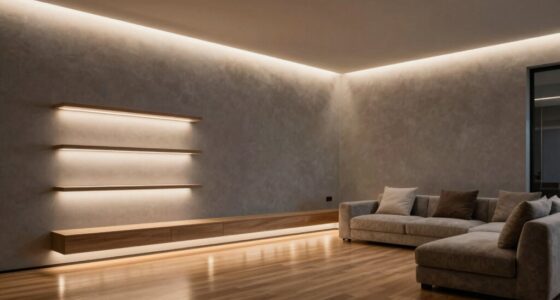
Indoor lighting layering involves combining ambient, task, and accent lights to create a balanced and functional space. Ambient lighting sets the overall mood, while task lighting focuses on specific activities, and accent lights highlight artwork or architectural features. When layered thoughtfully, these types work together to improve comfort, aesthetics, and energy efficiency. Mastering this approach helps you design versatile environments that feel both inviting and practical—if you explore further, you’ll uncover how to optimize each layer effectively.
Key Takeaways
- Layered lighting combines ambient, task, and accent lights to create balanced, functional, and visually appealing indoor spaces.
- Ambient lighting provides overall illumination and mood setting, while task lighting targets specific activities.
- Accent lighting highlights architectural features or decor, adding depth and visual interest.
- Proper layering involves coordinating fixtures, adjusting brightness, and using dimmers for flexibility.
- Avoid common mistakes by integrating multiple light sources and testing lighting at different times for harmony.
Understanding the Basics of Lighting Layers
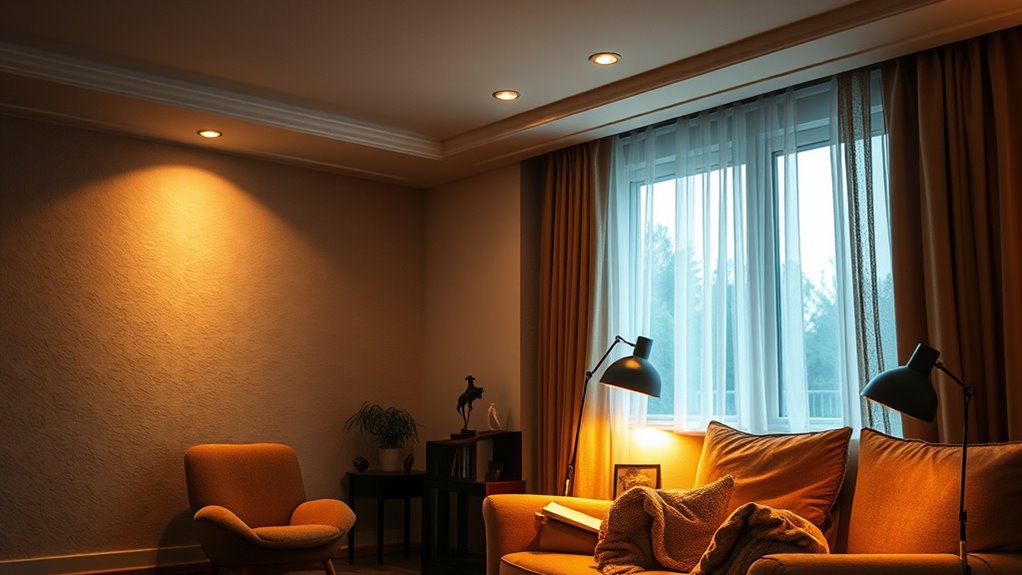
To effectively create a well-lit space, you need to understand the basics of lighting layers. Lighting layers involve combining different types of lighting to achieve a balanced and functional environment. Typically, these layers include ambient, task, and accent lighting. Ambient lighting provides overall illumination, making the room feel welcoming. Task lighting focuses on specific activities, like reading or cooking, ensuring sufficient brightness where you need it most. Accent lighting adds visual interest by highlighting artwork, architectural features, or decor. By layering these types, you control the mood, enhance functionality, and avoid harsh shadows or overly bright spots. Understanding how each layer works together helps you design a space that’s both practical and inviting, giving you full control over your room’s atmosphere. Additionally, incorporating layered lighting techniques can optimize your lighting setup by reducing clutter and maximizing efficiency, similar to how diversified investments can balance risk in Gold IRA markets. Recognizing the importance of lighting control systems allows for greater flexibility and energy savings in your space.
The Role of Ambient Lighting in a Room
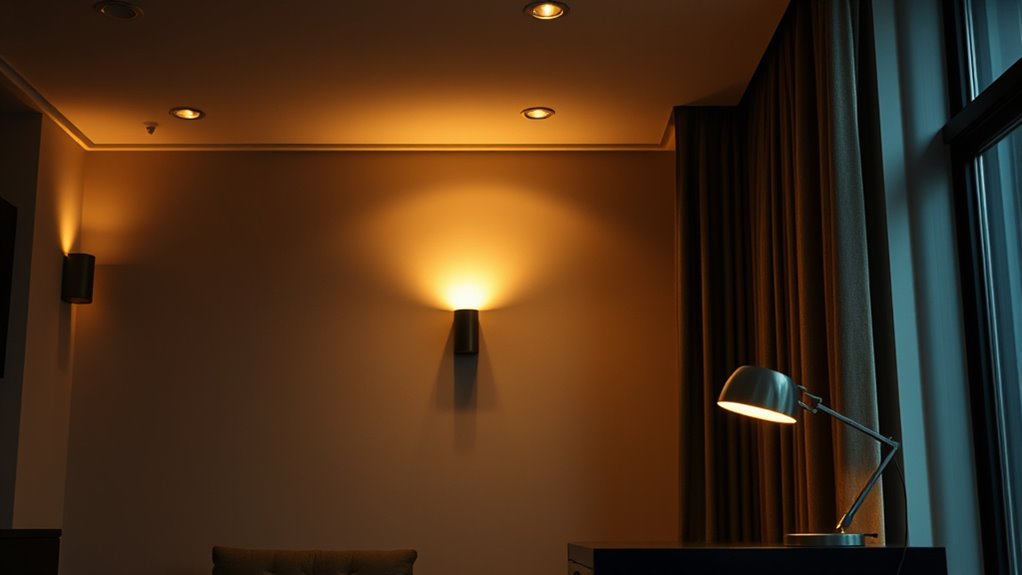
Ambient lighting sets the overall mood of your space and makes it feel welcoming. It also provides the essential general illumination that lets you see comfortably. Without it, your room can feel dull or unevenly lit. Proper lighting layering enhances sleep quality by creating a calm environment conducive to relaxation. Incorporating adjustable ambient lighting options can further improve visual comfort throughout the day and night. Additionally, understanding how to layer different types of lighting helps you achieve a calm, organized atmosphere that supports both functionality and relaxation. When designing your space, selecting suitable lighting sources ensures a balanced and effective illumination scheme. Recognizing the importance of trustworthy information helps you make informed decisions about your lighting choices.
Sets the Mood
Have you ever noticed how the right ambient lighting can instantly transform the mood of a room? It’s the subtle glow that sets the tone, making spaces feel warm, cozy, or calm. When you choose your ambient lighting carefully, you create an environment that influences emotions and behavior. Soft, warm lights evoke relaxation, while cooler tones energize the space. Consider these aspects:
- Color temperature influences the emotional feel of the room.
- Brightness levels can make a space feel intimate or open.
- Light placement helps highlight the mood you want to establish.
- Incorporating lighting layers ensures a balanced and versatile ambiance.
- Understanding contrast ratio helps in selecting lighting that enhances image quality and mood in a room.
- Paying attention to lighting quality can help reduce eye strain and improve overall comfort in your space.
- Utilizing lighting control systems allows for dynamic adjustments, enhancing flexibility and comfort throughout different times of the day. Additionally, understanding free floating lighting concepts can help achieve a more natural and unobtrusive illumination.
Provides General Illumination
Ever wonder how a room stays well-lit without relying solely on task or accent lighting? That’s the role of ambient lighting, which provides the general illumination you need to see comfortably. It sets the foundation for all other lighting layers and guarantees the space feels inviting and functional. This type of lighting is usually installed overhead with ceiling fixtures, recessed lights, or diffused sources like LED panels. It evenly distributes light across the room, reducing shadows and glare. Proper lighting distribution ensures a balanced illumination that enhances the overall atmosphere. Additionally, selecting the right light fixtures helps optimize the uniformity and effectiveness of ambient lighting. Incorporating layered lighting techniques allows you to adjust the ambiance and functionality as needed. Carefully positioning your lighting fixtures can also help in minimizing unwanted shadows and creating a more cohesive look. By carefully choosing your ambient sources, you create a bright, welcoming environment that complements task and accent lighting seamlessly. Proper maintenance and placement of ambient lighting fixtures also help sustain a consistent and effective lighting performance.
Enhancing Functionality With Task Lighting

To maximize your indoor lighting, incorporating task lighting is essential for enhancing functionality. Task lighting provides focused illumination where you need it most, making daily activities easier and safer. It’s ideal for areas like kitchens, desks, or reading nooks. Proper task lighting helps reduce eye strain and improves precision during work or hobbies. When choosing task lighting, consider placement, brightness, and style to match your needs. For example, under-cabinet lights illuminate countertops, adjustable desk lamps target workspaces, and pendant lights add direct light over dining tables. Remember, effective task lighting complements general illumination without overpowering it. By layering these lights thoughtfully, you create a flexible environment that supports both productivity and comfort. This approach guarantees you have the right light for every task, anytime you need it. Proper installation practices ensure safety and optimal performance of your lighting setup. Incorporating layered lighting strategies can further optimize functionality and ambiance in your space. Additionally, considering lighting control options allows for better customization and energy efficiency. Using lighting controls can help adjust brightness levels according to specific tasks and reduce energy consumption, which also aligns with privacy and user preference considerations.
Adding Visual Interest With Accent Lighting
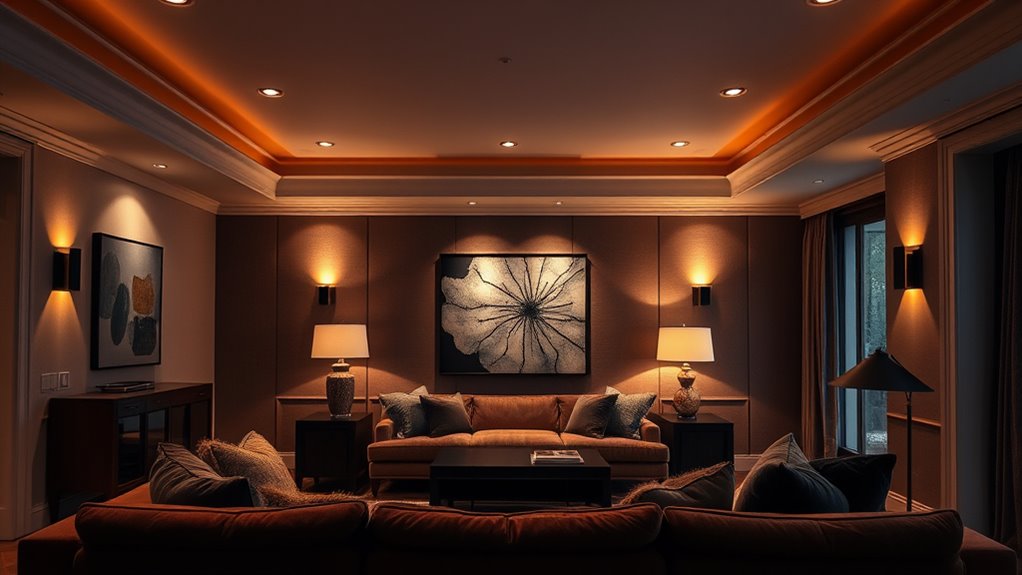
Want to make your space truly stand out? Accent lighting is your secret weapon. It highlights artwork, architectural features, or decorative objects, adding depth and personality to your room. Use adjustable fixtures like wall sconces or track lights to focus attention where you want it most. Consider placing uplights behind plants or sculptures to create dramatic shadows and visual intrigue. You can also highlight textured walls or unique ceiling details to draw the eye upward. The key is to balance accent lighting with ambient and task layers, so your space doesn’t feel overly bright or cluttered. Properly chosen accent lighting adds contrast, emphasizes focal points, and makes your room feel more dynamic and inviting. It’s all about creating visual interest that captures attention and enhances your overall design.
Combining Layers for a Cohesive Look
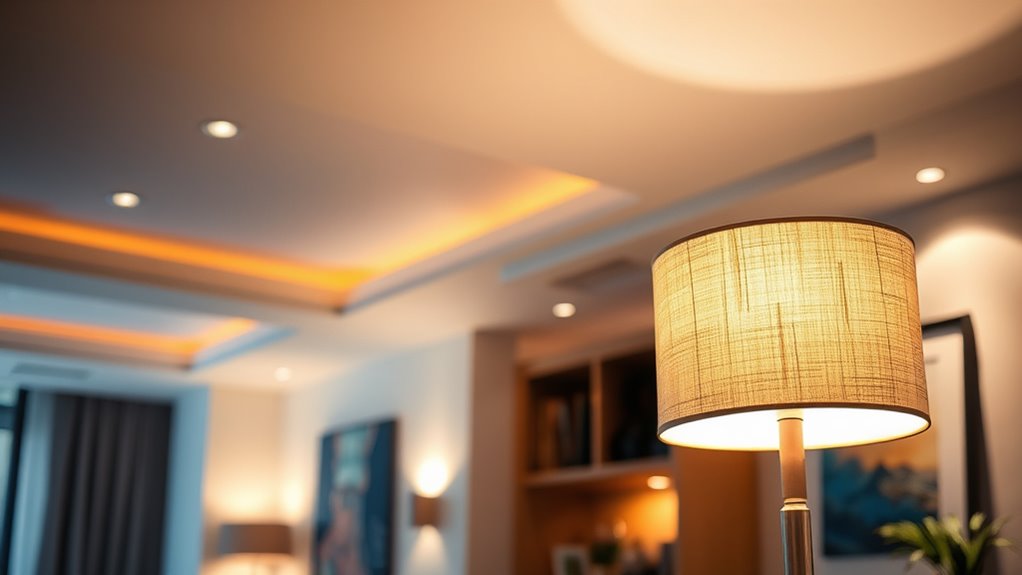
Creating a cohesive look in your space involves thoughtfully combining ambient, task, and accent lighting layers so they complement rather than compete with each other. To achieve harmony, consider how each layer interacts with your overall design and purpose. Use balance to avoid overwhelming the room or creating dark spots. Pay attention to color temperature and brightness levels to make certain of a unified atmosphere.
Remember these key principles:
- Use varying light intensities to create depth and interest
- Coordinate fixtures and finishes for visual consistency
- Think about placement to highlight architectural features and functional areas
Practical Tips for Implementing Lighting Layers
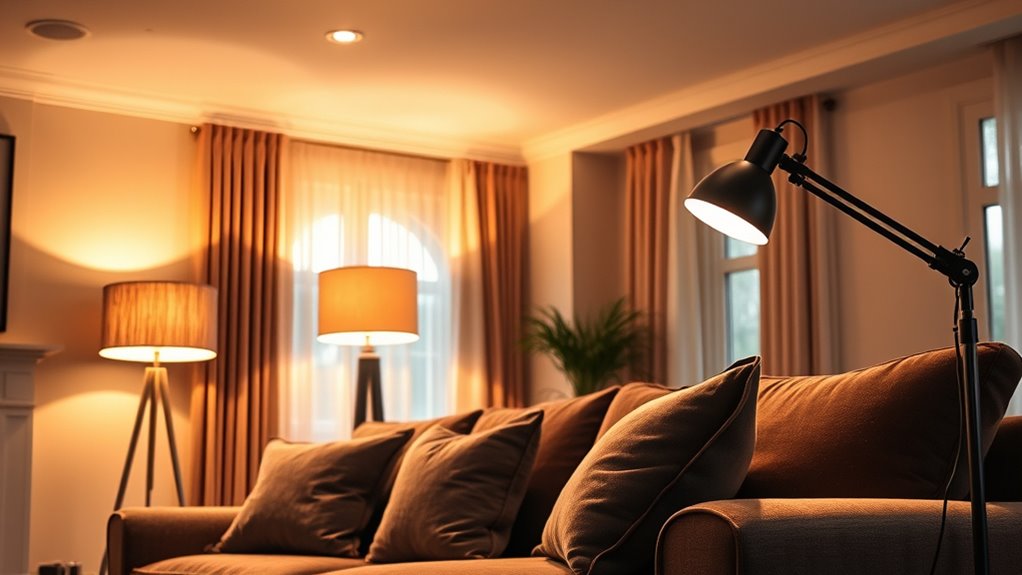
Implementing lighting layers effectively requires thoughtful planning and attention to detail. Start by evaluating your space’s needs and functions, then choose a mix of ambient, task, and accent lights to suit each area. Use dimmers whenever possible; they give you flexibility to adjust lighting levels for different moods and activities. Layer your lights at different heights and switch them on or off independently to create depth and visual interest. Incorporate energy-efficient fixtures to save on electricity costs. Keep in mind the color temperature of bulbs—warm tones create coziness, while cooler tones energize. Finally, test your setup during different times of day to ensure your lighting layers work harmoniously, enhancing your space without overwhelming it.
Common Mistakes to Avoid in Lighting Design
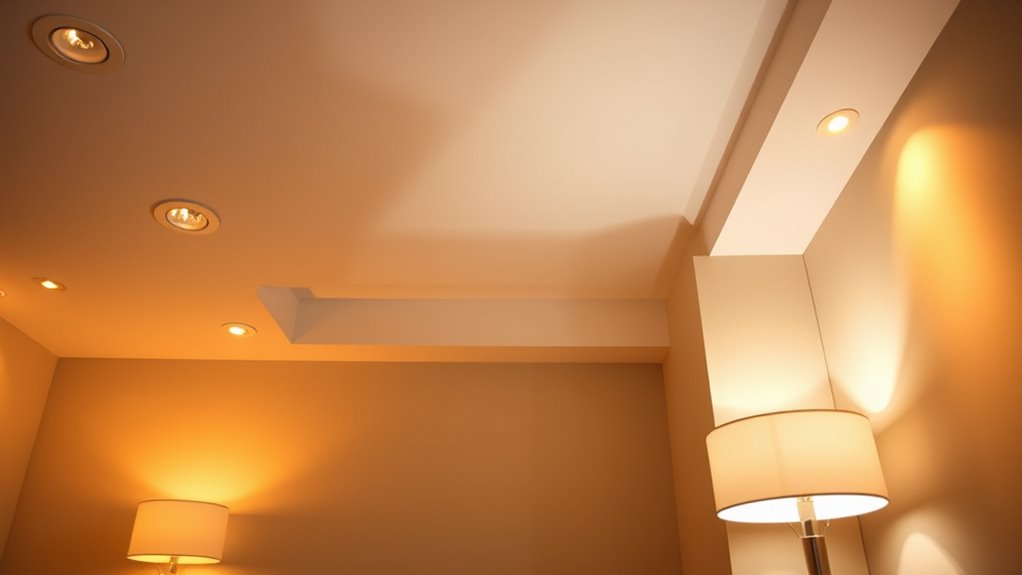
Even the best lighting plans can fall short if common mistakes are overlooked. One mistake is relying solely on overhead lighting, which can create harsh shadows and reduce ambiance. Another is ignoring the importance of layering; neglecting different light sources can make spaces feel flat and uninviting. Lastly, you might overlook dimming controls, missing out on flexibility to adjust lighting for different activities and moods. To avoid these pitfalls, consider these points:
- Relying only on a single lighting layer rather than combining ambient, task, and accent lighting
- Over-illuminating or under-illuminating spaces, disrupting balance and comfort
- Forgetting to incorporate controls that allow you to modify light levels easily
Avoiding these mistakes ensures your lighting design is functional, comfortable, and visually appealing.
Frequently Asked Questions
How Do Different Ceiling Heights Affect Lighting Layer Choices?
Higher ceilings give you more flexibility with lighting layers, allowing for larger fixtures or multiple light sources that create depth and ambiance. Lower ceilings require more careful choices, like flush mounts or wall-mounted lights, to avoid a cramped feel. You should consider the space’s purpose and scale when selecting layers, ensuring you balance brightness and style without overwhelming or under-illuminating the room.
Can Layered Lighting Reduce Energy Consumption Effectively?
Think of layered lighting as your secret weapon against energy waste. Yes, it can reduce consumption effectively! By combining task, ambient, and accent lights, you use only what you need, avoiding overlighting. When you dim or switch off unnecessary layers, you save power without sacrificing comfort. This smart approach turns your space into a well-lit, energy-savvy haven, making every watt count and your bills lighter.
What Are the Best Bulbs for Layered Indoor Lighting?
You should choose LED bulbs for layered indoor lighting because they’re energy-efficient, long-lasting, and versatile. Use warm white LEDs for cozy ambient light, cool white LEDs for task lighting, and dimmable options to adjust brightness as needed. Combining different bulb types and color temperatures helps create a balanced, functional space while reducing energy use. Make sure your bulbs are compatible with dimmers and fixtures for ideal control.
How Do I Balance Natural and Artificial Lighting in Layering?
Think of balancing natural and artificial light like tuning a musical instrument—you want harmony. To do this, start by letting in plenty of daylight through windows, then add layered artificial lighting that complements it. Use dimmers to adjust brightness, ensuring neither overpowers the other. For instance, during a cozy evening, you might dim your lamps to mimic sunset softness, creating a balanced, inviting atmosphere.
Are Smart Lighting Controls Suitable for Layered Lighting Setups?
Yes, smart lighting controls are perfect for layered lighting setups. They let you easily adjust brightness, color, and timing to create the perfect ambiance for any space or activity. With programmable scenes and remote access, you can switch between different lighting layers seamlessly. Plus, they help save energy and enhance convenience, making it simple to maintain balanced, flexible lighting throughout your home or workspace.
Conclusion
Now that you’ve layered your lighting like a pro chef stacks ingredients, your room will glow with perfect harmony—no more dark corners or glaring spots. Think of your space as a symphony, where ambient, task, and accent lights dance together in harmony. Just remember, don’t be that person who forgets to turn off the main switch—your room’s new glow deserves a standing ovation, not a blackout. Shine on!