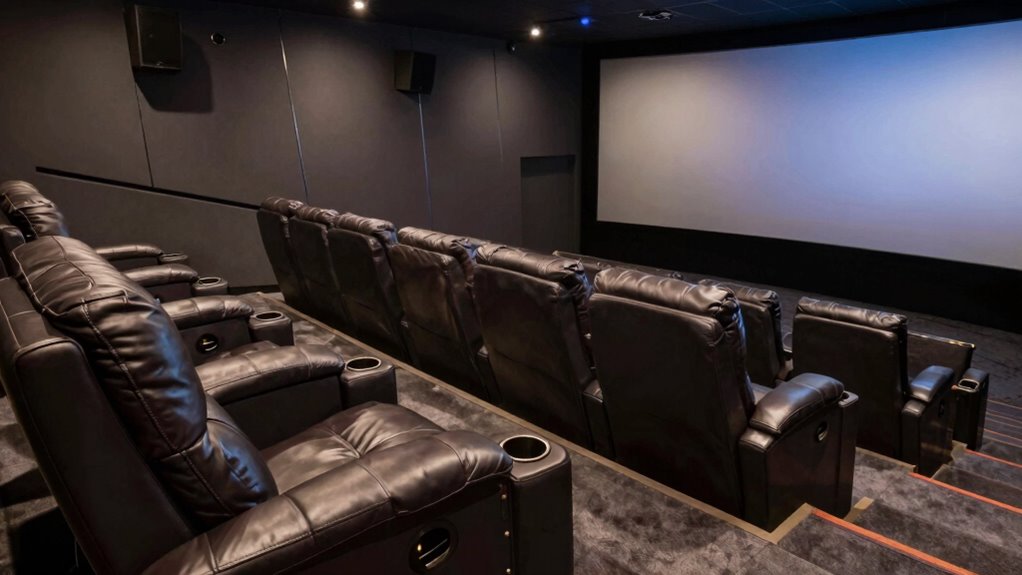

To optimize your home theater seating ergonomics, focus on adjustable features that support proper posture, like lumbar support and customizable headrests. Choose seats with the right height, depth, and padding to fit your body comfortably. Armrests and reclining options help reduce tension and improve relaxation during long sessions. Material choices also matter—opt for breathable, supportive fabrics. If you continue exploring, you’ll discover how to create a personalized, comfortable, and healthy viewing setup tailored just for you.
Key Takeaways
- Prioritize adjustable features like seat height, recline, and lumbar support to customize comfort and promote proper posture.
- Incorporate ergonomic support such as lumbar cushions and headrests to maintain spinal alignment during extended viewing.
- Ensure seat dimensions fit individual body measurements, with adequate depth and width for optimal support and circulation.
- Use quality materials and padding that balance support and softness, enhancing comfort and reducing fatigue.
- Arrange seating to optimize sightlines and space, reducing neck strain and facilitating easy movement within the home theater.
Understanding Ergonomic Principles for Home Theater Seating
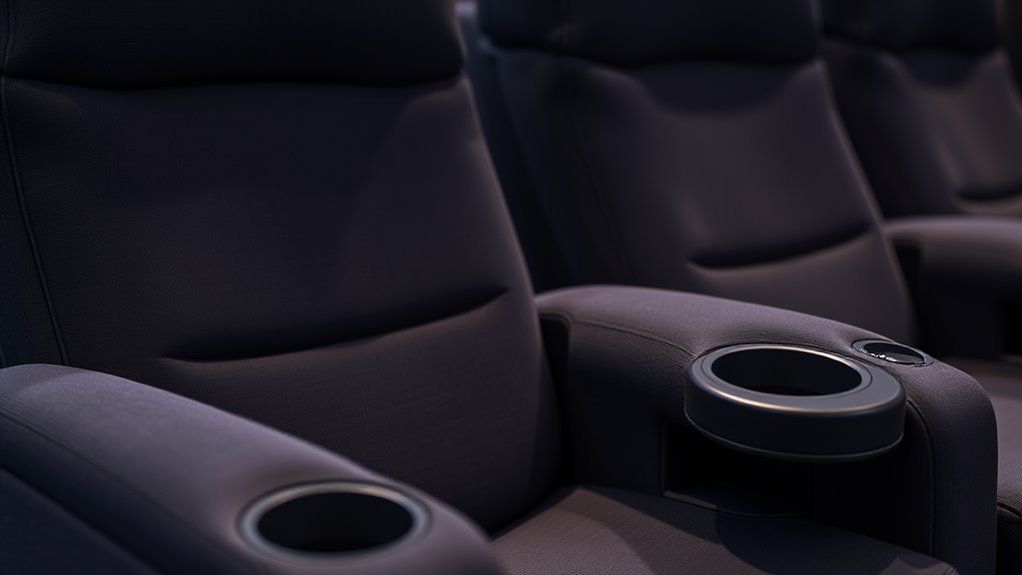
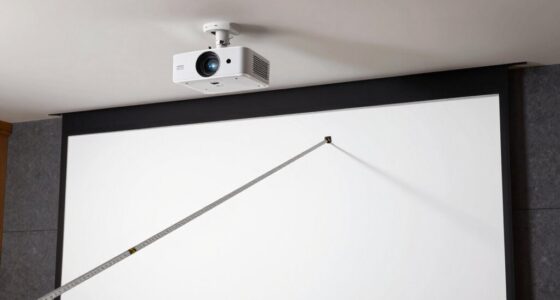
To create a comfortable and supportive home theater experience, understanding ergonomic principles is essential. You need to contemplate how your body interacts with your seating to prevent discomfort and fatigue. Proper alignment means your head, neck, and spine stay in neutral positions, reducing strain during long viewing sessions. Adjustability is key; seats that can be customized to fit your height and body shape help maintain good posture. Pay attention to seat depth, width, and cushioning, which influence overall comfort. Good ergonomics also involve supporting your limbs and maintaining proper eye level with the screen. Additionally, considering projector placement ensures optimal image quality and viewing angle. Incorporating ergonomic design principles into your seating arrangements can further enhance comfort and reduce physical stress during extended viewing. Being mindful of body mechanics can help you select or modify your seating to enhance comfort and enjoy your movies without unnecessary physical stress. Furthermore, selecting seats with adjustable lumbar support can significantly improve long-term comfort and spinal health during prolonged use.
The Importance of Lumbar Support and Back Comfort
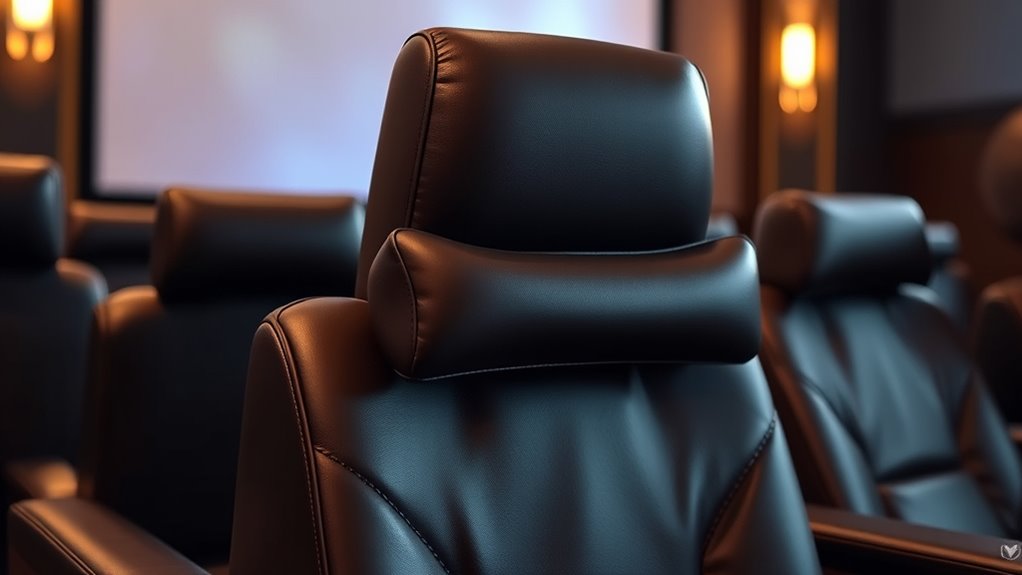
Have you considered how essential lumbar support is for long movie sessions? Proper lumbar support helps maintain your spine’s natural curve, reducing fatigue and discomfort. Without it, you might find yourself slouching or experiencing back pain that distracts from the movie. Good lumbar support encourages proper posture and keeps your back feeling relaxed. Imagine sitting in a chair that molds to your lower back, providing steady, gentle pressure. Think about a seat with:
- Contoured cushioning that supports your lower spine
- Adjustable lumbar pillows for a customized fit
- Firm but comfortable padding to prevent sinking
- Ergonomic design that promotes upright sitting
Ensuring your seat offers adequate lumbar support means you can enjoy extended viewing without back strain, making your home theater experience more comfortable and immersive. Proper ergonomic design also helps prevent long-term spinal issues and enhances overall comfort. Additionally, choosing seats with adjustable support features allows for personalized comfort tailored to your unique posture needs. Incorporating lumbar support technology can further optimize your seating comfort and promote better spinal health. Being aware of proper seating ergonomics can significantly improve your overall viewing experience and prevent discomfort over time.
Selecting the Right Seat Height and Depth
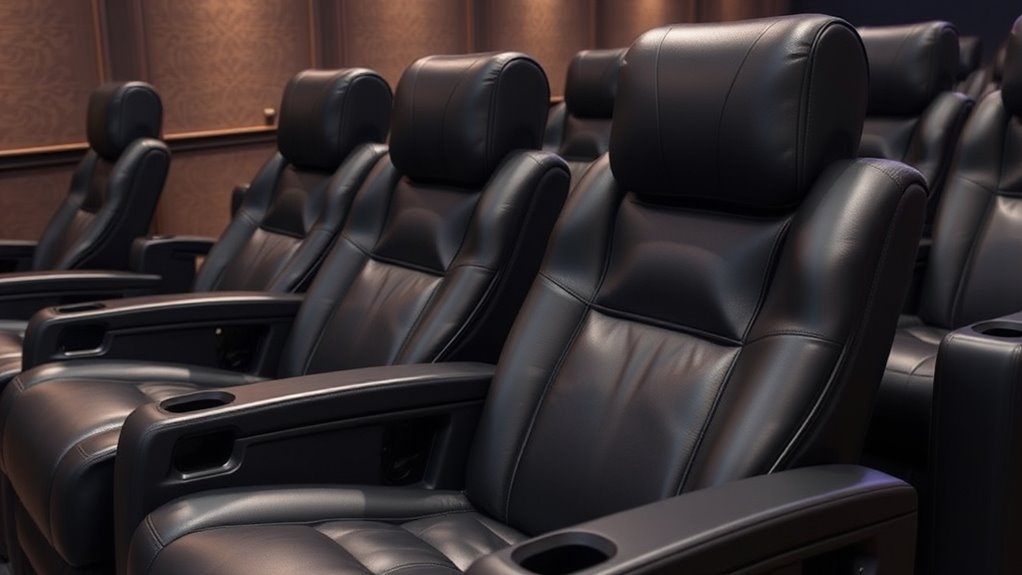
Choosing the right seat height and depth is essential for maximizing comfort and ensuring ideal viewing angles. When selecting a seat, measure the distance from your hips to your knees to determine the appropriate seat depth; you want enough space for your thighs to rest comfortably without pressing against the front. For height, ensure your feet are flat on the floor and your knees are at a 90-degree angle, providing good circulation and support. If the seat is too high, your legs may dangle, causing discomfort; too low, and it can strain your back. Adjustable seats can help you find the perfect fit, but if that’s not an option, choose a seat with a height and depth that align with your body measurements for lasting comfort.
The Role of Armrests and Headrests in Ergonomic Seating
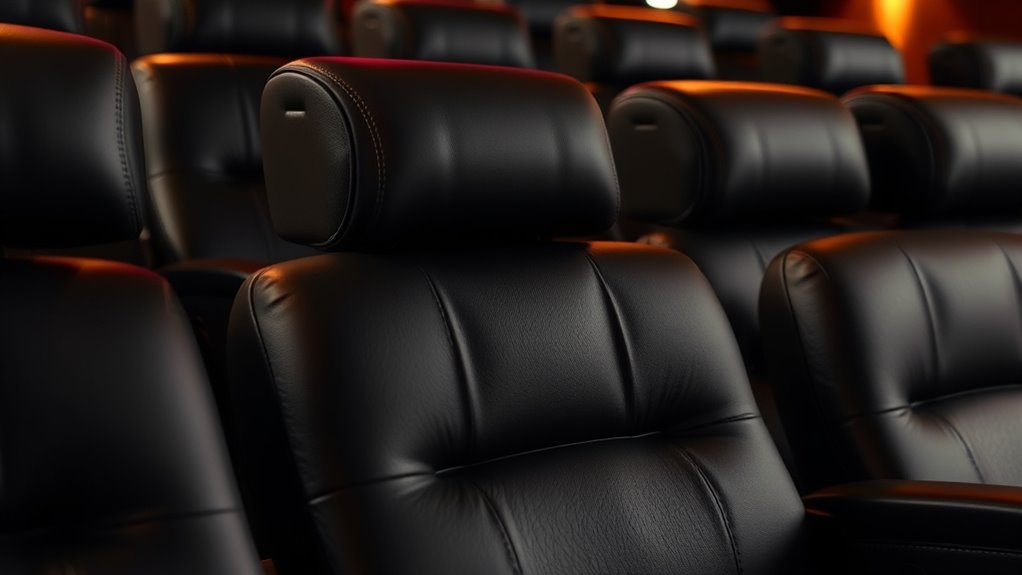
Ever wondered how armrests and headrests can enhance your home theater experience? These features aren’t just about luxury—they support your comfort and posture during long viewing sessions. Well-designed armrests provide a place to rest your arms, reducing tension and promoting relaxation. Headrests support your neck and head, preventing strain and encouraging proper alignment. When properly positioned, they keep you comfortable without forcing you into awkward positions. Imagine:
- Softly padded armrests that cradle your arms
- Adjustable headrests for personalized support
- Contoured shapes that follow your body’s natural curves
- Armrests with built-in storage or cupholders
These elements work together to keep you comfortable and engaged, turning your home theater into a true haven for movie nights. Proper positioning of these features ensures optimal ergonomic support, helping you maintain good posture throughout your viewing. Incorporating ergonomic design principles can further enhance your seating comfort and reduce fatigue during extended viewing sessions. Additionally, understanding ergonomic support can guide you in selecting and arranging your seating for maximum comfort. Using ergonomic support as a guide can help you choose seating that promotes better spinal alignment and reduces discomfort. Proper ergonomic considerations in seating design can also minimize postural strain during long periods of sitting.
Material Choices and Padding for Comfort and Support

Selecting the right materials and padding for your home theater seating is essential to achieving ideal comfort and support. High-quality upholstery like leather or fabric affects both durability and feel, so choose based on your preferences and maintenance needs. Foam padding is common for cushioned comfort, but the density matters—firmer foams provide better support, while softer foams offer plushness. Memory foam molds to your body, giving personalized comfort but may retain heat. Adding layers like down or fiberfill can enhance softness, but too much can reduce support. Consider breathability to prevent overheating during long viewing sessions. Additionally, understanding the concept of Free Floating padding can help improve the flexibility and adaptability of your seats’ cushioning. Using ergonomic design principles ensures that your seating provides proper lumbar support and promotes good posture. Incorporating adjustable features can further customize comfort for different users. Selecting appropriate padding materials based on your needs can also influence the longevity and overall feel of your seats. Ultimately, the right combination of materials and padding guarantees your seats remain comfortable and supportive over time, making your home theater experience more enjoyable.
Adjustability Features for Personalized Comfort
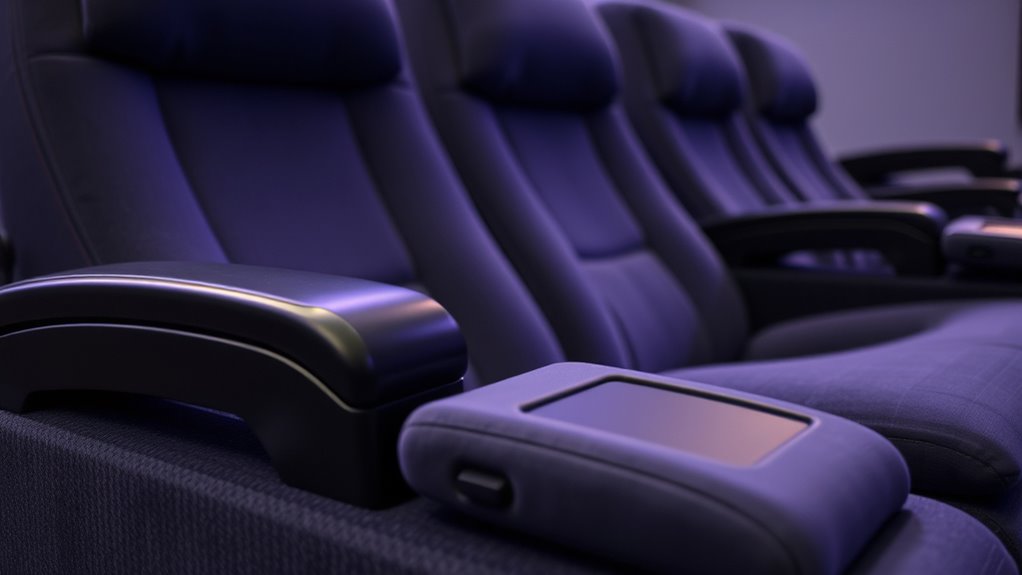
Adjustability features let you customize your home theater seating for maximum comfort. With multiple recline positions, height and tilt adjustments, and lumbar support options, you can create a setup that fits your body perfectly. These features guarantee you stay comfortable during long movie nights. Incorporating ergonomic design principles ensures that your seating promotes proper posture and reduces fatigue over extended viewing sessions. Additionally, integrating adaptive features can enhance comfort by automatically adjusting to your preferred settings. Implementing ergonomic principles can also help prevent discomfort and long-term musculoskeletal issues, especially when paired with adjustable configurations tailored to individual needs. Moreover, considering personalized support options can further optimize comfort by accommodating specific body shapes and seating preferences.
Multiple Recline Positions
Multiple recline positions allow you to customize your home theater experience by easily adjusting your seat to the perfect angle. Whether you want to sit upright for conversation or lean back for a movie marathon, this feature provides versatile comfort. With a simple lever or button, you can find your ideal position without hassle. Imagine sinking into a seat that adjusts smoothly as you shift your body, offering support exactly where you need it. Picture yourself:
- Reclining fully to kick back and relax
- Sitting upright for focused viewing or chatting
- Transitioning seamlessly between positions during a long movie
- Sharing the seat with family, adjusting for each person’s preference
This adjustability ensures you stay comfortable, no matter what you’re watching or doing. Multiple recline options help you personalize your theater experience effortlessly.
Height and Tilt Adjustments
Height and tilt adjustments let you customize your home theater seating to fit your body perfectly, ensuring ideal comfort during long movies or conversations. By adjusting the seat height, you can align your eyes with the screen for superior viewing and reduce neck strain. Tilt adjustments let you find the most comfortable angle, relieving pressure on your back and legs. These features allow you to create a personalized seating position, so you don’t have to settle for one-size-fits-all comfort. Whether you prefer a slightly raised seat or a reclined angle, these adjustments help you find the perfect fit. Proper height and tilt settings improve posture, reduce fatigue, and make your home theater experience more enjoyable. Simple to operate, they ensure your seating adapts as your preferences evolve.
Lumbar Support Options
A well-designed home theater seat should support your lower back to keep you comfortable during extended viewing sessions. Lumbar support options are key to achieving this, offering personalized comfort. Adjustable lumbar features allow you to customize the level of support, reducing strain and preventing discomfort. Many seats include built-in or removable lumbar cushions, or adjustable panels that conform to your spine’s natural curve. Some models feature electronic controls for precise adjustments, while others have manual levers or knobs. Proper lumbar support encourages good posture and minimizes fatigue, so you can enjoy movies longer. Imagine:
- A contoured cushion that molds to your back
- Easy-to-reach adjustment knobs
- Electronic controls at your fingertips
- Removable support pillows for added flexibility
Space Optimization and Seating Arrangement

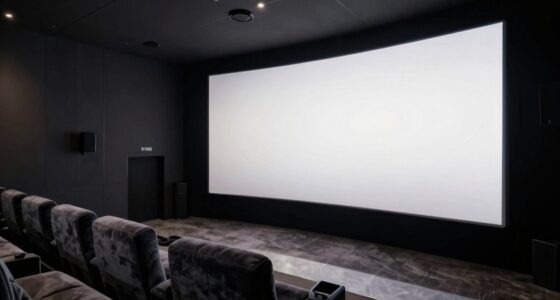
Optimizing space and arranging seating thoughtfully can dramatically enhance your home theater experience. Proper layout ensures everyone has a clear view and maintains comfort during long movies. Start by placing seats at ideal distances from the screen, typically 1.5 to 2.5 times the screen’s diagonal measurement. Use tiered or angled seating to improve sightlines, especially in larger rooms. Consider leaving enough aisle space for easy movement and access.
| Seating Tip | Benefit |
|---|---|
| Tiered seating | Better sightlines |
| Adequate aisle space | Easy movement and access |
| Distance from screen | Reduced eye strain |
| Angled arrangements | Improved viewing angles |
Thoughtful spacing and arrangement create a comfortable, immersive environment that transforms your viewing experience.
Integrating Seating With Overall Home Theater Design
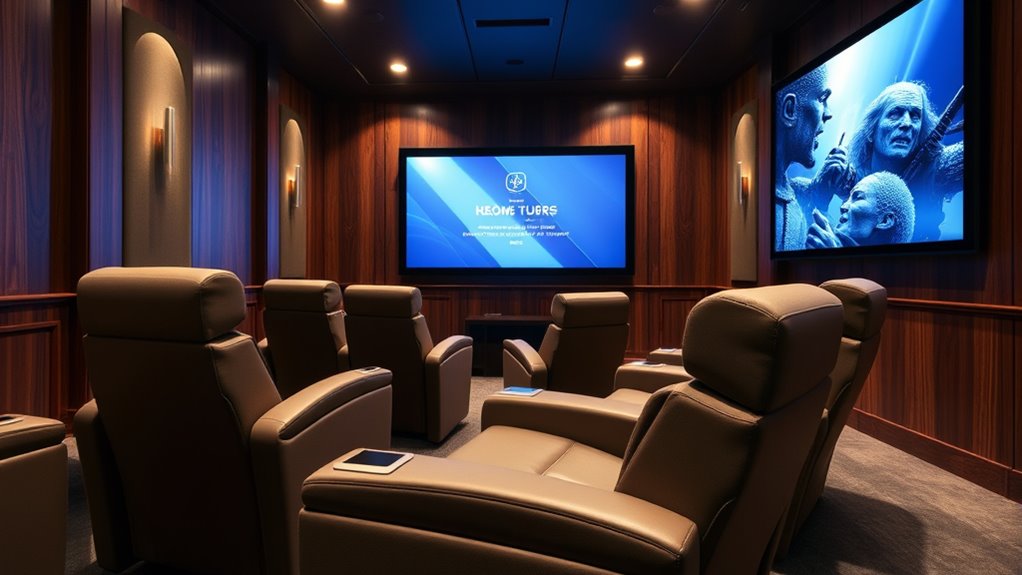
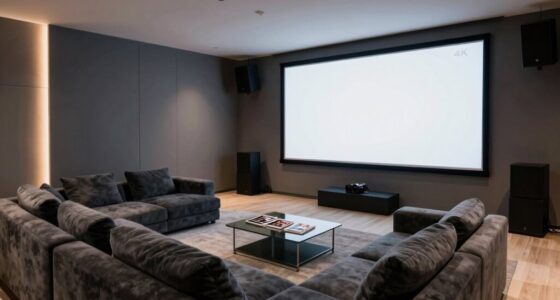
Seating should seamlessly blend with your home theater’s overall design to create a cohesive and inviting space. Think about how your chairs complement the room’s color scheme, furniture style, and lighting. The goal is to make the seats feel like a natural extension of your décor, rather than an afterthought. You can achieve this by choosing upholstery that matches or contrasts subtly with walls and curtains. Incorporate built-in shelving or hidden storage around the seating area to maintain clean lines. Consider the shape and placement of seats to enhance flow and accessibility.
- Upholstery that matches or complements walls and curtains
- Built-in storage or shelving integrated into the seating design
- Chairs that reflect the room’s architectural style
- Lighting that highlights seating areas without overpowering
Maintenance and Longevity of Ergonomic Home Theater Seats
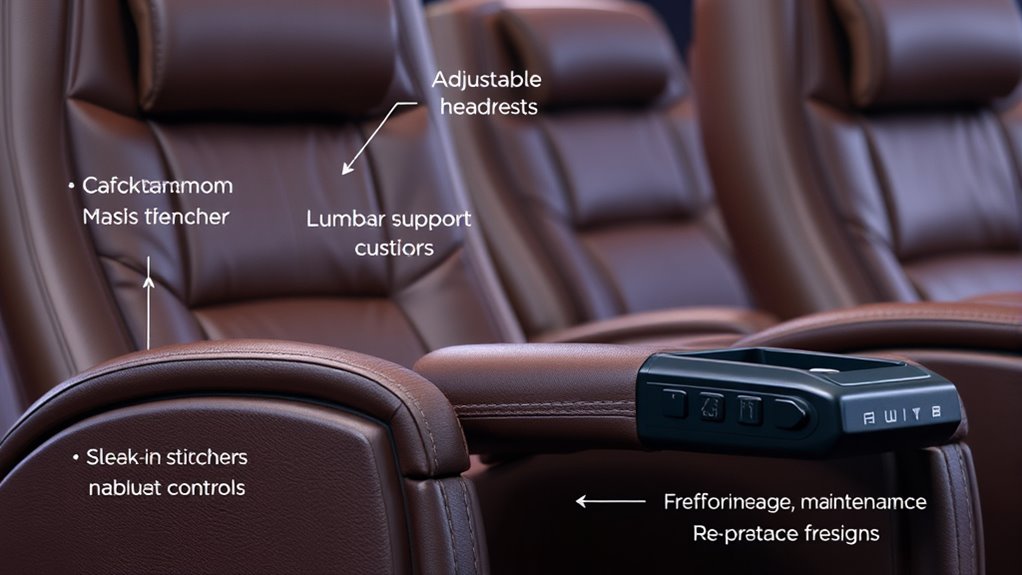
Proper maintenance is essential to guarantee your ergonomic home theater seats stay comfortable and durable over time. Regular cleaning prevents dust and debris from damaging the fabric or leather, keeping your seats fresh. Tighten loose bolts or screws to maintain stability and prevent wobbling. Condition leather surfaces every few months to avoid cracking and dryness, ensuring a luxurious feel. Avoid harsh chemicals that could degrade materials. To inspire confidence and comfort, consider this maintenance schedule:
| Task | Frequency | Benefits |
|---|---|---|
| Clean upholstery | Weekly | Keeps seats fresh and inviting |
| Tighten hardware | Monthly | Ensures stability and safety |
| Condition leather | Every 3-6 months | Prevents cracking and extends lifespan |
| Check for damage | Regularly | Prompt repairs maintain comfort |
| Protect from sunlight | Continuous | Prevents fading and material damage |
Frequently Asked Questions
How Do I Prevent Neck Strain During Long Viewing Sessions?
To prevent neck strain during long viewing sessions, make sure your seat supports your neck and back properly. Adjust the screen height so you’re looking straight ahead, avoiding craning your neck up or down. Take regular breaks, stretching your neck and shoulders. Use cushions or ergonomic pillows if needed for extra support, and sit upright rather than slouching, which can strain your neck muscles over time.
What Are the Best Materials for Reducing Heat Buildup?
Imagine your seat turning into a cozy sauna—sounds comfy, right? To avoid that heat trap, choose materials like breathable mesh, cool gel-infused foam, or open-cell foam that let air flow freely. These fabrics help wick away moisture and keep you cool, even during long movie marathons. Opt for seats with ventilation options or removable covers to maximize airflow and keep your home theater experience invigoratingly comfortable.
How Can I Customize Seats for Different Family Members?
You can customize seats for different family members by adding adjustable features like lumbar support, headrests, and footrests. Use modular cushions that can be swapped out or repositioned to suit individual preferences. Consider installing built-in controls for recline angles or heating options. Personalized armrest compartments or cup holders also help. By tailoring these elements, everyone gets a comfortable, ergonomic experience tailored to their needs, making your home theater more enjoyable for all.
Are There Ergonomic Options Suitable for Small Spaces?
Did you know that compact seating options can save up to 30% of space? For small rooms, look for slim-profile chairs with adjustable features like lumbar support and reclining angles. Foldable or modular seats work well too, letting you customize your setup without sacrificing comfort. Choose lightweight designs for easy rearrangement, and opt for narrow armrests to maximize seating capacity without compromising ergonomic support.
How Often Should I Replace or Upgrade My Home Theater Seating?
You should consider replacing or upgrading your home theater seating every 5 to 10 years, depending on usage and wear. If you notice sagging cushions, torn upholstery, or decreased comfort, it’s time for an upgrade. Regularly inspect your seats and prioritize comfort and support. Upgrading ensures you continue enjoying a cozy, ergonomic experience, making movie nights more enjoyable and preventing discomfort during long viewing sessions.
Conclusion
Imagine sinking into your perfect home theater seat, plush padding cradling your back, lumbar support keeping you comfortable through every scene. With the right ergonomic choices, your space becomes a cozy retreat where each movie feels like a personal screening. As you settle in, enjoy the seamless blend of comfort and style, knowing your seating is designed to support you for countless memorable movie nights. Your ideal home theater experience starts with thoughtful, ergonomic seating.