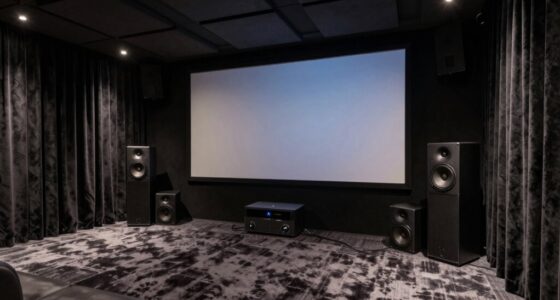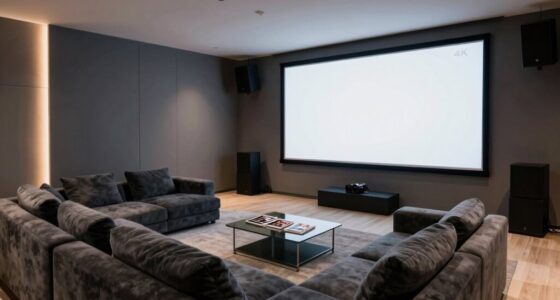

Choosing the right home theater screen size depends on understanding how measurements, aspect ratios, and room size influence your viewing experience. Screen size is measured diagonally, but the aspect ratio affects the width and height, impacting how content appears. Larger screens need more distance for comfortable viewing, especially in bigger rooms. Balancing size, resolution, and room layout creates immersive viewing. If you want to make the best choice, discover more tips below to optimize your theater setup.
Key Takeaways
- Screen size is measured diagonally in inches; aspect ratio affects width, height, and visual experience.
- Larger screens (90-150 inches) are ideal for spacious rooms and require seating 2.5 to 3.5 times the diagonal distance.
- Match screen size to room dimensions and seating distance to prevent eye strain and ensure immersive viewing.
- Higher resolution (4K, 8K) is recommended for larger screens to maintain clarity and detail.
- Consider aspect ratio and content type to select a screen that minimizes black bars, distortion, and maximizes cinematic experience.
Understanding Screen Size Measurements
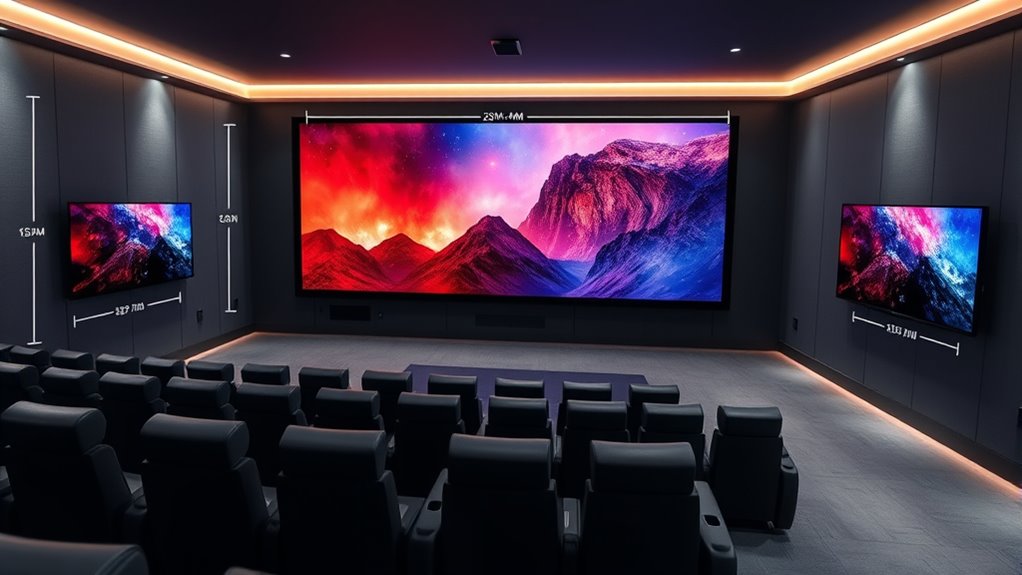
When choosing a home theater screen, understanding how screen size is measured is essential. Screen size is typically expressed diagonally, from one corner to the opposite corner, in inches. This measurement helps you determine the overall size of the display and how it will fit in your space. Keep in mind that the diagonal measurement doesn’t reflect width or height directly, so a larger screen might be wider or taller than you expect. For accurate planning, consider the aspect ratio, which is often 16:9 for widescreen displays. Knowing how the size is measured allows you to select a screen that fits comfortably in your room and provides an immersive viewing experience without overwhelming the space. Additionally, innovative European cloud servers are advancing the way digital content is delivered, supporting high-quality streaming and media experiences. Understanding contrast ratios and their impact on image quality can further help you choose the ideal screen size and setup for your home theater. Moreover, considering viewing distance can optimize your viewing comfort and ensure you enjoy the full benefits of your display.
How Screen Size Affects Viewing Distance
Choosing the right screen size directly impacts how far you should sit from your home theater display. If the screen is too large, you may feel overwhelmed or strain your eyes. Conversely, a small screen might make details hard to see. To optimize your viewing experience, consider these guidelines:
- For screens up to 100 inches, sit about 1.5 to 2.5 times the screen’s diagonal distance away.
- Larger screens (100-150 inches) require a distance of roughly 2.5 to 3.5 times the screen size.
- Very large screens (over 150 inches) benefit from sitting 3.5 times or more the screen’s diagonal for comfortable viewing.
These distances help you enjoy immersive visuals without discomfort, ensuring the screen size complements your space and viewing habits.
Ideal Screen Sizes for Small Rooms
In small rooms, selecting the right screen size is essential to maintain a comfortable viewing experience without overwhelming the space. For these areas, a screen between 100 and 120 inches diagonally usually works well. This size offers immersive visuals without making the room feel cramped. If your room is particularly tight, consider a 90-inch screen, which still provides a great cinematic experience while fitting comfortably. Keep in mind that larger screens require closer viewing distances, which can lead to eye strain in small spaces. To maximize comfort, ensure your seating is positioned so you can view the entire screen without craning your neck or feeling too close. Choosing an appropriate size helps balance visual immersion with the room’s dimensions, making your home theater enjoyable without sacrificing space. Proper screen size selection is crucial for creating a comfortable and enjoyable home theater environment, especially when considering viewing distance, room layout, and the importance of balance between screen size and space. Additionally, integrating smart home automation features can help optimize your setup for comfort and convenience.
Recommended Screen Sizes for Medium Spaces
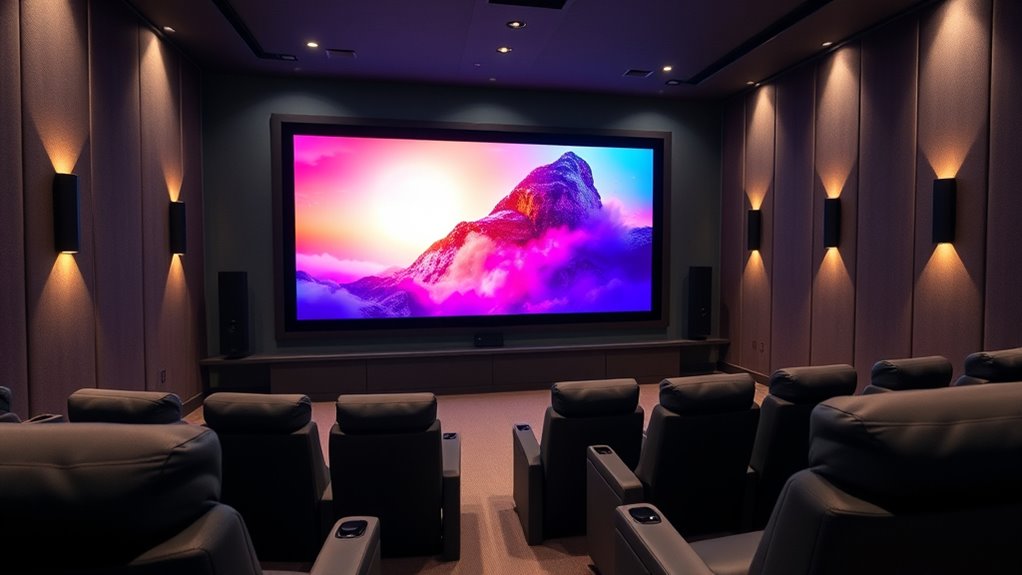
When setting up your home theater in a medium-sized room, it’s important to contemplate the ideal viewing distance to fully enjoy your screen. Based on your space, selecting a screen size that fits comfortably within this distance will give you the best experience. Proper display calibration ensures that your images are clear and vibrant, enhancing your viewing pleasure. Additionally, considering screen resolution can significantly impact image quality, making your viewing experience more immersive. To optimize your setup, studying field-of-view recommendations can help you select a size that provides the best balance between immersion and comfort. Let’s explore some recommended screen sizes that balance immersion and comfort in medium spaces.
Ideal Viewing Distance
For medium-sized rooms, finding the right viewing distance guarantees you can enjoy your home theater without straining your eyes or missing details. The ideal distance depends on your screen size, but generally, it falls within a specific range. To optimize your experience, consider these guidelines:
- Position yourself 1.5 to 2.5 times the diagonal screen size away.
- Avoid sitting closer than 1.5x the screen size to prevent pixelization.
- Keep a minimum distance of about 2.5x the screen size to prevent eye fatigue.
- Using proper sizing tools can help you determine the best setup for your space.
- Remember that optimal viewing distances are based on balancing image clarity and comfort for different screen sizes.
- Adjustments based on room layout and personal preferences can further enhance your viewing comfort.
- Taking into account visual acuity can help you select the most comfortable viewing distance for your eyes.
- Being mindful of ambient lighting levels can also improve your viewing experience by reducing glare and reflections.
This balance ensures you see all details clearly without discomfort. Adjust slightly based on your room layout and personal preference, but sticking close to these numbers guarantees a comfortable, immersive viewing experience.
Screen Size Recommendations
Choosing the right screen size for your medium-sized room guarantees an immersive viewing experience without overwhelming the space. For rooms around 12 to 16 feet in length, a screen between 90 to 120 inches is ideal. This size provides a cinematic feel without dominating the room or causing eye strain. Keep in mind your viewing distance; generally, the suitable distance is about 1.5 to 2.5 times the screen’s diagonal size. Larger screens can be impressive but may feel overwhelming if your seating is too close. Conversely, smaller screens might not deliver the immersive experience you want. Aim for a size that complements your room dimensions and seating arrangement to ensure the best balance between immersion and comfort. Proper sizing is essential to optimize your home theater setup and enhance your overall viewing pleasure. Additionally, considering screen resolution can further improve clarity and picture quality within your chosen size. When selecting a screen, pay attention to visual acuity to ensure comfortable viewing over extended periods. To maximize your viewing experience, it’s also important to pay attention to screen placement and ensure minimal glare for optimal picture quality. Understanding sound integration can help you create a more complete and immersive home theater environment.
Choosing the Right Screen Size for Large Rooms
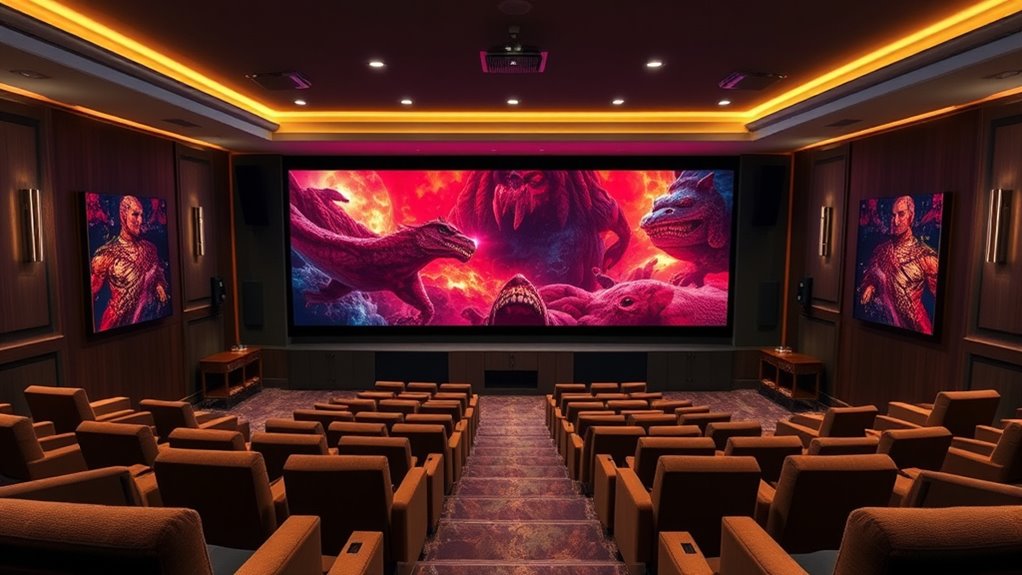
Selecting the right screen size for large rooms is crucial to guarantee an immersive viewing experience without causing eye strain or losing detail. To find the ideal size, consider these factors:
- Viewing distance: For large rooms, sit 1.5 to 2.5 times the screen’s diagonal distance away. Optimal viewing distance ensures maximum comfort and image clarity.
- Room dimensions: Measure your space to ensure the screen fits comfortably without overwhelming the room.
- Resolution: Higher resolutions like 4K allow for larger screens without sacrificing image clarity.
- Optimal screen size can be determined by balancing your room size, seating arrangement, and desired immersion level.
Aim for a screen size that fills your field of view without requiring excessive head movement. Typically, for large rooms, screens between 120 to 180 inches are suitable, but always tailor the size to your specific space and viewing preferences to optimize your experience.
Aspect Ratio and Its Impact on Screen Choice

Your choice of aspect ratio directly affects how well your screen balances image composition and content fit within your space. A wider or taller ratio can enhance your visual experience, making movies and games more immersive. Consider how the aspect ratio impacts both the overall look and your viewing comfort before selecting your screen. Additionally, understanding brewing methods can help you appreciate how different setups influence content presentation and quality.
Image Composition Balance
The aspect ratio of a home theater screen plays a crucial role in maintaining proper image composition and visual balance. It influences how scenes are framed and how your eyes perceive the overall picture. Choosing the right aspect ratio ensures your viewing experience feels natural and immersive. Consider these points:
- Wide ratios like 16:9 or 2.39:1 provide cinematic scope, emphasizing horizontal scenes.
- Standard ratios like 4:3 are better for older content or specific media formats.
- Matching your screen’s aspect ratio to your content prevents black bars and distortion, keeping images balanced and engaging.
Content Fit and Space
Choosing the right aspect ratio directly affects how well your screen fits your space and displays your content. If your room is narrow, a 4:3 or 5:4 screen might suit better, preventing excessive width or height. For wider spaces, 16:9 or 2.35:1 screens enhance film and video viewing, matching common content formats. Consider the aspect ratio of your favorite content—widescreen movies often look best on wider screens, while older TV shows may fit better on standard ratios. A mismatched aspect ratio can cause black bars, stretching, or cropping, reducing immersion. Measure your space carefully and select a screen that aligns with your viewing habits and room dimensions. This ensures your content fills the screen appropriately without overwhelming or underutilizing your space.
Visual Experience Impact
Aspect ratio plays a essential role in shaping your visual experience, as it determines how content fills the screen and how immersive it feels. A wider aspect ratio enhances cinematic immersion, while a narrower one offers a more traditional look. Your choice impacts:
- The sense of depth and field of view – wider ratios like 16:9 or 21:9 create a more panoramic experience.
- Compatibility with content – some movies and games are optimized for specific ratios, affecting how much is visible.
- Screen size and placement – certain ratios influence the size and shape of your screen, impacting your overall viewing comfort.
Choosing the right aspect ratio ensures you get the most engaging and realistic experience, making your home theater truly immersive.
Common Screen Sizes and Their Uses

When selecting a home theater screen size, it’s important to think about how you’ll use the space and your viewing distance. Common sizes range from 100 inches to 150 inches diagonally, suitable for different room sizes and preferences. A 100-inch screen works well in smaller rooms or for casual viewing, offering an immersive experience without overwhelming the space. If you have a larger room and want a cinema-like feel, a 120- to 150-inch screen can deliver stunning visuals for movies and sports. For everyday use or limited space, smaller screens around 80-100 inches still provide good quality. Remember, the right size balances your room’s dimensions, seating arrangement, and your entertainment needs, ensuring you get the best viewing experience without feeling cramped or distant.
Tips for Measuring Your Space and Selecting a Screen

Ever wonder how to pick the perfect home theater screen size for your space? Start by measuring your viewing area accurately. First, measure the distance from your seating to where the screen will hang. Second, note the width and height available on your wall or stand. Third, consider the room’s lighting and layout to prevent glare or obstruction. Keep these tips in mind:
- Determine your ideal viewing distance—generally, 1.5 to 2.5 times the screen’s diagonal size.
- Check available wall space to ensure the chosen screen fits comfortably.
- Avoid placing the screen too close or too large, which can cause eye strain and reduce immersion.
Balancing Screen Size and Resolution for Optimal Experience
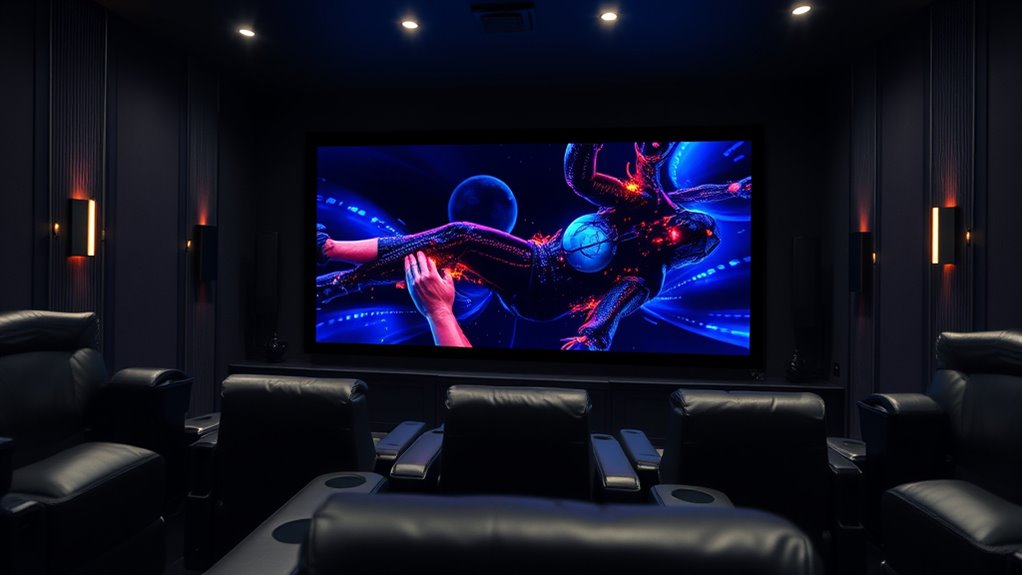
Finding the right balance between screen size and resolution is essential for creating an immersive home theater experience. If your screen is too large relative to your resolution, you’ll notice pixelation or a loss of sharpness, diminishing picture quality. Conversely, a high-resolution display on a small screen might not fully utilize its capabilities, making the extra pixels unnecessary. To optimize your setup, consider your viewing distance—generally, the farther you sit, the larger your screen can be without losing clarity. Aim for a resolution that matches your screen size and viewing habits. For example, 4K is ideal for larger screens over 90 inches, ensuring sharp images at close ranges. Striking this balance enhances immersion without sacrificing picture quality.
Frequently Asked Questions
What Are the Latest Trends in Home Theater Screen Technology?
You’re seeing a shift toward ultra-high-definition screens, like 4K and even 8K, for stunning clarity. OLED and QLED panels dominate, delivering richer colors and deeper blacks. Flexible and curved screens are gaining popularity, creating immersive experiences. Additionally, you’re noticing the rise of ambient lighting integration and ambient light-rejecting screens, which improve picture quality in well-lit rooms. These innovations make your home theater more vibrant, realistic, and enjoyable.
How Does Ambient Lighting Influence Screen Size Choice?
Ambient lighting markedly influences your screen size choice because brighter rooms require larger screens for clear viewing, while darker rooms allow smaller screens without sacrificing picture quality. You might think smaller screens work in any setting, but studies show larger screens enhance contrast and immersion in well-lit spaces. So, if your room has lots of ambient light, opt for a bigger screen to guarantee a vivid, enjoyable viewing experience.
Are There Specific Screen Sizes Recommended for 4K or HDR Content?
For 4K and HDR content, a screen size between 100 to 130 inches works best, as it allows you to fully appreciate the enhanced detail and color depth. If your room is spacious, go larger; for smaller spaces, opt for around 100 inches to avoid overwhelming the room. Remember, the ideal size balances immersive viewing with your room dimensions and seating distance for most suitable experience.
Can a Larger Screen Cause Eye Strain or Fatigue?
Yes, a larger screen can cause eye strain or fatigue if you sit too close or watch for long periods. Your eyes work harder to focus on bigger images, especially if the brightness or contrast is high. To prevent discomfort, sit at an appropriate distance, take regular breaks, and adjust settings for comfort. Choosing a screen size that matches your viewing space and habits helps avoid fatigue.
How Does Screen Size Impact Sound Quality and Acoustics?
A larger screen doesn’t directly affect sound quality or acoustics, but it influences your perception of audio. When you have a big screen, you might prefer higher volume levels to match the immersive visuals, which can impact sound clarity if your setup isn’t properly calibrated. Additionally, larger screens can reflect more sound, so investing in quality speakers or acoustic treatments helps guarantee the best sound experience, regardless of screen size.
Conclusion
Ultimately, understanding your space, selecting a suitable screen size, and syncing it with the right resolution creates a mesmerizing cinematic experience. By balancing brilliance with boundaries, you bring boldness to your home theater. Don’t delay—dare to dream, determine, and decide on the perfect screen size that transforms your room into a domain of relaxation and recreation. Your ideal home theater awaits; make your move and maximize your viewing moments today.