
A center channel speaker is essential for your home theater because it delivers clear dialogue and anchors the front soundstage. It makes conversations natural and easy to understand, while balancing sound effects and music for a more immersive experience. Proper placement and calibration ensure the best sound quality. If you want to learn how to optimize your setup and avoid common mistakes, there’s more to discover below.
Key Takeaways
- The center channel speaker anchors dialogue, ensuring clarity and natural sound in home theater setups.
- Proper placement above or below the TV enhances sound focus and reduces muddiness.
- It improves overall sound coherence by isolating speech from background noise and effects.
- Different types and sizes impact voice clarity, with dedicated centers offering focused, powerful dialogue delivery.
- Investing in quality and correct calibration maximizes sound accuracy, clarity, and immersive viewing experience.
The Role of the Center Channel in Home Theater Systems
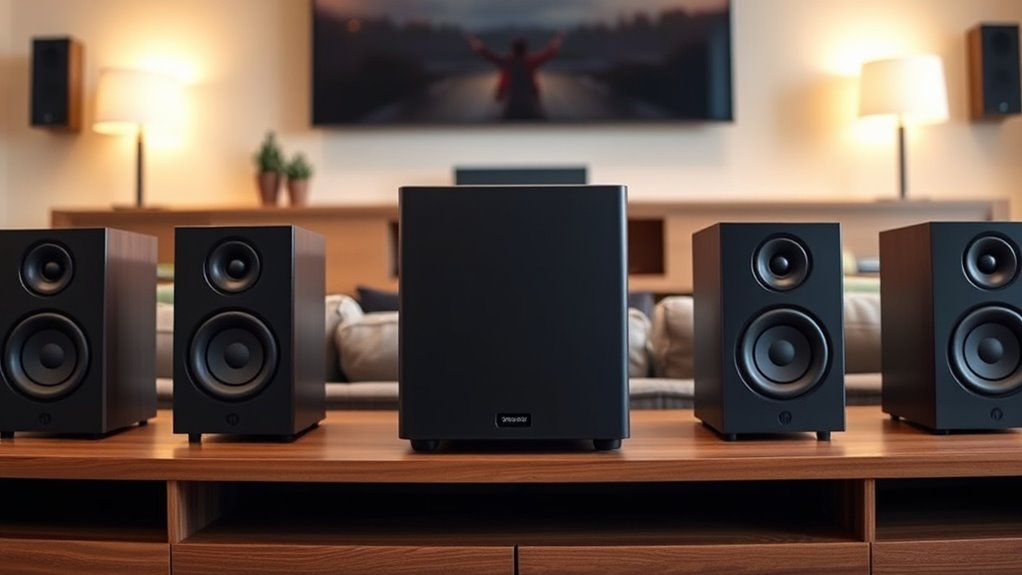
The center channel plays a crucial role in home theater systems because it anchors dialogue and important audio cues. When you watch movies, this speaker is usually positioned directly above or below your screen, bridging the gap between the left and right speakers. Its primary purpose is to deliver clear, focused sound for dialogue, making conversations sound natural and easily understandable. Without a dedicated center channel, speech can seem disconnected or muffled, pulling you out of the immersive experience. The center speaker also handles key sound effects and background noises, helping to create a balanced soundstage. By doing so, it guarantees that all audio elements come together seamlessly, giving you a more engaging and realistic viewing experience. Additionally, color accuracy in the speaker’s output can further enhance the clarity and richness of dialogue, making it an essential component for an optimal home theater setup. Proper speaker placement can also significantly improve sound quality and immersion. Ensuring that your center channel has the correct audio positioning helps maintain a cohesive and natural sound environment, further elevating your viewing experience. Achieving optimal sound quality often involves adjusting the speaker calibration settings to suit your room acoustics, which is vital for a truly immersive experience. A well-placed center channel contributes to a more balanced soundstage, creating a truly immersive home theater environment.
How a Center Speaker Enhances Dialogue Clarity
A center speaker considerably improves dialogue clarity by directing speech directly toward you, making conversations sound natural and easy to understand. Without it, voices may seem scattered across the soundstage, causing you to strain to catch every word. The center channel isolates dialogue from background noise and effects, assuring voices remain focused and distinct. This fundamental aspect helps reduce muddiness and overlapping sounds, especially during busy scenes. As a result, you experience clearer, more intelligible speech, which enhances your overall viewing experience. Whether watching a movie or a TV show, the center speaker ensures that dialogue remains crisp, balanced, and anchored, so you don’t miss important details or context. It’s an essential component for achieving clear, immersive sound in your home theater. Additionally, proper speaker placement can significantly improve overall sound quality by optimizing sound direction and clarity, making your listening experience more realistic and engaging. Properly positioning your speakers also helps prevent sound muddiness, further sharpening dialogue and enhancing the clarity of audio. Proper speaker calibration also plays a vital role in maintaining balanced sound levels across all channels, ensuring an optimal listening environment.
Key Features to Consider When Choosing a Center Channel Speaker
When choosing a center channel speaker, focus on sound clarity and range to guarantee dialogue is crisp and natural. You also need to check compatibility and setup options so it fits seamlessly with your existing system. Considering these key features helps you select a speaker that enhances your overall listening experience. Additionally, paying attention to speaker placement can dramatically improve sound quality and ensure an immersive experience. Proper speaker positioning optimizes audio performance and can make a significant difference in your home theater setup. For optimal results, understanding room acoustics can further refine your speaker setup and improve sound quality. Being aware of acoustic treatment options allows you to customize your environment for the best possible audio performance. To improve your writing, use tools that detect passive voice and help you make your sentences more direct and engaging.
Sound Clarity and Range
Sound clarity and range are essential factors that directly impact your overall listening experience with a center channel speaker. Clear sound ensures dialogues are crisp and understandable, preventing voices from sounding muffled or muddled. A wide frequency range allows the speaker to reproduce both deep bass and high treble, creating a balanced sound profile. This frequency response is crucial for capturing the full spectrum of audio details, enhancing the realism of movies and music, immersing you in the experience. When evaluating options, look for speakers with detailed midrange clarity and extended bandwidth. Properly reproducing vocals and sound effects helps you catch every nuance. Additionally, integrating modern audio technology can optimize your setup for even better sound performance and system compatibility. Paying attention to sound clarity and range and understanding the importance of audio fidelity ensures an immersive and authentic audio experience that brings your entertainment to life.
Compatibility and Setup
Choosing a center channel speaker that fits well with your existing audio setup guarantees seamless integration and peak performance. To make certain of compatibility and effortless setup, consider these key features:
- Matching Impedance and Power Handling: Make sure your receiver’s output matches the speaker’s impedance and power capacity. This prevents distortion and damage, giving you confident sound delivery. Being aware of matched components ensures your system operates efficiently and reliably. Additionally, understanding speaker specifications can help you select components that work harmoniously.
- Size and Space: Pick a size that fits your room without overwhelming it. Proper placement enhances clarity and immerses you in the sound.
- Connectivity Options: Verify the speaker’s connection types align with your system—whether it’s banana plugs, binding posts, or other connectors—to ensure a straightforward, secure setup.
- Compatibility with Your Environment: Ensuring your speaker fits well with your room acoustics can significantly improve sound quality and overall experience.
Prioritizing these features guarantees your center channel speaker performs flawlessly and elevates your overall audio experience.
The Impact of Placement and Calibration on Sound Quality
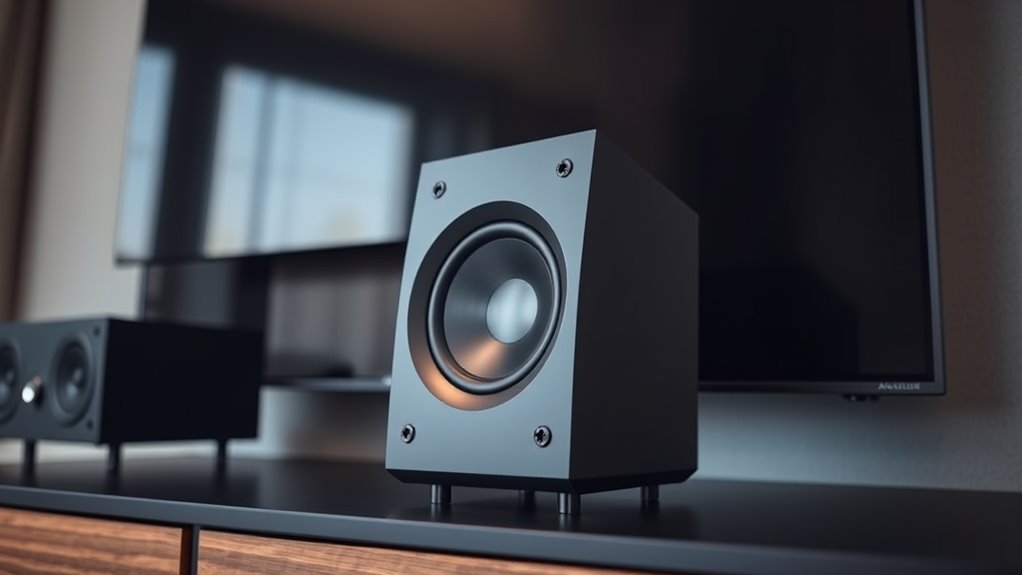
The placement and calibration of your center channel speaker directly influence the clarity and balance of your soundstage. Position it directly above or below your TV, centered with your screen, to guarantee dialogue remains focused and clear. Avoid placing it too close to walls or corners, as this can cause sound reflections and muddiness. Calibrate your speaker using an equalizer or receiver setup to match its volume and tone with your other speakers. Test with familiar content, paying attention to dialogue clarity and overall sound coherence. Proper placement and calibration eliminate muddiness, enhance dialogue intelligibility, and create a balanced listening experience. Taking the time to get these details right ensures your system performs at its best, delivering crisp, focused sound for movies and music alike. Incorporating smart calibration tools can further optimize your setup for the best sound quality.
Comparing Different Types of Center Channel Speakers
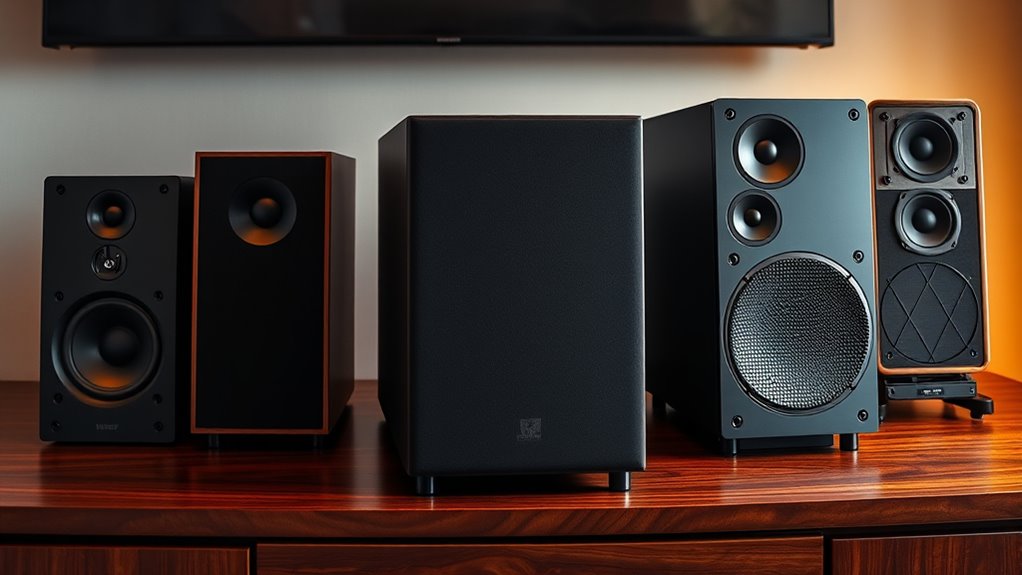
When choosing a center channel speaker, you’ll notice differences in sound quality, size, and how they fit into your setup. Some options offer better clarity and imaging, while others are more compact or budget-friendly. Comparing these factors helps you find the best balance between performance, space, and value.
Sound Quality Variations
Different types of center channel speakers deliver distinct sound qualities that can substantially impact your home theater experience. Each type emphasizes different aspects of audio, affecting clarity and immersion.
- Bookshelf speakers offer crisp vocals and detailed dialogue, making conversations feel natural and intimate.
- In-wall speakers provide a seamless, clean sound with broad dispersion, filling the room evenly and reducing clutter.
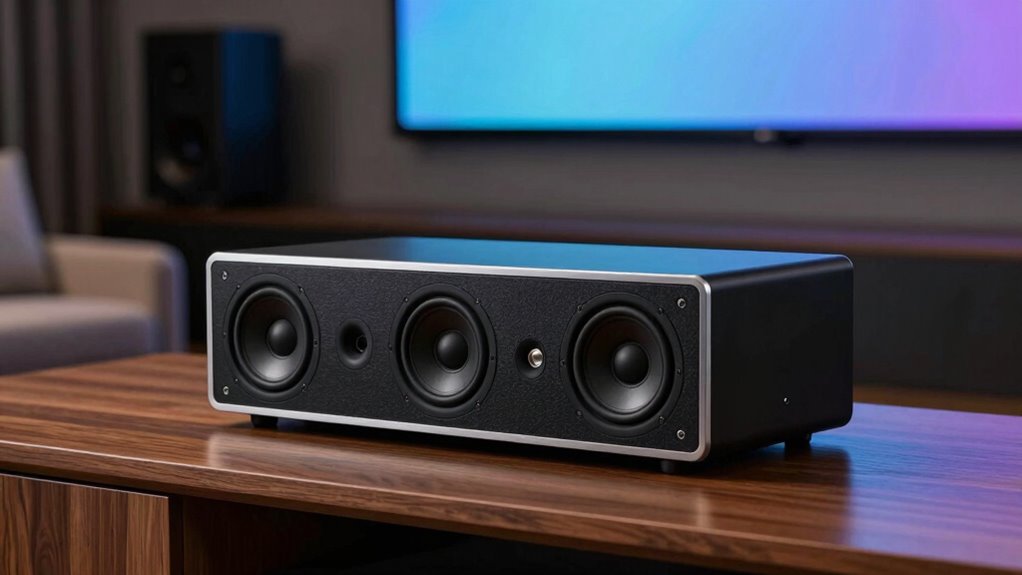
- Dedicated center channel speakers deliver focused, powerful sound that anchors dialogue and enhances clarity across the entire soundstage.
Choosing the right type can evoke stronger emotions, drawing you deeper into the story. Your decision influences whether voices sound lifelike or distant, directly shaping your overall enjoyment. The right speaker transforms your home theater into a fascinating, immersive experience.
Size and Placement Options
Choosing the right size and placement for your center channel speaker can significantly influence your home theater’s sound performance. Smaller speakers fit neatly on a shelf or TV stand, but they may lack bass depth and volume. Larger speakers deliver richer sound and better voice clarity, but might require more space. Placement is essential: positioning your speaker directly above or below your TV ensures sound aligns with the on-screen action, creating a seamless experience. Ideally, it should be ear level when seated. Avoid placing it too far off-center or behind furniture, which can muffled sound. Experiment with placement to find the best balance between audio clarity and aesthetic fit. Proper size and positioning ensure your center channel effectively anchors dialogue and enhances overall sound quality.
Cost and Value Differences
The type of center channel speaker you select can substantially impact your overall home theater investment. Different options vary greatly in cost and perceived value, affecting your experience and budget.
- Entry-Level Speakers: These are affordable but may lack clarity and richness, limiting your immersive experience.
- Mid-Range Models: Offering improved sound quality and durability, they balance cost with performance for most enthusiasts.
- High-End Speakers: These deliver exceptional audio clarity and build quality, elevating your system but demanding a significant investment.
Choosing wisely guarantees you get the best value for your money, enhancing your viewing pleasure without overspending. Remember, investing in quality often pays off through longevity and superior sound.
Integrating the Center Channel With Surround Sound Components
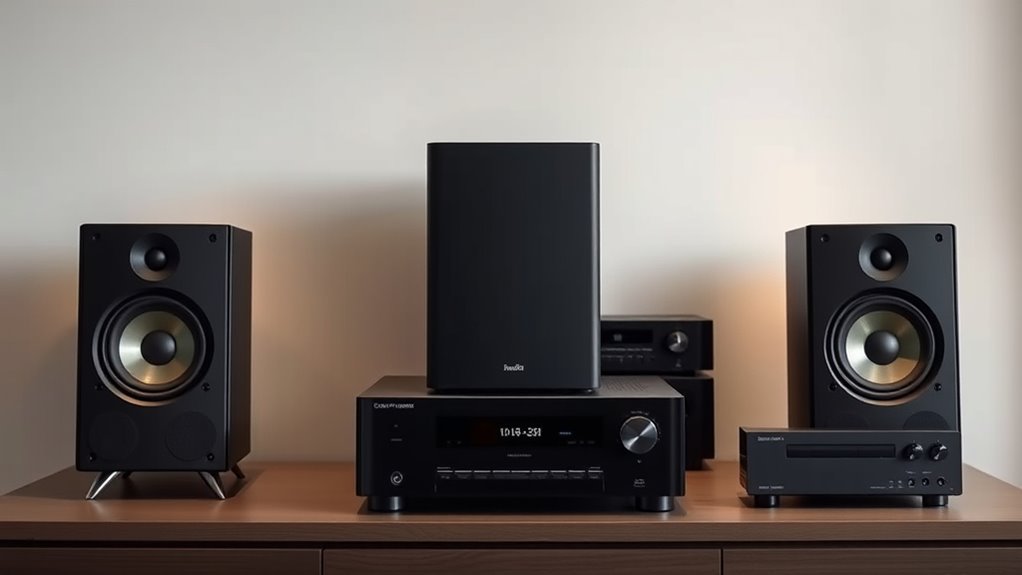
To achieve seamless integration of your center channel with surround sound components, you need to focus on proper placement and calibration. Position your center speaker directly above or below your TV, ensuring it’s aligned with the main listening position. Keep it at ear level for ideal sound clarity. Use your receiver’s calibration tool to balance the volume levels of all speakers, making sure voices sound natural and consistent across channels. Adjust the speaker distances and crossover settings to match your room layout. Avoid placing the center too close to walls or corners, which can cause sound reflections. Consistent placement and careful calibration ensure your center channel blends smoothly with surround speakers, creating an immersive and balanced listening experience.
Common Mistakes to Avoid When Setting Up Your Center Speaker
One common mistake is placing the center channel too close to walls or corners, which can cause sound reflections and muddy the dialogue. This placement can distort the clarity you need for a cinematic experience. To avoid pitfalls, keep these in mind:
- Don’t position your speaker behind or too close to furniture—it muffles sound and reduces clarity.
- Avoid angling the speaker incorrectly—aim it directly at your listening position for proper sound imaging.
- Skip covering or blocking the speaker grille—it can muffle sound and diminish audio quality.
Frequently Asked Questions
Can a Center Channel Speaker Improve Music Listening Experience?
Yes, a center channel speaker can enhance your music listening experience by delivering clearer vocals and more precise sound positioning. It helps create a balanced and immersive audio environment, especially if you have a multi-speaker setup. By focusing on the vocals and central sounds, it guarantees you hear every detail more distinctly, making your music sound richer and more realistic. This enhancement makes your listening sessions more enjoyable and engaging.
How Often Should I Upgrade My Center Channel Speaker?
You should consider upgrading your center channel speaker every 5 to 10 years, depending on your usage and the technology advancements. If you notice a decline in sound quality, muffled dialogue, or if newer models offer better clarity and features, it’s time to upgrade. Regularly evaluating your listening experience helps guarantee you enjoy clear dialogue and balanced sound, keeping your home theater setup fresh and immersive.
Is a Larger Center Speaker Always Better?
A larger center speaker isn’t always better. While a bigger speaker can produce deeper bass and higher volume, it doesn’t guarantee improved sound quality. Your choice should depend on your room size, speaker compatibility, and audio needs. Focus on clarity, balance, and how well the speaker integrates with your system. Sometimes, a smaller, well-designed speaker outperforms a larger one, so prioritize quality over size.
What Is the Ideal Wattage for a Center Channel Speaker?
You should look for a center channel speaker with wattage that matches your amplifier’s power output, typically between 50 to 150 watts. This range guarantees your speaker can handle loud volumes without distortion or damage. Don’t just focus on wattage—consider sensitivity and impedance too, so your setup sounds clear and balanced. Ultimately, choose a speaker that complements your system’s power and delivers the sound quality you want.
Do I Need a Subwoofer With My Center Channel Speaker?
If you’re aiming for full, rich sound, then yes, you should get a subwoofer with your center channel speaker. For example, in a home theater setup, a subwoofer enhances dialogue clarity and deep bass, making movies more immersive. Without it, you might miss out on low-frequency effects and fullness, especially in larger rooms. A subwoofer complements your center channel, creating a balanced, theater-like experience.
Conclusion
Remember, a well-placed center channel speaker is the backbone of clear dialogue and immersive sound. When you choose and set it up carefully, you’re enhancing your entire home theater experience. Don’t overlook its importance—after all, a chain is only as strong as its weakest link. By paying attention to placement, quality, and integration, you guarantee every movie night feels just like the real thing. Invest wisely, and enjoy the true magic of cinematic sound.