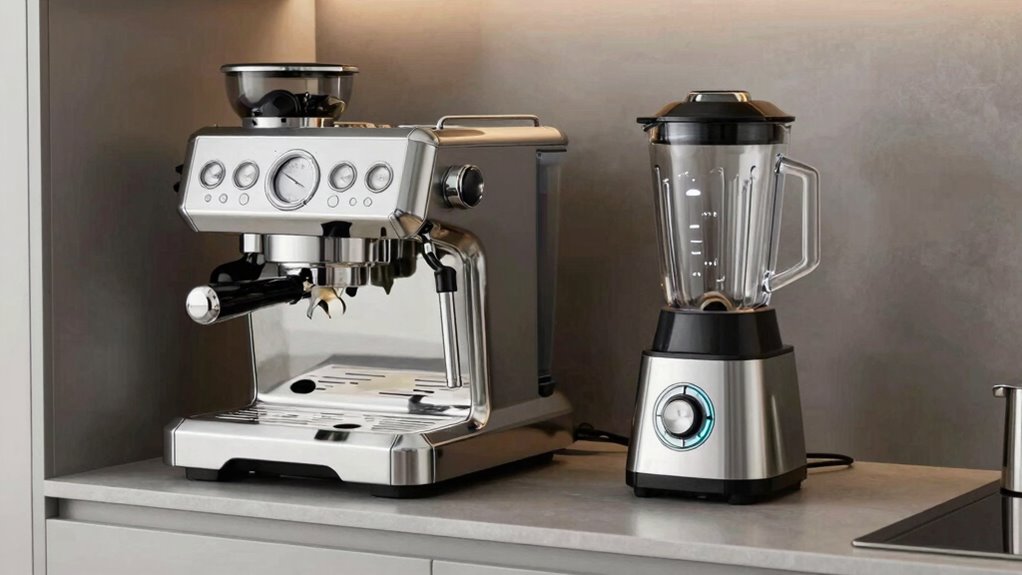

Noise engineering in high-end appliances focuses on creating quieter, more comfortable operation through advanced sound design, vibration control, and innovative materials. Experts use soundproof enclosures, damping layers, and smart vibration isolation to reduce noise and vibrations effectively. Active noise cancellation and sound masking further improve acoustic comfort. Strict standards guarantee performance, while future innovations promise even better noise management. Keep exploring to discover how these techniques elevate your experience with luxury appliances.

Turn your quiet moments into listening time
- Thousands of audiobooks, podcasts and originals
- Listen on your phone, tablet or Echo — also offline
- Cancel anytime
Key Takeaways
- Advanced vibration damping materials and isolation mechanisms are employed to minimize noise and mechanical vibrations.
- Acoustic design strategies, including soundproof enclosures and paneling, effectively contain and reduce operational noise.
- Active noise control systems generate anti-noise signals to dynamically cancel unwanted sounds during appliance operation.
- Precise component alignment and regular verification ensure optimal performance and quiet operation in high-end appliances.
- Integration of sound branding and acoustic ergonomics enhances user experience by creating seamless, tranquil appliance environments.
The Significance of Acoustic Comfort in Luxury Appliances

In luxury appliances, acoustic comfort plays a crucial role in enhancing the overall user experience. You notice how quietly your high-end refrigerator hums, creating a sense of tranquility. This is where sound branding becomes essential; manufacturers carefully craft sound signatures that reinforce brand identity while maintaining subtlety. Acoustic ergonomics ensures the appliance’s sounds are optimized for comfort, reducing noise levels and preventing discomfort or annoyance. When appliances operate smoothly and quietly, you feel more at ease in your space, appreciating the seamless integration of function and ambiance. This focus on acoustic comfort not only elevates usability but also signifies quality and sophistication, making your kitchen environment more enjoyable and aligning with your desire for luxury, comfort, and refined aesthetics. Additionally, thoughtful sound design contributes to Acoustic ergonomics, ensuring that noise levels are carefully calibrated to avoid fatigue or disturbance during daily routines. Incorporating sound engineering principles helps balance performance and tranquility, further enhancing the overall experience. Recognizing the importance of sound quality in appliance design underscores how integral acoustic comfort is to the luxury experience. Moreover, understanding noise mitigation techniques can help manufacturers create even more serene environments in high-end appliances. Embracing innovations such as advanced soundproofing materials can further elevate the level of acoustic comfort in premium appliances.
Materials and Design Strategies for Noise Reduction

Selecting the right materials and design strategies is essential for minimizing noise in high-end appliances. Using soundproof enclosures helps contain noise within the appliance, preventing it from spreading into the surrounding environment. These enclosures are typically made from dense, vibration-dampening materials that absorb sound waves effectively. Acoustic paneling is another key strategy; installing panels inside or around the appliance reduces echo and dampens vibrations, creating a quieter operation. Additionally, choosing materials with high damping properties, such as specialized composites or layered structures, further minimizes noise transmission. Incorporating soundproofing materials can significantly enhance the effectiveness of noise reduction efforts. Thoughtful design, including strategic placement of components and isolation mounts, complements these materials. Incorporating simple tools like BTU and CADR quick‑calculators can also help optimize the design for noise reduction during the planning phase. Implementing advanced vibration control techniques can further reduce the transfer of noise and vibrations, ensuring a more silent appliance operation. Employing vibration damping methods tailored for high-end appliances can lead to even more effective noise mitigation. Moreover, integrating adaptive noise cancellation technology can actively reduce residual noise, providing a quieter user experience.
Precision Engineering and Vibration Control Techniques

You can improve noise control by implementing advanced isolation mechanisms that reduce vibration transfer. Ensuring precise alignment of components minimizes unwanted movements that generate noise. Additionally, using vibration damping materials helps absorb residual vibrations, creating a quieter operation overall. Incorporating soundproofing techniques further enhances acoustic performance by blocking and absorbing noise. Employing precision engineering practices ensures that components fit together with minimal gaps, reducing pathways for noise transmission. Moreover, incorporating nano-scale materials can significantly improve the effectiveness of vibration attenuation and noise reduction strategies, leveraging advanced material science to achieve superior results. Utilizing active noise control systems can also dynamically counteract unwanted vibrations, further enhancing the overall noise reduction.
Advanced Isolation Mechanisms
Advanced isolation mechanisms play an essential role in minimizing noise and vibrations in high-end appliances by employing precision engineering and sophisticated vibration control techniques. You achieve this through resonance suppression, which prevents vibrations from amplifying within the system. Structural decoupling is also indispensable; by isolating sensitive components from vibration sources, you reduce transmission paths. Precision-engineered mounts and dampers absorb and dissipate vibrational energy, preventing it from reaching the outer casing or user. These mechanisms are carefully designed to target specific frequencies, guaranteeing excellent performance. Additionally, material selection in isolation components enhances their damping capabilities and durability. Material damping properties are carefully considered to optimize vibration absorption and longevity. Incorporating advanced manufacturing processes further improves the consistency and effectiveness of these isolation features. Moreover, integrating smart vibration monitoring systems enables real-time adjustments to vibration control, ensuring optimal performance under varying operating conditions. Implementing feedback control systems allows for adaptive vibration suppression, further refining the appliance’s noise reduction capabilities. By integrating advanced isolation techniques, you enhance the acoustic comfort and longevity of the appliance. Your focus on resonance suppression and structural decoupling ensures that vibrations are contained, providing a quieter, more refined user experience.
Precision Component Alignment
How does precise component alignment contribute to noise reduction in high-end appliances? Precision component alignment minimizes vibrations caused by misaligned parts, which can generate unwanted noise. By adhering to strict manufacturing tolerances, you ensure that components fit perfectly, reducing the chances of wobbling or imbalance during operation. This careful alignment not only enhances the appliance’s performance but also prevents excessive vibrations that lead to noise pollution. Incorporating precision engineering into your manufacturing process guarantees consistent quality, allowing your appliances to operate smoothly and quietly. When components are precisely aligned, mechanical stress and resonance are minimized, resulting in less noise and longer-lasting performance. Additionally, utilizing specialized vibration control techniques can further suppress noise levels, ensuring a quieter operation. Understanding quality standards and maintaining rigorous inspection processes is essential to achieve the desired accuracy. Employing advanced measurement tools is crucial for verifying alignment accuracy and maintaining high-quality production. Ultimately, precise component alignment is a critical step in delivering the silent, high-quality experience expected from high-end appliances.
Vibration Damping Materials
Vibration damping materials play an essential role in controlling unwanted noise and reducing mechanical vibrations in high-end appliances. When selecting materials, focus on properties like flexibility, energy absorption, and durability to guarantee effective damping. Proper materials selection allows you to tailor damping layers that absorb vibrations efficiently without adding excessive weight or compromising design. Damping layer integration involves strategically placing these materials between vibrating components and structural elements, minimizing transmission of vibrations and noise. You should consider compatibility with existing materials and ease of installation during integration. By carefully choosing damping materials and implementing seamless damping layer integration, you can considerably improve acoustic performance, ensuring your appliances operate quietly and smoothly while maintaining their premium quality.
Sound-Dampening Technologies and Innovations

Have you ever wondered how high-end appliances manage to run so quietly despite their powerful motors and complex components? They use innovative sound-dampening technologies that create an acoustic illusion, making noise less noticeable. Sound masking is a common technique, where background sounds are introduced to blend with operational noise, reducing its perceived loudness. Advanced materials and design features also play a role, absorbing and deflecting sound waves effectively. These innovations ensure a tranquil environment without sacrificing performance. Here’s a quick overview:
| Technology | Functionality |
|---|---|
| Acoustic Illusion | Creates a sound environment that masks appliance noise |
| Sound Masking | Introduces background sounds to hide operational noise |
| Noise Absorbing Materials | Minimize sound reflection and transmission |
| Vibration Isolation | Reduces noise caused by vibrations |
The Role of Active Noise Cancellation in Modern Appliances

Active noise cancellation (ANC) has become a game-changer in making modern appliances quieter by actively reducing unwanted sounds. You’ll find ANC integrated into devices like wireless speakers and noise-canceling headphones, enhancing user experience by minimizing background noise. In high-end appliances, ANC technology helps quieten operational sounds, creating a more peaceful environment. For example, premium kitchen appliances can incorporate ANC to suppress motor noise, making kitchen tasks less disruptive. Similarly, smart home devices benefit from ANC by reducing mechanical sounds that might interfere with audio clarity or communication. By generating anti-noise signals, ANC actively cancels out specific sound frequencies, allowing you to enjoy your audio or environment without distraction. This technology makes high-end appliances not only smarter but remarkably quieter and more comfortable to use.
Testing and Standards for Sound Levels

Understanding the testing and standards for sound levels helps you guarantee appliances meet safety and quality expectations. You need to be familiar with regulatory sound limits, measurement techniques, and how compliance is certified. This knowledge guarantees that high-end appliances deliver quiet performance while adhering to industry benchmarks.
Regulatory Sound Limits
How do manufacturers guarantee their appliances meet acceptable sound levels? They follow strict regulatory limits for sound power, ensuring appliances stay within legal thresholds. First, they design products with sound engineering in mind, minimizing noise at the source. Second, they conduct testing under standardized conditions to verify compliance with these limits. Third, they submit their results to certification bodies that evaluate whether the sound power levels align with regulatory standards. By adhering to these steps, manufacturers ensure their appliances pass legal requirements and avoid penalties. This process provides confidence that high-end appliances operate quietly, respecting noise regulations and consumer comfort. Ultimately, understanding and applying regulatory sound limits helps create products that balance performance with sound engineering principles.
Measurement Methodologies
To guarantee appliances meet regulatory sound limits, you rely on standardized measurement methods that accurately assess sound levels. Ensuring measurement accuracy is essential, so you use calibrated sensors that provide consistent, reliable data. Proper sensor calibration minimizes errors, allowing you to capture true sound emissions without distortion. Measurement methodologies typically involve specific testing environments, such as reverberation chambers or semi-anechoic rooms, to control background noise and reflections. You follow established standards, like ISO or ANSI, to ensure consistency across tests. These methods specify microphone placement, measurement duration, and data collection processes, all aimed at producing precise, repeatable results. Accurate measurement methodologies are vital for validating compliance and maintaining the integrity of high-end appliance design.
Compliance Certification Processes
Compliance certification processes guarantee that high-end appliances meet established sound level standards before reaching consumers. You’ll undergo certification procedures that include rigorous testing based on acoustic modeling and real-world measurements. These procedures typically involve:
- Conducting acoustic modeling to predict sound emissions in various environments.
- Performing standardized sound level tests in controlled labs to verify compliance.
- Reviewing documentation and test results to ensure the appliance meets regulatory standards.
These steps help manufacturers identify potential noise issues early, allowing adjustments before product release. Certification agencies evaluate whether your appliance’s sound levels align with legal limits and industry expectations. By following these processes, you ensure your high-end appliances not only perform efficiently but also uphold consumer satisfaction and brand reputation.
Future Trends in Noise Engineering and User Experience

As technology advances, noise engineering in high-end appliances is poised to become more sophisticated, directly enhancing user experience. Future trends point toward seamless wireless integration, allowing you to control noise levels effortlessly through smart devices. You’ll likely see more appliances equipped with smart control features that automatically adjust operational noise based on your preferences or time of day. Innovations in sensor technology will enable real-time noise monitoring, ensuring ideal comfort without manual intervention. Additionally, enhanced data analytics will personalize noise management, creating quieter environments tailored to your lifestyle. These advancements will make high-end appliances not only more efficient but also more attuned to your comfort, transforming noise engineering from a technical necessity into a key component of user-centric design.
Frequently Asked Questions
How Do Noise Levels Impact Appliance Longevity and Maintenance Costs?
Higher noise levels can negatively impact your appliance’s longevity and increase maintenance costs. When sound insulation and vibration dampening aren’t effective, excess vibration and noise stress internal components, causing wear and tear. Over time, this leads to more frequent repairs and a shorter lifespan. To keep your appliances running smoothly and save money, guarantee they have proper sound insulation and vibration dampening features that reduce noise and mechanical strain.
Are There Specific Brands Known for Superior Noise Engineering?
You’ll be amazed by brands like Miele, known for their exceptional noise engineering that transforms everyday appliances into whisper-quiet marvels. Their reputation for innovation strategies prioritizes soundproofing and smooth operation, making them stand out in the high-end market. These brands don’t just meet standards—they redefine them, ensuring your appliances operate silently and efficiently. Trust in their expertise to deliver a peaceful home environment with cutting-edge noise reduction technology.
How Does User Perception Influence Noise Engineering Priorities?
Your perception greatly influences noise engineering priorities because customer expectations shape product design. When users value quiet operation, manufacturers focus on advanced soundproofing and vibration reduction. If you find noise disruptive, companies will prioritize minimizing sound levels to meet your standards. Ultimately, your feedback and perception drive innovations, ensuring high-end appliances deliver a quieter, more satisfying experience that aligns with what you expect from luxury products.
Can Noise Reduction Compromise Appliance Performance or Efficiency?
Noise reduction can sometimes influence appliance performance or efficiency, but if you focus on sound insulation and vibration dampening, you can minimize these effects. Properly designed soundproofing materials and vibration dampers prevent noise from affecting operation while maintaining efficiency. You won’t have to choose between quietness and performance; smart noise engineering ensures that reducing noise doesn’t compromise the appliance’s functionality or energy use.
What Are the Environmental Impacts of Noise Engineering Materials?
You’ll find that using eco-friendly materials in noise engineering reduces environmental impacts by lowering toxic waste and energy consumption. These sustainable manufacturing practices help conserve resources and minimize pollution. By choosing environmentally conscious materials, you support eco-friendly initiatives, promoting a healthier planet while maintaining appliance performance. This approach balances noise reduction with environmental responsibility, ensuring your high-end appliances are both effective and sustainable for long-term use.
Conclusion
Imagine your luxury appliance as a symphony conductor, expertly balancing sound and silence. When noise is minimized, every task feels like a quiet, seamless dance. With advanced materials, vibration control, and active noise cancellation, you’re not just using an appliance—you’re experiencing serenity. As tech evolves, your home becomes a sanctuary of peaceful efficiency, proving that in high-end design, silence isn’t just golden—it’s essential for true luxury.
Fall Picks
fall essentials
As an affiliate, we earn on qualifying purchases.