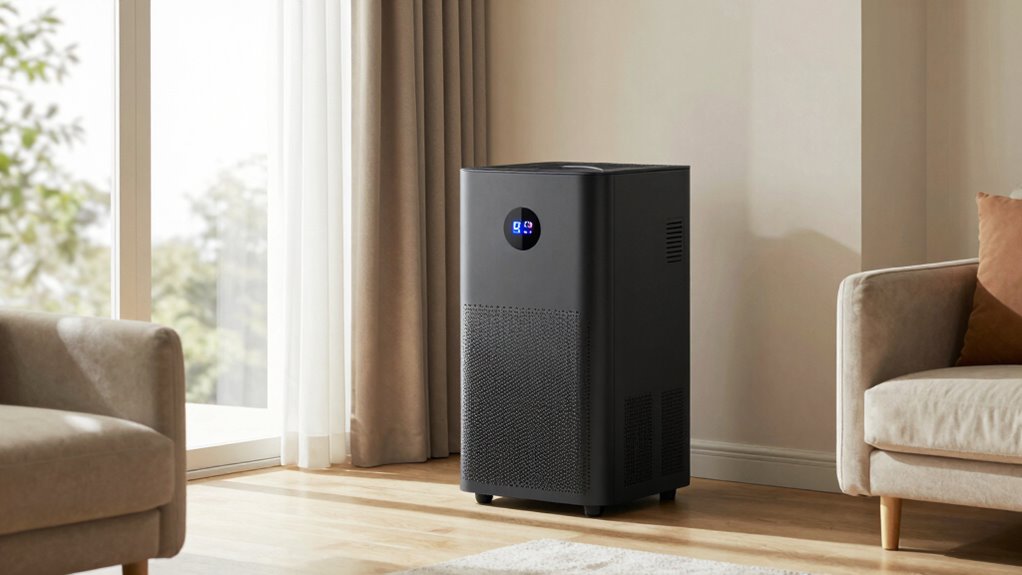

To size a dehumidifier by room volume, measure the room’s length, width, and height in feet, then multiply these to find the cubic footage. Usually, a room with around 960 cubic feet needs a 30-pint dehumidifier, but larger or damp spaces require bigger units. Proper sizing improves efficiency, reduces energy waste, and keeps humidity levels comfortable. If you want to know more about matching capacity accurately, keep exploring these helpful tips.

Turn your quiet moments into listening time
- Thousands of audiobooks, podcasts and originals
- Listen on your phone, tablet or Echo — also offline
- Cancel anytime
Key Takeaways
- Measure room dimensions (length, width, height) to calculate total cubic footage.
- Match dehumidifier capacity (pints per day) to the room’s volume and moisture level.
- Larger or damp spaces require higher-capacity units for effective humidity control.
- Consider room conditions like ventilation and humidity sources to select appropriate size.
- Proper sizing enhances efficiency, prolongs equipment lifespan, and maintains optimal humidity levels.
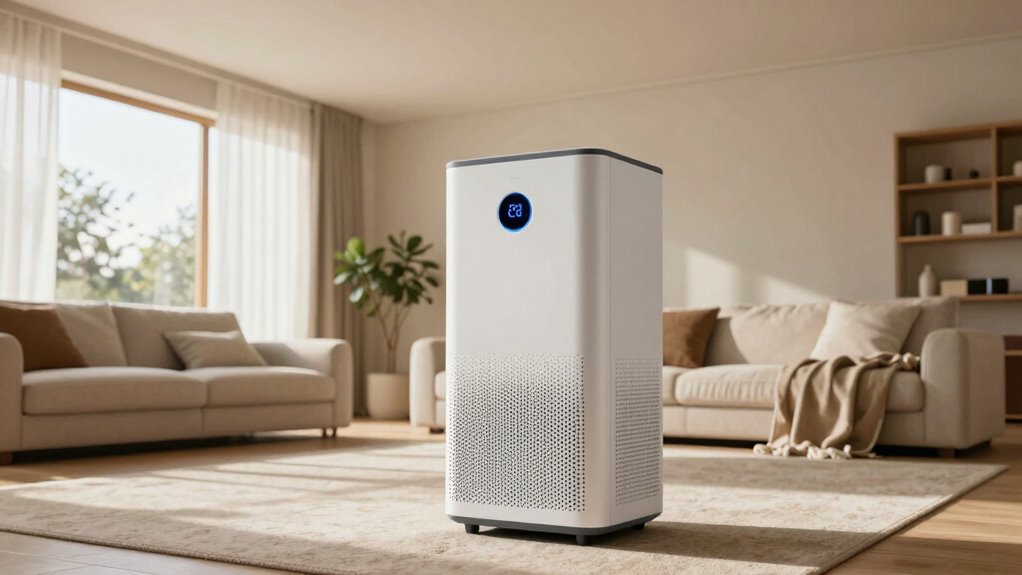
Have you ever wondered how to choose the right dehumidifier size for your space? Picking the correct size isn’t just about fitting it into your room; it’s about effective humidity regulation and maximizing energy efficiency. When you select a dehumidifier that matches your room’s volume, you guarantee it can remove excess moisture efficiently without wasting energy. An undersized unit will struggle to keep humidity levels in check, leading to persistent dampness and potential mold growth. Conversely, an oversized model might cycle on and off too frequently, consuming more electricity than necessary and increasing operating costs.
Choosing the right dehumidifier size ensures efficient moisture control and energy savings in your space.
To determine the right size, start by calculating your room’s volume. Measure the length, width, and height in feet, then multiply these numbers together to get the total cubic footage. Once you know this figure, you can match it to the dehumidifier’s capacity, usually expressed in pints per 24 hours. For example, if your room is 10 feet by 12 feet with an 8-foot ceiling, the volume is 960 cubic feet. For this size, a dehumidifier rated around 30 pints per day typically suffices, assuming average humidity levels. Larger spaces or those with persistent dampness will require units with higher capacity ratings.
Choosing the right size is essential for maintaining consistent humidity control. When your dehumidifier matches your room’s volume, it runs more efficiently, removing moisture at a steady, controlled rate. This consistency not only keeps your environment comfortable but also prevents energy waste. An appropriately sized unit cycles on and off less frequently, reducing wear and tear, and lowering your electricity bills. Proper sizing also minimizes the risk of over-drying, which can lead to dry, uncomfortable air, or under-drying, which leaves your space damp and prone to mold.
Remember that room conditions matter too. If your space is particularly humid—say, a basement or laundry room—you might need a slightly larger capacity than the basic calculation suggests. Conversely, if the room is well-ventilated or has dehumidification systems, you might opt for a smaller model. Additionally, considering indoor air quality factors can help you select a dehumidifier that complements other ventilation solutions for healthier indoor environments. Understanding the room environment can also influence your choice, ensuring optimal humidity levels and energy use. Proper sizing of your dehumidifier is also influenced by climatic conditions, which can vary significantly depending on your location. Properly sizing your dehumidifier not only improves its performance but also extends its lifespan, saving you money in the long run. Ultimately, matching your dehumidifier’s capacity to your room’s volume helps you achieve ideal humidity control while ensuring energy efficiency. It’s a smart investment that keeps your space comfortable, healthy, and budget-friendly.
30 pint dehumidifier for 960 cubic feet room
As an affiliate, we earn on qualifying purchases.
As an affiliate, we earn on qualifying purchases.
Frequently Asked Questions
How Do Humidity Levels Affect Dehumidifier Size?
Humidity levels directly influence the size of dehumidifier you need. If humidity is high, you’ll require a larger unit to effectively control moisture and improve air quality. Conversely, lower humidity levels need a smaller dehumidifier. Proper sizing guarantees ideal humidity control, prevents mold growth, and maintains good air quality. Always consider the current humidity and room conditions to select a dehumidifier that efficiently manages moisture without overworking.
Can Multiple Small Dehumidifiers Outperform One Large Unit?
Think of multiple small dehumidifiers as a team of nimble mice, each tackling a corner of the room. They can outperform a single large unit by providing more targeted moisture control, improving energy efficiency, and reducing noise levels. Smaller units often use less power, and their focused operation means less disturbance, making your space more comfortable. Plus, if one fails, the others keep working, unlike a single large dehumidifier.
How Often Should I Run My Dehumidifier Daily?
You should run your dehumidifier daily until the desired humidity level is maintained, typically 30-50%, depending on your environment. To maximize energy efficiency and reduce noise levels, operate it during times when humidity peaks, like after showers or cooking. Avoid continuous running if unnecessary, as it saves energy and reduces noise. Use a hygrometer to monitor humidity, and adjust the running times accordingly for ideal comfort and efficiency.
What Features Should I Consider Besides Room Size?
You should consider features like energy efficiency and noise levels when choosing a dehumidifier. Energy-efficient models save you money and reduce environmental impact, making them ideal for long-term use. Noise levels matter if you plan to run it in bedrooms or living spaces—look for quieter units to avoid disruptions. Additionally, check for adjustable humidity settings, easy filters, and a timer, ensuring your dehumidifier fits your comfort and convenience needs.
How Does Climate Impact Dehumidifier Selection?
Climate greatly impacts your dehumidifier choice. In humid climates, you’ll want a model with high energy efficiency to keep running costs low while effectively removing moisture. Additionally, consider noise levels, especially if you plan to use it in living spaces or bedrooms. A quieter unit helps maintain comfort without disruption. By selecting a dehumidifier suited to your climate, you guarantee ideal performance and comfort year-round.
best dehumidifier for basement dampness
As an affiliate, we earn on qualifying purchases.
As an affiliate, we earn on qualifying purchases.
Conclusion
Choosing the right dehumidifier is like planting a seed—nurturing your space’s health from the roots up. When you match the size to your room’s volume, you’re cultivating a balanced environment, where moisture slips away like shadows at dawn. Trust your instincts, and let the perfect fit be the steady heartbeat of your sanctuary. In this quiet rhythm, your home breathes easier, and the air becomes a gentle song of comfort and clarity.
energy-efficient dehumidifier for large rooms
As an affiliate, we earn on qualifying purchases.
As an affiliate, we earn on qualifying purchases.
dehumidifier with adjustable capacity
As an affiliate, we earn on qualifying purchases.
As an affiliate, we earn on qualifying purchases.
Columbus Day / Indigenous Peoples' Day Picks
long weekend sales
As an affiliate, we earn on qualifying purchases.