
MERV 13 filters can be overkill if your home already has good ventilation and air quality, since their high efficiency may restrict airflow and increase energy use. They trap tiny particles like viruses and smoke, which is great for high-pollution areas or health concerns. However, if your HVAC isn’t designed for dense filters, it could strain the system and reduce comfort. To find the best balance for your needs, keep exploring the details below.

Turn your quiet moments into listening time
- Thousands of audiobooks, podcasts and originals
- Listen on your phone, tablet or Echo — also offline
- Cancel anytime
Key Takeaways
- MERV 13 filters may be unnecessary in environments with already high indoor air quality.
- They can restrict airflow and strain HVAC systems not designed for high-resistance filters.
- Overusing MERV 13 filters in residential settings with minimal pollution offers limited benefits.
- Cost and maintenance requirements may outweigh advantages if high filtration isn’t needed.
- Lower-rated filters (MERV 8–11) often provide sufficient filtration with less system impact.

MERV 13 filters are a popular choice for improving indoor air quality because they effectively capture a wide range of airborne particles. If you’re considering upgrading your filter, you might wonder whether a MERV 13 is the right fit or if it’s overkill for your needs. While these filters are excellent at trapping tiny particles like bacteria, viruses, and smoke, they’re not always necessary for every home or environment. Before installing one, it’s important to evaluate your specific air quality concerns and your HVAC system’s capabilities.
MERV 13 filters improve air quality but may be overkill for homes with good ventilation and compatible HVAC systems.
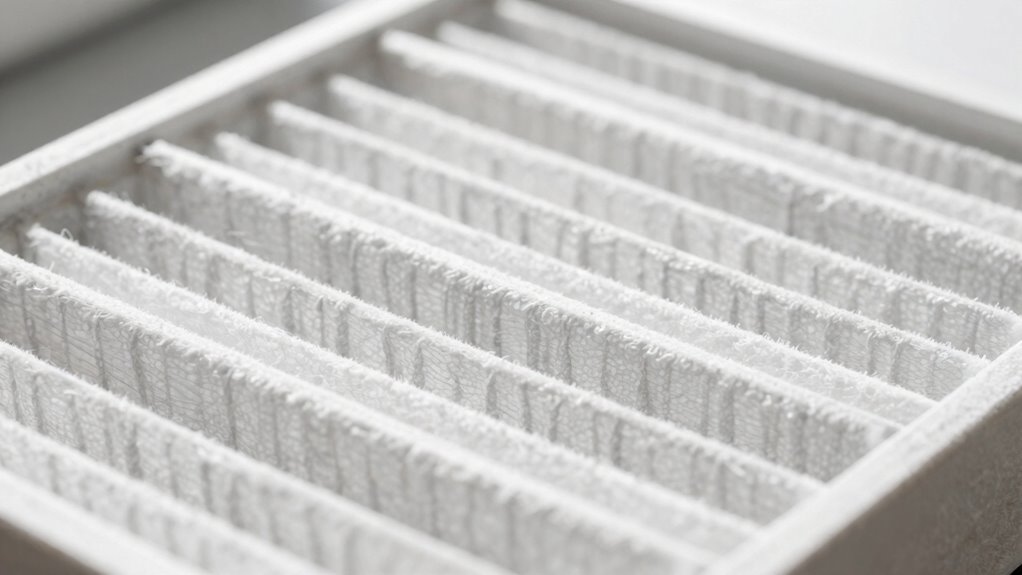
In many cases, a MERV 13 filter can significantly enhance air quality, especially if you suffer from allergies or asthma, or if you’re trying to reduce airborne pathogens. However, using a filter with such a high rating can also come with some drawbacks. Because they are denser, MERV 13 filters tend to restrict airflow more than lower-rated filters. This means your HVAC system might have to work harder to circulate air, which can lead to increased energy consumption and potential strain on your system. If your system isn’t designed to handle the higher resistance, it could result in reduced efficiency or even damage over time.
When considering whether a MERV 13 filter is overkill, you should think about your environment. For most residential settings, filters rated between MERV 8 and MERV 11 often strike a good balance between improving air quality and maintaining filter maintenance ease. You’ll need to check your system’s specifications to ensure it can handle a MERV 13 without issues. If your system isn’t compatible, you might experience decreased airflow, which can impact overall air circulation and comfort. Understanding air filtration efficiency can help you determine the best options for your specific needs. Additionally, considering HVAC system capacity can help prevent potential issues caused by higher-rated filters. Furthermore, selecting the right filter rating can also influence the energy efficiency of your HVAC system.
Filter maintenance is another critical factor. Higher-rated filters tend to clog faster because they trap more particles, meaning you’ll need to replace or clean them more frequently. Neglecting regular filter maintenance can lead to reduced indoor air quality, defeating the purpose of using such a high-efficiency filter. If you choose a MERV 13, establish a routine for checking and replacing the filters to avoid buildup that could hamper your HVAC system’s performance. Proper maintenance not only extends the lifespan of your system but also ensures consistent air quality. Ultimately, a MERV 13 filter isn’t always necessary for every home. It’s a powerful option for those with specific health concerns or in environments with high pollution levels, but it can be overkill if your air quality is generally good and your system isn’t designed for it. Carefully weigh the benefits against the potential drawbacks, and remember that proper filter maintenance is key to keeping your indoor air clean and your HVAC system running smoothly. Additionally, understanding the filter efficiency levels can help you make more informed choices about your indoor air quality solutions.
As an affiliate, we earn on qualifying purchases.
Frequently Asked Questions
Are MERV 13 Filters Suitable for All HVAC Systems?
MERV 13 filters aren’t suitable for all HVAC systems. You might face shorter filter lifespan and installation challenges if your system isn’t designed for high-efficiency filters. Check your system’s specifications before upgrading, as some units can strain or become less efficient with MERV 13 filters. Always consult your HVAC manufacturer or a professional to confirm compatibility, so you avoid unnecessary maintenance and guarantee the best indoor air quality.
How Often Should MERV 13 Filters Be Replaced?
You should replace MERV 13 filters every 6 to 12 months, depending on your home’s air quality and usage. Monitor the filter’s lifespan by checking for visible dirt and reduced airflow. If you notice increased dust or allergies, it’s time for a replacement. Regularly changing filters guarantees the best HVAC performance and indoor air quality, especially since MERV 13 filters trap more particles and need consistent maintenance for peak efficiency.
Do MERV 13 Filters Significantly Impact Energy Efficiency?
Imagine you’re in a spaceship, and airflow restriction is a real concern—well, MERV 13 filters can slightly impact energy efficiency. They do add some resistance, which may make your HVAC work harder, potentially affecting filter longevity and increasing energy use. However, if your system is high-capacity, the impact is minimal. Regular maintenance helps keep airflow smooth, ensuring your system runs efficiently without overworking.
Can MERV 13 Filters Trap Viruses Effectively?
Yes, MERV 13 filters can trap viruses effectively through viral filtration, capturing airborne pathogens like influenza and some coronaviruses. They’re designed to filter out particles as small as 0.3 microns, which includes many airborne viruses. While they don’t eliminate all pathogens, using MERV 13 filters considerably reduces airborne transmission risk, making them a good choice for improving indoor air quality, especially during health concerns.
Are There Health Risks Associated With Using High-Merv Filters?
Using high-MERV filters can pose health risks if they restrict airflow or aren’t properly maintained, leading to poor air quality. You might experience allergy relief initially, but mold or dust can accumulate if filters aren’t replaced regularly. Always guarantee good ventilation and choose filters suited for your HVAC system. Proper maintenance helps improve air quality without risking health issues, so monitor filter condition and replace as recommended.
As an affiliate, we earn on qualifying purchases.
Conclusion
In the end, choosing a MERV 13 filter is like wielding a double-edged sword; it offers exceptional filtration but can be overkill for everyday needs. Before you jump into the highest rating, ask yourself if your environment truly demands such power. Sometimes, less is more—like a whisper in a storm—providing just enough protection without the unnecessary strain. Always weigh your air quality needs carefully; after all, the perfect filter is the one that strikes the right balance.
air purifier filters for allergies
As an affiliate, we earn on qualifying purchases.
As an affiliate, we earn on qualifying purchases.
As an affiliate, we earn on qualifying purchases.
Fall Picks
fall essentials
As an affiliate, we earn on qualifying purchases.