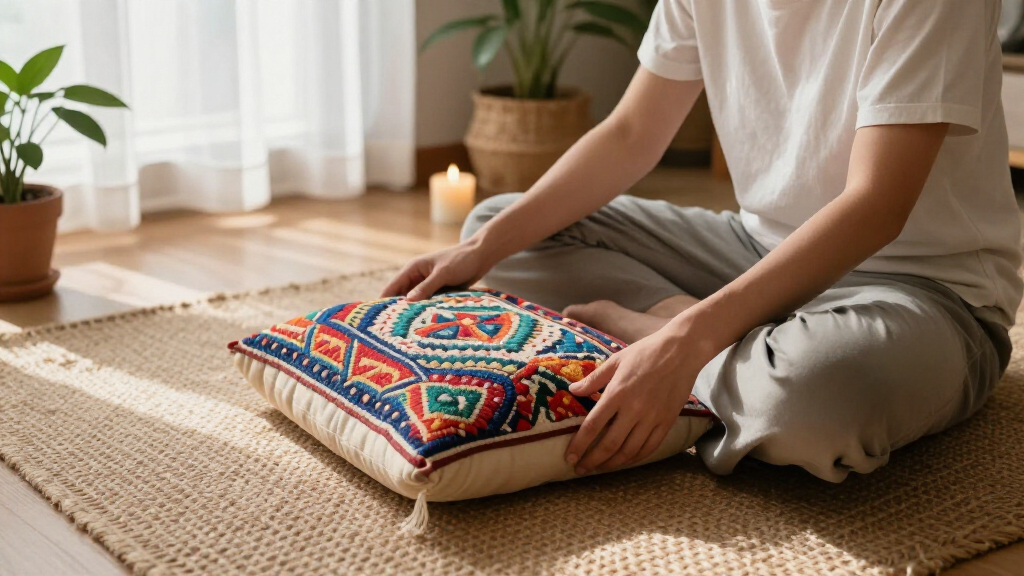

This guide explains how to select and use meditation cushions to maximize comfort and relaxation during meditation practices. Suitable for beginners, it covers everything needed to improve your meditation experience using the right cushion and proper positioning. Whether you are new to meditation or looking to enhance your current routine, follow these clear steps to achieve a comfortable, supportive sitting posture that encourages relaxation and focus.

Turn your quiet moments into listening time
- Thousands of audiobooks, podcasts and originals
- Listen on your phone, tablet or Echo — also offline
- Cancel anytime

Meditation Cushion – Cross Leg Floor Pillow for Meditation and Yoga
- ✔ Material: Memory foam, hypoallergenic fabric
- ✔ Cover: Removable and machine washable
- ✔ Design: Ergonomic contour with memory foam core

Retrospec Sedona Meditation Cushion, Buckwheat Pillow
- ✔ Fill Material: Buckwheat hulls
- ✔ Cover Material: 100% cotton
- ✔ Washable: Yes

Hihealer Meditation Cushion, Traditional Tibetan Velvet Meditation Pillow
- ✔ Material: Velvet cover
- ✔ Filling: Buckwheat hulls
- ✔ Use: Meditation, yoga, floor seating, decorative
Difficulty: Beginner | Time: 30-45 minutes
What You’ll Need
Tools & Materials:
- Meditation cushion or bolster
- Yoga mat or soft surface
- Optional: blanket or towel for added comfort
Knowledge:
- Basic understanding of meditation posture
- Awareness of personal comfort preferences
Choose a cushion that supports your body’s natural alignment. Be prepared to experiment with different heights and firmness levels to find what works best for you. Allocate about 10-15 minutes for initial setup and testing.
Meditation Cushion – Cross Leg Floor Pillow for Meditation and Yoga
<p>Compared with traditional cushions, this <strong>ergonomic cross-leg pillow</strong> offers superior support with its contour design and high-density memory foam, making it a top choice for relaxation. Its <strong>removable, washable cover</strong> simplifies maintenance, and its lightweight construction ensures portability without sacrificing stability. However, the <strong>memory foam may retain heat</strong> during extended sessions, which could be uncomfortable for some users. Additionally, its limited color options might not suit everyone’s aesthetic preferences. Overall, this cushion makes the most sense for those prioritizing ergonomic support and easy upkeep, especially for home use or studio practice.</p>
Pros:
- Provides ergonomic support and reduces leg and back pain
- Removable, washable cover for easy maintenance
- Versatile for meditation, yoga, and floor seating
- Lightweight yet stable on any floor surface
Cons:
- Memory foam may retain heat during extended use
- Design may not suit those preferring firmer cushions
- Limited color options
Best for: Users seeking versatile, supportive cushioning for prolonged meditation or yoga sessions
Not ideal for: People sensitive to heat retention or who prefer firmer, more traditional cushions
Bottom line: A highly supportive, versatile cushion ideal for comfort-focused meditation, with minor heat retention caveats.
“A highly supportive, versatile cushion ideal for comfort-focused meditation, with minor heat retention caveats.”
Retrospec Sedona Meditation Cushion, Buckwheat Pillow
<p>This cushion stands out for its use of <strong>sustainable buckwheat hulls</strong> that provide natural, adjustable support, making it ideal for environmentally conscious practitioners. Its <strong>machine-washable cotton cover</strong> ensures easy cleaning, and the <strong>adjustability</strong> allows users to tailor firmness to their preferences. The main tradeoff is that it may be too firm for some, especially those who prefer a softer, plush feel. Furthermore, adjusting firmness involves unzipping the cover and redistributing the hulls, which can be less convenient. Still, its support for proper posture and circulation makes it a compelling choice for relaxation and sustainable living.</p>
Pros:
- Adjustable firmness for personalized comfort
- Eco-friendly and machine washable cover
- Supports proper posture and circulation
Cons:
- May be too firm or rigid for some users
- Requires unzipping to customize support
- Limited color options
Best for: Eco-conscious users seeking customizable comfort and natural support
Not ideal for: Those preferring soft, plush cushions or with limited mobility to adjust firmness
Bottom line: A sustainable, customizable cushion perfect for those prioritizing eco-friendliness and natural support, with some tradeoffs in softness.
“A sustainable, customizable cushion perfect for those prioritizing eco-friendliness and natural support, with some tradeoffs in softness.”
Hihealer Meditation Cushion, Traditional Tibetan Velvet Meditation Pillow
<p>This cushion combines <strong>luxurious velvet fabric</strong> with a natural buckwheat hull filling, offering a plush, elegant look and customizable support. Its <strong>removable cover</strong> makes cleaning straightforward, and its large ergonomic design ensures comfort across various meditation and yoga postures. However, the <strong>buckwheat hulls may settle over time</strong>, requiring occasional adjustment, and the cushion’s weight could be a drawback for portability. It’s best suited for practitioners who want a decorative piece that also delivers reliable support, rather than a lightweight travel option.</p>
Pros:
- Luxurious velvet cover adds elegance and comfort
- Natural buckwheat filling allows customizable firmness
- Versatile for meditation, yoga, or as a decorative piece
- Removable cover for easy cleaning
Cons:
- Buckwheat hulls may settle and need adjustment
- Potentially heavy due to filling material
- Limited color options
Best for: Practitioners seeking an elegant, plush cushion that doubles as décor
Not ideal for: Travelers or those needing lightweight, portable cushions
Bottom line: A luxurious, supportive cushion best suited for those valuing elegance and comfort over portability.
“A luxurious, supportive cushion best suited for those valuing elegance and comfort over portability.”
As an Amazon Associate we earn from qualifying purchases.
Before You Start
Ensure your meditation space is clean, quiet, and free of distractions. Have your cushion, blanket, and any additional padding nearby. Avoid setting up on a hard, cold surface; a soft surface like a carpet or yoga mat enhances comfort. If you have any physical limitations or discomfort, consult with a healthcare provider before choosing your cushion height and firmness.
Step-by-Step Instructions
Step 1: Select the appropriate meditation cushion
Choose a cushion that provides adequate height and support to keep your hips elevated and knees comfortably lower than your hips. Options include a traditional zafu, rectangular bolster, or a firm pillow. Consider firmness: a cushion that is too soft may lack support, while one that is too firm may cause discomfort.
Tip:If you are new to meditation, start with a medium-firm cushion about 8-12 inches high. Adjust based on your height and flexibility. Taller individuals might prefer higher cushions, while shorter or less flexible individuals might need lower support.
Check: You will feel balanced and supported, with your spine aligned naturally and no undue strain on your hips, knees, or back.
Step 2: Position the cushion correctly
Place the cushion on a flat surface where you plan to meditate. Sit in front of it, then gently lower yourself onto the cushion so that your hips are raised above your knees. Keep your knees bent comfortably, with feet flat on the ground or cross-legged if that’s more comfortable.
Tip:Use a folded blanket or towel under the cushion if it slips or if additional height or softness is needed. Keep your back straight but relaxed, avoiding slouching or leaning forward.
Check: Your hips are slightly higher than your knees, your back is upright, and your weight is evenly distributed on the cushion. You feel stable and comfortable without strain.
Step 3: Adjust your sitting posture
Place your hands on your thighs or in your lap. Keep your shoulders relaxed and your chin slightly tucked. If your back feels strained, adjust the cushion height or add padding under your knees for support. Maintain a gentle engagement of your core muscles to keep your spine aligned.
Tip:Use a small cushion or rolled-up towel behind your lower back if you need extra lumbar support. Do not lean excessively forward or backward; aim for a straight but relaxed posture.
Check: You will notice your spine in a natural, upright position with minimal effort, and your breathing remains smooth and relaxed.
Step 4: Test and refine your setup
Close your eyes or soften your gaze, and sit quietly for a few minutes. Notice any discomfort or tension. Adjust the cushion height, padding, or your sitting position until you find a posture that feels stable, supported, and relaxed.
Tip:It may take several adjustments to get comfortable. Be patient and make small changes, testing each time.
Check: You experience a sense of calm, with minimal physical distraction or discomfort, and maintain your posture comfortably for at least 10 minutes.
Common Mistakes to Avoid
- Choosing a cushion that is too flat or too soft. — Select a firm, supportive cushion that elevates your hips enough to keep your spine upright without causing discomfort.
- Forgetting to adjust cushion height for individual body differences. — Test different heights and padding until your hips are higher than your knees, and your back feels supported.
- Leaning forward or slouching during meditation. — Use support like cushions or lumbar rolls to maintain an upright spine without strain.
Troubleshooting
Problem: Persistent discomfort in knees or hips.
Solution: Add padding under the knees or lower the cushion height to reduce strain. Consider using a softer surface or a different cushion shape.
Problem: Back feels strained or slouched.
Solution: Place a lumbar support cushion behind your lower back or adjust the cushion height to promote an upright posture.
Problem: Cushion slips during meditation.
Solution: Place the cushion on a non-slip surface or add a towel underneath to increase grip.
Problem: Feeling too cold or exposed during meditation.
Solution: Use a blanket or wear comfortable clothing to stay warm and relaxed.
What Success Looks Like
You are seated comfortably with a straight spine, hips elevated above knees, shoulders relaxed, and feeling relaxed and stable for at least 10 minutes without adjusting your posture.
Next Steps
Maintain your setup for daily meditation sessions. Periodically reassess comfort and make small adjustments as needed. Consider experimenting with cushion shapes or materials for further comfort. When feeling ready, explore different seated meditation techniques to deepen your practice.
Frequently Asked Questions
Can I use a regular pillow instead of a meditation cushion?
Yes, but ensure it provides adequate height and support. Traditional meditation cushions are designed for this purpose, offering better stability and support for prolonged sitting.
How often should I replace or upgrade my meditation cushion?
Replace your cushion when it becomes too soft, compressed, or worn out, typically every 1-2 years depending on usage. Upgrading can improve comfort and support.
Is it necessary to sit cross-legged?
No. You can sit with your legs extended, in a kneeling position, or in a chair if preferred. The key is to maintain an upright, supported posture that promotes relaxation.
What if I experience back pain despite using a cushion?
Adjust the cushion height or add lumbar support. If pain persists, consult a healthcare professional to rule out underlying issues and receive personalized advice.
Evergreen bestsellers Picks
bestsellers
As an affiliate, we earn on qualifying purchases.