
To create smooth microfoam without stress, use cold, fresh milk and fill your pitcher only a third full. Submerge the steam wand just below the surface to introduce gentle air until it makes a soft hissing sound, then deepen to heat evenly to about 140-150°F. With consistent practice, you’ll develop a feel for perfect texture and temperature, making latte art and great drinks easier. Keep experimenting—you’ll uncover more tips and skills ahead.

Turn your quiet moments into listening time
- Thousands of audiobooks, podcasts and originals
- Listen on your phone, tablet or Echo — also offline
- Cancel anytime
Key Takeaways
- Use fresh, cold milk and fill the steaming pitcher only one-third full for better frothing.
- Insert the steam wand just below the milk surface to introduce gentle air for microfoam.
- Submerge the wand deeper after reaching ~100°F to heat milk evenly without breaking the foam.
- Aim for a silky, smooth microfoam free of large bubbles for ideal latte art.
- Practice steady pouring and pitcher control to create consistent, stress-free latte art designs.
Have you ever wondered how baristas create those creamy, velvety foam on your favorite latte? It’s all about mastering the right frothing techniques to produce microfoam—tiny, uniform bubbles that give your coffee that smooth, glossy finish. When you learn to craft this foam properly, you can elevate your coffee game and even get into the art of latte art, adding a personal touch to each cup. The key is understanding the fundamentals of frothing and practicing consistently.
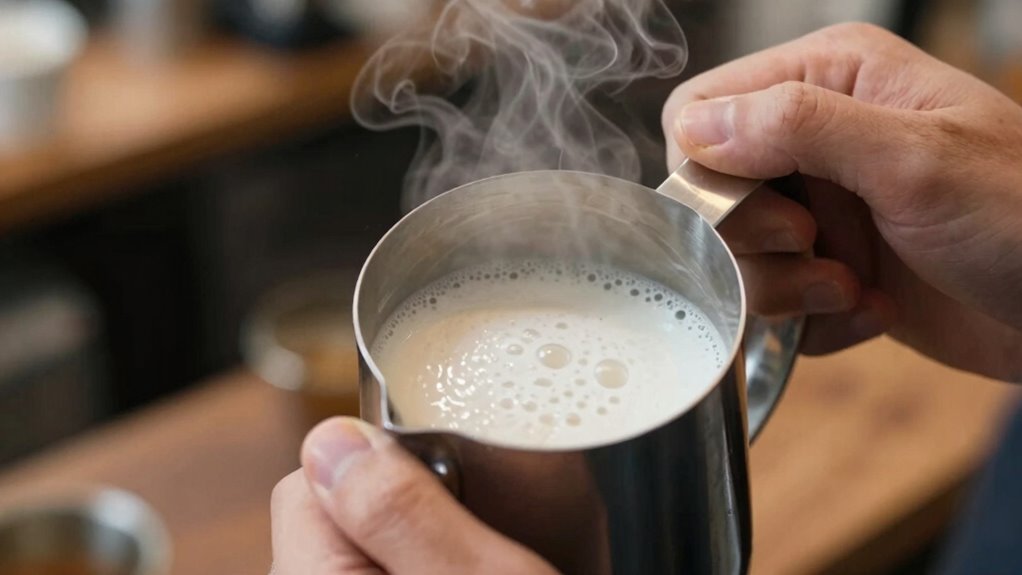
To start, use fresh, cold milk. Cold milk froths better because the temperature helps create stable bubbles. Pour it into a clean steaming pitcher, filling it only about one-third full; this gives the milk room to expand and allows you to control the frothing process. When you insert the steam wand, position it just below the surface of the milk. The goal is to introduce air into the milk gently, creating a fine, velvety microfoam. You’ll hear a gentle hissing or a consistent, soft screech—this sound indicates proper aeration. Keep the wand near the surface until the milk reaches about 100°F, then submerge it deeper to heat the milk evenly until around 140°F-150°F. Overheating can break down the foam, so keep an eye on the temperature. Achieving microfoam quality depends on the technique and attention to detail during frothing. Practicing your frothing techniques regularly helps develop the muscle memory necessary for consistent results and proper aeration. Developing an understanding of the frothed milk texture is essential for creating beautiful latte art, as it influences how the foam flows and holds shapes. Additionally, understanding basic milk steaming principles can help you troubleshoot common issues like large bubbles or uneven heating. Being familiar with the science of milk steaming can further enhance your ability to produce perfect microfoam consistently.
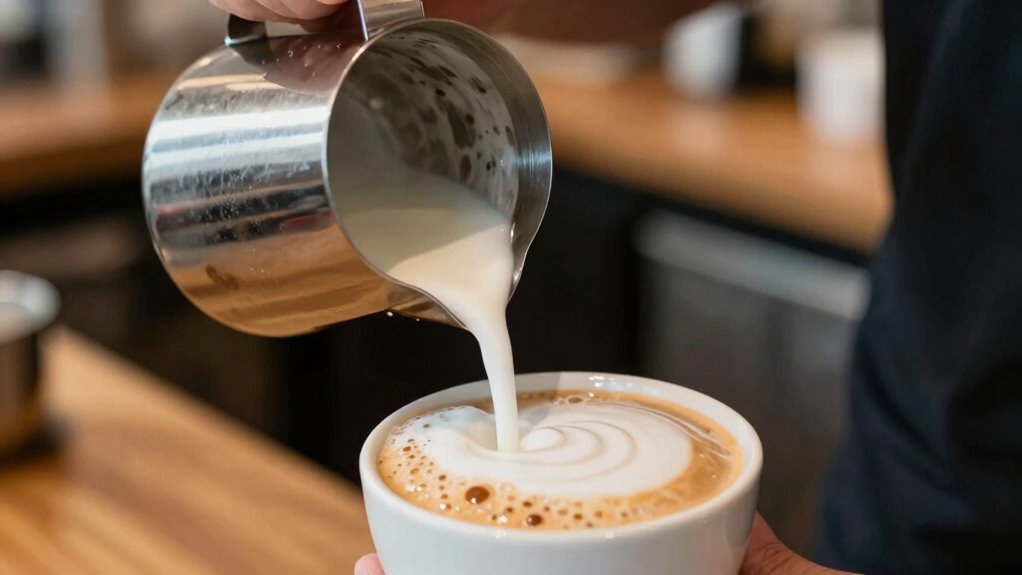
Once you’ve created a good microfoam, you can pour it into your espresso to form beautiful patterns—hearts, rosettas, tulips—these are all achievable with a steady hand and patience. The key to creating latte art is the consistency of your foam; it should be silky, smooth, and free of large bubbles. As you pour, move the pitcher closer or farther from the cup to control the flow and shape your design. A well-textured milk allows the foam to move seamlessly across the espresso, letting you manipulate the foam into intricate designs.
As an affiliate, we earn on qualifying purchases.
Frequently Asked Questions
Can I Froth Plant-Based Milks Effectively?
Yes, you can froth plant-based milks effectively! Vegan alternatives like almond, soy, and oat milk work well, especially when you choose nut-based options with good foamability. To get the best microfoam, heat the milk gently and use a steam wand or frother. Keep in mind that some plant-based milks foam better than others, so experiment to find your favorite for perfect lattes and cappuccinos.
How Do I Fix Large Bubbles in My Microfoam?
To fix large bubbles in your microfoam, focus on your frothing techniques. Start by positioning the steam wand just below the milk surface and maintaining a gentle, consistent motion. This helps create a smooth, velvety milk texture without large bubbles. If bubbles appear, gently tap the pitcher on a counter to release trapped air, then swirl the milk to integrate everything. Practice these steps regularly for perfect microfoam every time.
What’s the Ideal Temperature for Frothing Milk?
The ideal temperature for frothing milk is between 140°F and 150°F (60°C to 65°C). Use temperature control on your espresso machine or a thermometer to monitor milk as you froth. Focus on smooth, consistent frothing techniques, keeping the steam wand just below the surface to incorporate air without overheating. Proper temperature regulation guarantees your microfoam stays silky, sweet, and perfect for your coffee drinks.
Does the Type of Milk Affect Frothing Quality?
Yes, the type of milk impacts your frothing quality. Milk with higher milk fat, like whole milk, tends to create richer, creamier microfoam, making your drinks more indulgent. Skim milk froths easily into light, airy foam but might lack richness. Your frothing technique also plays a big role. Adjust your technique based on the milk type, and you’ll achieve perfect microfoam every time.
Can I Froth Cold Milk Successfully?
Yes, you can froth cold milk successfully. Use proper milk frothing techniques by starting with cold milk, which helps create stable microfoam, and incorporate froth stabilization tips like tilting your pitcher and positioning the steam wand correctly. Frothing cold milk might take a bit longer, but it results in denser foam. Keep practicing, and you’ll master cold milk frothing, producing rich, velvety microfoam perfect for your favorite coffee drinks.
As an affiliate, we earn on qualifying purchases.
Conclusion
Now that you’ve mastered milk frothing, you’re ready to impress your friends with café-quality drinks—without the need for a fancy steam wand. Remember, even the greatest baristas had to start somewhere, so don’t be discouraged if it takes a few tries. Keep practicing, stay patient, and soon you’ll be pouring microfoam like a modern-day alchemist. Before long, you’ll be the talk of your town, turning your kitchen into a cozy coffeehouse, just like in the good old days of the coffeehouse renaissance.
As an affiliate, we earn on qualifying purchases.
As an affiliate, we earn on qualifying purchases.
Halloween Picks
halloween
As an affiliate, we earn on qualifying purchases.