
Vacuum suction works by creating a pressure difference that pulls debris into a container, making it ideal for deep, detailed cleaning or tough debris removal. Airflow moves large volumes of air quickly to carry away dust and lightweight particles, which is better for ventilation and general dust collection. While high suction handles stubborn dirt, airflow systems are more energy-efficient for constant air movement. Continue exploring to discover how choosing the right method can improve your cleaning effectiveness.

Turn your quiet moments into listening time
- Thousands of audiobooks, podcasts and originals
- Listen on your phone, tablet or Echo — also offline
- Cancel anytime
Key Takeaways
- Vacuum suction creates a pressure difference to directly lift debris, while airflow moves particles away using movement of air.
- High suction is effective for detailed cleaning and embedded debris, whereas airflow efficiently handles loose, lightweight dust.
- Vacuum systems consume more energy due to stronger suction, while airflow systems generally require less power for moving large air volumes.
- Suction strength is crucial for deep, heavy-duty cleaning; airflow focuses on ventilation and removing surface dust.
- Proper selection depends on cleaning needs: deep cleaning favors suction, while dust/ventilation benefits from airflow efficiency.

When choosing between vacuum suction and airflow for cleaning or industrial applications, understanding how each method works can make a big difference in efficiency and effectiveness. Vacuum suction relies on creating a pressure difference that pulls dirt, debris, or other particles into a container or filter. The key factor here is suction strength, which determines how effectively the system can lift particles from surfaces. A strong suction ensures that even embedded debris gets pulled in thoroughly, making it ideal for deep cleaning tasks or handling heavy-duty materials. On the other hand, airflow efficiency focuses on how smoothly and quickly air moves through the system. This method uses airflow to carry particles away from surfaces and into collection areas, often with less emphasis on creating a strong vacuum. Proper airflow management is crucial for maximizing efficiency in systems designed for dust collection or ventilation.
Choosing between vacuum suction and airflow depends on cleaning needs and debris type.
In terms of performance, suction strength plays a crucial role in the effectiveness of vacuum suction systems. If the suction is weak, debris might be left behind, especially in textured surfaces or tight spaces. You’ll notice that high-suction models are better at picking up fine dust or larger particles, making them suitable for detailed cleaning or industrial processes that demand thorough removal. Conversely, airflow efficiency excels when the goal is to move large volumes of air quickly, which helps in capturing loose dust and lightweight particles with minimal resistance. This is often seen in systems designed for ventilation or dust collection where constant airflow prevents buildup and maintains a cleaner environment.
Another difference to consider is how each method impacts energy consumption. Systems with high suction strength often require more power because they need to generate a strong vacuum. This can lead to higher operational costs but offers superior cleaning or collection performance. Airflow-based systems may consume less energy since they focus on moving air efficiently rather than maintaining a high vacuum. However, they might not be as effective at removing stubborn debris, especially if the airflow isn’t optimized for the task.
Ultimately, your choice depends on what you need to accomplish. If your priority is deep cleaning or handling tough debris, a system with high suction strength will serve you better. If you need to move large amounts of air quickly or manage light dust, airflow efficiency will be more suitable. Understanding how each method works helps you select the right technology, ensuring you maximize both suction strength and airflow efficiency for your specific application.
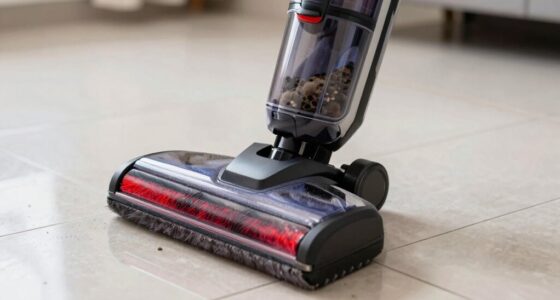
vacuum cleaner with strong suction
As an affiliate, we earn on qualifying purchases.
As an affiliate, we earn on qualifying purchases.
Frequently Asked Questions
Which Technology Is More Energy-Efficient for Cleaning Devices?
Airflow technology generally consumes less energy, making it more power-efficient for cleaning devices. You’ll notice lower energy consumption with airflow systems because they use less power to move air through the device, while vacuum suction requires more energy to generate strong suction power. If you’re looking for a cleaning device that’s more energy-efficient and saves on power, airflow-based systems are usually the better choice.
How Do Vacuum Suction and Airflow Impact Noise Levels?
They say, “silence is golden,” and it’s true when comparing vacuum suction and airflow’s noise impact. Vacuum suction tends to produce louder sounds due to its powerful motor and sound insulation challenges. Airflow, on the other hand, creates less noise because it relies on steady air movement rather than intense suction. For quieter cleaning, opt for devices designed with noise reduction features that enhance sound insulation, making your experience more peaceful.
Are There Specific Surfaces Better Suited for One Method?
Certain surfaces respond better to vacuum suction due to surface compatibility and material suitability. Smooth, hard surfaces like tile or hardwood allow suction to work efficiently, while textured or soft surfaces like carpet or upholstery benefit more from airflow. You should choose the method based on the surface you’re cleaning, ensuring the cleaning tool’s design matches the material for maximum results and to prevent damage.
Can Airflow Be Adjusted Independently of Suction Power?
Can airflow be adjusted independently of suction power? Absolutely. Think of airflow control as your vehicle’s cruise control—allowing you to fine-tune the airflow without changing the suction power. Many modern vacuum cleaners offer this feature, giving you suction independence and precise control. This means you can optimize cleaning for delicate surfaces or stubborn dirt without sacrificing overall suction strength, making your cleaning more effective and tailored to each task.
How Do Maintenance Requirements Differ Between the Two?
You’ll find that maintenance frequency differs between vacuum suction and airflow systems. Vacuum suction units typically need more frequent maintenance, like filter replacements, as their filters tend to have shorter lifespans due to higher strain. Conversely, airflow systems usually require less frequent upkeep because their filters last longer and experience less wear. Regular cleaning and timely filter changes guarantee both systems perform efficiently and last longer, reducing downtime and repair costs.
As an affiliate, we earn on qualifying purchases.
Conclusion
Ultimately, whether vacuum suction or airflow works best for you depends on your specific needs, but it’s intriguing how sometimes, what seems different can serve a surprisingly similar purpose. You might find yourself surprised that both methods, in their unique ways, draw in or move air effectively, demonstrating that innovation often hinges on subtle variations. In the end, it’s the coincidence of these differences that underscores the versatility and ingenuity behind simple yet powerful technologies.
industrial vacuum with high suction
As an affiliate, we earn on qualifying purchases.
As an affiliate, we earn on qualifying purchases.
As an affiliate, we earn on qualifying purchases.
Halloween Picks
halloween
As an affiliate, we earn on qualifying purchases.