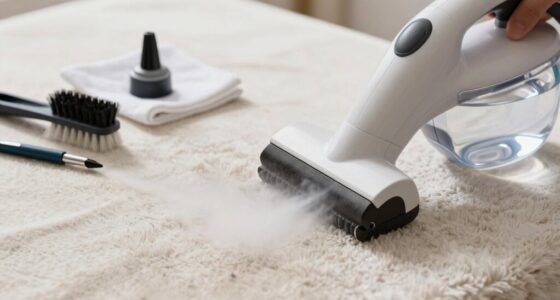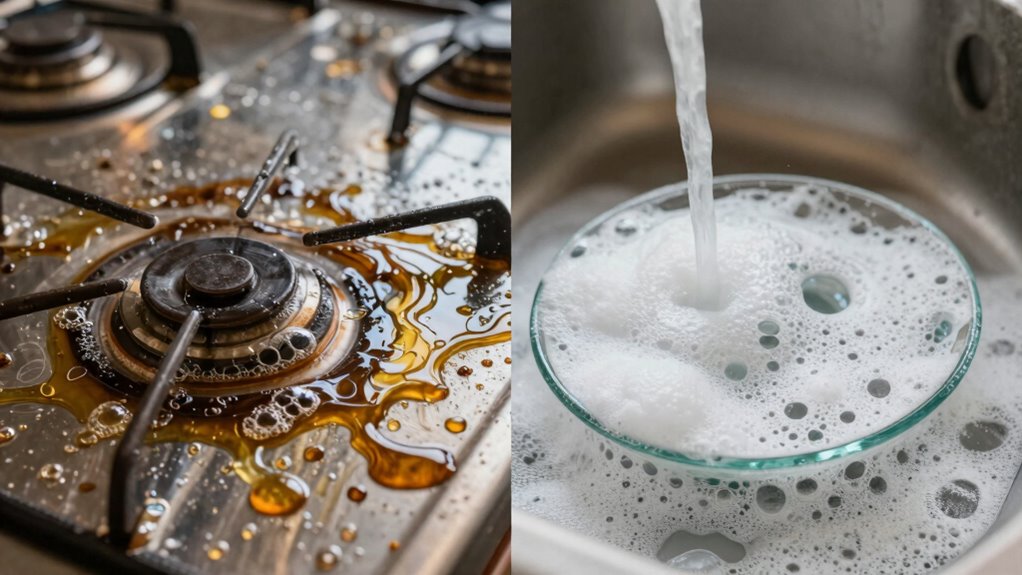
Use dish soap for light to moderate grease on everyday surfaces like cookware, countertops, or stovetops. It’s gentle, eco-friendly, and effective with water, making it ideal for routine cleaning. Save heavy-duty degreasers for stubborn, thick grime or industrial messes, as they contain stronger chemicals and deep-cleaning powers. Choosing the right product depends on your cleaning needs—if you want to learn more about making the best choice, keep exploring the details.

Turn your quiet moments into listening time
- Thousands of audiobooks, podcasts and originals
- Listen on your phone, tablet or Echo — also offline
- Cancel anytime
Key Takeaways
- Use dish soap for light to moderate grease on household surfaces and everyday cleaning tasks.
- Choose a degreaser for stubborn, thick grease and heavy-duty cleaning, especially in industrial or heavily soiled areas.
- Opt for eco-friendly dish soap when safety and environmental impact are priorities.
- Use degreasers with caution, following safety instructions and wearing protective gear due to harsher chemicals.
- Consider surface compatibility to prevent damage: dish soap is gentle, while some degreasers may be more aggressive.
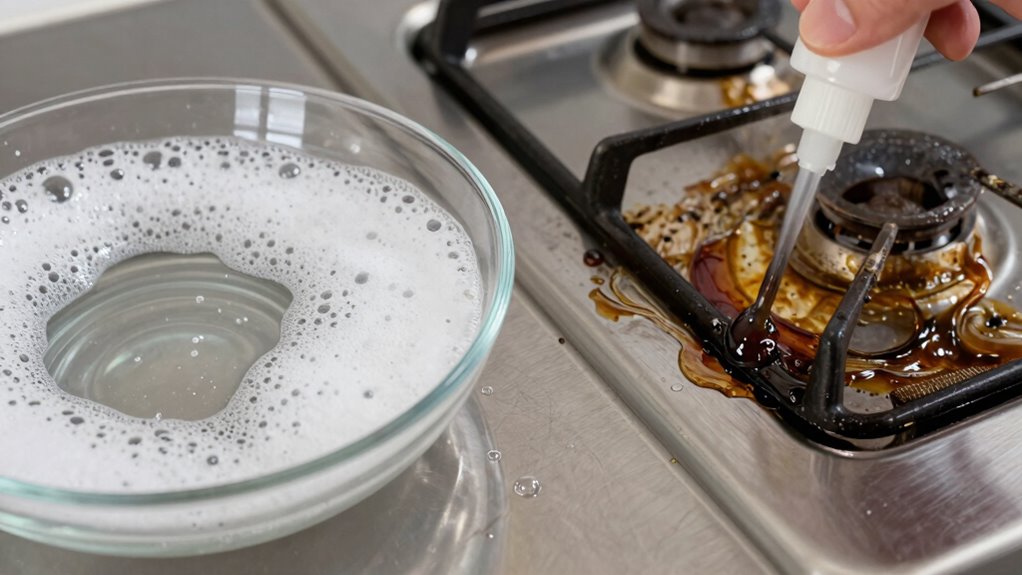
When it comes to cleaning greasy surfaces, understanding the differences between dish soap and degreasers can make all the difference. Dish soap is designed primarily for cleaning dishes, but it can also handle light to moderate grease on cookware, countertops, or stovetops. It’s gentle, effective in cutting through grease with water, and often contains eco friendly alternatives that reduce environmental impact. Many brands now offer plant-based or biodegradable formulas, making dish soap a more sustainable option. These eco friendly alternatives are especially appealing if you’re concerned about chemical safety considerations, as they typically avoid harsh synthetic chemicals that can irritate skin or harm aquatic life. However, dish soap’s mild nature means it may not be strong enough for heavy-duty grease buildup, like industrial kitchen grease or heavily soiled appliances.
Degreasers, on the other hand, are formulated specifically to tackle stubborn, thick grease and grime. Their powerful chemical compositions break down oily residues quickly, making them ideal for deep cleaning tasks in commercial kitchens or machinery. Still, it’s important to contemplate chemical safety considerations when using degreasers. Many contain solvents or surfactants that can be harsh or toxic if mishandled, so always read labels carefully. For household use, there are eco friendly degreasers available that minimize environmental impact without compromising effectiveness. These alternatives often utilize natural enzymes or citrus extracts to cut through grease safely and sustainably. Using a degreaser when you’re dealing with particularly stubborn stains ensures you don’t waste time scrubbing endlessly, but it’s equally critical to follow safety instructions—wear gloves, ensure good ventilation, and keep them out of reach of children and pets. Additionally, choosing products with environmentally friendly ingredients can help reduce your ecological footprint. It’s also wise to consider the type of surface you’re cleaning, as some materials may be sensitive to certain chemicals. When selecting a cleaning product, understanding its chemical formulation can help you make safer choices for your household.
Furthermore, understanding the difference in application methods between dish soap and degreasers can help you optimize their use and avoid potential damage to surfaces. Choosing between dish soap and degreaser comes down to the severity of the grease and your priorities. For everyday cleaning and lighter grease, dish soap is usually sufficient and safer, especially if you prefer eco friendly alternatives or are concerned about chemical safety considerations. When faced with stubborn, thick grease, a dedicated degreaser will save you effort and deliver better results. Just remember, safety first: always read labels, use proper protective gear, and opt for eco friendly products when possible to minimize your ecological footprint. By understanding these distinctions, you’ll be better equipped to select the right product for each cleaning challenge, ensuring effective results without compromising health or environmental safety.
eco-friendly dish soap for grease
As an affiliate, we earn on qualifying purchases.
As an affiliate, we earn on qualifying purchases.
Frequently Asked Questions
Can Dish Soap Remove Heavy Grease Stains Effectively?
Yes, dish soap can effectively remove heavy grease stains. It’s designed to cut through grease and oil, making it a good option for stain removal on fabrics and surfaces. To use, apply a small amount of dish soap directly to the stain, let it sit for a few minutes, then scrub gently. Rinse or wash as usual. For tough stains, repeating the process can guarantee better results.
Are Degreasers Safe for All Kitchen Surfaces?
Degreasers aren’t a one-size-fits-all solution; they can be like a wild stallion—powerful but unpredictable. You should always check chemical safety and surface compatibility before use. Some degreasers can damage delicate kitchen surfaces like countertops or painted finishes. Always read labels carefully, test on small areas first, and follow manufacturer guidelines. When used appropriately, they’re safe, but misuse can turn your kitchen into a battlefield.
How Long Should I Leave Degreaser on a Surface?
You should leave a degreaser on a surface for about 5 to 10 minutes, depending on the level of grease buildup and the product’s instructions. This allows proper surface preparation and guarantees the chemical composition effectively breaks down stubborn grime. Always check the label for recommended wait times, especially for delicate surfaces, to prevent damage. Rinse thoroughly afterward to remove any residue and maintain surface integrity.
Is Dish Soap Suitable for Cleaning Automotive Greasy Parts?
Yes, dish soap can be suitable for automotive cleaning and grease removal on greasy parts. Its surfactants help break down and lift grease effectively, making it a handy option for light cleaning tasks. However, for heavy-duty grease or stubborn stains, a commercial degreaser might be more effective. Always rinse thoroughly after using dish soap to prevent residue and potential damage to sensitive automotive surfaces.
Can I Use Degreaser on Delicate Fabrics or Upholstery?
You should avoid using degreaser on delicate fabrics or upholstery, as it can damage the fabric safety and compromise upholstery cleaning. Degreasers are powerful and designed for tough grease, but they may strip or discolor delicate materials. For upholstery cleaning, opt for a gentle fabric-safe cleaner or a mild soap solution to protect the fabric’s integrity and guarantee effective cleaning without harm.
heavy-duty degreaser for kitchen
As an affiliate, we earn on qualifying purchases.
As an affiliate, we earn on qualifying purchases.
Conclusion
In the battle of dish soap versus degreaser, think of dish soap as your gentle swimmer—perfect for everyday messes—while degreaser is your fierce warrior, tackling stubborn grease head-on. Knowing when to call in each helper keeps your cleaning routine smooth and effective. Like a skilled conductor, choose the right tool for the job, and your surfaces will shine brighter than a diamond. Clean smart, and enjoy the sparkle!
As an affiliate, we earn on qualifying purchases.
As an affiliate, we earn on qualifying purchases.
Halloween Picks
halloween
As an affiliate, we earn on qualifying purchases.