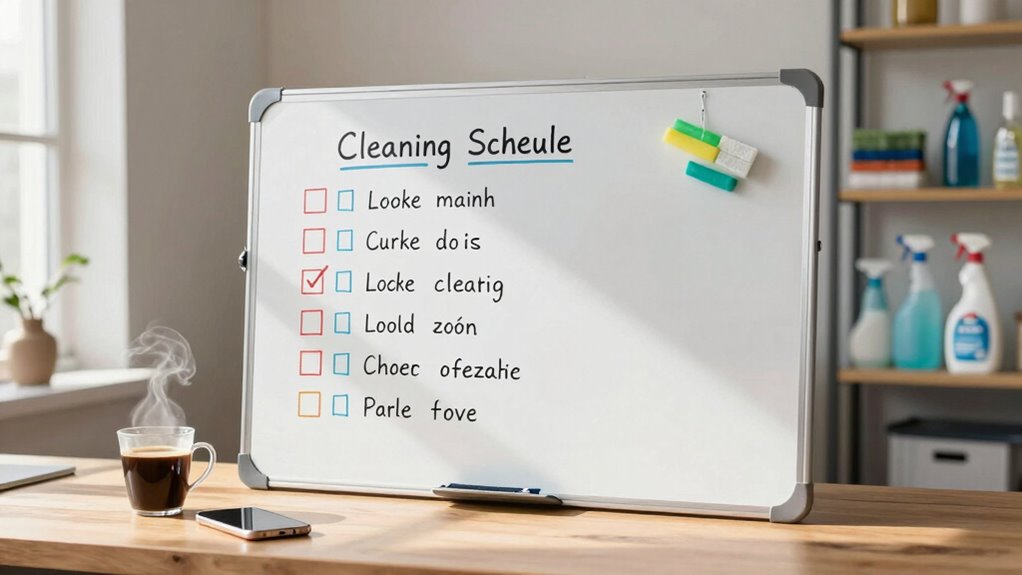

To create a cleaning schedule that won’t collapse, use digital tools like calendars or checklists to break tasks into small, specific steps. Stick to a routine by assigning consistent days and times, dedicating just 10-15 minutes daily for quick tidying. Focus on routines that fit your lifestyle and keep clutter under control. Consistency and proper planning make your schedule sustainable, helping you maintain an organized home long-term—discover how to keep it up effortlessly.

Get books, candles and calm essentials delivered free — and shop member deals
- Fast, free delivery on millions of items
- Access to Prime Big Deal Days deals on October 6–7
- Prime Video, Amazon Music and more included
Key Takeaways
- Use digital calendars or apps to set recurring, non-negotiable cleaning reminders.
- Break tasks into small, specific actions to prevent feeling overwhelmed.
- Schedule short daily tidying sessions to maintain consistency without burnout.
- Develop a routine that aligns with your lifestyle for sustainable habit formation.
- Regularly review and adjust your schedule to ensure it remains realistic and effective.

Have you ever started a cleaning schedule only to find it quickly falling apart? It’s a common frustration, but the good news is that with the right approach, you can create a routine that sticks. The key lies in using effective organizational tools and honing your time management skills. When you set up a system that works for your lifestyle, cleaning becomes less of a chore and more of a manageable task.
First, focus on choosing organizational tools that suit your habits. Whether it’s a digital calendar, a dedicated cleaning app, or a simple planner, find a method that helps you keep track of your chores. Visual aids like checklists or color-coded schedules make it easier to see what needs to be done and when. Breaking down your cleaning tasks into smaller, specific actions prevents overwhelm and helps you stay on top of everything. For example, instead of “clean the house,” you can list “vacuum the living room,” “wipe kitchen counters,” and “launder bathroom towels.” These smaller tasks are less daunting and give you a clear sense of progress.
Time management plays a crucial role in maintaining a consistent cleaning routine. Allocate specific days and times for different chores, and stick to that schedule as much as possible. Setting aside just 10-15 minutes daily for quick tidying can make a huge difference over time. When you assign dedicated slots in your calendar, cleaning becomes a non-negotiable part of your day rather than an optional task you keep putting off. Remember, consistency is more important than lengthy cleaning sessions. Short, regular intervals keep your space tidy without overwhelming you. Incorporating effective organizational techniques can help you develop a sustainable cleaning routine that fits your unique needs. Additionally, understanding home organization principles can lead to more efficient cleaning sessions and long-term cleanliness. Developing a clutter management strategy is also essential for maintaining an organized space that requires less frequent intensive cleaning. Ultimately, the goal is to create a cleaning schedule that fits into your life seamlessly. When you use the right organizational tools and manage your time wisely, your routine becomes sustainable. No more guilt or frustration about falling behind. Instead, you develop a consistent habit that keeps your home tidy and your mind at ease. With a bit of planning and discipline, your cleaning schedule won’t collapse but will instead become a natural part of your day-to-day life.
As an affiliate, we earn on qualifying purchases.
Frequently Asked Questions
How Do I Adjust the Schedule for Unexpected Events?
When unexpected delays or emergency cleaning arise, you should adjust your schedule by prioritizing critical tasks and rescheduling less urgent ones. Flexibility is key—add buffer times for unforeseen events and communicate changes promptly to everyone involved. Keep a backup plan ready, so you can swiftly handle emergencies without disrupting your entire cleaning routine. This approach guarantees your schedule remains effective, even when unexpected events occur.
What Tools Are Essential for Maintaining Consistency?
Think of your cleaning routine as a well-oiled machine—what tools keep it running smoothly? Essential tools include reliable cleaning supplies like disinfectants, microfiber cloths, and a mop. To stay consistent, good time management is key; set specific cleaning times and stick to them. These tools and strategies act as your allies, helping you maintain a steady rhythm and ensuring your schedule never collapses, no matter what surprises come your way.
How Can I Motivate Family Members to Stick to the Schedule?
You can motivate family members to stick to the schedule by incorporating motivational rewards that encourage participation. Make sure to highlight the importance of family accountability, so everyone feels responsible. Celebrate small wins together and offer incentives like extra screen time or a special treat. Keeping the mood positive and emphasizing teamwork will inspire everyone to stay committed, making cleaning more manageable and less of a chore.
What Are Common Pitfalls That Cause Schedules to Collapse?
You’ll often see schedules collapse due to poor time management or lack of clear motivational strategies. When tasks aren’t prioritized or deadlines aren’t realistic, family members may feel overwhelmed or discouraged. To prevent this, you should set achievable goals, break tasks into smaller steps, and celebrate progress. Consistently reinforce motivation and adjust the schedule as needed, ensuring everyone understands their roles and stays engaged, which keeps the cleaning routine steady and effective.
How Often Should I Review and Update My Cleaning Plan?
You should review and update your cleaning plan at least monthly to keep your routines effective and adaptable. Regular reviews help you identify areas needing schedule flexibility, ensuring your plan fits changing needs or unexpected disruptions. As you evaluate, adjust tasks or frequencies to prevent burnout and keep the schedule realistic. This proactive approach maintains consistency, making sure your cleaning routines stay reliable without collapsing under pressure.
checklist organizer for home chores
As an affiliate, we earn on qualifying purchases.
As an affiliate, we earn on qualifying purchases.
Conclusion
So, congratulations—your new cleaning schedule is finally foolproof. Or is it? Ironically, the more you plan to “never let it collapse,” the more it might just do exactly that. Life’s messy moments have a sneaky way of sneaking in when you least expect them. But hey, that’s part of the charm, right? Embrace the chaos with a schedule that’s flexible enough to survive your inevitable slip-ups. After all, perfection isn’t the goal—consistent cleanliness is.
As an affiliate, we earn on qualifying purchases.
As an affiliate, we earn on qualifying purchases.
Fall Picks
fall essentials
As an affiliate, we earn on qualifying purchases.