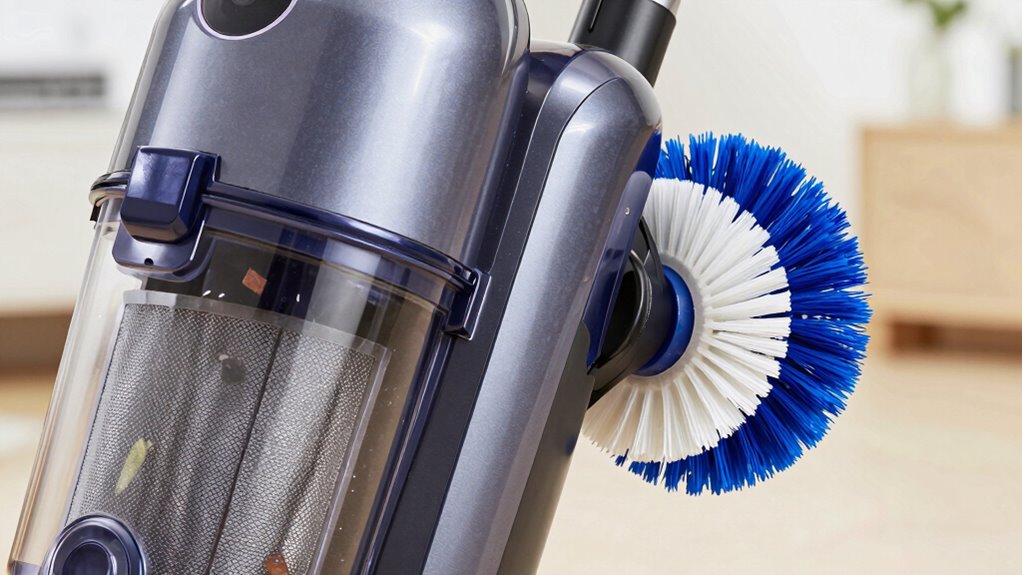

To keep your vacuum working well, you should regularly clean or replace filters, check the brush roll for tangles or wear, and inspect the suction pathway for blockages. Dirty filters and a worn brush reduce cleaning power and can strain the motor, while obstructions decrease suction efficiency. Proper maintenance prevents costly repairs and extends your vacuum’s lifespan. If you want tips on how to do these tasks effectively, there’s more you can explore to keep your vacuum at its best.
Key Takeaways
- Regularly check and replace filters to prevent airflow blockages and maintain suction power.
- Inspect and clean or replace the vacuum brush to ensure effective carpet agitation.
- Clear any blockages in hoses or intake pathways to prevent suction drops.
- Proper maintenance of filters, brushes, and pathways extends vacuum lifespan and improves performance.
- Neglecting maintenance can cause reduced suction, inefficient cleaning, and potential motor damage.
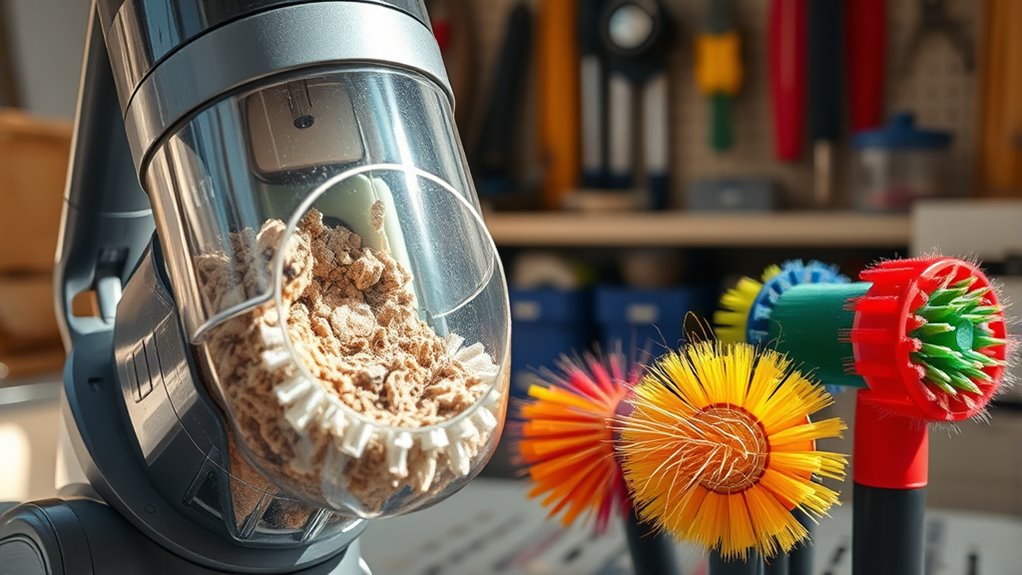
Maintaining your vacuum regularly is crucial to guarantee it performs at its best and lasts longer. One of the most important aspects of upkeep involves paying attention to the filters. Over time, filters accumulate dust, dirt, and debris, which can block airflow and reduce suction power. To keep your vacuum working efficiently, you should monitor the filter lifespan and replace filters as recommended by the manufacturer. A clogged or dirty filter not only hampers suction but can also strain your vacuum’s motor, leading to potential damage. Regular filter replacement ensures unrestricted airflow, improves cleaning performance, and extends the life of your vacuum. It’s a simple task that pays off by maintaining ideal suction power and preventing costly repairs down the line. Additionally, understanding the importance of proper maintenance can help you identify issues early and avoid more serious problems later.
Along with filters, another critical component to check is the brush. Over time, the brush roll can become worn out or tangled with hair, string, and debris, which diminishes its ability to agitate carpets and pick up dirt effectively. Consistent brush replacement is essential because a worn brush reduces cleaning efficiency and can even cause damage to your carpets. When inspecting the brush, look for signs of wear, such as frayed bristles or a flattened surface. Replacing the brush at regular intervals restores its ability to loosen dirt from fibers, making your vacuum more effective. It’s especially important if you notice the vacuum isn’t picking up as much dirt as before or if the brush looks visibly worn. Keeping the brush in top condition not only improves cleaning but also prevents strain on other parts of your vacuum, contributing to its longevity.
In addition to filters and brushes, don’t forget to regularly check the vacuum’s suction pathway. Blockages or buildup within hoses or intakes can cause suction drops, making your cleaning efforts less effective. Regularly inspecting and clearing these pathways complements your routine filter and brush maintenance. By staying attentive to these components, you ensure your vacuum maintains strong suction, clean carpets thoroughly, and operate smoothly for years to come. Proper maintenance, including timely filter changes and brush replacements, is the key to maximizing your vacuum’s lifespan and performance. It’s a small investment of time that results in better cleaning, fewer repairs, and a longer-lasting appliance.
Frequently Asked Questions
How Often Should I Replace My Vacuum Filters?
You should replace your vacuum filters every 3 to 6 months, depending on the filter lifespan and usage. Regular replacement guarantees peak suction and cleaning performance. Check your vacuum’s manual for a specific replacement schedule, as some filters need more frequent changes if you vacuum often or have pets. Keeping filters fresh prevents clogging and maintains your vacuum’s efficiency, making your cleaning easier and more effective.
Can I Use Generic Filters Instead of Brand-Specific Ones?
You can try generic filters, but it’s a bit of a double-edged sword. While they might save you money, filter compatibility with your vacuum isn’t always assured, especially when comparing brand vs. generic options. Using incompatible filters can reduce suction and damage your vacuum. It’s best to stick with the original brand filters or make certain the generic ones meet your vacuum’s specifications to keep it running smoothly.
What Are Signs My Vacuum’s Brush Needs Replacing?
You’ll know your vacuum’s brush needs replacing if you notice uneven cleaning, hair or string tangled around it, or if it’s visibly worn or damaged during brush inspection. Reduced motor performance can also be a sign, as a worn brush strains the motor. Regularly check the brush to guarantee it spins freely and isn’t frayed, helping maintain ideal suction and prolonging your vacuum’s lifespan.
Does Vacuum Suction Decrease Over Time Naturally?
Did you know that vacuum suction can decrease by up to 50% over time? Yes, it’s common for suction to decline gradually due to factors like vacuum bag lifespan and motor wear patterns. As your vacuum ages, parts may clog or weaken, reducing performance. Regular maintenance, such as replacing filters and checking for blockages, helps preserve suction, but some decline is inevitable with prolonged use.
Are There DIY Tips to Improve Suction Without Professional Help?
Yes, you can try DIY improvements for suction troubleshooting. First, check and clean or replace filters and brushes to guarantee airflow isn’t blocked. Clear any debris from the hose and nozzles. Ensure the vacuum bag or bin isn’t full. Tighten any loose parts or seals to prevent airflow leaks. These simple steps often restore suction without needing professional help, making your vacuum work like new again.
Conclusion
By keeping your vacuum filters clean, brushes in top shape, and checking the suction regularly, you’re fundamentally giving your device a secret weapon against dirt and debris. Neglecting maintenance can turn your powerful cleaner into a feeble, sputtering machine—like a lion reduced to a kitten. Stay vigilant with these simple steps, and your vacuum will perform like a champion for years to come, making your cleaning routine effortless and almost spectacular in its efficiency.