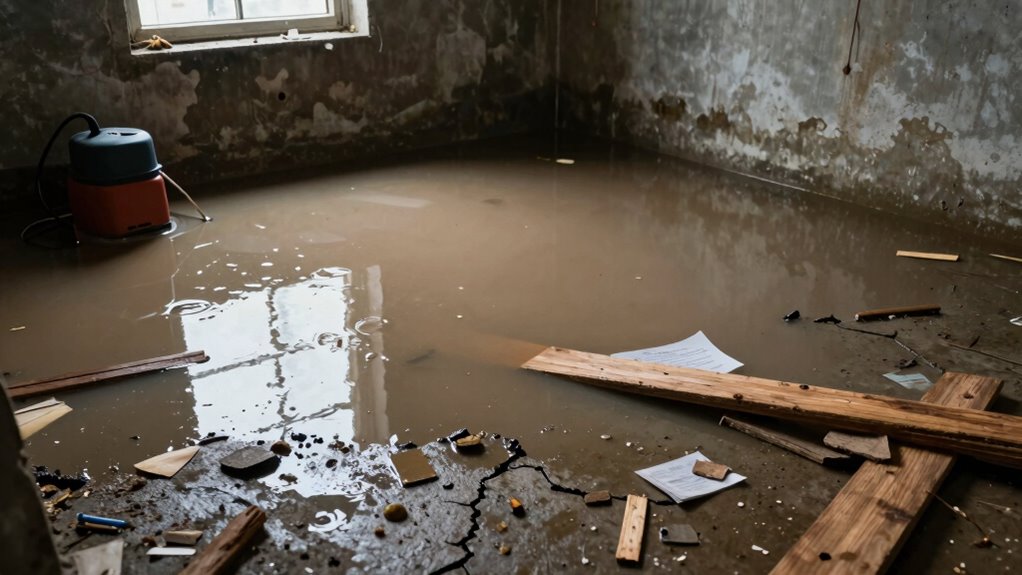
During a power outage, your primary sump pump can’t operate, which can lead to basement flooding if no backup plan is in place. Installing a battery backup, water-powered pump, or secondary pump guarantees your system keeps running. Regular maintenance and testing are essential for reliability. By having these safeguards, you keep your basement dry even during storms or equipment failures. If you want to learn more about effective backup strategies, keep exploring.
Key Takeaways
- Battery backups activate automatically during power outages to keep the sump pump running and prevent basement flooding.
- Regular maintenance and testing ensure backup systems function properly when needed most.
- Fully charged batteries are critical; they should be checked frequently and replaced every few years.
- Additional backup options like water-powered pumps can provide extra protection during outages.
- Proper planning and proactive maintenance significantly reduce the risk of flooding when main power fails.
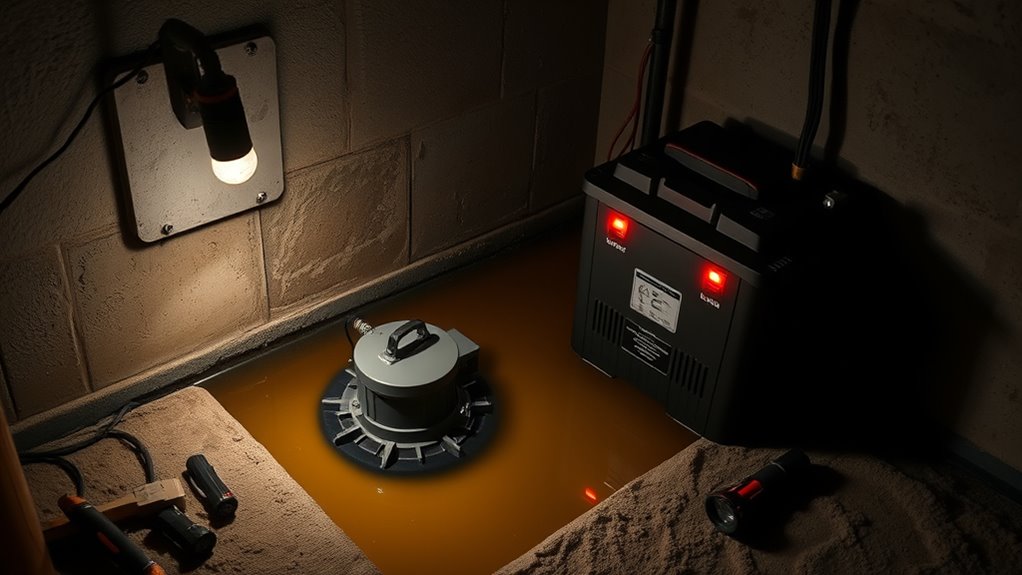
Flooding from a sump pump failure can cause significant damage to your home, so it’s vital to have a solid backup plan in place. When heavy rain or storms overwhelm your sump pump, especially during power outages, your basement becomes vulnerable. That’s where a battery backup system comes into play. A battery backup ensures that your sump pump continues to operate even when the main power is out, preventing flooding and water damage. Installing a reliable battery backup is a smart investment, but it’s equally important to maintain your sump pump regularly. Proper sump pump maintenance involves inspecting the unit, clearing debris, and testing its operation to verify it’s ready when needed.
You should check your sump pump at least once a month, especially before the rainy season begins. During this inspection, look for signs of wear and tear, corrosion, or clogs. Clear any debris from the sump pit and ensure the float switch moves freely. Testing the pump by pouring water into the sump pit helps verify that it activates correctly and pumps water out efficiently. Remember, a well-maintained sump pump reduces the likelihood of failure, but even the best units can malfunction during severe storms or power outages. That’s why having a battery backup as part of your sump pump maintenance routine is essential.
A battery backup provides peace of mind because it kicks in automatically when the main pump loses power. Make sure your backup system is properly installed and maintained according to the manufacturer’s instructions. Regularly check the battery’s charge and replace it every few years or as recommended. Keep a spare battery on hand, so you’re prepared if the current one fails unexpectedly. Also, test your backup system periodically to confirm it’s functioning correctly. Battery performance is crucial to ensure your backup system operates reliably during emergencies.
In addition to battery backup, consider other backup options like water-powered sump pumps or secondary units. These can provide extra layers of protection against flooding during outages. But regardless of the backup method you choose, proper sump pump maintenance remains the foundation of your flood prevention strategy. Staying proactive with inspections, testing, and timely battery replacements can save you from costly water damage and the stress of cleaning up after a flood. When storms threaten, your preparedness and regular maintenance will be your best defense against basement flooding.

Anker SOLIX F3000 Portable Power Station with 2×400 Solar Panel, 3,072Wh, 6,000W Recharging, Solar Generators for Home Use, For Power Outages, Camping, RVs, Emergencies
Massive 3,600W Pass-Through Charging: No more interruptions during outages. Recharge with a 120V generator and run appliances at...
As an affiliate, we earn on qualifying purchases.
Frequently Asked Questions
How Long Can a Sump Pump Operate During a Power Outage?
During a power outage, your sump pump can run as long as your backup system’s battery lasts, typically between 4 to 24 hours. Battery lifespan varies depending on usage and quality, so it’s vital to choose a reliable backup system. Keep in mind, backup system costs can range from affordable to expensive, depending on capacity and features. Regular maintenance ensures your backup works when you need it most.
Are Battery Backups Reliable for Long-Term Outages?
Battery backups can be reliable for short-term outages, but their battery lifespan and backup system durability matter. As batteries age, they lose capacity, reducing effectiveness during prolonged power loss. You should monitor your backup system regularly and replace batteries as needed to guarantee continued protection. For long-term outages, consider combining battery backups with other backup systems, like generators, to maintain sump pump operation and prevent basement flooding.
What Maintenance Is Needed for Backup Sump Pump Systems?
Think of your backup sump pump as a guardian warrior; it needs regular armor checks. You should perform routine maintenance tips like inspecting batteries, cleaning the float switch, and testing the system monthly. Don’t forget to schedule backup system upgrades when needed, guaranteeing your protector remains strong against rising waters. By keeping everything in top shape, you’ll ensure your basement stays dry, no matter how fierce the storm.
Can Generators Be Used to Power Sump Pumps?
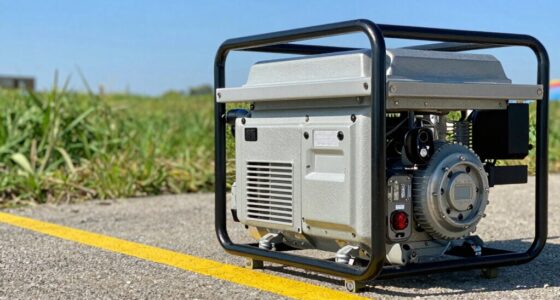
Yes, generators can power sump pumps, but you need to prioritize generator safety by installing proper outlets and grounding. Make sure your generator is rated for continuous use and keep it in a well-ventilated area to prevent carbon monoxide buildup. Regularly check your generator’s battery lifespan if it has an electric start feature, and ensure it’s maintained to avoid failures during outages. Proper setup guarantees your sump pump keeps working safely and reliably.
How Do I Test My Backup Sump Pump System?
To test your backup sump pump system, first verify the backup is properly installed and has fresh batteries. Then, manually activate the system or simulate a power outage by unplugging the primary pump. Watch for the backup’s operation, listen for any unusual sounds, and check if it’s pumping water. Regularly replace batteries as needed to keep your backup system ready, and schedule routine tests to confirm it functions correctly.

Pump Partner Heavy-Duty automatic backup power station for 120v sump pumps. Built-in 51.2V 40Ah LiFePO₄ battery, Specifically designed for extreme weather, and homes facing 1–3 day power outages.
Broad Pump Compatibility – Works with most 115V/120V residential sump pumps from Zoeller, Wayne, Everbilt, Red Lion, Little...
As an affiliate, we earn on qualifying purchases.
Conclusion
Think of your sump pump system as a lifeline for your basement. When the power goes out, a backup is like having a trusted friend ready to catch you. By planning ahead and installing reliable backups, you’re safeguarding your home from flooding disasters. Don’t wait for the storm to hit—prepare now so your basement stays dry, no matter how fierce the outage. Your home’s safety depends on your proactive steps today.

DJI Power 1000 Portable Power Station, 1024Wh LiFePO4 Battery, 2200W (Peak 2600W) AC/140W USB-C Output, 23db Ultra-Silent, Solar Generator For Home Backup, Camping (Solar Panel Optional)
The Power from DJI - Unleash reliable portable energy with DJI Power 1000 portable power station. Experience unparalleled...
As an affiliate, we earn on qualifying purchases.

BLUETTI Elite 100 V2 Portable Power Station, 1024Wh LFP Battery Backup w/ 4 1800W AC Ports (3600W Surge), 35% Smaller, Fast Charge and UPS Solar Generator for Camping, Road Trip, Outages, Home Backup
[Power 11 Devices] - With a 1024Wh capacity, Elite 100 V2 portable power station delivers 1800W AC output...
As an affiliate, we earn on qualifying purchases.