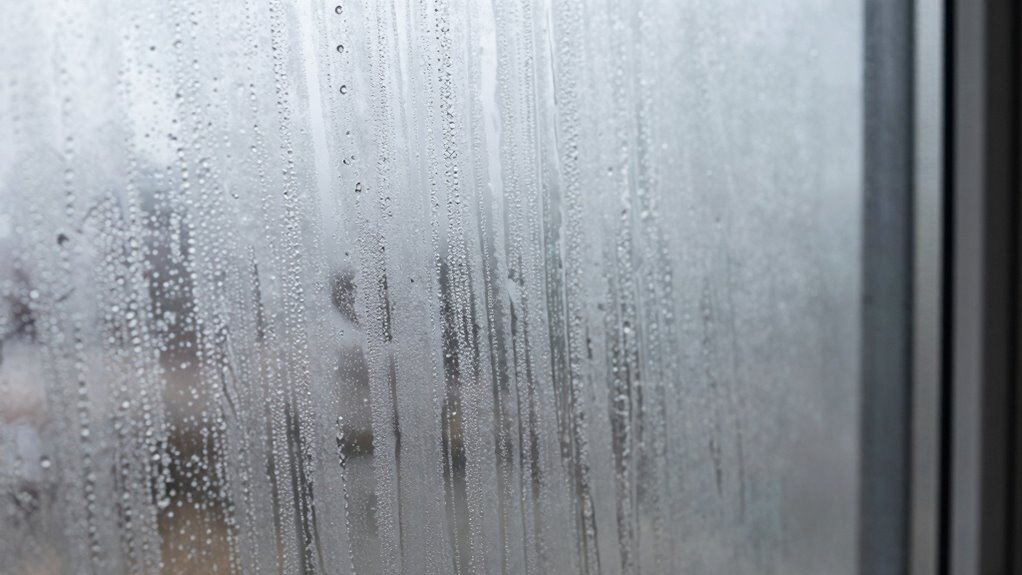
Condensation on your windows happens when warm, moist indoor air hits the cold glass surface, causing water droplets to form. This usually occurs during winter or in humid environments if ventilation isn’t enough. To fix it quickly, increase airflow, use a dehumidifier, or wipe the moisture away. However, controlling humidity levels and improving insulation can prevent future buildup. Keep exploring to learn more about tackling the root causes effectively.
Key Takeaways
- Condensation occurs when warm, moist indoor air contacts cold window surfaces, reaching its dew point.
- High indoor humidity and low outdoor temperatures significantly increase window fogging.
- Improving ventilation, controlling indoor humidity below 50%, and insulating windows help prevent condensation.
- Quick fixes include wiping windows, using dehumidifiers, and increasing airflow; long-term solutions involve better insulation and sealing.
- Address underlying causes like leaks, poor insulation, and indoor moisture sources for effective, lasting results.
Understanding Why Windows Get Foggy

When warm, moist air comes into contact with a cold window surface, it cools down quickly, causing the moisture to condense into tiny water droplets. This happens because cold surfaces lower the air temperature directly adjacent to them, reducing its ability to hold moisture. As the air cools, it reaches its dew point—the temperature at which it can no longer retain all its water vapor. The excess moisture then turns into visible droplets on the glass. You’ll notice this most during winter or in humid environments. Understanding this process helps you see why windows fog up, especially when indoor air is warm and damp, and the glass remains cold. Recognizing the causes of condensation can help you take effective steps to reduce fogging. Additionally, insulating windows can help minimize temperature differences that lead to condensation on the glass surface. Proper ventilation also plays a crucial role in managing indoor humidity levels****, which directly impacts how often windows fog up.
The Science Behind Window Condensation

You’ll notice that when indoor humidity rises and outdoor temperatures drop, condensation forms on your windows. This happens because warm, moist air hits the cooler glass surface and reaches its dew point. Understanding how temperature and humidity interact helps explain why surfaces stay wet or stay clear. Additionally, energy-efficient window designs can help reduce condensation buildup by improving insulation. Proper ventilation is also essential for controlling indoor humidity levels and preventing excess moisture from accumulating. Introducing hydrotherapy techniques like aquatic exercises can also help regulate indoor humidity by increasing moisture absorption and evaporation in controlled environments. Incorporating humidity regulation strategies can further enhance the effectiveness of ventilation systems and help maintain optimal indoor conditions. Emerging technologies like bioluminescent lighting solutions into window design are an area that could influence future energy efficiency standards.
Humidity and Temperature
Have you ever wondered why condensation forms on your windows, especially during certain times of the year? It all comes down to humidity and temperature. When warm, moist air inside your home meets the colder surface of your window, the air cools down. Cooler air can’t hold as much moisture, so the excess vapor turns into water droplets on the glass. This is why higher humidity levels and lower temperatures increase condensation chances. To understand this better, consider the table below:
| Condition | Effect on Condensation | Example |
|---|---|---|
| High humidity | More moisture in air | Laundry drying indoors |
| Low temperature | Cooler window surface | Winter mornings |
| Warm interior, cold exterior | Increased temperature difference | Heated homes in winter |
Controlling humidity and warmth helps prevent condensation buildup. Maintaining proper ventilation can also reduce excess moisture in the air and minimize condensation issues. Additionally, using dehumidifiers or opening windows periodically can help regulate indoor humidity levels and reduce condensation. Implementing humidity control strategies is essential for maintaining clear windows and a comfortable indoor environment.
Dew Point Formation
Understanding dew point formation helps explain why condensation appears on your windows. The dew point is the temperature at which air becomes saturated with moisture and water vapor begins to condense into liquid. When warm, humid indoor air comes into contact with a cooler window surface, it cools down rapidly. If the window’s surface temperature drops below the dew point, the moisture in the air turns into tiny droplets on the glass. This process is natural and depends on both the humidity level and temperature difference. The higher the humidity or the lower the window temperature, the more likely dew will form. Recognizing this helps you understand that controlling indoor humidity and keeping windows warmer can prevent or reduce condensation. Maintaining optimal indoor conditions can significantly minimize these issues.
Warm Surface Effects
Warm surface effects play a crucial role in whether condensation forms on your windows. When the inside surface of your window remains warm, it’s less likely to reach the dew point, preventing moisture from condensing. Cold glass surfaces cause moisture in the air to turn into droplets, especially in high humidity conditions. To avoid this, you can improve your window’s insulation or add storm windows to keep the interior surface warmer. Using window films or applying low-emissivity coatings also helps retain heat. Ensuring proper indoor heating and reducing humidity levels further maintain higher surface temperatures. Proper insulation techniques can significantly enhance a window’s ability to stay warm and dry. By keeping your window surfaces warm, you reduce the chances of condensation forming, making your home more comfortable and preventing mold growth or water damage. Air quality improvements can also contribute to a healthier environment inside your home. Additionally, maintaining consistent indoor temperatures supports support breakfast routines by creating a more comfortable living space. Improving ventilation can help control indoor humidity levels, further reducing the risk of condensation. Proper humidity control is essential to maintain the ideal moisture levels and prevent condensation from occurring.
Common Myths About Window Moisture

Many people believe that window moisture is always caused by poor insulation or leaks, but that’s not the full story. You’re often told that sealing or upgrading windows will fix the problem, yet condensation can still occur even with new windows. Understanding these myths helps you find the right solutions instead of wasting time on ineffective fixes. Indoor air quality and proper ventilation play a crucial role in managing window condensation effectively. Recognizing the role of air circulation can help you implement effective strategies to reduce moisture buildup. Additionally, specialized services like professional assessments can identify underlying issues contributing to persistent condensation. Proper ventilation systems are essential for controlling humidity levels and preventing ongoing moisture problems. Maintaining appropriate humidity levels is vital for preventing condensation and ensuring a comfortable indoor environment.
Myths About Causes
One common misconception is that condensation on windows is solely caused by indoor activities like cooking or showering. While these activities increase humidity temporarily, they aren’t the main cause of persistent window condensation. The real issue is often the difference between indoor and outdoor temperatures and humidity levels. Many believe that reducing indoor moisture alone will eliminate condensation, but that’s not always true. Factors such as poor ventilation, insufficient insulation, and cold window surfaces play a bigger role. Remember:
- High outdoor humidity can cause condensation regardless of indoor activities
- Cold window surfaces attract moisture more easily
- Ventilation affects how quickly indoor moisture dissipates
- Insulation quality influences window temperature
- Persistent condensation often indicates a need for better insulation or ventilation
- Proper insulation can help keep window surfaces warmer and reduce moisture buildup
Understanding these myths helps you target the actual causes, not just the symptoms.
Misconceptions About Solutions
Some common solutions people try to fix window condensation don’t address the root causes. For example, many believe turning up the heat or using dehumidifiers alone will eliminate moisture issues. While these can help temporarily, they don’t solve underlying problems like poor ventilation or excess indoor humidity. Others think applying sealants or window films will prevent condensation, but these only trap moisture inside, potentially causing damage. Some also assume that opening windows frequently is enough, yet it often isn’t effective if indoor humidity remains high. These myths lead you to waste money on quick fixes that don’t work long-term. To truly fix the problem, you need to understand and address the core causes—like controlling indoor moisture and improving airflow—rather than relying solely on surface solutions. Additionally, using proper filtration and pump protection can help maintain your equipment and prevent issues that contribute to moisture buildup.
How Humidity Levels Affect Your Windows

High humidity levels inside your home can directly lead to condensation on your windows. When the air is moist, it holds more water vapor. As warm indoor air contacts colder window surfaces, the vapor cools and turns into water droplets. To manage this, monitor your home’s humidity and keep it below 50%. Excess humidity makes windows more prone to fogging and water buildup. Consider these points:
- High humidity increases the likelihood of condensation
- Cold windows cause vapor to condense quickly
- Maintaining proper humidity reduces moisture buildup
- Using exhaust fans helps remove excess moisture
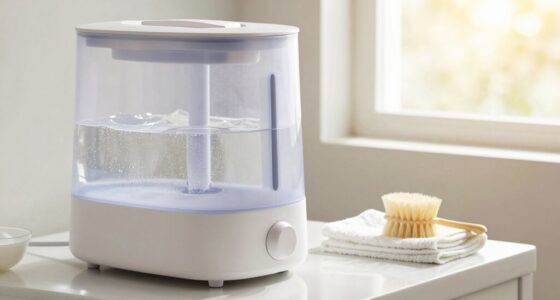
- Dehumidifiers can stabilize indoor humidity levels
- Ensuring proper ventilation in your home can significantly reduce humidity and prevent window condensation.
Controlling humidity is essential in preventing window condensation and protecting your home from potential damage. Keep an eye on moisture levels, especially during colder months, to maintain clear, dry windows.
Identifying the Root Causes of Excess Moisture

Identifying the root causes of excess moisture in your home is essential for effective condensation control. Start by examining your daily activities—cooking, showering, and doing laundry release significant moisture into the air. Poor ventilation traps this humidity indoors, making it harder for windows to stay dry. Check for leaks around pipes, windows, or roofing, as these allow outside moisture to seep in. Additionally, consider your home’s insulation; inadequate insulation leads to colder surfaces where condensation easily forms. Keep an eye on sources of moisture that are persistent or excessive. By pinpointing these causes, you can target your efforts more effectively and prevent ongoing moisture buildup, ultimately reducing window condensation and protecting your home’s structure.
Simple Quick Fixes to Clear Up Your Windows

When you notice your windows fogging up, quick fixes can make an immediate difference while addressing the underlying issues. Start by wiping the glass with a clean, dry cloth to remove moisture. Increase ventilation by opening windows or using exhaust fans, especially in high-humidity rooms. You can also try using a dehumidifier to quickly reduce indoor moisture levels. Applying a commercial anti-fog spray to your windows creates a temporary barrier against condensation. Additionally, using a hairdryer on a low, cool setting can help evaporate existing moisture. Remember these quick tips:
Wipe windows with a dry cloth, boost ventilation, and use anti-fog sprays for quick relief.
- Wipe windows regularly with a dry cloth
- Boost ventilation in the room
- Use a dehumidifier
- Apply anti-fog sprays
- Carefully dry with a hairdryer
These simple steps can improve visibility fast while you work on long-term solutions.
Long-Term Solutions for Preventing Condensation

To effectively prevent condensation on your windows over the long term, you need to address the root causes of excess moisture and poor insulation. Start by improving ventilation in your home; use exhaust fans in bathrooms and kitchens, and open windows regularly to reduce indoor humidity. Invest in better insulation around your windows to minimize temperature differences that cause moisture buildup. Consider upgrading to double or triple-pane windows, which are more resistant to condensation. Using a dehumidifier can help maintain ideal humidity levels, ideally between 30% and 50%. Additionally, sealing drafts and gaps around your window frames prevents cold air from entering and cold surfaces from forming. These steps work together to create a less humid environment and keep your windows warmer, reducing condensation over time.
When to Call a Professional for Window Issues

Sometimes, despite your best efforts to manage condensation, persistent window issues signal that it’s time to call in a professional. If you notice problems beyond simple fogging, such as cracked seals, warped frames, or persistent leaks, it’s a sign that expert intervention is needed. A professional can assess structural damage, replace faulty seals, or recommend window upgrades to prevent future issues. Don’t delay if you experience:
- Extensive or worsening condensation between panes
- Cracks or damage to window frames
- Unusual drafts or air leaks
- Water stains or mold around the window
- Persistent fogging despite previous fixes
Addressing these problems promptly can prevent further damage and costly repairs. When in doubt, consulting a window specialist ensures your home stays comfortable and energy-efficient.
Frequently Asked Questions
What Are the Signs That Condensation Is Damaging My Windows?
You might notice foggy or streaked windows that don’t clear up, which indicates condensation. Over time, this moisture can cause mold, mildew, or peeling paint around your window frames. You may also see rust or corrosion on metal parts or feel dampness when touching the window sill. These signs suggest that excess moisture is damaging your windows and could lead to costly repairs if left unchecked.
Can Window Condensation Cause Mold Growth Indoors?
Yes, window condensation can cause mold growth indoors. When moisture from condensation stays trapped around your windows, it creates a damp environment ideal for mold to thrive. If you don’t address this moisture quickly, mold spores can spread throughout your home, leading to health issues and damage to your walls and furniture. To prevent mold, keep your indoor humidity levels low and guarantee proper ventilation around windows.
Are There Specific Window Types More Prone to Condensation?
Yes, certain window types are more prone to condensation. Double-pane windows with poor seals or low-quality insulation tend to trap moisture, making condensation more likely. Single-pane windows, especially older ones, also struggle with temperature differences that cause moisture buildup. You should pay attention to windows with low energy efficiency, as their inability to insulate properly increases the chances of condensation forming. Upgrading or sealing these windows can reduce moisture issues.
How Does Outdoor Weather Impact Indoor Window Fogging?
Outdoor weather directly impacts indoor window fogging by influencing the temperature and humidity levels inside your home. When it’s cold or humid outside, warm, moist indoor air hits the cooler window surface, causing condensation. Similarly, rainy or damp conditions increase indoor humidity, making fogging more likely. To reduce this, you should monitor outdoor weather forecasts, use dehumidifiers, and guarantee proper ventilation to keep indoor air dry and temperature-balanced.
Is Condensation a Sign of Poor Home Insulation?
Yes, condensation can indicate poor home insulation. When your home’s insulation is lacking, warm indoor air meets cold windows, causing moisture to condense. This moisture buildup suggests your home isn’t retaining heat effectively, leading to temperature fluctuations and increased condensation. To fix this, consider improving insulation, sealing leaks, and using double-glazed windows. These steps help maintain consistent indoor temperatures and reduce moisture, preventing window fogging and enhancing overall comfort.
Conclusion
Understanding the true cause of window condensation helps you take effective action. Did you know that indoor humidity levels above 60% can increase condensation by 30%? By keeping humidity in check and using simple fixes, you can keep your windows clear and prevent damage. Don’t wait until it becomes a bigger problem—address moisture issues early. Staying proactive guarantees your home stays comfortable and your windows stay fog-free longer.