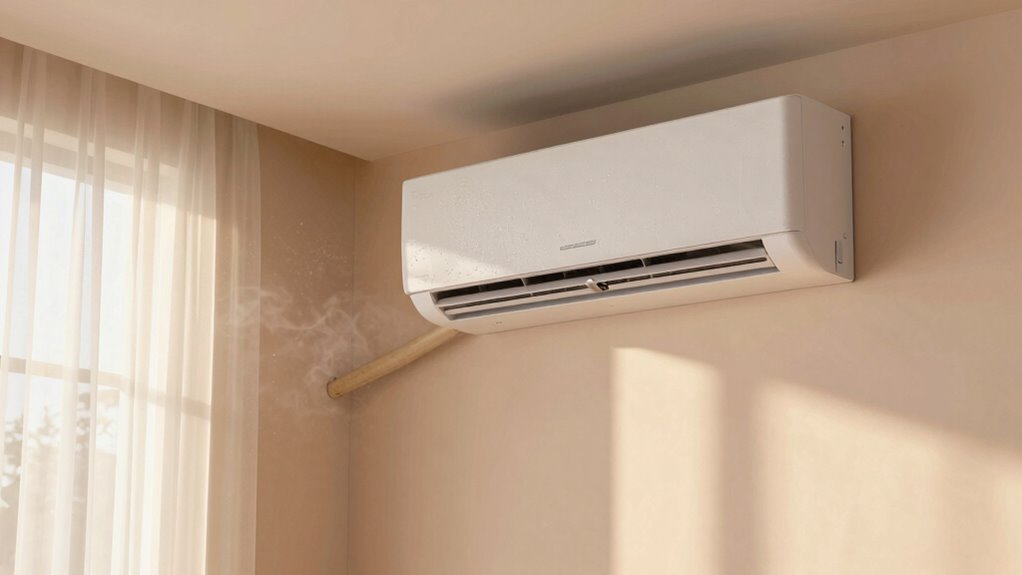
During summer, your indoor air can still feel heavy because outdoor heat, humidity, and pollutants seep inside, especially if your ventilation isn’t effective. Air conditioning traps moisture and stale air if not properly managed, making the space feel stuffy. Using exhaust fans, opening windows at the right times, and managing humidity with purifiers and dehumidifiers helps reinforce fresh, dry air. To discover more ways to improve your indoor air comfort, explore further tips and strategies.
Key Takeaways
- Heavy indoor air during summer is often caused by poor ventilation and trapped humidity from air conditioning.
- Outdoor pollutants and high humidity can seep indoors, contributing to a stuffy, oppressive feeling.
- Proper ventilation methods, like exhaust fans or controlled window opening, help remove moisture and pollutants.
- Using air purifiers and humidity controls, such as dehumidifiers, reduces indoor heaviness and stale air.
- Balancing fresh air intake with humidity management maintains a comfortable, breathable indoor environment in summer.
Have you ever wondered how indoor air quality changes during summer? As temperatures rise outside, you might notice your indoor environment feels heavier or more stuffy, even when your air conditioning is on. This sensation isn’t just in your head—it’s closely tied to shifts in air quality and how well your space is ventilated. During summer, outdoor air often contains higher humidity and pollutants, which can seep inside if your ventilation isn’t properly managed. Without adequate ventilation techniques, stale air lingers, and indoor pollutants like dust, pet dander, or VOCs (volatile organic compounds) accumulate, making the air feel heavy and oppressive.
To maintain good air quality during the hotter months, you need to focus on effective ventilation techniques. Simply relying on air conditioning to cool your home isn’t enough; it can sometimes trap humid, stale air inside. Using exhaust fans in kitchens and bathrooms helps remove excess moisture and pollutants directly at their source. Opening windows strategically during cooler parts of the day can also introduce fresh outdoor air, diluting indoor contaminants. However, it’s vital to consider outdoor air quality before opening windows, especially if pollution levels are high or pollen counts are elevated.
Modern ventilation systems, like energy recovery ventilators (ERVs) or heat recovery ventilators (HRVs), can help. These devices bring in fresh air while exhausting stale indoor air, all without considerably impacting your home’s temperature or humidity levels. They work particularly well in summer because they balance air exchange with energy efficiency, reducing the feeling of heaviness indoors. In addition, air purifiers equipped with HEPA filters can improve air quality by capturing airborne particles, further reducing the indoor “heaviness” caused by pollutants and allergens.
Furthermore, maintaining proper ventilation practices is essential for preventing humidity buildup and ensuring continuous airflow. It’s also important to monitor humidity levels. High humidity worsens the feeling of stuffiness and can encourage mold growth. Using dehumidifiers in conjunction with proper ventilation ensures that indoor air stays dry and comfortable. Keep in mind that ventilation isn’t just about exchanging air; it’s about doing so smartly to prevent humidity buildup and minimize pollutants. Properly managed ventilation techniques help you breathe easier and keep your indoor air feeling fresh, even during the heat of summer.
Frequently Asked Questions
How Does Indoor Air Quality Affect Sleep Quality During Summer?
Indoor air quality directly impacts your sleep quality in summer by influencing your breathing and preventing sleep disruption. Poor air quality can cause congestion, dryness, or allergies, making it harder to breathe comfortably and stay asleep. When the air feels heavy or humid, your body works harder to regulate temperature and oxygen intake. Improving ventilation, using air purifiers, and maintaining ideal humidity levels can help you breathe better and enjoy restful sleep.
Can Indoor Plants Improve Summer Air Humidity Levels?
Yes, indoor plants can improve summer air humidity levels by releasing moisture through transpiration. When you choose healthy plants and guarantee they aren’t over- or under-watered, you help maintain a humidity balance that feels more comfortable. Keep their plant health in check, and you’ll notice a subtle increase in moisture in the air, making your indoor environment feel fresher and less heavy during hot summer days.
What Are the Best Ways to Prevent Mold Growth Indoors in Summer?
To prevent mold growth indoors during summer, you should improve ventilation strategies by opening windows or using exhaust fans, especially in high-moisture areas like bathrooms and kitchens. Additionally, opt for mold-resistant materials in construction and renovation, such as mold-resistant drywall and paint. Keep humidity levels below 60%, fix leaks promptly, and use dehumidifiers if needed. These steps help reduce moisture and inhibit mold development effectively.
How Do Different Types of Air Conditioning Units Impact Indoor Humidity?
Imagine you install a window unit in a humid room; it cools the air but often struggles with dehumidifier efficiency, leaving the space damp. Centralized HVAC systems typically manage indoor humidity better because they dehumidify as part of their cooling process. Different AC units impact indoor humidity variably—window units may need additional dehumidifiers, while centralized systems handle humidity more effectively, keeping your home comfortable and mold-free in summer.
Are Air Purifiers Effective Against Summer Allergens and Pollutants?
Yes, air purifiers are effective against summer allergens and pollutants. Their efficiency depends on the filter type, with HEPA filters excelling at allergen removal, capturing tiny particles like pollen, dust, and pet dander. To maximize air purifier effectiveness, run it continuously in common living areas, and choose a unit suited to your room size. This way, you create a cleaner, healthier indoor environment, even during hot, humid summer days.
Conclusion
As summer whispers its warm secrets, the air indoors gently beckons you to find balance. While humidity and air conditioning can sometimes make things feel a touch weightier, understanding their dance helps you navigate this seasonal lull gracefully. Embrace small adjustments, like proper ventilation or mindful humidity levels, to create a space that feels lighter without forcing the breeze. In doing so, you’ll find comfort in the subtle art of harmony, even when the air feels just a little more contemplative.