
During renovations, it’s crucial to control dust, VOCs, and other pollutants to protect your health. Use air purifiers with HEPA filters and seal off work areas with plastic barriers to contain contaminants. Proper ventilation and moisture control help prevent mold growth and reduce airborne particles. Implementing these containment strategies keeps your indoor air cleaner and safer during the project. Continue to explore how effective filtration, moisture management, and containment techniques can enhance your home’s air quality.

Turn your quiet moments into listening time
- Thousands of audiobooks, podcasts and originals
- Listen on your phone, tablet or Echo — also offline
- Cancel anytime
Key Takeaways
- Use HEPA filters and air purifiers to effectively trap dust, allergens, and VOCs during renovations.
- Implement physical barriers and negative air pressure systems to contain contaminants and prevent spread.
- Control indoor humidity with dehumidifiers to reduce mold growth and moisture-related issues.
- Seal doorways and vents to limit contaminated air from migrating to clean areas.
- Regular maintenance of filtration and containment equipment ensures optimal indoor air quality throughout renovation.
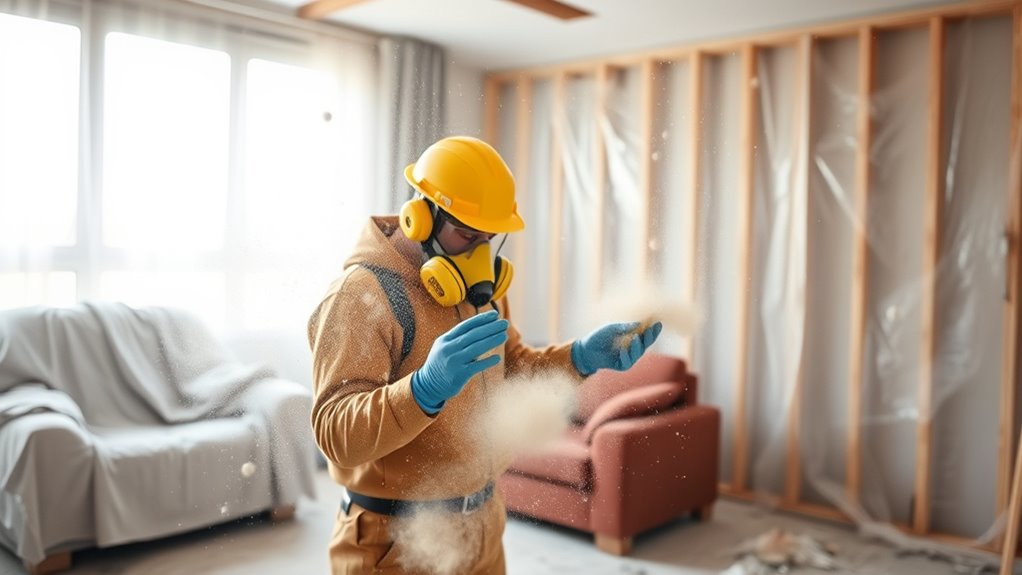
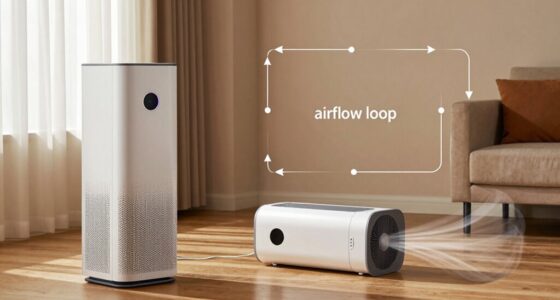
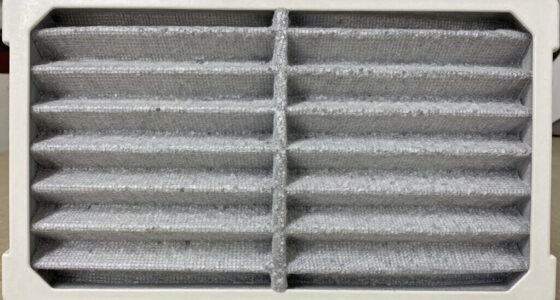
Renovations can considerably impact your home’s air quality, releasing dust, volatile organic compounds (VOCs), and other pollutants into the indoor environment. As you begin your project, it’s essential to understand how these airborne contaminants can affect your health and comfort. Effective air filtration becomes your first line of defense. Installing HEPA filters or high-quality air purifiers helps trap tiny particles like dust, debris, and allergens stirred up during construction. These devices pull polluted air through dense filters, capturing harmful substances before they circulate back into your living space. Regularly changing or maintaining these filters guarantees ideal performance, keeping the air cleaner and healthier throughout your renovation.
Effective air filtration with HEPA filters helps keep indoor air clean during renovations.
Moisture control is equally critical in maintaining good indoor air quality. Renovation activities often generate excess humidity, which can lead to mold growth and exacerbate respiratory issues. Using dehumidifiers or ensuring proper ventilation helps keep moisture levels in check. Proper moisture control prevents the development of mold spores, which are not only unsightly but also pose serious health risks when inhaled. It’s wise to monitor humidity levels consistently, aiming for a range of 30-50%, to prevent dampness that fosters mold and mildew. Additionally, managing moisture helps reduce the likelihood of structural damage, such as warping or rotting, that can occur when excess water lingers in building materials. Incorporating air quality monitoring devices can help keep track of indoor pollutant levels and ensure optimal air conditions during renovation.
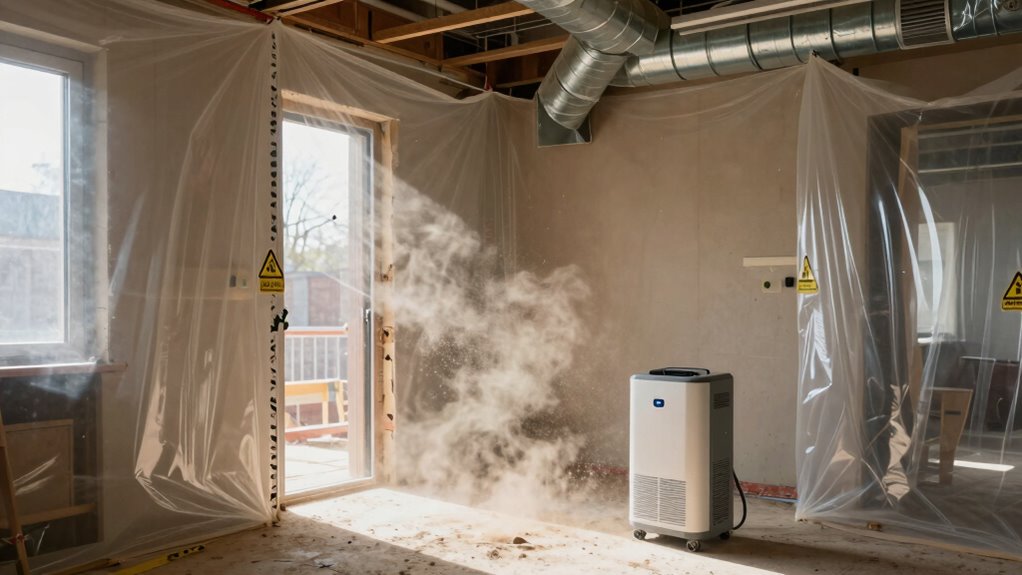
Containment strategies are crucial during renovations to limit dust and pollutants from spreading to other areas of your home. Setting up physical barriers like plastic sheeting and using negative air pressure systems help contain dust and VOCs within the work zone. These barriers prevent airborne particles from migrating into clean living spaces, protecting your family’s health. When working in one room, sealing off doorways and vents ensures that contaminated air doesn’t escape, reducing the risk of exposure. Proper containment also makes cleanup easier, as it confines the mess and pollutants to a specific area, minimizing the spread of dust and VOCs to other parts of your house.
Incorporating air filtration, moisture control, and effective containment isn’t just about protecting your indoor air quality; it’s about creating a safer, healthier environment during your renovation. By taking these proactive steps, you’ll reduce the risk of respiratory issues, allergies, and mold-related problems. Remember, a little preparation and the right equipment go a long way in making sure your home remains a safe haven, even amidst the dust and chaos of renovation work.
HEPA air purifier for dust and VOC removal
As an affiliate, we earn on qualifying purchases.
As an affiliate, we earn on qualifying purchases.
Frequently Asked Questions
How Can I Tell if Indoor Air Quality Is Safe During Renovations?
You can tell if indoor air quality is safe during renovations by conducting air quality testing and monitoring regularly. Use portable air quality monitors to check for dust, VOCs, and other pollutants. If levels stay within safe limits, your air is likely safe. Keep windows open and use containment measures to reduce airborne contaminants. Staying proactive with testing helps guarantee your space remains healthy throughout the renovation process.
What Are the Long-Term Health Effects of Renovation-Related Indoor Pollutants?
Long-term exposure to renovation-related indoor pollutants can lead to chronic respiratory issues, such as asthma or bronchitis, and neurological risks like headaches, memory problems, or cognitive decline. If you ignore proper containment or ventilation during renovations, you might unknowingly increase these health risks over time. It’s essential to maintain good air quality, use protective measures, and guarantee proper cleanup to minimize long-term health effects.
Are There Specific Air Purifiers Recommended for Renovation Sites?
Think of air purifiers as your renovation’s unsung heroes. For site protection, you should get HEPA purifiers because they trap dust and tiny particles effectively. To combat VOCs from paints or adhesives, activated carbon purifiers are essential. Combining both gives you a powerful shield that keeps indoor air clean and safe. Always choose units designed for high-traffic or construction environments to guarantee maximum effectiveness.
How Does Ventilation Impact Dust and VOC Levels During Renovations?
Ventilation plays a vital role in reducing dust and VOC levels during renovations by increasing air exchange and improving airflow control. You should guarantee continuous fresh air intake and proper exhaust to dilute airborne contaminants quickly. Using fans and open windows strategically helps maintain steady airflow, preventing buildup. Proper ventilation not only minimizes health risks but also keeps indoor air quality safe, making your renovation process safer and more manageable.
Can Pets Be Safely Kept in the Home During Renovation Projects?
Did you know that 70% of pet owners keep their animals in the home during renovations? You can keep pets safe if you take precautions. Guarantee proper pet safety by sealing off renovation areas and maintaining good ventilation. Minimize animal exposure to dust and VOCs by keeping pets in a separate, well-ventilated space. Regularly clean to reduce airborne particles, and monitor your pets for any signs of distress.
portable dehumidifier for mold prevention
As an affiliate, we earn on qualifying purchases.
As an affiliate, we earn on qualifying purchases.
Conclusion
If you ignore proper dust control, VOC containment, and ventilation, your home could turn into a toxic cloud that makes breathing feel like inhaling a fog of chemicals and debris. Without careful precautions, you might as well live inside a chimney or a storm of dust and fumes. But with the right measures, you’ll keep your air cleaner than a mountain breeze, turning renovation chaos into a refreshing gust.
plastic barrier for renovation containment
As an affiliate, we earn on qualifying purchases.
As an affiliate, we earn on qualifying purchases.
negative air pressure system for construction
As an affiliate, we earn on qualifying purchases.
As an affiliate, we earn on qualifying purchases.
Fall Picks
fall essentials
As an affiliate, we earn on qualifying purchases.