To quickly clear paint fumes and get a smell-free room, start by opening windows on opposite sides for cross-ventilation. Use fans to boost airflow, ideally facing outward to push fumes outside. Incorporate an air purifier with activated carbon filters for added VOC removal. Keep ventilation going during and after painting, and test the air before re-entering. Follow these steps, and you’ll find effective ways to speed up fume dissipation and improve indoor air quality.
Key Takeaways
- Open windows on opposite sides to create cross-ventilation, enhancing airflow and dispersing paint fumes quickly.
- Use fans facing outward and oscillating fans inside to boost air circulation and expel VOCs efficiently.
- Incorporate activated carbon air purifiers to absorb and remove chemical vapors from the indoor environment.
- Start ventilation early, keep it consistent during and after painting, and test air quality before re-entering the room.
- Maintain continuous airflow until paint fumes and odors are fully dissipated for a safer, smell-free space.
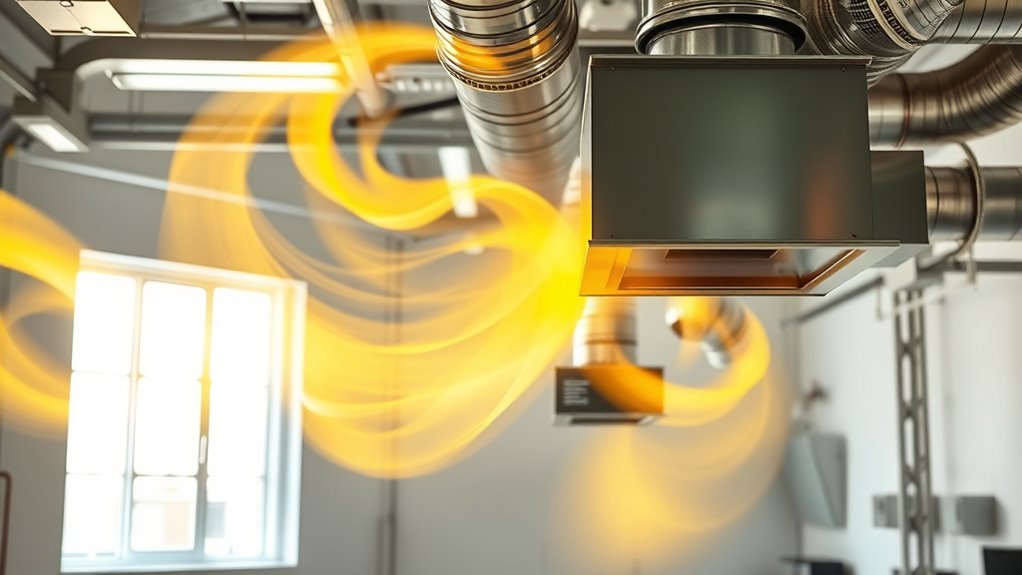
Have you ever wondered what’s really in the paint fumes you breathe during a project? Understanding what’s in those fumes is key to managing your space’s air quality and ensuring a safer, more comfortable environment. When you’re painting, chemicals like volatile organic compounds (VOCs) are released into the air, which can cause headaches, dizziness, or even long-term health issues if inhaled in large amounts. That’s why a solid ventilation plan isn’t just about getting rid of the smell—it’s about protecting yourself and anyone nearby from airborne toxins. Proper ventilation helps dilute these fumes quickly, reducing their concentration and improving overall air quality.
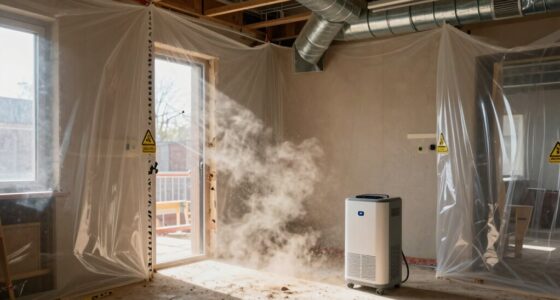
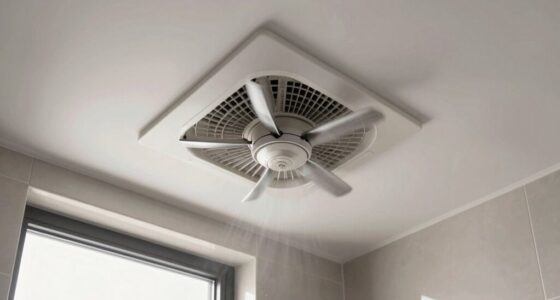
To achieve effective odor control, you need a clear strategy that actively pulls fresh air into the room while exhausting contaminated air outside. Start by opening windows on opposite sides of the space—this cross-ventilation creates a natural airflow that carries fumes out faster. If natural ventilation isn’t enough, consider using fans. Placing a box fan in a window facing outward speeds up the removal of fumes, while an oscillating fan inside can help circulate fresh air throughout the room. For larger projects, invest in high-quality air purifiers equipped with activated carbon filters, which are specifically designed to absorb VOCs and eliminate odors at a molecular level. These devices are especially useful in enclosed spaces where natural airflow is limited.
It’s also important to plan your ventilation early in the process. Before you start painting, set up your fans and open windows to establish good airflow. Keep doors open and position fans strategically to maximize air exchange. During painting, avoid closing off the room completely; instead, keep the airflow consistent to prevent fumes from lingering and building up. Once you finish, continue ventilating until the smell subsides and air quality tests confirm it’s safe to re-enter the space. This way, you not only speed up the drying process but also ensure that the air you breathe remains clean and odor-free. Additionally, understanding air quality factors can help you optimize your ventilation strategy for safer indoor environments.
Frequently Asked Questions
How Long Does It Typically Take for Paint Fumes to Dissipate Completely?
The fume duration varies, but typically, paint fumes take about 24 to 72 hours to dissipate completely. To speed up odor removal, guarantee proper ventilation—open windows, use fans, and keep air circulating. If you follow these steps, you can reduce the smell faster. Keep in mind, some fumes may linger longer depending on the paint type and room size, so patience is key for a truly smell-free space.
Are There Specific Ventilation Systems Best Suited for Large Painting Projects?
Imagine your space as a bustling workshop, where efficiency is key. For large painting projects, you should opt for high-capacity exhaust fans paired with HVAC optimization to maximize air exchange. Portable industrial-grade ventilation systems or commercial exhaust fans are ideal, as they move large volumes of air swiftly. These systems help clear paint fumes quickly, ensuring a safer, smell-free environment while speeding up the drying process.
Can Using Low-Voc or No-Voc Paints Eliminate the Need for Ventilation?
Using low-VOC or no-VOC paints can substantially reduce odors, but they don’t eliminate the need for ventilation altogether. Even odorless options still release some fumes, especially during application and drying. You should still guarantee proper ventilation to protect your health and speed up drying times. Good airflow helps disperse any remaining fumes, making your space safer and more comfortable, regardless of the type of paint you choose.
What Are the Health Risks Associated With Prolonged Exposure to Paint Fumes?
Prolonged exposure to paint fumes can pose serious health concerns, including respiratory issues like coughing, wheezing, and shortness of breath. You might also experience headaches, dizziness, or skin irritation. If you don’t properly ventilate the area, these risks increase, especially for those with allergies or asthma. Always guarantee good airflow during and after painting to protect your health and reduce these potential hazards.
How Can I Tell if the Air in My Room Is Safe After Painting?
Think of your room’s air quality indicators as your personal weather forecast. To tell if it’s safe, check for lingering odors—if the smell persists, your air isn’t clear yet. Use an air quality monitor to detect VOC levels, and guarantee proper ventilation. Wait until odors dissipate and readings fall within safe limits before resuming normal activities, giving your space a breath of fresh atmosphere.
Conclusion
By following these simple ventilation tips, you’ll clear out paint fumes faster, making your space smell fresh again. Think of your ventilation plan like a breeze through an open window—quick and effective. Don’t forget to open windows, use fans, and let fresh air do its job. With a little effort, your room will be smell-free in no time, just like a sunny day after a storm. Your fresh, clean space is waiting!