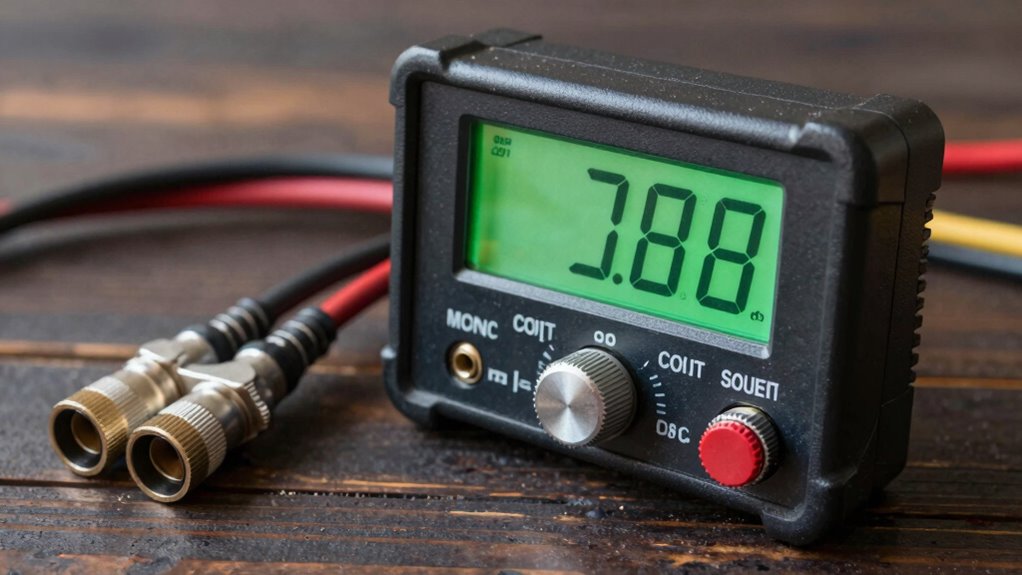

When choosing a heavy-duty watt meter, prioritize durability with a rugged build and resistant materials suited for tough environments. Guarantee it offers accurate measurements of voltage, current, and power factor, with calibration for ongoing reliability. Look for user-friendly features like clear displays and simple controls, and avoid unnecessary extras that add cost and complexity. Check compatibility with your setup and select reputable brands. Keep these essentials in mind, and you’ll discover more tips to make the best choice.
Key Takeaways
- Prioritize rugged construction and resistant materials for durability in harsh environments.
- Ensure accurate measurement of voltage, current, wattage, and power factor with reliable calibration.
- Choose models with user-friendly interfaces, clear displays, and data logging features for efficiency.
- Focus on core features like accuracy and durability; skip unnecessary extras like Bluetooth if not needed.
- Verify compatibility with your voltage/current ranges and select trusted brands with positive reviews.
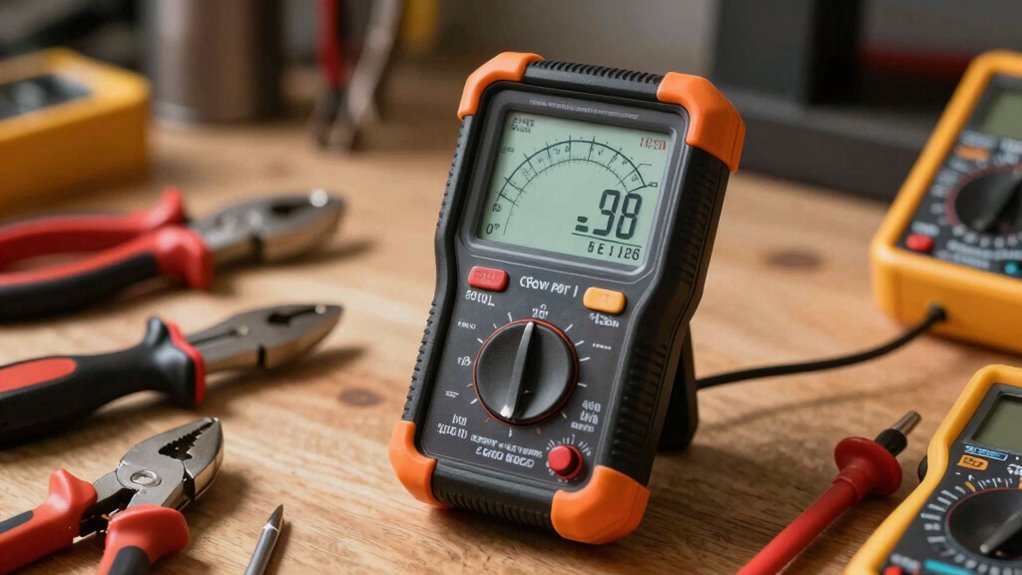
When dealing with heavy-duty electrical equipment, verifying your watt meter is functioning correctly is essential for safety and efficiency. A reliable watt meter helps you monitor power consumption, identify areas where energy might be wasted, and improve overall energy efficiency. Investing in the right device means understanding what features matter most for your needs and avoiding unnecessary extras that don’t add value.
First, focus on durability and build quality. Heavy-duty environments demand a meter that can withstand harsh conditions—robust casing, high-quality connectors, and a solid design are non-negotiable. A flimsy device may give inaccurate readings or break down quickly, costing you more in repairs or replacements in the long run. Next, consider the measurement capabilities. You want a watt meter that provides accurate real-time data on power consumption analysis, including voltage, current, wattage, and power factor. This extensive view allows you to make informed decisions about your equipment’s energy efficiency and spot inefficiencies immediately. Additionally, understanding measurement accuracy can help you select a device that delivers precise data essential for heavy-duty applications. Incorporating measurement standards in your selection process ensures the device complies with industry safety and accuracy benchmarks. Moreover, paying attention to device calibration can ensure ongoing measurement reliability over time.
Prioritize durable construction and comprehensive measurement features for reliable, accurate energy monitoring in heavy-duty environments.
Furthermore, selecting a watt meter with reliable performance features can greatly reduce downtime and maintenance costs. Ease of use is another critical factor. A user-friendly interface with clear digital readouts saves time and reduces errors during readings. Look for models with simple controls, large displays, and straightforward measurement modes. Some advanced models even offer data logging and connectivity features, letting you track energy use over time or export data for detailed analysis. These features can profoundly enhance your power consumption analysis, especially when managing large or complex setups.
While some watt meters come packed with extra features like Bluetooth connectivity, smart home integration, or detailed diagnostics, ask yourself if you really need all those bells and whistles. These extras often increase the price and complexity without necessarily improving core performance. Focus instead on the essentials—accuracy, durability, and ease of use. Skip models that have overly complicated interfaces or that lack the precision needed for heavy-duty applications.
In addition, check for compatibility with your existing equipment. The watt meter should handle the voltage and current ranges typical of your setup. If you’re working with industrial or high-voltage systems, ensure the device complies with safety standards and offers appropriate protection. Also, researching watt meter specifications can help you better understand the technical aspects necessary for your specific needs. Finally, consider customer reviews and brand reputation. A trusted brand with consistent positive feedback indicates a reliable product that performs well over time.
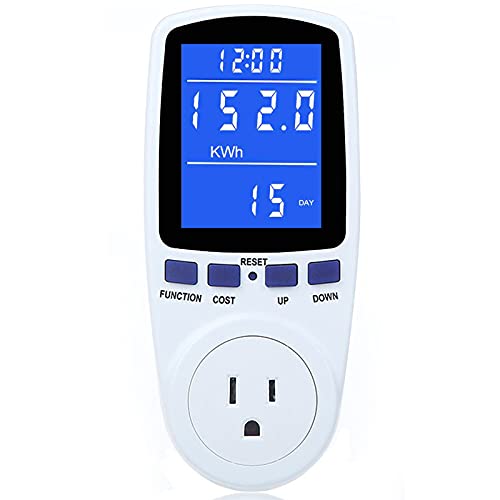
Upgraded Watt Power Meter Plug Home Electrical Usage Monitor Consumption, Energy Voltage Amps Kill Tester with Backlight, Overload Protection, 7 Modes Display
- Multiple Monitoring Parameters: Displays power, energy, volts, amps, and more
- Clear Large LCD Screen: 2.36×1.85 inch backlit display with wide angles
- Adjustable Backlight Duration: Five backlight time options for convenience
As an affiliate, we earn on qualifying purchases.
As an affiliate, we earn on qualifying purchases.
Frequently Asked Questions
How Accurate Are Heavy Duty Watt Meters for Long-Term Measurements?
Heavy duty watt meters generally offer good accuracy for long-term measurements, but accuracy concerns can arise depending on the device’s quality and calibration. To guarantee long-term reliability, you should regularly calibrate your watt meter and choose models with proven precision. Keep in mind that environmental factors like temperature and humidity may impact readings over time, so monitoring and maintaining your device helps sustain measurement accuracy.
Can a Watt Meter Handle All Types of Electrical Loads?
Sure, your watt meter can handle all types of electrical loads—if it’s designed with enough power capacity and electrical compatibility. But don’t assume it’s a superhero; some meters struggle with high loads or specialized equipment. Always check the specifications to verify it matches your needs. After all, a watt meter’s job is to monitor, not to magically power up your heavy-duty appliances!
What Is the Typical Lifespan of a Heavy Duty Watt Meter?
A heavy-duty watt meter typically lasts around 5 to 10 years, depending on usage and build quality. You should consider its battery life and power consumption, as frequent battery replacements or high energy use can shorten its lifespan. Proper maintenance, like avoiding overloading and keeping it clean, helps maximize its durability. Regularly check for calibration and damage to guarantee accurate readings and extend its overall lifespan.
Are There Warranty Options for High-End Watt Meters?
Yes, high-end watt meters often come with warranty coverage, giving you peace of mind. You should check the brand reputation, as reputable brands usually offer better warranty options that cover defects or malfunctions. When shopping, look for extended warranties or service plans, especially for premium models, so you protect your investment. This guarantees you get reliable performance and support, prolonging the lifespan of your heavy-duty watt meter.
How Easy Is It to Calibrate a Heavy Duty Watt Meter?
Calibrating a heavy duty watt meter is fairly straightforward if you follow the calibration procedures outlined in the user manual. Typically, you’ll connect the meter to a known power source, then adjust settings as instructed. The user manual provides step-by-step guidance, making the process accessible even if you’re new to watt meters. Just make certain you have the right tools and follow safety precautions during calibration.
Upgraded Watt Power Meter Plug Home Electrical Usage Monitor Consumption, Energy Voltage Amps Kill Tester with Backlight, Overload Protection, 7 Modes Display
- Multiple Monitoring Parameters: Displays power, energy, volts, amps, and more
- Clear Large LCD Screen: 2.36×1.85 inch backlit display with wide angles
- Adjustable Backlight Duration: Five backlight time options for convenience
As an affiliate, we earn on qualifying purchases.
As an affiliate, we earn on qualifying purchases.
Conclusion
Think a cheap watt meter will do the trick? Not so fast. Investing in a heavy-duty watt meter isn’t just about saving money—it’s about ensuring safety, accuracy, and durability. The theory that all meters are created equal is false; quality matters. Don’t skip on features that protect your devices and give precise readings. Choose wisely, and you’ll power up confidently, knowing your gear is in good hands. Sometimes, paying more truly pays off.
Upgraded Watt Power Meter Plug Home Electrical Usage Monitor Consumption, Energy Voltage Amps Kill Tester with Backlight, Overload Protection, 7 Modes Display
- Multiple Monitoring Parameters: Displays power, energy, volts, amps, and more
- Clear Large LCD Screen: 2.36×1.85 inch backlit display with wide angles
- Adjustable Backlight Duration: Five backlight time options for convenience
As an affiliate, we earn on qualifying purchases.
As an affiliate, we earn on qualifying purchases.
Upgraded Watt Power Meter Plug Home Electrical Usage Monitor Consumption, Energy Voltage Amps Kill Tester with Backlight, Overload Protection, 7 Modes Display
- Multiple Monitoring Parameters: Displays power, energy, volts, amps, and more
- Clear Large LCD Screen: 2.36×1.85 inch backlit display with wide angles
- Adjustable Backlight Duration: Five backlight time options for convenience
As an affiliate, we earn on qualifying purchases.
As an affiliate, we earn on qualifying purchases.