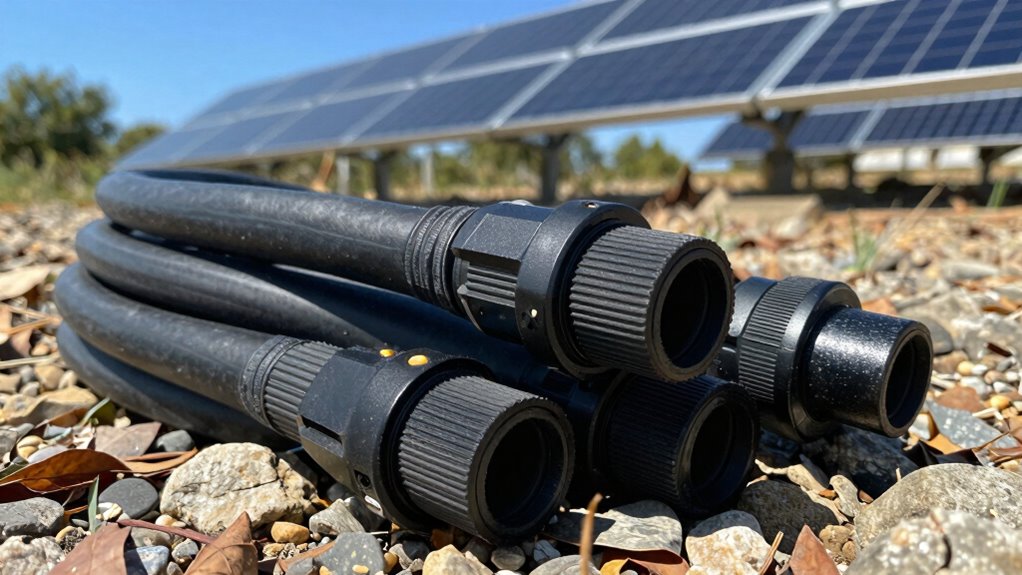
When choosing a heavy-duty solar panel extension cable, you might overlook proper gauge selection, risking voltage drops or unnecessary costs. Failing to take into account weatherproofing and durability can lead to cable failure over time, especially outdoors. Using incompatible connectors or ignoring safety standards may cause power loss or hazards. Many overlook the importance of quality and safety standards, risking poor performance and safety issues. If you keep these pitfalls in mind, you’ll be better equipped to pick a reliable, efficient cable for your system.
Key Takeaways
- Selecting the correct cable gauge based on system current to prevent voltage drops and overheating.
- Ensuring cables are weatherproof, UV-resistant, and rated for outdoor use to withstand environmental conditions.
- Matching connectors and fittings properly to avoid loose connections, power loss, and safety risks.
- Choosing cables that meet quality standards and certifications for safety, durability, and performance.
- Considering safety features like insulation and proper sealing to prevent shorts, electrical hazards, and system failure.
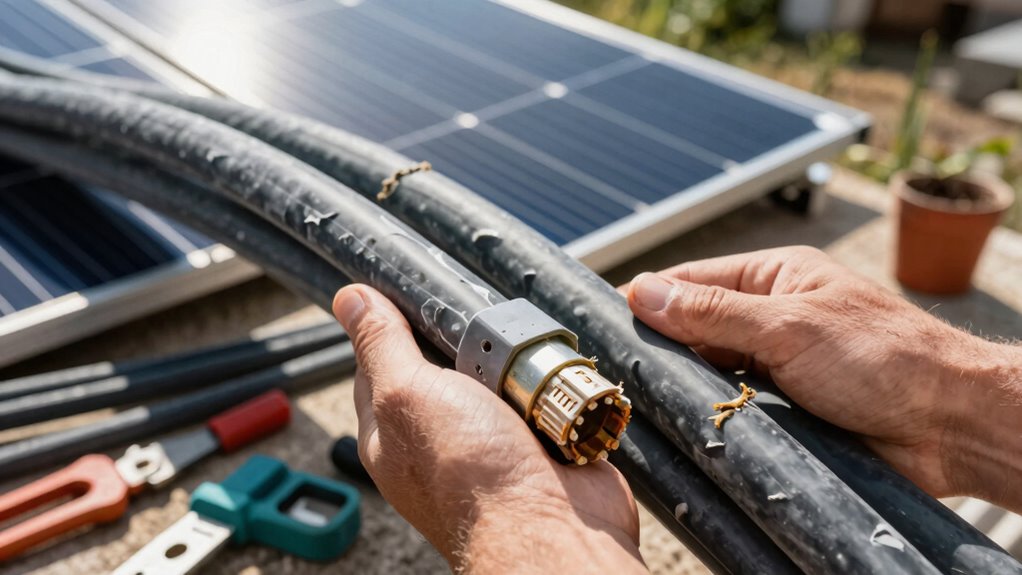
Choosing the right heavy-duty solar panel extension cable is essential for guaranteeing your solar system operates efficiently and safely. When you select the wrong cable, you risk compromising your system’s solar panel efficiency and jeopardizing cable installation safety. Many people make common mistakes that can lead to reduced energy output and potential hazards, so it’s important to understand what to avoid.
One mistake is overlooking the importance of matching the cable’s gauge to your system’s current. Using a cable with a gauge that’s too thin can cause excessive voltage drop, which diminishes your solar panel efficiency. This means your panels won’t produce the maximum power they’re capable of, ultimately wasting your investment. Conversely, choosing a cable that’s too thick might be unnecessary and more costly but won’t improve performance. Knowing the correct gauge ensures maximum power transfer without unnecessary expense. Additionally, cable gauge selection should be based on the specific current requirements of your solar system for optimal results. Ensuring the cable’s ampacity aligns with your system’s needs is vital to prevent overheating and potential safety issues. Properly calculating the required current capacity is crucial for safe and effective operation.
Matching cable gauge to your system’s current is crucial for optimal solar efficiency and cost-effective performance.
Another common error is neglecting to verify the cable’s weatherproofing and durability. Solar installations are often outdoors, exposed to rain, sun, and temperature fluctuations. Failing to select a cable rated for outdoor use or lacking proper insulation can lead to deterioration over time, risking cable failure or electrical shorts. This not only reduces your solar panel efficiency but also poses serious cable installation safety hazards. Guaranteeing your cable is UV resistant, waterproof, and rated for outdoor conditions is essential for long-term reliability. Understanding solar cable specifications can help in making informed choices about durability and weatherproofing needs.
Many installers also overlook the importance of proper connector compatibility. Using incompatible connectors or mismatched fittings can cause loose connections, leading to power loss or arcing. This impacts solar panel efficiency as well as safety, since poor connections can generate heat and increase the risk of fire. Always double-check that your extension cable’s connectors match your solar panel system’s specifications, and ensure they are secure and properly sealed.
Lastly, some people buy the cheapest extension cables available without considering quality standards. While budget options might seem attractive initially, they often lack proper insulation or testing for safety standards. This compromises cable installation safety and can result in energy loss or electrical hazards down the line. Investing in a reputable, certified heavy-duty solar panel extension cable ensures you’re getting a product designed for high performance, safety, and longevity. Being aware of solar cable specifications can help prevent these common mistakes and ensure your solar setup functions optimally.

REEYINTCK 10AWG 10FT Solar Panel Extension Cable, Heavy Duty MC4 Waterproof Connector Wire for RV Solar System, Marine Boat, Off-Grid Photovoltaic Power Supply, 1 Pair Black + Red
1.Extreme Weather Protection Withstands -40°C to 90°C, rain, snow, and UV radiation. This waterproof solar cable features weatherproof…
As an affiliate, we earn on qualifying purchases.
As an affiliate, we earn on qualifying purchases.
Frequently Asked Questions
Can I Use Regular Extension Cables for Solar Panels?
You shouldn’t use regular extension cords for solar panels because they often lack solar cable compatibility and may not handle the voltage and current safely. Using the wrong extension cord can compromise extension cord safety, risking damage to your panels or electrical hazards. Instead, choose a heavy-duty solar panel extension cable designed specifically for solar energy systems, ensuring proper insulation, appropriate connectors, and durability for outdoor use.
What Is the Maximum Length for a Heavy-Duty Solar Extension Cable?
The maximum length for a heavy-duty solar extension cable depends on cable insulation and power ratings, but generally, it’s around 50 feet. Longer cables can cause voltage drops, reducing efficiency. To maintain peak performance, choose cables with appropriate insulation to withstand weather conditions and confirm your power ratings match your system’s requirements. Always consult manufacturer guidelines to prevent energy loss and guarantee safety during extended connections.
How Do I Determine the Correct Gauge for My Setup?
Ever wondered how to pick the right wire gauge for your solar setup? You determine this by considering your system’s current, voltage, and distance. A thicker wire gauge reduces resistance, ensuring better performance and safer installation. Always check manufacturer recommendations and local electrical codes to guarantee installation safety. Using the correct wire gauge prevents overheating and voltage drops, protecting your equipment and guaranteeing peak energy transfer for your solar panels.
Are There Specific Brands Recommended for Heavy-Duty Solar Cables?
You should look for brands known for their cable durability and reliable performance, such as Ironridge, Renogy, and MC4. These brands offer heavy-duty solar cables designed to withstand harsh weather conditions and UV exposure. When choosing, prioritize brand recommendations that emphasize quality and durability, ensuring your solar setup remains efficient and safe over time. Trusting reputable brands helps you avoid issues related to cable failure or poor insulation.
How Weather-Resistant Should My Solar Extension Cable Be?
You should look for a solar extension cable with a high weatherproof rating, ideally IP65 or higher, since over 80% of outdoor cable failures are weather-related. This guarantees excellent cable durability against rain, UV rays, and temperature fluctuations. A highly weather-resistant cable protects your system’s efficiency and longevity, saving you money on replacements and repairs. Prioritize weatherproof ratings to keep your solar setup safe and performing at its best in any weather.
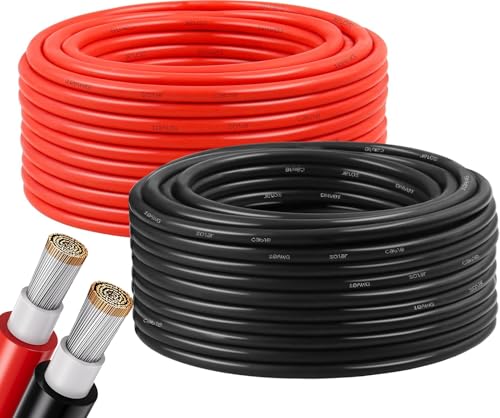
Aimou 10AWG Solar Panel Wire, 2x50FT 6mm² Solar Extension Cable Red & Black 84 Strands Tinned Copper PV Wire, XLPE Insulated Fire & UV Resistant for Outdoor Off-Grid Photovoltaic System RVs Cars Boats
【 99. 5% Max Power Transfer】Our 10awg solar panel extension cables deliver up to 99. 5% power transfer….
As an affiliate, we earn on qualifying purchases.
As an affiliate, we earn on qualifying purchases.
Conclusion
Choosing the right heavy-duty solar panel extension cable is like planting your foot firmly on solid ground—avoid the pitfalls, and your system will thrive under the sun’s steady gaze. Picture your energy flowing seamlessly, like a gentle river carving through terrain, uninterrupted and strong. Don’t let simple mistakes block the sunlight’s journey to your batteries. Make informed choices, and watch your solar setup shine brighter, powering your world with confidence and clarity.
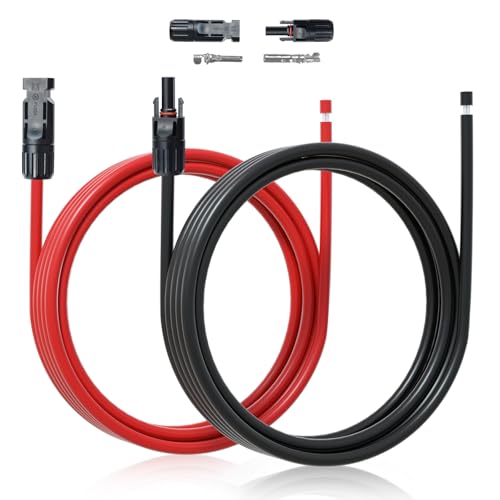
ECO-WORTHY 10FT 10AWG Solar Extension Cable 30A/1000V DC, IP67 Waterproof with Compatible Quick Connectors (Red+Black) for Solar Panels, Controllers, Off-Grid Systems
Tinned Copper Core: Premium 10AWG oxygen-free copper wire with tin-plated surface prevents oxidation (3X corrosion resistance vs bare…
As an affiliate, we earn on qualifying purchases.
As an affiliate, we earn on qualifying purchases.

16.4FT (5M) Extension Cable 1 Pack DC Extension Wire Extension Cord Waterproof IP65 16.4ft per Cables only for APONUO Solar Spotlight
16.4ft/5m compatible extension cord, for aponuo solar spotlight
As an affiliate, we earn on qualifying purchases.
As an affiliate, we earn on qualifying purchases.