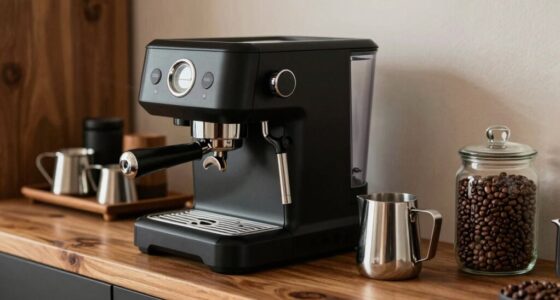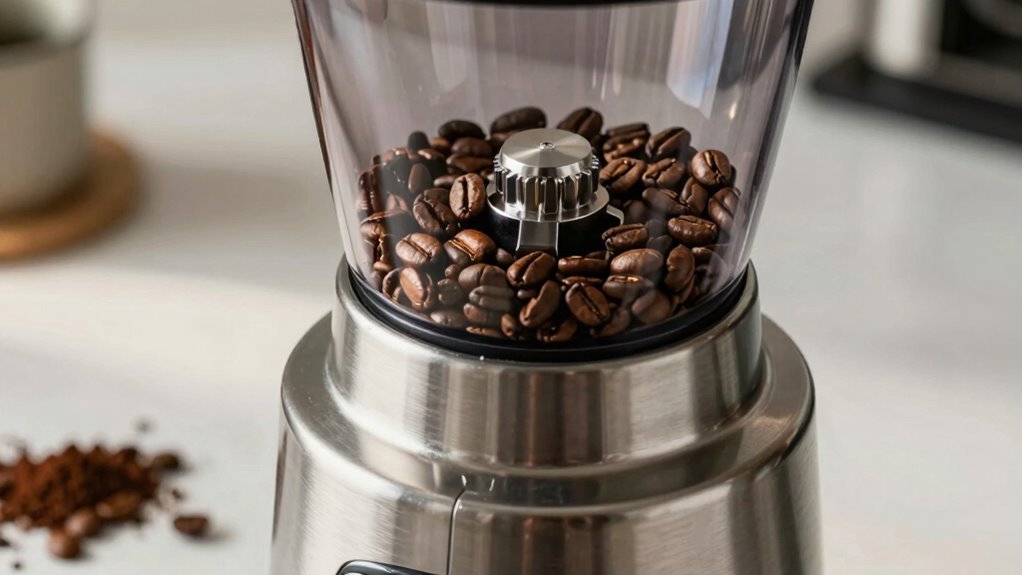

To get the best flavor from your coffee, choosing the right grinder and grind size is vital. Burr grinders provide consistent, uniform grounds, which lead to better extraction, while blade grinders are faster and more affordable but less precise. The grind size varies depending on your brewing method—coarser for French press, finer for espresso. Proper adjustments guarantee your coffee tastes great every time. Keep exploring to learn how to perfect your grinding techniques and improve your brew even more.

Turn your quiet moments into listening time
- Thousands of audiobooks, podcasts and originals
- Listen on your phone, tablet or Echo — also offline
- Cancel anytime
Key Takeaways
- Understand the difference between burr and blade grinders for consistency and flavor extraction.
- Choose the correct grind size based on your brewing method, such as coarse for French press or fine for espresso.
- Burr grinders offer precise adjustments and uniform grounds, enhancing overall coffee quality.
- Properly adjusting grind settings is essential for optimal flavor and avoiding over- or under-extraction.
- Selecting the right grinder and grind size improves coffee flavor, aroma, and brewing success.

If you’re new to grinding tools, understanding the basics is vital for safe and effective use. One of the first things you’ll want to grasp is how different coffee grind sizes impact your brew. The coffee grind refers to the size of the coffee particles after grinding, and it plays a key role in extracting flavors properly. A coarse grind is best for French press brewing, while a fine grind suits espresso machines. Getting this right guarantees your coffee isn’t under-extracted or over-extracted, which can lead to bitter or weak flavors.
Choosing the right coffee grind size is essential for optimal flavor extraction and brewing success.
When choosing a grinder, you’ll encounter two main types: burr and blade grinders. Burr grinders crush beans between two revolving abrasive surfaces, giving you a consistent grind size. This uniformity is essential for brewing methods that demand precision, like espresso. Blade grinders, on the other hand, use a rapidly spinning blade to chop the beans. They’re usually more affordable and faster but tend to produce uneven coffee grounds. This inconsistency can cause uneven extraction, affecting the taste of your brew. So, if you’re serious about flavor and consistency, a burr grinder is the better choice. It allows you to adjust the grind size more precisely, whether you’re making espresso or French press.
Understanding the differences between burr and blade grinders helps you decide what suits your needs. Burr grinders, while often pricier, provide a consistent grind that enhances flavor extraction and reduces bitterness. They come in two styles: flat and conical burrs. Flat burrs are known for producing very uniform grounds, which is ideal for espresso. Conical burrs tend to generate less heat and are quieter, making them a popular choice for home use. Blade grinders are simpler but come with the trade-off of inconsistent particle sizes, which means you’ll need to be more careful with your brewing times and methods to avoid uneven flavors. Grinder types are a fundamental concept to understand for achieving the best coffee results. Additionally, pay attention to the grind setting on your grinder. Many burr grinders have multiple levels, allowing you to fine-tune your coffee grind from coarse to fine. This flexibility guarantees you can match the grind size to your brewing method precisely. Proper grind size adjustment is crucial for getting the most flavor out of your coffee and ensuring your brewing process is smooth.
A good understanding of the coffee grind and the differences between grinder types can greatly improve your brewing consistency and flavor profile. Being aware of how different grinding techniques influence extraction can help you troubleshoot and perfect your brewing method. Whether you’re making drip coffee, pour-over, or espresso, selecting the right grind size and grinder type makes all the difference in your coffee’s taste and aroma. By understanding these basics—especially the importance of the coffee grind and the burr versus blade debate—you set yourself up for a better, more enjoyable coffee experience.
Products Worth Considering

Levoit Vital 100S-P Air Purifier with Washable Pre-Filter

Bose TV Speaker Compact Soundbar with Bluetooth and HDMI-ARC, Black

Dreame L40 Ultra Gen 2 Robot Vacuum and Mop with 25,000 Pa Suction
As an affiliate, we earn on qualifying purchases.
Frequently Asked Questions
What Materials Are Best for Grinder Blades?
You should choose grinder blades made from high-quality materials like stainless steel or tungsten carbide for peak performance. These materials offer excellent material durability, ensuring your blades stay sharp longer and resist corrosion. Regular blade sharpening extends their lifespan and maintains efficiency. By selecting durable materials, you reduce the need for frequent replacements, making your grinding tasks smoother and more reliable over time.
How Often Should I Clean My Grinder?
To keep your grinder performing at its best, you should clean it regularly, about every few uses or weekly if you use it daily. Proper cleaning prevents buildup that can affect grinding techniques and flavors. Use storage tips like airtight containers to keep your grinder dry and clean. Regular maintenance guarantees smooth operation, maintains quality, and prolongs the lifespan of your grinder, making every grind consistent and satisfying.
Can Grinders Grind Wet Ingredients Effectively?
Grinders generally aren’t designed for wet ingredient compatibility, so they don’t grind wet items effectively. Using them with moisture can damage the grinder’s motor and reduce its moisture resistance. If you need to process wet ingredients, consider using a blender or food processor specifically designed for that purpose. Always check your grinder’s specifications to see if it offers any level of moisture resistance before attempting to grind anything damp.
Are There Grinders Suitable for Specific Spices or Herbs?
Yes, there are herb-specific grinders designed to handle particular spices or herbs, ensuring ideal grind size and flavor. These grinders often feature specialized blades or settings tailored to preserve spice flavor and prevent cross-contamination. By using herb-specific grinders, you maintain the distinct aroma and potency of each herb or spice, enhancing your culinary experience. They’re a smart choice for spice flavor preservation and achieving consistent results in your cooking.
How Do I Troubleshoot Common Grinder Malfunctions?
Think of your grinder like a well-oiled machine; if it jams or stops working, it’s time for some maintenance tips. First, check for jammed particles and clean the blades carefully. Safety precautions include unplugging it before cleaning or inspecting. If it still malfunctions, inspect the motor or blades for damage. Regular cleaning and proper use prevent issues, ensuring your grinder runs smoothly and safely every time.
Conclusion
Now that you’ve got the grind down, you’re ready to conquer your coffee or spice routines like a true pro. Think of your grinder as the heartbeat of flavor—every turn and tweak sending ripples through your brew or dish. Remember, mastering the basics is like tuning a fine instrument; once in harmony, your creations will sing with richness and depth. Keep experimenting, stay curious, and let your grinder be the magic wand in your culinary adventures.