To start with grinder basics, choose a quality burr grinder for consistent, uniform grounds, which are key to a great brew. Adjust the settings based on your brewing method—fine for espresso, coarse for French press. Grind fresh just before brewing to lock in flavor and aroma. Keep your grinder clean and well-maintained for peak performance. Mastering these basics will help you make better-tasting coffee, and if you keep exploring, you’ll discover even more tips to perfect your grind.

Turn your quiet moments into listening time
- Thousands of audiobooks, podcasts and originals
- Listen on your phone, tablet or Echo — also offline
- Cancel anytime
Key Takeaways
- Choose a burr grinder for consistent, uniform grind sizes suitable for various brewing methods.
- Adjust grind settings based on your brewing method, from fine for espresso to coarse for French press.
- Grind fresh beans just before brewing to maximize aroma and flavor preservation.
- Maintain your grinder regularly by cleaning burrs and removing residual oils to ensure optimal performance.
- Measure beans precisely and maintain proper coffee-to-water ratios for consistent, high-quality coffee.
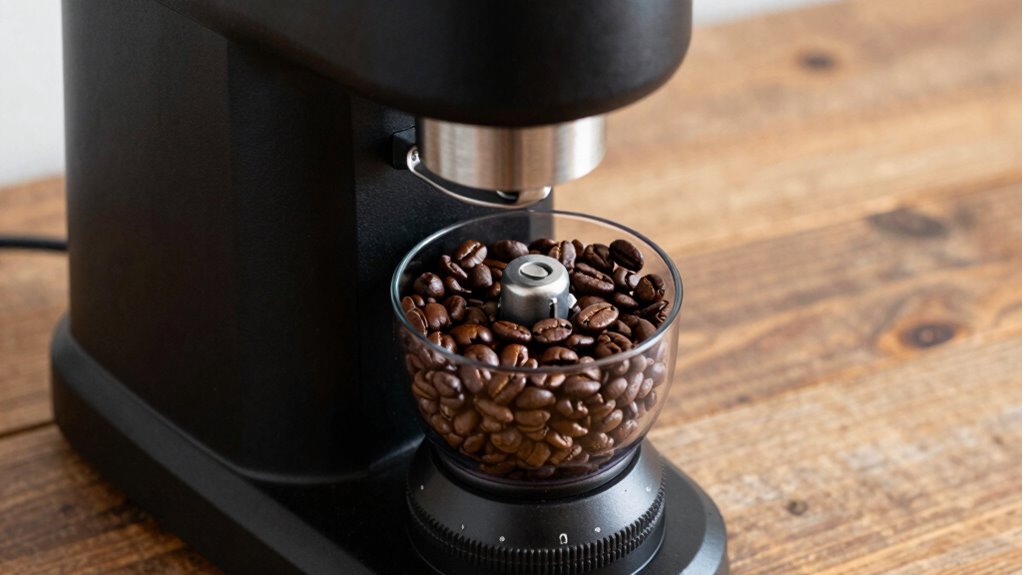
Getting started with grinders can seem overwhelming at first, but with a clear roadmap, you’ll quickly gain confidence in understanding the basics. The first step is recognizing how essential a grinder is to your coffee experience. A good grind influences not only how your coffee tastes but also how it brews. When you grind your beans, you’re revealing their potential, releasing oils and flavors that define coffee flavor. The key is achieving the right grind size and consistency, which directly impacts extraction and, ultimately, taste.
Your main focus should be on grind consistency. Uniform particles allow water to flow evenly through your coffee, preventing over-extraction or under-extraction. When the grind is inconsistent, some grounds might be too fine, leading to bitter flavors, or too coarse, resulting in weak coffee. To avoid this, start with a quality grinder that offers adjustable settings. Burr grinders are usually preferred because they produce more uniform grinds compared to blade grinders, which tend to be less precise and can create uneven particle sizes.
Once you have your grinder, experiment with different grind settings. If you’re making espresso, opt for a fine grind; for French press, a coarse grind works best. Medium grind suits drip coffee makers. The goal is to find a setting that produces a consistent grind size, so your coffee brews evenly and tastes balanced. Pay attention to the texture of the grounds—should feel uniform and resemble sand for drip coffee, or resemble coarse salt for French press. This consistency is essential because it directly influences the coffee flavor, ensuring each sip is rich and well-rounded.
Another tip is to grind fresh just before brewing. Coffee begins to lose its aroma and flavor shortly after grinding, so grinding in small amounts right before you brew preserves maximum freshness. Using a quality grinder that offers adjustable settings can significantly improve your grind consistency and overall coffee quality. Additionally, exploring different grind sizes allows you to tailor your brew to your taste preferences and the brewing method used. It’s also helpful to understand the importance of grind uniformity in achieving a balanced extraction and flavor profile. Use a scale if possible to measure your beans, and then grind based on your desired coffee-to-water ratio. This precision helps maintain a consistent grind and prevents wastage.
Finally, cleaning your grinder regularly plays a big role in maintaining grind consistency and flavor. Residual oils and old grounds can clog the burrs or blades, resulting in uneven grinds and stale flavors. A quick brush or wipe after each use keeps your grinder in top shape and your coffee tasting fresh.
As an affiliate, we earn on qualifying purchases.
Frequently Asked Questions
What Types of Coffee Beans Are Best for Grinding Beginners?
As a beginner, you should start with medium roast coffee beans like Colombian or Central American varieties. They’re forgiving and versatile, making them ideal for learning. When choosing grinding equipment options, go for a burr grinder for consistent results. Avoid blade grinders initially, as they’re less precise. These coffee bean varieties and a good burr grinder will help you achieve better flavor extraction and a smoother brewing experience.
How Long Should I Grind Coffee for Optimal Flavor?
Think of grinding coffee like sculpting—timing is everything. For ideal flavor, aim for about 20-30 seconds, ensuring you achieve a consistent grind. Too short, and the coffee may be uneven; too long, and you risk losing freshness. Remember, coffee freshness is fleeting, so grind just before brewing. This balance guarantees a uniform grind and a fresh, rich flavor that elevates your cup.
Can I Use a Regular Blender as a Grinder?
You can use a regular blender as a grinder, but it might not give you the consistent grind size needed for ideal flavor. Blenders can produce uneven grounds, which could affect your coffee machine’s extraction and taste. After grinding, store your coffee in an airtight container to preserve freshness. Just remember, investing in a burr grinder ensures more uniform grounds, leading to better flavor and longevity for your coffee beans.
How Do I Clean and Maintain My Coffee Grinder?
To clean your coffee grinder, start by unplugging it and removing the bean hopper, then empty any remaining beans into bean storage. Use a brush or damp cloth to clean the burrs and chamber, avoiding water on electronic parts. For a grinding noise issue, check for stuck particles or dried coffee residues. Regular maintenance keeps your grinder in top shape, ensuring fresh grounds and consistent flavor every time.
What Grind Size Is Ideal for French Press Brewing?
For French press brewing, you want a coarse grind size to guarantee proper extraction and prevent sediment. To maintain grind consistency, store your coffee beans properly in an airtight container away from light, heat, and moisture. Always grind just before brewing to preserve flavor, and use a burr grinder for uniform size. This approach helps you achieve the ideal brew and keeps your coffee tasting fresh and flavorful.
adjustable coffee grinder for espresso
As an affiliate, we earn on qualifying purchases.
As an affiliate, we earn on qualifying purchases.
Conclusion
By understanding grinder basics, you’re now equipped to make informed choices and improve your brewing. Imagine trying different grind sizes for your espresso—adjusting to find the perfect extraction. Like Sarah, who started with a coarse grind for French press, then refined her technique, her coffee improved dramatically. Remember, learning your grinder is a journey. With patience and experimentation, you’ll discover the full potential of your brew and enjoy richer, more satisfying coffee every time.
coarse grind French press grinder
As an affiliate, we earn on qualifying purchases.
As an affiliate, we earn on qualifying purchases.
As an affiliate, we earn on qualifying purchases.
Halloween Picks
halloween
As an affiliate, we earn on qualifying purchases.