
To choose the right shop vac size, consider your workspace and cleaning needs. Larger models with bigger capacities are ideal for big projects or commercial use, allowing longer work times without frequent empties. Smaller models are more portable and easier to maneuver in tight spots. Think about hose length, noise levels, and power options too. Finding the perfect fit depends on balancing capacity with maneuverability. Keep exploring to discover detailed tips for selecting the best shop vac for you.
Key Takeaways
- Choose a capacity based on project size: larger for commercial use, smaller for portability.
- Consider hose length for adequate reach without sacrificing suction power.
- Match vacuum size to workspace to balance maneuverability and cleaning efficiency.
- Evaluate noise levels if working in noise-sensitive environments.
- Ensure the vacuum’s power, airflow, and features align with your specific cleaning needs.
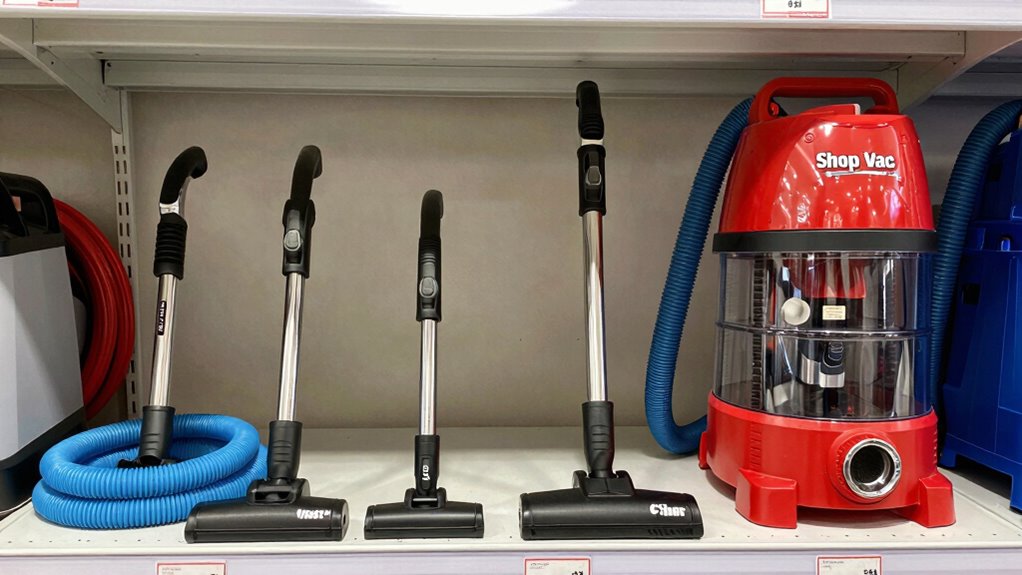
Choosing the right size shop vac is essential for efficient cleanup and ideal performance. When you’re selecting a vac, consider how much debris you’ll be handling regularly. A larger capacity allows you to work longer without frequent emptying, which is especially useful for big projects or commercial use. Conversely, smaller models are more portable and easier to maneuver in tight spaces. Beyond capacity, the hose length plays a crucial role in your overall efficiency. A longer hose offers greater reach, reducing the need to frequently move the entire unit around, which is especially helpful when cleaning large areas or reaching high spots. However, keep in mind that very long hoses can sometimes reduce suction power, so strike a balance that suits your typical cleaning tasks.
Choosing the right shop vac size ensures efficient cleaning, longer work time, and better reach for your specific needs.
Noise levels are another important factor when choosing a shop vac. If you work in a shared space or have noise-sensitive surroundings, opt for a model designed with noise reduction features. Quieter vacuums often come with sound-insulating materials or are engineered to operate more quietly without sacrificing suction power. Remember, a loud shop vac can become disruptive and uncomfortable over extended use, so investing in a quieter model makes your work environment more pleasant and less stressful. Additionally, vacuum maintenance is key to ensuring consistent performance and longevity of your shop vac. Regular maintenance can prevent loss of suction and extend the overall lifespan of your equipment. Maintaining proper filters and checking for blockages can also significantly impact suction efficiency.
In addition to capacity, hose length, and noise levels, consider the vacuum’s power and airflow. A more powerful motor can handle tougher debris, but it might also generate more noise. Selecting a model with adjustable suction settings can help you tailor performance to different tasks, whether you’re cleaning delicate surfaces or heavy-duty messes. Pay attention to the diameter of the hose as well—wider hoses move more air and debris but might be less maneuverable in tight spaces. Being aware of industry standards and product specifications can help you make a more informed decision aligned with your specific cleaning needs. Moreover, understanding how airflow impacts suction efficiency can guide you in choosing a model that provides optimal cleaning power for your tasks.
Ultimately, your choice depends on your specific needs and workspace. If you’re tackling large cleanup jobs, a higher-capacity shop vac with a longer hose and sound-dampening features will serve you best. For quick, light-duty tasks, a smaller, more portable unit with a shorter hose and lower noise levels could be more suitable. By carefully considering these factors—hose length for reach, noise levels for comfort, and capacity for workload—you’ll find a shop vac that makes your cleaning efficient, effective, and less of a hassle. Additionally, understanding user reviews can provide valuable insights into how different models perform in real-world scenarios.
shop vac with adjustable suction
As an affiliate, we earn on qualifying purchases.
As an affiliate, we earn on qualifying purchases.
Frequently Asked Questions
How Do I Determine the Right Filter Size for My Shop Vac?
You determine the right filter size for your shop vac by checking the filter materials and confirming sizing compatibility. First, look at your vac’s model number and manufacturer’s specifications. Then, measure the existing filter or refer to the user manual to find the correct dimensions. Choosing a filter that fits snugly and matches your vac’s specifications guarantees peak performance and proper dust containment. Always verify compatibility before purchasing.
Can I Use a Larger Shop Vac for Smaller Cleaning Tasks?
Imagine wielding a giant, powerful vacuum that consumes more energy than needed, with excess vacuum storage taking up space. Yes, you can use a larger shop vac for smaller tasks, but it might be inefficient. It could waste power and clutter your workspace. Choosing a smaller, more precise vacuum guarantees better power efficiency and easier handling for little jobs, saving you time and energy while keeping your workspace tidy.
What Accessories Are Compatible With Different Shop Vac Sizes?
You can generally find accessories compatible with different shop vac sizes by checking their specifications. Accessory compatibility varies, so make sure the attachments fit your shop vac’s diameter. Shop vac extensions are available to extend reach and improve versatility. Always measure your vac’s hose diameter before purchasing new accessories to ensure a proper fit, and look for universal or adjustable attachments designed to work with multiple sizes for the best compatibility.
How Often Should I Clean or Replace My Shop Vac Filters?
You should clean or replace your shop vac filters regularly, or risk turning it into a dust monster. Filter maintenance depends on usage—every few months for light use, more often if you’re working with heavy debris. Replacement frequency varies, but don’t wait until it’s choking your vacuum or spewing dust. Keep it fresh to guarantee peak performance, because a neglected filter is just a fancy dust collector that doesn’t do its job.
Are There Specific Models Recommended for Wet vs. Dry Use?
Yes, there are specific models designed for wet or dry use. For ideal airflow and noise reduction, choose a wet/dry vacuum with a sealed motor and adjustable settings. Wet vacs typically feature water-resistant filters and sturdy tanks, while dry vacs focus on fine dust filtration. Selecting the right model guarantees efficient cleaning, reduces noise, and maintains airflow, making your tasks more comfortable and effective.
quiet shop vac for noise-sensitive environments
As an affiliate, we earn on qualifying purchases.
As an affiliate, we earn on qualifying purchases.
Conclusion
Now that you’ve got the perfect size in mind, imagine the clutter, dust, and debris waiting to be tamed. Your shop vac is just within reach, ready to conquer every mess with ease. But what if there’s a hidden challenge lurking around the corner, waiting to test your choice? Stay prepared, because choosing the right size isn’t just about cleaning — it’s about gaining control over chaos, one powerful suction at a time. Are you ready to make your move?
large capacity shop vac for commercial use
As an affiliate, we earn on qualifying purchases.
As an affiliate, we earn on qualifying purchases.
compact portable shop vac for tight spaces
As an affiliate, we earn on qualifying purchases.
As an affiliate, we earn on qualifying purchases.