If you want a simple, portable option, a pitcher filter is easy to use and requires no installation, but you’ll need to replace filters every couple of months. Under-sink filters cost more upfront and may need professional setup, but they last longer and handle larger volumes with less maintenance. They also free up counter space and look cleaner in your kitchen. Keep exploring to discover which system suits your daily needs and budget best.
Listen free for 30 days with Audible
Thousands of audiobooks and originals — cancel anytime.
As an affiliate, we earn on qualifying purchases.
Key Takeaways
- Pitcher filters are more affordable initially but require frequent replacements, while under-sink filters have higher upfront costs but longer lifespan.
- Pitcher filters are easy to set up and portable, whereas under-sink systems need plumbing installation and are more permanent.
- Under-sink filters offer higher capacity and less maintenance, suitable for larger households or frequent use.
- Pitcher filters save space and are discreet, while under-sink systems keep counters clear and integrate seamlessly with kitchen design.
- Maintenance frequency favors under-sink filters due to longer-lasting filters, reducing ongoing replacement costs.
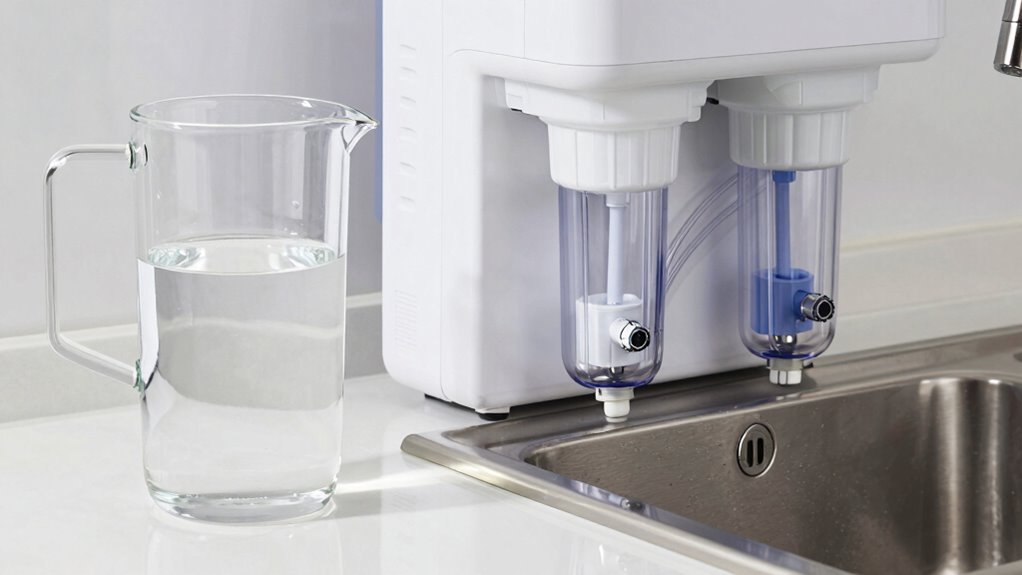
Are you trying to decide between a pitcher water filter and an under-sink system? Both options aim to improve your tap water quality, but they serve different needs and preferences. One of the key considerations is filter lifespan. Pitcher filters generally need replacing every 2 to 3 months, which means you’re frequently changing smaller filters. This can add up over time, but the replacements are usually affordable and straightforward. Under-sink systems, on the other hand, feature larger filters that last longer—often 6 to 12 months—reducing how often you need to replace them. This longer filter lifespan can be more convenient and cost-effective in the long run, especially if your household consumes a lot of water. However, the initial investment for an under-sink system is typically higher, and you’ll need to factor in installation complexity. Additionally, some under-sink systems include features like filtration capacity that can handle larger volumes of water efficiently. Plus, the longer-lasting filters contribute to fewer disruptions in your daily routine. Understanding the filter lifespan of each option can help you plan your maintenance schedule more effectively. A cost comparison can further help determine which system aligns with your budget and usage needs.
Pitcher filters need frequent changing but are affordable and easy to use, while under-sink systems last longer but require higher upfront investment.
When it comes to installation complexity, pitcher filters are incredibly user-friendly. You simply fill the pitcher with water, and it filters as it pours. No tools, plumbing, or professional help are required. This simplicity appeals to renters or anyone who prefers a hassle-free setup. Conversely, under-sink systems require more effort to install. You might need to connect the system to your plumbing, install a dedicated faucet, and ensure proper sealing to avoid leaks. While many models come with detailed instructions, some people find the process intimidating or time-consuming. If you’re comfortable with DIY projects or willing to hire a professional, installing an under-sink system becomes manageable. But if you’re looking for a quick, no-fuss solution, a pitcher filter wins in terms of installation simplicity.
Another factor to weigh is space and aesthetic. Pitcher filters are portable and take up minimal space in your fridge or countertop, making them ideal for small kitchens or for taking on the go. Under-sink systems, however, are installed out of sight, providing a cleaner look and freeing up countertop space. They also tend to deliver higher water flow rates, which is beneficial if you need larger quantities of filtered water quickly. Additionally, considering the maintenance requirements of each type can help you choose a system that fits your lifestyle and cleaning routine. Proper maintenance also contributes to the longevity and effectiveness of your water filter, ensuring clean and safe drinking water over time.
As an affiliate, we earn on qualifying purchases.
Frequently Asked Questions
Which Filter Type Is More Environmentally Friendly?
You’ll find that under-sink filters are generally more eco-friendly because they use fewer replacement parts and produce less waste over time. They often incorporate eco-friendly materials and reduce plastic waste compared to pitcher filters, which rely heavily on disposable filter cartridges. By choosing an under-sink filter, you support waste reduction and sustainability efforts, making it a smarter, greener choice for your household and the environment.
How Often Do I Need to Replace the Filters?
You need to replace your water filter roughly every 2-6 months, depending on usage. Regular filter maintenance is essential to keep your water tasting fresh and safe. Follow the manufacturer’s recommended replacement schedule to avoid clogging or reduced filtration. Neglecting this means risking compromised water quality—imagine drinking water so unclean, it could scare away even the bravest. Stay vigilant, and your filter will serve you well!
Are Under-Sink Filters Compatible With All Plumbing Systems?
Under-sink filters aren’t compatible with all plumbing systems. You’ll need to verify plumbing compatibility before installation, as some setups may pose installation challenges. Certain models require specific fittings or additional adapters, especially in complex or older plumbing. To avoid surprises, consult the manufacturer’s guidelines or a professional plumber. This guarantees your under-sink filter fits well and functions correctly without causing installation challenges.
Do Pitcher Filters Remove Chlorine Taste Effectively?
While pitcher filters may not be as thorough as under-sink systems, they do effectively improve taste, especially by removing chlorine. You’ll notice a significant taste improvement, though filter capacity varies by model. For daily use, a pitcher offers convenience and decent chlorine removal, making your drinking water more palatable. However, if you need prolonged filtration with larger capacity, an under-sink system might be a better choice.
What Is the Typical Lifespan of Each Filter Type?
You can expect pitcher filters to last around 2-3 months, depending on filter material and use, while under-sink filters typically last 6-12 months. The installation process for pitchers is simple and quick, often requiring just filling and replacing. Under-sink units involve a more involved installation process but tend to have longer-lasting filters due to larger filter material capacity, providing more consistent water quality over time.
under sink water filtration system
As an affiliate, we earn on qualifying purchases.
As an affiliate, we earn on qualifying purchases.
Conclusion
Choosing between a pitcher and an under-sink water filter depends on your needs and lifestyle. If you want convenience and portability, a pitcher might be your best bet; for a more permanent, high-capacity solution, under-sink filters shine. Remember, “A stitch in time saves nine,” so investing in the right filter now can save you future headaches and guarantee you enjoy clean, fresh water every day. Make the choice that best fits your life!
As an affiliate, we earn on qualifying purchases.
As an affiliate, we earn on qualifying purchases.
Flea & tick season Picks
flea and tick prevention
As an affiliate, we earn on qualifying purchases.