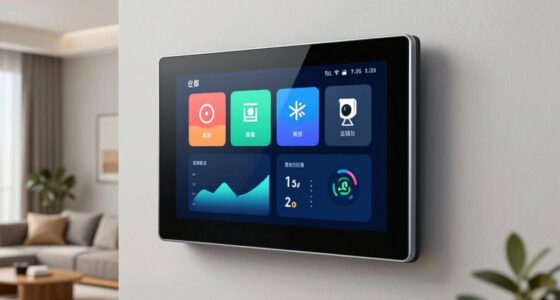
Smart sensors have transformed environmental awareness by providing real-time data on air, water, soil, and noise pollution. They are smaller, more affordable, and easier to install, creating networks that quickly detect changes and help you respond faster. These advanced sensors improve pollution control, support climate prediction, and aid disaster management. As technology advances, smarter, more durable systems will become even more crucial in safeguarding our environment—explore how these innovations can benefit you.
Key Takeaways
- Smart sensors enable real-time environmental data collection, improving pollution detection and climate change monitoring.
- Integration with IoT networks allows seamless communication and comprehensive environmental awareness.
- Advanced sensors enhance accuracy in measuring air, water, soil, and noise parameters for better decision-making.
- Edge computing and data analytics facilitate rapid responses to environmental hazards and disasters.
- Continuous innovations in sensor technology support proactive environmental management and policy development.

YOSUDA Exercise Bike, Brake Pad Stationary Bike for Home with Exclusive App, Magnetic Indoor Cycling Bike with 300 lb Weight Capacity, Low Noise, Tablet Holder and Fitness Courses for Weight Loss, Friction-Black
CHOOSE YOSUDA: We have been specializing in the design and manufacture of high-quality home fitness equipment for more...
As an affiliate, we earn on qualifying purchases.
The Evolution of Smart Sensing Technologies
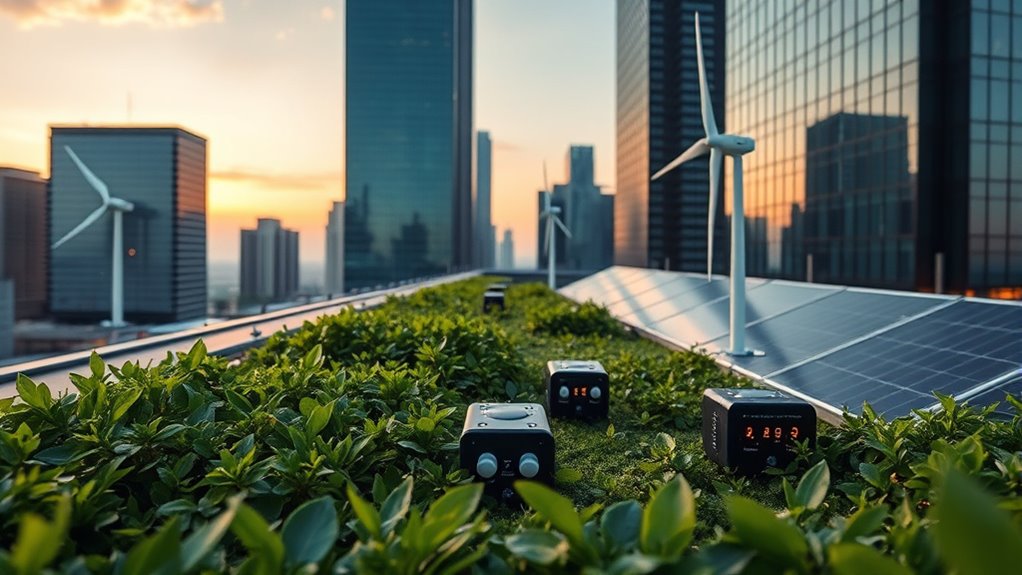
The evolution of smart sensing technologies has transformed how you monitor and respond to environmental changes. Early sensors were simple, often limited to detecting basic parameters like temperature or humidity. Over time, innovations introduced more advanced capabilities, such as real-time data collection and wireless connectivity. These improvements allow you to gather accurate information quickly, making environmental management more efficient. As technology advances, sensors have become smaller, more affordable, and easier to install in diverse settings. You can now deploy networks of sensors that communicate seamlessly, providing all-encompassing environmental insights. The development of high-precision sensors has further enhanced the accuracy and reliability of environmental data collection. Additionally, the integration of edge computing with smart sensors enables faster data processing directly at the source, reducing latency and increasing system responsiveness. This evolution empowers you to make informed decisions, respond proactively, and maintain healthier ecosystems. The continuous development of smart sensing technologies marks a significant leap toward more sustainable and responsive environmental stewardship, supported by wireless communication that facilitates real-time updates and control. Moreover, the incorporation of adaptive algorithms allows sensors to optimize their performance based on environmental conditions, further improving data quality and system efficiency.

Exercise Bike, Magnetic Resistance Stationary Bikes for Home with App Compatible, Silent Indoor Cycling Bike with 350lbs Weight Capacity Comfortable Seat, Digital Monitor & Phone Mount, Black Red
[2026 Upgraded - Compatible with Fitness Apps]: Our newly upgraded exercise bike is compatible with popular fitness apps...
As an affiliate, we earn on qualifying purchases.
Types of Environmental Parameters Monitored

Ever wonder what environmental sensors track to keep our surroundings in check? These sensors monitor a variety of parameters essential for environmental health. Air quality sensors measure pollutants like particulate matter, carbon monoxide, nitrogen dioxide, and ozone levels, helping you understand pollution levels in real time. Water sensors track parameters such as pH, dissolved oxygen, turbidity, and contaminant concentrations to ensure safe water quality. Soil sensors analyze moisture content, temperature, and nutrient levels, aiding agriculture and land management. Noise sensors detect sound levels, alerting you to excessive noise pollution. Additionally, radiation sensors monitor background radiation for safety. Understanding sensor technology enhances our ability to interpret these measurements accurately. The development of sensor calibration techniques ensures data consistency across different devices and environments. Accurate calibration is vital for reliable data in environmental monitoring, supporting decision-making processes. By tracking these parameters, smart sensors provide critical data that supports environmental monitoring, guaranteeing you stay informed about the health of air, water, soil, and overall ecosystems. Incorporating environmental data from these sensors can also help in optimizing resource usage and reducing environmental impact. Furthermore, advancements in sensor accuracy continue to improve the reliability of environmental assessments.

Marcy Fan Exercise Bike with Air Resistance System – Red and Black – NS-1000
FULL-BODY WORKOUT – The Marcy Fan Exercise Bike is a stationary bike that also offers a full-body workout....
As an affiliate, we earn on qualifying purchases.
How Smart Sensors Enhance Pollution Control

Smart sensors play a vital role in actively reducing pollution levels by providing real-time data that enables swift action. You can quickly identify sources of pollution and respond before environmental damage worsens. These sensors detect pollutants in air, water, and soil, giving authorities the information needed to implement targeted measures. This immediate insight helps prevent health risks and preserves ecosystems. Additionally, understanding filtration systems used in sensor technology enhances their effectiveness in monitoring various pollutants. Incorporating real-time monitoring further improves pollution control by allowing rapid adjustments to environmental management strategies. Utilizing sensor calibration ensures data accuracy, which is crucial for effective decision-making, and helps maintain the reliability of pollution detection systems. Advanced data analysis techniques further optimize responses and improve environmental outcomes.
| Pollution Source | Sensor Response |
|---|---|
| Factory emissions | Trigger alerts for immediate action |
| Vehicle exhaust | Adjust traffic flow to reduce emissions |
| Industrial spills | Alert cleanup crews instantly |
| Urban dust | Initiate street cleaning measures |
| Water contamination | Close affected water sources |
With smart sensors, you become part of a proactive effort to protect the environment, ensuring cleaner air and water for everyone.

Winfita Exercise Bike,Premium Smart Air Resistance Fan Bike,Featuring Air Bike with Dual-Layer Drive System,Equipped with App Connectivity and Customizable Display,Ideal for Home Cardio Workouts
Unlimited Air Resistance: Featuring an 6-blade performance fan, the Winfita air bike Resistance intensifies with your effort. And...
As an affiliate, we earn on qualifying purchases.
Applications in Water and Air Quality Monitoring

Applying smart sensors to water and air quality monitoring allows you to detect pollutants quickly and accurately. These sensors provide real-time data, enabling swift responses to contamination events. They help you identify sources of pollution, track changes over time, and ensure regulatory compliance. With smart sensors, you can:
- Continuously monitor water quality parameters like pH, dissolved oxygen, and contaminants.
- Detect airborne pollutants such as particulate matter, VOCs, and gases in real time.
- Automate data collection and analysis, reducing manual labor and increasing efficiency.
- Some advanced sensors incorporate navigation and mapping features, enhancing their ability to cover large or complex environments effectively. Incorporating data integration capabilities further improves the accuracy and usability of environmental monitoring systems. Additionally, sensor calibration ensures ongoing measurement precision, maintaining data reliability over time. Regular maintenance and calibration are essential to sustain sensor performance and data accuracy. Implementing quality control procedures also helps verify the integrity of collected data, ensuring trustworthy results.
This technology empowers you to maintain healthier environments, prevent health hazards, and make informed decisions. Smart sensors’ precision and immediacy make them essential tools for managing water and air quality proactively.
Role in Climate Change and Natural Disaster Prediction
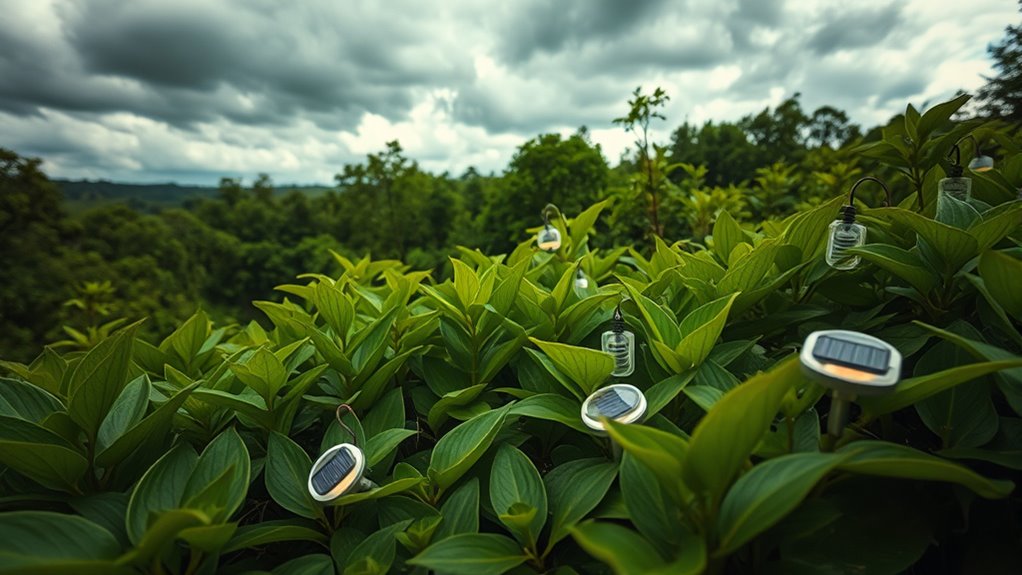
Have you considered how sensors can help predict and respond to climate change and natural disasters? Smart sensors detect early warning signs like rising temperatures, shifting weather patterns, and seismic activity. By continuously collecting real-time data, they enable scientists and emergency responders to forecast events such as hurricanes, wildfires, and floods more accurately. This rapid information flow helps communities prepare and respond swiftly, minimizing damage and saving lives. Sensors placed in forests, oceans, and urban areas track environmental changes that signal impending disasters. With advanced analytics, you can identify trends and anomalies, allowing for proactive measures. Connected equipment enhances the effectiveness of these sensors by integrating data into comprehensive monitoring systems. Additionally, environmental monitoring is vital for understanding long-term climate trends and implementing sustainable solutions. Deploying these systems with sustainable practices can further enhance their efficiency and reduce environmental impact. Effective deployment of real-time data collection can significantly improve early warning systems and disaster resilience. Overall, these sensors serve as crucial tools, enhancing your ability to anticipate and mitigate the impacts of climate change and natural calamities effectively.
Challenges and Limitations of Smart Sensor Deployment

As you consider deploying smart sensors, you’ll face concerns about data privacy and security. Calibration can also be tricky, requiring ongoing adjustments to guarantee accuracy. Plus, the costs of installation and maintenance might be a barrier to widespread adoption.
Data Privacy Concerns
While smart sensors offer valuable environmental data, they also raise significant privacy concerns that can hinder widespread adoption. These sensors often collect detailed information about locations, behaviors, and personal habits, which can be misused or leaked. To address these issues, consider these key points:
- Data Security: Ensuring that collected data is protected from unauthorized access is vital to prevent breaches.
- Consent and Transparency: Users should be informed about what data is collected and how it’s used, giving them control over their information.
- Data Misuse Risks: Without strict regulations, sensitive data could be exploited for malicious purposes or commercial gain.
Addressing these concerns is essential to build trust and promote responsible deployment of smart sensors in environmental monitoring.
Sensor Calibration Challenges
One of the main hurdles in deploying smart sensors effectively is ensuring accurate calibration, which is essential for reliable data collection. If your sensors aren’t calibrated correctly, the data they gather could be misleading or unusable. Calibration involves adjusting sensors to match known standards, but environmental factors like temperature and humidity can complicate this process. You may find yourself repeatedly recalibrating sensors to maintain accuracy. To illustrate, consider the following:
| Calibration Challenge | Impact on Deployment |
|---|---|
| Environmental variability | Causes drift, requiring frequent recalibration |
| Sensor aging | Reduces accuracy over time |
| Limited calibration resources | Slows deployment and maintenance |
Addressing these challenges is key to ensuring your sensors provide trustworthy environmental insights.
High Deployment Costs
Deploying smart sensors often involves significant costs that can limit their widespread adoption. These expenses include hardware, installation, and maintenance. First, the price of high-quality sensors can be steep, especially for large-scale projects. Second, installation requires skilled labor and infrastructure adjustments, adding to upfront costs. Third, ongoing maintenance and data management demand continuous investment, making long-term deployment costly. These financial barriers can slow innovation and restrict deployment in resource-limited areas. While the benefits of environmental monitoring are clear, the initial investment can be prohibitive, especially for smaller organizations or developing regions. Overcoming these cost challenges requires advancements in affordable sensor technology, streamlined installation processes, and supportive policies to make smart sensor deployment more accessible.
Future Trends in Environmental Sensing Solutions

Future environmental sensing solutions will rely on advanced sensor technologies that offer greater accuracy and durability. As IoT integration grows, you’ll see more interconnected devices providing seamless data flow and management. Real-time data analytics will become essential, helping you make immediate, informed decisions to protect the environment effectively.
Advanced Sensor Technologies
Advancements in sensor technology are driving the development of more accurate and versatile environmental monitoring solutions. You’ll see innovations that make sensors smaller, more energy-efficient, and capable of detecting a wider range of pollutants. These breakthroughs enable real-time data collection and improve responsiveness to environmental changes. Specifically,:
- Sensors now incorporate nanomaterials, increasing sensitivity to minute pollutant levels.
- Multi-parameter sensors can simultaneously measure various environmental factors like temperature, humidity, and air quality.
- Self-powered sensors utilize energy harvesting, reducing maintenance and expanding deployment options in remote areas.
These technological leaps allow you to gather precise, all-encompassing environmental data, informing better decision-making and policy development. As sensor capabilities evolve, expect smarter, more adaptive systems that enhance your environmental awareness and management.
IoT Integration Growth
As the Internet of Things (IoT) continues to expand, its integration with environmental sensing solutions is set to transform how you monitor and respond to ecological changes. More sensors are connecting to networks, creating smarter, interconnected systems that provide thorough environmental data. This growth enables real-time updates on air quality, water levels, and soil conditions, empowering you to make informed decisions quickly. As IoT devices become more affordable and accessible, expect widespread adoption across urban, rural, and industrial settings. Enhanced connectivity allows for seamless data sharing among devices, leading to improved accuracy and efficiency in environmental management. This integration also paves the way for automation, where sensors trigger actions without human intervention, ensuring prompt responses to environmental threats or changes.
Real-Time Data Analytics
Real-time data analytics is poised to revolutionize environmental sensing by enabling immediate interpretation of the vast amounts of data generated by sensors. This technology allows you to identify patterns, detect anomalies, and make quick decisions, considerably improving response times. As you adopt real-time analytics, you’ll benefit from:
- Faster response to environmental changes, reducing damage and hazards.
- Improved data accuracy through continuous monitoring and instant validation.
- Enhanced decision-making with actionable insights derived from live data streams.
Frequently Asked Questions
How Do Smart Sensors Adapt to Changing Environmental Conditions?
Smart sensors adapt to changing environmental conditions by continuously monitoring variables like temperature, humidity, and light levels. They process this data in real-time and automatically adjust their functions or trigger responses, such as activating ventilation or alerting you to issues. This dynamic adjustment helps maintain ideal conditions, ensuring efficiency and safety. You benefit from seamless operation, as sensors learn from the environment and respond promptly to fluctuations.
What Are the Privacy Concerns Related to Environmental Data Collection?
You might worry about privacy when environmental data is collected, but remember, this data often reveals personal habits or location details. While it helps improve services and safety, it can also be misused or hacked. Protect yourself by understanding who has access, using secure networks, and advocating for transparent data policies. Balancing the benefits of environmental insights with privacy rights is essential for responsible technology use.
How Cost-Effective Are Smart Sensor Implementations for Large-Scale Monitoring?
Implementing smart sensors for large-scale monitoring can be quite cost-effective if you carefully plan and choose the right technology. You save money over time by reducing manual labor and gaining real-time insights that help prevent costly issues. Although initial setup costs might seem high, the long-term benefits, such as improved efficiency and proactive maintenance, often outweigh the expenses. With proper investment, you can achieve significant savings and better environmental management.
Can Smart Sensors Detect Invisible Environmental Hazards?
Yes, smart sensors can detect invisible environmental hazards like gases, radiation, or pollutants. They use advanced technology such as chemical, optical, and electronic sensors to identify contaminants that are not visible to the naked eye. When integrated with data analysis tools, they provide real-time alerts and detailed information, helping you respond quickly to potential dangers and maintain a safer environment.
What Maintenance Is Required to Ensure Sensor Accuracy Over Time?
You need to regularly calibrate your sensors and clean their surfaces to keep them accurate. Just like tuning a guitar keeps music sounding perfect, calibration guarantees precise readings. Dust, dirt, or corrosion can skew data, so check for buildup and replace damaged parts promptly. Scheduling routine maintenance, including software updates and sensor testing, helps prevent errors and ensures your sensors stay reliable, just like a well-maintained instrument.
Conclusion
While deploying smart sensors might seem costly or complex, their benefits far outweigh the challenges. They empower you to monitor and protect the environment effectively, helping prevent disasters and improve quality of life. Think of them as your eco-friendly eyes and ears, providing real-time data that guides smarter decisions. Embracing these technologies isn’t just smart—it’s essential for a healthier planet. So, don’t let hesitation hold you back from making a meaningful impact.