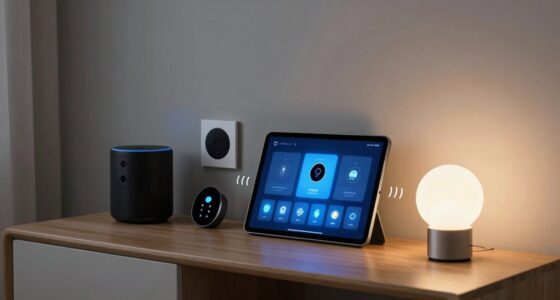
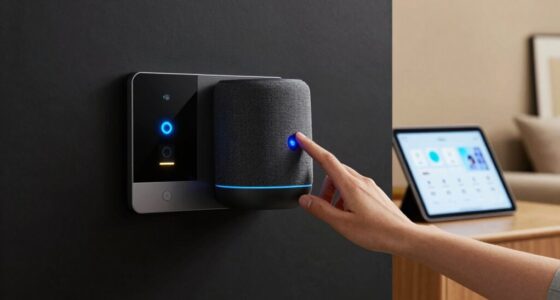
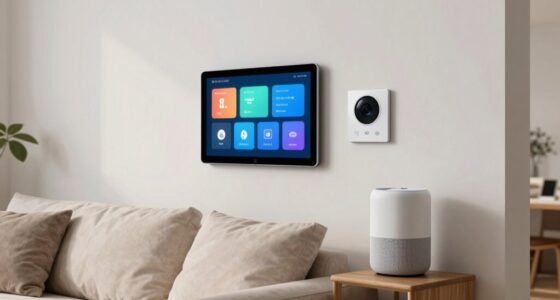
To plan your smart home upgrade, start by evaluating your current setup and clarifying your goals—whether it’s security, energy savings, or convenience. Research compatible devices and choose ecosystems that fit your needs. Break the upgrade into manageable phases, prioritize essential features, and budget carefully. Focus on future-proofing by selecting open standards and modular components. Following a strategic approach guarantees smooth growth; explore further to master every step of a seamless upgrade.

Get books, candles and calm essentials delivered free — and shop member deals
- Fast, free delivery on millions of items
- Access to Prime Big Deal Days deals on October 6–7
- Prime Video, Amazon Music and more included
Key Takeaways
- Assess existing devices, connectivity, and goals to identify gaps and prioritize upgrades effectively.
- Research compatible ecosystems and modular devices to ensure seamless integration and future scalability.
- Break down the upgrade process into manageable phases focusing on high-impact, foundational improvements first.
- Establish a budget, leverage cost-effective options, and plan for long-term value and adaptability.
- Choose open standards and scalable infrastructure to support ongoing growth and technological advancements.
smart home device compatibility checker
As an affiliate, we earn on qualifying purchases.
As an affiliate, we earn on qualifying purchases.
Assessing Your Current Smart Home Setup

Before planning any upgrades, you need to understand your current smart home setup. Take a moment to list all the devices you already have, including smart lights, thermostats, security cameras, and voice assistants. Check how they’re connected—are they all on the same Wi-Fi network or spread across different systems? Note any devices that aren’t working as expected or seem outdated. Evaluate their compatibility—are they compatible with your existing hubs or platforms? Consider your usage patterns: which devices do you use daily, and which ones rarely get used? Understanding your current setup helps you identify gaps, avoid redundant purchases, and plan upgrades that truly enhance your home’s automation. Additionally, understanding the connectivity of your devices ensures they work together smoothly and reliably. Recognizing the compatibility among your devices can prevent future integration issues and streamline your smart home experience. Taking time to assess your current smart home ecosystem can also reveal opportunities for improved security and energy efficiency. Being aware of your device capabilities can help you prioritize upgrades that increase convenience and functionality. Moreover, evaluating the expandability of your system can guide you in choosing upgrades that support future device additions and technological advancements.
modular smart home security system
As an affiliate, we earn on qualifying purchases.
As an affiliate, we earn on qualifying purchases.
Defining Your Priorities and Goals

Understanding what you want to achieve with your smart home is essential to guiding your upgrade plan. Clarify your priorities—whether it’s enhancing security, increasing energy efficiency, or improving convenience. Think about your daily routines and identify pain points that smart devices could address. Set specific, measurable goals, like reducing energy bills by a certain percentage or automating particular tasks. Consider future needs as well, so your upgrades remain relevant over time. Establishing clear priorities helps you avoid unnecessary purchases and focus on solutions that truly add value. Additionally, evaluating your existing smart home ecosystem ensures compatibility and maximizes the benefits of your investments. Recognizing the importance of technological compatibility can prevent costly redundancies and ensure seamless integration. By defining your goals early, you create a roadmap that aligns your investments with what matters most to you, ensuring your smart home evolves in a purposeful and efficient manner. Taking the time to assess your current setup can reveal gaps and opportunities for more targeted improvements. Understanding how different devices and systems work together can also enhance the overall efficiency and user experience of your smart home. Exploring system interoperability can further ensure your devices function harmoniously and adapt to future upgrades.
As an affiliate, we earn on qualifying purchases.
Researching Compatible Devices and Ecosystems

To guarantee your smart home functions smoothly, it’s essential to research devices and ecosystems that are compatible with each other. Compatibility ensures seamless communication, reduces frustration, and saves money. Start by identifying popular ecosystems like Apple HomeKit, Google Home, or Amazon Alexa. Then, verify each device’s compatibility before purchasing. To help compare options, consider this quick overview:
| Ecosystem | Device Compatibility | Ease of Integration |
|---|---|---|
| Apple HomeKit | Apple devices, select brands | User-friendly, secure |
| Google Home | Most smart devices, broad support | Easy setup, versatile |
| Amazon Alexa | Wide device range, third-party support | Convenient, flexible |
Matching devices with your chosen ecosystem minimizes issues and simplifies future upgrades. Additionally, exploring smart home ecosystem features can help you select the setup that best aligns with your existing devices and lifestyle. Understanding device interoperability can further enhance your smart home experience by ensuring all components work together smoothly. Being aware of cloud server capabilities and limitations can also influence your device choices, especially regarding data security and reliability. Moreover, considering future scalability ensures your smart home setup can grow alongside your needs. Incorporating standardized protocols can also improve the reliability and expandability of your system over time.
As an affiliate, we earn on qualifying purchases.
Creating a Phased Upgrade Strategy

Creating a phased upgrade strategy is essential to guarantee your smart home evolves smoothly without overwhelming your budget or causing disruptions. Start by identifying your long-term goals and breaking them into manageable steps. Focus on high-impact upgrades first, such as central hubs or essential sensors, to establish a solid foundation. Then, plan subsequent phases to add features gradually, ensuring each step integrates seamlessly with existing devices. Prioritize upgrades based on necessity and device compatibility**, avoiding the temptation to overhaul everything at once. This approach helps you monitor progress, troubleshoot issues early, and adapt your plan as needed. Additionally, considering practical, room-by-room solutions can simplify the upgrade process and help maintain an organized home. Incorporating home safety & accessibility considerations can further enhance your living environment during these upgrades. Recognizing future-proofing techniques ensures your smart home remains adaptable to new technologies over time. Conducting regular system assessments** can identify potential issues early and guide your upgrade priorities. A phased strategy keeps your upgrade process organized, minimizes inconvenience, and ensures your smart home grows in a controlled, efficient manner.
Budgeting and Cost Management

A well-planned upgrade strategy relies heavily on managing your budget effectively. You need to set clear financial limits and prioritize essential upgrades first. Track costs carefully to avoid overspending, and look for ways to save, like bundling purchases or waiting for discounts. Creating a detailed budget helps you stay focused and ensures funds are allocated wisely. To keep things straightforward, consider this simple comparison:
| Essential Upgrades | Optional Enhancements |
|---|---|
| Prioritize basics | Add luxury features later |
| Set a strict limit | Flex when discounts appear |
| Get quotes early | Avoid impulse buys |
| Track expenses | Reassess budget regularly |
| Focus on ROI | Delay non-urgent items |
Sticking to your budget minimizes stress and keeps your project on track. Vetted Additionally, understanding the cost management principles can significantly improve your upgrade process, especially when you leverage hosting discount codes and other savings opportunities. Effective cost control strategies are essential for a successful smart home upgrade.
Ensuring Future-Proofing and Scalability

Planning your smart home upgrades with future-proofing and scalability in mind guarantees your investment stays valuable over time. To achieve this, select devices and systems that follow open standards and protocols, ensuring compatibility as new technologies emerge. Prioritize modular components that can be easily expanded or replaced without overhauling your entire setup. Consider a centralized hub or controller that supports multiple device types and integrations, so you’re not locked into a single brand. Think long-term: choose infrastructure elements like wiring and network hardware that can handle increased bandwidth and added devices. By planning for growth now, you avoid costly upgrades later and ensure your smart home adapts seamlessly to evolving technology and your changing needs.
Frequently Asked Questions
How Do I Troubleshoot Compatibility Issues During Upgrades?
To troubleshoot compatibility issues during upgrades, start by checking the device specifications and firmware versions to verify they match the new system requirements. Update all devices to their latest firmware. If issues persist, consult the manufacturer’s compatibility list or user forums for known conflicts. Disable conflicting devices temporarily to test if they cause the problem. Finally, contact customer support for guidance on resolving specific compatibility hurdles.
What Security Measures Should I Consider for Smart Home Devices?
To keep your smart home safe, you should prioritize robust passwords and enable two-factor authentication whenever possible. Regularly update device firmware to patch vulnerabilities, and make certain your Wi-Fi network is secure with a strong encryption method. Consider segmenting your network to isolate your smart devices, and disable any unnecessary features. These measures help create a secure environment, allowing you to enjoy your smart home’s benefits with peace of mind.
How Can I Integrate New Devices With Existing Voice Assistants?
You can integrate new devices with your voice assistants by guaranteeing compatibility first. Check if the devices support your assistant’s platform, like Alexa, Google Assistant, or Siri. Use the respective app to add and link the new devices, following setup instructions. Enable necessary skills or integrations, then test to ensure they respond correctly. Regularly update device firmware and voice assistant apps to maintain smooth operation and security.
What Are Common Pitfalls in Smart Home Upgrade Planning?
You might stumble into pitfalls like overcomplicating your setup or neglecting compatibility. Think of upgrading your smart home like assembling a puzzle—you need matching pieces that fit seamlessly. If you ignore device standards or rush decisions, you risk frustration and extra costs. Always research compatibility first, plan your ecosystem, and avoid jumping into upgrades without a clear strategy, so your smart home functions smoothly like a well-oiled machine.
How Do I Ensure Data Privacy With Upgraded Systems?
You guarantee data privacy by choosing devices with strong security features, like end-to-end encryption and regular updates. Always change default passwords and enable two-factor authentication whenever possible. Keep your firmware current and review privacy settings regularly. Avoid sharing sensitive information through your smart devices, and consider setting up a dedicated network for your smart home. These steps help protect your personal data from unauthorized access and breaches.
Conclusion
Like Da Vinci planning his masterpiece, mapping out your smart home upgrade ensures a seamless transformation. By evaluating your current setup, defining goals, and researching compatible devices, you craft a future-proof sanctuary. Remember, every great design requires patience and foresight—think of it as your personal blueprint for a smarter, more efficient home. With careful planning, you’ll turn your house into the masterpiece you’ve envisioned, ready to evolve just like the timeless works of art.
Evergreen bestsellers Picks
bestsellers
As an affiliate, we earn on qualifying purchases.