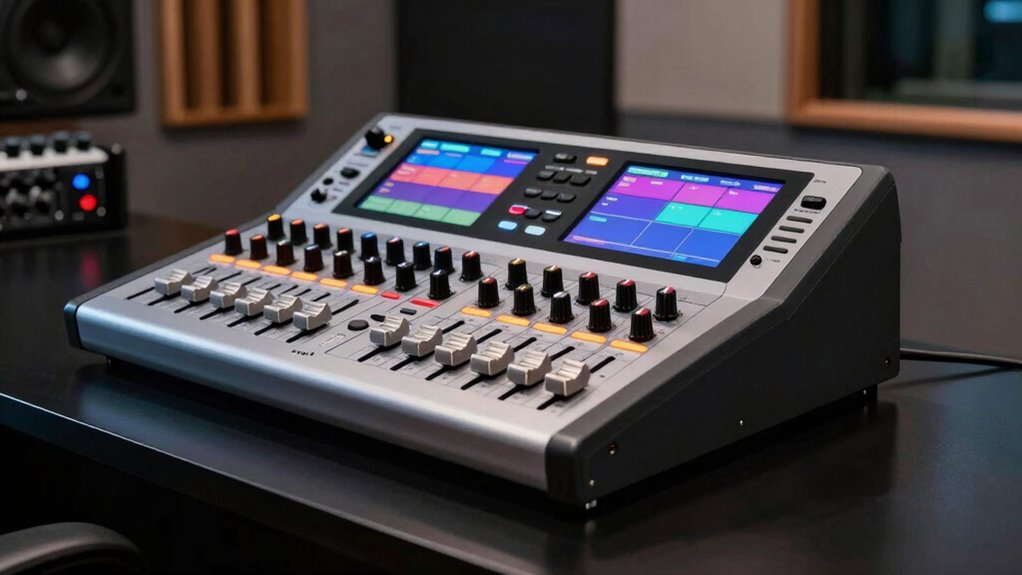
Finding the right studio mixer digital can be a challenge due to the variety of features, sizes, and software options available. The Behringer X AIR XR18 stands out as the best overall choice for its user-friendly interface and solid performance. For those seeking advanced control and integration, the PreSonus StudioLive Series III 32SC offers extensive features and connectivity. However, tradeoffs such as price and complexity mean buyers must consider their specific needs carefully. Continue reading for a detailed breakdown of each option and how they compare in key areas.

Turn your quiet moments into listening time
- Thousands of audiobooks, podcasts and originals
- Listen on your phone, tablet or Echo — also offline
- Cancel anytime
Key Takeaways
- The best digital studio mixers balance ease of use with advanced features, with the Behringer XR18 leading for simplicity and functionality.
- Software integration, especially with Studio One, significantly impacts workflow and is a key consideration for many buyers.
- Size and channel count vary widely, with larger models offering more flexibility but higher costs and complexity.
- Build quality and expandability are crucial for long-term use, particularly for professional or live setups.
- Tradeoffs often involve price versus feature set, so understanding your specific needs helps narrow the best options.
| Behringer X AIR XR18 18-Channel Digital Mixer for iPad/Android Tablets |  | Best for Flexible Remote Control and Compact Live Use | Number of Channels: 18 | Connectivity Technology: USB | Output Connector Type: XLR, TRS | VIEW ON AMAZON | See Our Full Breakdown |
| PreSonus StudioLive Series III 32SC Digital Console Mixer |  | Best for Large-Scale Recording and Installed Sound | Channels: 32 | Built-in USB Interface: 128-channel (64×64) | Multitrack Recorder: Yes, SD Card | VIEW ON AMAZON | See Our Full Breakdown |
| PreSonus StudioLive AR16c Analog Mixer with Studio One Pro Software |  | Best for Hybrid Live and Studio Use with Easy Recording | Channels: 18 | Sample Rate: 96 kHz | Bit Depth: 24-bit | VIEW ON AMAZON | See Our Full Breakdown |
| PreSonus StudioLive Series III 32S Digital Console Mixer with Studio One Pro Software |  | Best for Large-Scale Installations and Recording | Channels: 32 | Inputs: 40 | USB Interface: 128-channel (64×64) | VIEW ON AMAZON | See Our Full Breakdown |
| StudioLive Series III SE 32 Digital Console Mixer with Fender Studio Pro |  | Best for Versatile Large-Scale Live and Studio Applications | Channels: 40 | Mix Buses: 26 | Connectivity: AVB audio networking, USB 2.0 | VIEW ON AMAZON | See Our Full Breakdown |
| StudioLive Series III SE 16 Digital Console Mixer with Fender Studio Pro |  | Best Versatile Compact Digital Mixer | Channels: 40 | Mix Buses: 26 | Connectivity: AVB Ethernet, USB 2.0 | VIEW ON AMAZON | See Our Full Breakdown |
| PreSonus StudioLive Series III 32SX Digital Console Mixer |  | Best Versatile Large-Format Digital Mixer | Inputs: 40 | Channels: 32 | USB Interface: 128-channel (64×64) | VIEW ON AMAZON | See Our Full Breakdown |
| StudioLive Series III SE 24 Digital Console Mixer with Fender Studio Pro |  | Best for Compact Versatile Live and Studio Use | Channels: 40 | Mix Buses: 26 | Connectivity: AVB audio networking, USB 2.0 | VIEW ON AMAZON | See Our Full Breakdown |
| PreSonus StudioLive Classic 16.0.2 USB Digital Console Mixer |  | Best Compact, User-Friendly Digital Mixer | Number of channels: 16 | Mono channels: 8 | Stereo channels: 4 | VIEW ON AMAZON | See Our Full Breakdown |
| PreSonus StudioLive Series III 24R Digital Rack Mixer with Studio One Pro Software |  | Best Rack-Mounted Professional Studio and Live Mixer | Channels: 32 | Inputs: 24 mic/line + 8 digital channels | Total inputs: 26 | VIEW ON AMAZON | See Our Full Breakdown |
More Details on Our Top Picks
Behringer X AIR XR18 18-Channel Digital Mixer for iPad/Android Tablets
The Behringer XR18 stands out for its tablet-controlled operation, making it ideal for performers and technicians who favor wireless flexibility. Compared with the PreSonus StudioLive AR16c, it offers a more streamlined digital experience with a focus on remote control, though it requires an external power source, which can be less convenient for mobile setups. Its high-quality MIDAS preamps deliver professional sound clarity, and the built-in Wi-Fi simplifies connectivity without extra hardware. However, the setup process can be complex for newcomers, and firmware update details are somewhat limited, potentially affecting long-term stability. This pick makes the most sense for live performers or smaller studios seeking easy remote operation without a large footprint.Pros:- Tablet control offers flexible and wireless operation
- High-quality MIDAS preamps for clear sound
- Built-in Wi-Fi for easy connectivity
- Multi-channel USB interface for direct recording
Cons:- Requires external power source, limiting portability
- Setup can be complex for beginners
- Firmware update information is limited
Best for: Musicians, live sound engineers, or event organizers needing remote control and portability
Not ideal for: Beginners or users who prefer plug-and-play simplicity, due to complex setup and external power requirement
- Number of Channels:18
- Connectivity Technology:USB
- Output Connector Type:XLR, TRS
- Audio Input:XLR
- Item Weight:7.1 pounds
Our verdict“This mixer suits experienced users who want wireless control and professional sound in a compact form.”
PreSonus StudioLive Series III 32SC Digital Console Mixer
The StudioLive Series III 32SC offers a substantial 32-channel capacity, making it ideal for complex live or studio setups where extensive routing and effects are needed. Compared with the smaller XR18, it provides more onboard effects and a higher channel count, but its setup complexity and higher price tag can be barriers for hobbyists or small setups. Its built-in multitrack recording and AVB networking create a seamless digital ecosystem for professional projects, supported by included software like Studio One Artist. Yet, the system’s complexity demands a good understanding of digital audio workflows, and the investment might be prohibitive for casual users. This mixer is best for advanced users or production environments requiring extensive channel flexibility.Pros:- High channel count with comprehensive onboard effects
- Built-in multitrack recording and virtual soundcheck
- Flexible AVB networking for ecosystem integration
- Includes professional DAW and capture software
Cons:- Complex setup requiring technical knowledge
- High cost may not suit casual or beginner users
Best for: Professional studios, large live venues, or mobile rigs needing extensive channels and integrated recording
Not ideal for: Entry-level users or small setups with limited budgets, due to its complexity and cost
- Channels:32
- Built-in USB Interface:128-channel (64×64)
- Multitrack Recorder:Yes, SD Card
- Networking:AVB
- Effects Slots:4
- Included Software:Studio One Artist DAW, Capture
Our verdict“Ideal for experienced audio professionals seeking a versatile, high-capacity digital console with integrated recording.”
PreSonus StudioLive AR16c Analog Mixer with Studio One Pro Software
The AR16c blends the tactile feel of an analog mixer with the convenience of a built-in USB interface, making it suitable for small to mid-sized live setups and home studios. Its versatile 18 channels and multiple input types surpass the simpler AR mixers, while the included Studio One Pro software supports recording and production. Compared to the XR18, it offers a more familiar analog interface, which some users prefer for quick adjustments, but setup can still be tricky for beginners unfamiliar with digital audio interfaces. Its Bluetooth connectivity adds convenience for wireless streaming, though the maximum SD card size of 32 GB limits recording lengths. This mixer is best for users who want a familiar mixing experience combined with digital recording capabilities.Pros:- Versatile analog mixer with multiple input options
- Built-in 24-bit/96 kHz USB audio interface for recording
- Includes professional DAW (Studio One Pro)
- Wireless streaming via Bluetooth 5.0
Cons:- Setup can be complex for beginners
- Limited SD card capacity (up to 32 GB)
Best for: Small bands, podcasters, or home studio owners seeking a hybrid mixing and recording solution
Not ideal for: Users who need extensive digital routing or advanced effects, as it offers limited onboard effects and simpler networking
- Channels:18
- Sample Rate:96 kHz
- Bit Depth:24-bit
- USB:USB 2.0 (over USB-C)
- Inputs:12 microphone, 2 instrument, 16 line level
- SD Card Support:up to 32 GB
Our verdict“This mixer suits users wanting a familiar analog feel with integrated digital recording for small setups.”
PreSonus StudioLive Series III 32S Digital Console Mixer with Studio One Pro Software
The 32S model offers a significant upgrade in channel count and features, making it well-suited for installed sound, touring, or recording studios that demand high capacity. Its 40 inputs and 32 channels provide extensive routing options, and the onboard effects and multitrack recording support complex productions, similar to the 32SC but with even more connectivity. Compared to the XR18, the 32S provides a more robust feature set for professional environments at a higher price point, which might be a barrier for hobbyists. The setup complexity and cost are tradeoffs for its advanced capabilities. This mixer is best for seasoned professionals who need maximum channel flexibility and advanced networking options.Pros:- Powerful 40-channel capacity with extensive features
- Advanced AVB networking for seamless integration
- Includes professional software and multitrack recording
- Versatile routing and effects options
Cons:- Requires technical expertise for setup
- High cost may be prohibitive for casual users
Best for: Large venues, professional recording studios, or complex live setups
Not ideal for: Casual users or small bands with limited budgets due to its high price and complexity
- Channels:32
- Inputs:40
- USB Interface:128-channel (64×64)
- Built-in Recorder:SD Card
- Effects Slots:4
- Included Software:Studio One Artist DAW, Capture
Our verdict“Best suited for professionals managing large, complex audio environments requiring maximum flexibility.”
StudioLive Series III SE 32 Digital Console Mixer with Fender Studio Pro
The SE 32 offers an impressive 40 channels and 26 buses, combining advanced audio networking with extensive routing and effects. Its strength lies in its ability to handle complex live and studio tasks while integrating seamlessly with software like Fender Studio Pro and PreSonus Capture. Compared to smaller models like the XR18, it provides more buses and advanced features, but the setup can be intimidating for users unfamiliar with digital mixers, and the cost may be a concern for casual or small-scale users. Its bidirectional USB and remote control capabilities add convenience for remote operation and multi-room setups. This model fits well with experienced professionals needing a powerful, flexible digital mixer with excellent networking.Pros:- Powerful 40-channel capacity with 26 buses
- Advanced AVB networking for robust connectivity
- Includes professional software and remote control
- Comprehensive EQ and compressor options
Cons:- Setup complexity requires technical knowledge
- High price may deter casual users
Best for: Large live venues, professional recording environments, or multi-room installations
Not ideal for: Beginner or casual users who require a straightforward, less complex setup
- Channels:40
- Mix Buses:26
- Connectivity:AVB audio networking, USB 2.0
- Included Software:PreSonus Capture
- Control:Universal Control remote
Our verdict“This mixer is ideal for seasoned professionals demanding extensive channels and advanced networking features.”
StudioLive Series III SE 16 Digital Console Mixer with Fender Studio Pro
The StudioLive Series III SE 16 stands out for its portable, rack-mountable design combined with advanced networking options like AVB and Dante, making it ideal for mobile setups and small venues that require seamless connectivity. Compared to the larger 32-channel models, it offers fewer channels but retains high-quality EQ and compression on every input, providing professional sound in a more manageable package. The integrated recording and remote software control add significant value, though the complex setup can challenge less experienced users. This model is better suited for audio engineers needing flexibility without sacrificing quality, especially in live and mobile environments. Not ideal for beginners or those seeking a simple out-of-the-box solution. Pros include its portability, advanced networking, and high-quality processing. Cons involve a steeper learning curve and potentially overwhelming features for novices. Verdict: This mixer makes the most sense for professionals who need portability and top-tier networking, accepting some setup complexity.Pros:- Portable and rack-mountable for flexible deployment
- Advanced audio networking with AVB and Dante support
- Integrated recording with remote control capabilities
Cons:- Complex setup requiring technical familiarity
- Large feature set may overwhelm new users
Best for: Audio professionals needing portable, networked digital mixing with integrated recording capabilities.
Not ideal for: Beginners or users seeking a straightforward, plug-and-play mixer without extensive setup.
- Channels:40
- Mix Buses:26
- Connectivity:AVB Ethernet, USB 2.0
- Recording:Integrated recording with PreSonus Capture software
- Networking:Milan-certified AVB, Dante bridge
- Control:Universal Control remote software
Our verdict“Best suited for experienced professionals seeking a portable, network-ready digital mixer with comprehensive features.”
PreSonus StudioLive Series III 32SX Digital Console Mixer
The StudioLive Series III 32SX is designed for versatile applications, combining 40 inputs and comprehensive control software, setting it apart from smaller models like the SE 16. Its extensive input/output options, built-in multitrack recording, and compatibility with Studio One make it ideal for complex live and studio setups. However, the higher cost and complex configuration may deter casual users or small-scale venues. This mixer is perfect for professionals needing maximum flexibility, especially those managing large performances or studio recordings, but it demands a more advanced setup process. Not recommended for beginners or budget-conscious users. Pros include its extensive input options, integrated multitrack recording, and software compatibility. Cons involve a challenging setup and higher investment for non-pro users. Verdict: This is a clear choice for seasoned sound engineers requiring a highly capable, feature-rich mixer for complex projects.Pros:- High input and output capacity for complex setups
- Built-in multitrack recording and advanced scene management
- Comprehensive software suite for production
Cons:- Challenging setup may require technical expertise
- High price point may be prohibitive for casual users
Best for: Professional audio setups requiring extensive inputs, multitrack recording, and software integration.
Not ideal for: Entry-level users or small venues with limited budgets looking for simple solutions.
- Inputs:40
- Channels:32
- USB Interface:128-channel (64×64)
- Built-in Recording:Multitrack SD Card recorder
- Networking:AVB networking
- Effects:16 FlexMixes, FLEX FX multieffects processor
Our verdict“Ideal for seasoned professionals needing maximum flexibility and extensive recording options in a large-format digital mixer.”
StudioLive Series III SE 24 Digital Console Mixer with Fender Studio Pro
The StudioLive Series III SE 24 combines a compact form factor with a full suite of features, including 40 channels, 26 mix buses, and advanced networking, making it suitable for both live and studio environments. Its state-space modeled EQ and vintage-inspired compressors provide a unique sound character not found on many comparable models like the SE 16, which is more basic. The inclusion of professional software and seamless AVB networking enhances its appeal, but setup complexity may be a barrier for less technical users. It makes the most sense for mid-sized venues or studio operators who want a versatile, feature-rich mixer without the bulk of larger units. Not ideal for beginners or those on a tight budget. Pros include its versatility, advanced audio processing, and networking capabilities. Cons involve a steep learning curve and higher cost for casual users. Verdict: This mixer suits experienced users seeking a flexible, professional-grade solution with vintage sound options.Pros:- Versatile 40-channel capacity with advanced audio processing
- Vintage-inspired compressors and state-space modeled EQ
- Seamless AVB networking for easy integration
Cons:- Complex setup requiring technical knowledge
- Potentially high cost for casual or small-scale users
Best for: Mid-sized venues or recording environments seeking vintage-inspired sound and advanced networking.
Not ideal for: Beginners or users seeking straightforward, simple digital mixers with minimal setup.
- Channels:40
- Mix Buses:26
- Connectivity:AVB audio networking, USB 2.0
- Included Software:PreSonus Capture multitracking software
- Control:Universal Control remote control
- Special Features:State-space modeled EQ, vintage compressors
Our verdict“Designed for experienced sound engineers who want vintage character combined with modern digital features.”
PreSonus StudioLive Classic 16.0.2 USB Digital Console Mixer
The StudioLive 16.0.2 offers a straightforward setup with 16 channels, built-in effects, and a USB interface, making it appealing for small live acts and home studios. Its simplicity contrasts with larger, more complex models like the 32SX, but it still provides professional effects and scene recall, offering good value for smaller operations. Wireless control options via UC Surface add convenience, though the limited number of channels and effects buses may restrict larger or more complex projects. This model is best for solo performers, small bands, or home studio owners who prioritize ease of use over extensive features. Not suitable for large productions or those needing extensive routing options. Pros include its compact size, user-friendly interface, and wireless control. Cons involve limited channels and effects buses, which could be restrictive. Verdict: A solid choice for smaller setups where ease of operation matters most.Pros:- Compact and lightweight for portability
- Built-in effects and scene recall
- Wireless control via UC Surface app
Cons:- Limited channels and effects buses for complex projects
- Less scalable for larger setups
Best for: Small bands, solo performers, or home recording enthusiasts seeking a compact, easy-to-use mixer.
Not ideal for: Large live sound setups or users needing extensive routing and effects options.
- Number of channels:16
- Mono channels:8
- Stereo channels:4
- Faders:12
- Mic preamplifiers:12 Class A XMAX
- Effects buses:2 internal
- USB interface:Yes, 2-in/16-out
- Software included:Studio One Artist, Capture, UC Surface, QMix-UC
Our verdict“Ideal for small-scale performers and home studios prioritizing ease and simplicity.”
PreSonus StudioLive Series III 24R Digital Rack Mixer with Studio One Pro Software
The StudioLive Series III 24R offers a robust 32-channel setup in a rack-mountable form, featuring recallable XMAX preamps and multiple aux/subgroups, making it a strong choice for both live and studio environments. Its onboard stereo recording and comprehensive software bundle, including Studio One Pro, make it suitable for professional recording and live mixing. Compared to smaller models like the SE 16, its rack-mount design suits permanent installations or mobile setups where space efficiency is key. Setup can be complex for users unfamiliar with rack systems, and its weight might be a concern. This mixer excels for professionals needing a high-quality, versatile rack-mounted solution, but casual users may find it overkill. Not ideal for those seeking portable or simple mixers. Pros include high-quality preamps, extensive scene management, and included recording software. Cons involve weight, size, and setup complexity. Verdict: Best for professionals who need a reliable, rack-mounted digital mixer with powerful features and integrated recording.Pros:- High-quality, recallable preamps with vintage EQ and compressor modes
- Extensive scene and effect management
- Onboard stereo recording and software bundle
Cons:- Heavy and less portable
- Setup requires technical expertise
Best for: Professional studios or live sound setups that require a high-quality, rack-mountable digital mixer with integrated recording.
Not ideal for: Casual users or those with limited space seeking lightweight, portable solutions.
- Channels:32
- Inputs:24 mic/line + 8 digital channels
- Total inputs:26
- Recording interface:40×40 USB 2.0, 55×55 AVB
- Scene management:Yes
- Effects buses:4
Our verdict“This rack-mounted mixer is ideal for professionals needing a durable, feature-rich solution for studio or large live environments.”

How We Picked
These products were evaluated based on performance, ease of use, build quality, software compatibility, and value for money. Priority was given to models that offer a good mix of professional features and user-friendly interfaces suitable for various skill levels. We compared channel counts, connectivity options, and expandability to assess versatility. Cost was also a factor, ensuring recommendations suit a range of budgets while maintaining quality. The ranking reflects how well each mixer meets the typical needs of home studios, project studios, and live sound professionals alike.Factors to Consider When Choosing Studio Mixer Digital
Choosing the right digital studio mixer involves understanding several key factors. Beyond just channel count, consider how the software integrates into your workflow, the build quality for durability, and whether the mixer can scale with your growing needs. Avoid common mistakes like overpaying for features you won’t use or choosing a model that’s too complex for your skill level. Evaluating these factors ensures you select a mixer that fits your current setup and future ambitions.Channel Count and Size
Deciding how many channels you need is fundamental. Larger models with more channels support complex setups but come with higher costs and increased complexity. Smaller mixers are perfect for solo projects or small bands, offering simplicity and portability. Carefully consider your current needs and potential expansion—buying too many channels now may be unnecessary, but underestimating can limit your future flexibility.
Software Compatibility and Integration
Many digital mixers come with dedicated software or integration options, which can streamline your workflow significantly. If you use a DAW like Studio One, choosing a mixer with seamless integration adds value. However, software-heavy models may require more setup time and learning. Evaluate your comfort with digital workflows and ensure the software ecosystem aligns with your existing tools.
Build Quality and Expandability
Durability matters, especially for professional or mobile setups. Look for sturdy construction materials and reliable components. Expandability, through additional inputs or effects, can extend the life of your mixer and support more complex projects. Be cautious of budget options that cut corners on build quality, which may save money initially but lead to issues later.
Connectivity and Inputs/Outputs
Assess your input and output needs carefully. Consider not just the number of channels but also the types of connections—XLR, TRS, USB, etc. Versatile connectivity options allow integration with various audio sources and recording equipment. Overlooking this can limit your setup flexibility or require costly adapters later.
Price and Value for Money
While it’s tempting to buy the most feature-rich model, many buyers find better value in middle-tier choices that meet their core needs. High-end mixers offer advanced features but may be underused if you’re a beginner or small studio. Conversely, cheaper models might lack essential features, leading to frustration. Balancing features with your budget ensures a more satisfying purchase.
Frequently Asked Questions
Can I use a digital studio mixer with my existing analog equipment?
Yes, most digital mixers include analog inputs and outputs or adapters to connect with traditional gear. This flexibility allows you to incorporate a digital mixer into an existing setup without replacing all your equipment. However, check the specific connectivity options and compatibility before purchasing to ensure seamless integration.
Is it necessary to have experience with digital audio workstations to operate a digital mixer?
While prior experience with DAWs can make setup and operation easier, many digital mixers are designed with intuitive interfaces that cater to beginners. Features like touchscreens, preset configurations, and dedicated control apps simplify learning curves. For newcomers, choosing a model with user-friendly controls can save time and frustration.
How important is software compatibility when choosing a digital mixer?
Software compatibility can greatly influence your workflow, especially if you use specific DAWs like Studio One. A mixer that integrates well with your preferred software allows for more efficient control, recording, and editing. Incompatibility may require additional steps or third-party tools, which can complicate your setup.
Are larger channel count mixers worth the extra cost?
It depends on your current and future needs. Larger mixers with more channels provide greater flexibility for complex projects or live sound. If you frequently record multiple sources simultaneously or plan to expand your setup, investing in a higher channel count makes sense. For small projects, however, a smaller mixer could suffice and be more budget-friendly.
What should I prioritize: build quality or features?
Both are important, but your choice depends on your use case. If you plan to move your mixer frequently or rely on it for professional gigs, durability and build quality take precedence. If your focus is on advanced effects and software controls, prioritize features. Striking a balance between the two ensures a reliable, versatile setup.
Conclusion
For most users, the Behringer X AIR XR18 offers a compelling combination of ease of use, flexibility, and value, making it the best overall choice. Those who need professional-grade features and extensive expandability should consider the PreSonus StudioLive Series III 32SC. Beginners or small setups benefit from models like the PreSonus StudioLive AR16c for simplicity and affordability. For high-end, feature-rich setups, the StudioLive Series III 32S or 32SX are excellent, though at a premium price. Ultimately, your choice should align with your current needs and future ambitions, balancing features, size, and budget accordingly.
As an affiliate, we earn on qualifying purchases.Fall Picks
fall essentials