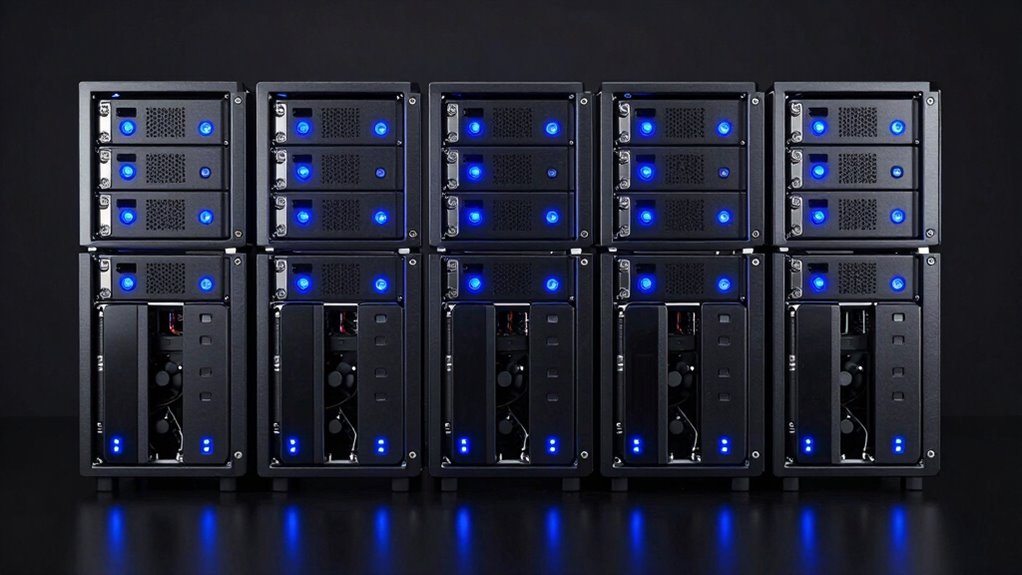

Searching for the best NAS 8 bay in 2026? The ideal choice depends on your specific needs—whether you prioritize performance, capacity, or ease of use. The Synology DiskStation DS1823xs+ stands out as the top overall pick thanks to its enterprise features and reliability. The QNAP TS-832PX-4G offers a strong balance of speed and affordability, while the UGREEN NAS DXP8800 Plus provides impressive specs for content creators. Each option involves tradeoffs like cost, complexity, or upgrade potential. Continue reading for a detailed breakdown of these picks and what to consider before buying.

Turn your quiet moments into listening time
- Thousands of audiobooks, podcasts and originals
- Listen on your phone, tablet or Echo — also offline
- Cancel anytime
Key Takeaways
- The top performers combine high capacity with versatile networking options, especially dual 10GbE ports.
- Enterprise-grade features like advanced RAID configurations and high-speed connectivity separate premium models from budget options.
- Ease of use and setup vary significantly; user-friendly interfaces are more common in branded NAS solutions.
- Build quality and expandability are vital for future-proofing, especially for professional or enterprise use.
- Price often correlates with feature set: higher cost models offer more robust hardware and software capabilities.
| UGREEN NAS DXP2800 2-Bay Network Attached Storage for Content Creators |  | Best for Small-Scale Content Creators | Digital Storage Capacity: 80 TB | Hard Disk Interface: SATA | Connectivity Technology: SATA | VIEW ON AMAZON | See Our Full Breakdown |
| Synology 8-Bay DiskStation DS1823xs+ (Diskless) |  | Best for Small to Large Business Data Storage | Drive Bays: 8 | Expansion Support: Up to 18 drives | Warranty: 5 years | VIEW ON AMAZON | See Our Full Breakdown |
| QNAP TS-832PX-4G 8-Bay NAS |  | Best for High-Speed Network Connectivity | Processor: Alpine AL324 ARM Cortex-A57 | RAM: 4 GB DDR4 (max 16 GB) | Drive Bays: 8 | VIEW ON AMAZON | See Our Full Breakdown |
| QNAP TS-855X-8G-US 8-Bay NAS |  | Best for Virtualization and High Performance | Processor: Intel Atom C5125 8-core 2.8GHz | RAM: 8GB DDR4 (up to 128GB) | Drive Bays: 8 | VIEW ON AMAZON | See Our Full Breakdown |
| Synology DS1825+ Enterprise NAS – 8-Bay Diskless Storage, 360TB Capacity, 25GbE Speed, Enterprise Reliability |  | Best for Large-Scale Media Workflows | Capacity: up to 360TB | Number of Bays: 8 | Network Speed: 25GbE | VIEW ON AMAZON | See Our Full Breakdown |
| UGREEN NAS DXP8800 Plus 8-Bay Network Attached Storage with Intel i5 1235U, 8GB DDR5, 128GB SSD, Dual 10GbE, 8K HDMI, TBT4 |  | Best for Enterprise-Grade Performance and Flexibility | Processor: Intel i5 1235U 10-Core | RAM: 8GB DDR5 | Storage Capacity: Up to 272TB | VIEW ON AMAZON | See Our Full Breakdown |
| Asustor Lockerstor 8 AS6508T 8-Bay NAS Network Storage Enclosure |  | Best for High-Speed Home or Small Business Storage | Processor: Intel Atom C3538 Quad Core | RAM: 8GB DDR4 | Drive Bays: 8 SATA hard drives | VIEW ON AMAZON | See Our Full Breakdown |
| QNAP TS-873A-8G 8-Bay NAS |  | Best for Versatile Performance and Expandability | Processor: AMD Ryzen Embedded V1500B | RAM: 8GB DDR4 (expandable up to 64GB) | Number of Bays: 8 | VIEW ON AMAZON | See Our Full Breakdown |
| nas 8 bay | Drive Bays | Processor | RAM |
|---|---|---|---|
| UGREEN NAS DXP2800 2-Bay Netwo | — | — | — |
| Synology 8-Bay DiskStation DS1 | 8 | — | — |
| QNAP TS-832PX-4G 8-Bay NAS | 8 | Alpine AL324 ARM Cortex-A57 | 4 GB DDR4 (max 16 GB) |
| QNAP TS-855X-8G-US 8-Bay NAS | 8 | Intel Atom C5125 8-core 2.8GHz | 8GB DDR4 (up to 128GB) |
| Synology DS1825+ Enterprise NA | — | — | — |
| UGREEN NAS DXP8800 Plus 8-Bay | 8 SATA + 2 M.2 NVMe | Intel i5 1235U 10-Core | 8GB DDR5 |
| Asustor Lockerstor 8 AS6508T 8 | 8 SATA hard drives | Intel Atom C3538 Quad Core | 8GB DDR4 |
| QNAP TS-873A-8G 8-Bay NAS | — | AMD Ryzen Embedded V1500B | 8GB DDR4 (expandable up to 64GB) |
More Details on Our Top Picks
UGREEN NAS DXP2800 2-Bay Network Attached Storage for Content Creators
The UGREEN NAS DXP2800 stands out for its user-friendly setup and AI-powered photo organization, making it ideal for content creators who prioritize simplicity and local storage security. Compared with larger NAS options like the Synology DS1825+, this model is less expandable but offers a straightforward experience for those managing moderate data loads. Its 80TB capacity and easy sharing features support creative workflows without the complexity of enterprise systems. However, the limited to 2 bays means less flexibility for future expansion, and the internal installation process can be a hurdle for less technical users.
Pros:- High storage capacity up to 80TB for large creative files
- Easy setup and cross-device file sharing
- AI-powered photo organization reduces clutter
Cons:- Requires internal installation, which can be complex for some users
- Limited to 2-bay configuration restricts future expansion
Best for: Small-scale content creators or enthusiasts who want a simple, secure storage solution with AI features.
Not ideal for: Larger teams or users needing extensive expansion, since it’s limited to 2-bay capacity and internal installation may be complex.
- Digital Storage Capacity:80 TB
- Hard Disk Interface:SATA
- Connectivity Technology:SATA
- Hard Disk Form Factor:3.5 inches
- Hardware Connectivity:Ethernet, SATA 6.0 Gb/s, USB
- Hardware Platform:x86
Our verdict“This NAS is best suited for individual creators or small teams valuing ease of use and AI features over extensive scalability.”
Synology 8-Bay DiskStation DS1823xs+ (Diskless)
The Synology DS1823xs+ excels in high-availability and potential for large-scale enterprise storage, supporting up to 18 drives with expansion units. Unlike the QNAP TS-832PX-4G, which emphasizes network speed, this model prioritizes uptime and data security, making it ideal for critical business applications. Its 5-year warranty and hot-swappable drives cater to environments where maximum uptime is essential. However, the absence of included drives and the more complex setup make it less suitable for small businesses or users unfamiliar with enterprise hardware.
Pros:- Supports up to 18 drives with expansion units
- High availability and hot-swappable drives for maximum uptime
- Long 5-year warranty offers peace of mind
Cons:- No included drives, requiring additional purchase
- Complex setup may be challenging for non-technical users
Best for: Small to medium-sized businesses needing robust, expandable storage with high availability.
Not ideal for: Home users or small teams without the technical expertise or budget for enterprise-grade NAS hardware.
- Drive Bays:8
- Expansion Support:Up to 18 drives
- Warranty:5 years
- Form Factor:Diskless
- Network Speed:Standard Ethernet
Our verdict“This NAS makes the most sense for businesses prioritizing reliability and expandability over initial simplicity or cost.”
QNAP TS-832PX-4G 8-Bay NAS
The QNAP TS-832PX-4G is tailored for users needing fast network access, thanks to its dual 10GbE SFP+ ports and support for up to 16 GB of RAM. Compared to the Synology DS1823xs+, this model emphasizes network performance, making it suitable for media streaming or large data transfers within a high-speed LAN. Its diskless design offers flexibility but requires users to add drives, which might be a barrier for beginners. The limited software detail can leave potential buyers uncertain about its full capabilities.
Pros:- Fast 10GbE SFP+ ports for quick transfers
- Supports up to 16 GB RAM for multitasking performance
- High-capacity 8-bay design for extensive storage
Cons:- Diskless, requiring additional drives
- Setup can be complex for less experienced users
Best for: Tech-savvy professionals or small teams demanding high-speed data transfer within their network.
Not ideal for: Beginners or users seeking a plug-and-play system, due to potential setup complexity and lack of pre-installed drives.
- Processor:Alpine AL324 ARM Cortex-A57
- RAM:4 GB DDR4 (max 16 GB)
- Drive Bays:8
- Ethernet Ports:2 x 2.5GbE, 2 x 10GbE
- Form Factor:Diskless
Our verdict“Ideal for users who prioritize network speed and capacity, but not for those seeking ease of setup out of the box.”
QNAP TS-855X-8G-US 8-Bay NAS
The QNAP TS-855X-8G-US offers a powerful platform for virtualization, with an 8-core Intel Atom processor and expandable RAM up to 128GB. It stands out for its dual M.2 NVMe slots and PCIe expansion, making it a top choice for demanding workflows. Compared to the Synology DS1825+ which targets enterprise storage, this model provides a more flexible, high-performance environment for tech-heavy users. Its diskless configuration, however, makes it less appealing for those seeking an out-of-the-box solution, and the setup complexity could be a hurdle for newcomers.
Pros:- High-performance 8-core processor with up to 128GB RAM
- Dual M.2 NVMe slots for cache acceleration
- PCIe expansion slots for additional cards
Cons:- Diskless, requiring additional drives
- Setup may be challenging for less experienced users
Best for: IT professionals or enterprises needing high-performance virtualization and cache acceleration.
Not ideal for: Casual users or small offices without technical resources, due to setup complexity and additional drive needs.
- Processor:Intel Atom C5125 8-core 2.8GHz
- RAM:8GB DDR4 (up to 128GB)
- Drive Bays:8
- NVMe Slots:2
- Expansion Slots:Dual PCIe
Our verdict“This NAS suits advanced users seeking maximum performance and expandability for virtualization tasks.”
Synology DS1825+ Enterprise NAS – 8-Bay Diskless Storage, 360TB Capacity, 25GbE Speed, Enterprise Reliability
The Synology DS1825+ is built for enterprise-level media production, supporting up to 360TB with expansion units and high-speed 25GbE networking. It’s designed for heavy-duty multi-user editing workflows, making it a step up from the QNAP TS-832PX-4G, which offers high network speeds but less raw capacity. Its complex setup and high cost position it as a solution for large media teams or data centers rather than small offices. Additionally, being diskless, it requires extra drives, which adds to the initial investment.
Pros:- Supports over 50 users editing simultaneously
- Expandable storage up to 360TB with expansion units
- Flexible high-speed networking up to 25GbE
Cons:- Requires additional drives, increasing initial cost
- Setup complexity and enterprise focus may overwhelm casual users
Best for: Media companies or large teams managing high-resolution video editing and storage needs at scale.
Not ideal for: Small businesses or individual users who don’t need such extensive capacity and enterprise features.
- Capacity:up to 360TB
- Number of Bays:8
- Network Speed:25GbE
- Warranty:3 years
Our verdict“This NAS is best for enterprise environments demanding massive storage and high-speed data access, not small-scale or casual use.”
UGREEN NAS DXP8800 Plus 8-Bay Network Attached Storage with Intel i5 1235U, 8GB DDR5, 128GB SSD, Dual 10GbE, 8K HDMI, TBT4
The UGREEN NAS DXP8800 Plus stands out for its powerful Intel i5 processor and massive storage potential, making it an excellent choice for demanding businesses needing high-performance data handling. Compared with the QNAP TS-873A-8G, it offers more raw processing power and supports extensive RAID configurations for large-scale storage, but it lacks included drives and built-in Wi-Fi, which could add to setup complexity. Its dual 10GbE ports and 8K HDMI output cater to media-heavy workflows and virtualization, ideal for enterprise environments. However, the setup may be daunting for those without technical expertise. Overall, this NAS suits large organizations or power users who prioritize speed, capacity, and advanced connectivity but are prepared for a complex initial setup.
Pros:- High-performance Intel i5 processor suitable for demanding tasks
- Massive storage capacity up to 272TB with flexible RAID options
- Fast dual 10GbE network ports for high-speed data transfer
- Supports multiple operating systems and virtual machines
Cons:- Storage drives are not included and must be purchased separately
- No built-in Wi-Fi; wired Ethernet only
Best for: IT professionals or enterprise users needing high throughput, extensive storage, and multimedia capabilities.
Not ideal for: Home users or small offices lacking technical skills or needing plug-and-play simplicity.
- Processor:Intel i5 1235U 10-Core
- RAM:8GB DDR5
- Storage Capacity:Up to 272TB
- Drive Bays:8 SATA + 2 M.2 NVMe
- Network Ports:2x 10GbE
- Video Output:8K HDMI
Our verdict“Best suited for enterprise environments that need raw power, high capacity, and advanced connectivity, willing to manage a complex setup.”
Asustor Lockerstor 8 AS6508T 8-Bay NAS Network Storage Enclosure
The Asustor Lockerstor 8 AS6508T offers a balanced mix of performance and user-friendly features, making it ideal for tech-savvy home users or small offices seeking robust storage. Its quad-core Intel Atom C3538 processor and 8GB DDR4 RAM provide ample power for backups, media streaming, and light virtualization, but it doesn’t match the processing muscle of the UGREEN DXP8800 Plus for enterprise workloads. With dual 10GbE ports supporting link aggregation and two NVMe slots, it excels in network speed and storage flexibility while remaining relatively straightforward to set up. However, it requires users to purchase hard drives separately, and its hardware isn’t optimized for large-scale enterprise deployments. This NAS is perfect for users who want high speed and capacity without the complexity of a full enterprise system.
Pros:- High-speed dual 10GbE network interfaces with link aggregation
- Supports up to eight SATA drives for extensive storage
- Powerful quad-core processor handles demanding tasks
- Includes two NVMe slots for cache acceleration
Cons:- Hard drives are sold separately, adding to total cost
- Setup can be complex for less experienced users
Best for: Small business owners or advanced home users looking for high-speed local network storage with easy expandability.
Not ideal for: Large enterprises needing maximum scalability and dedicated enterprise features, or users seeking an out-of-the-box solution with included drives.
- Processor:Intel Atom C3538 Quad Core
- RAM:8GB DDR4
- Drive Bays:8 SATA hard drives
- Network Interfaces:Two 10GbE, Two 2.5GbE
- M.2 Slots:2 NVMe
Our verdict“A strong choice for small teams or advanced home users prioritizing speed and expandability with a manageable setup process.”
QNAP TS-873A-8G 8-Bay NAS
The QNAP TS-873A-8G delivers a well-rounded performance with its AMD Ryzen embedded processor and extensive RAM upgrade options, making it an appealing choice for users needing flexibility and raw power. Its AMD Ryzen V1500B CPU outperforms the Atom in multi-threaded tasks and offers better overall responsiveness than the Asustor Lockerstor 8. While it doesn’t include drives, its expandable RAM up to 64GB and multiple connectivity options—including dual 2.5GbE ports and USB 3.2—make it adaptable for media, virtualization, and backup needs. However, the initial setup can be intimidating for beginners, and its higher price point might deter casual users. This NAS works best for tech-savvy users who want a versatile, expandable platform capable of handling diverse workloads.
Pros:- High-performance AMD Ryzen embedded processor
- Expandable RAM up to 64GB for demanding multitasking
- Multiple high-speed connectivity options including dual 2.5GbE
- Supports extensive virtualization and media applications
Cons:- No included drives, increasing initial investment
- Setup complexity may challenge less experienced users
Best for: Power users or small businesses needing flexible, expandable NAS performance with room for growth.
Not ideal for: Beginners or users who prefer plug-and-play solutions without extensive configuration or who don’t require high expandability.
- Processor:AMD Ryzen Embedded V1500B
- RAM:8GB DDR4 (expandable up to 64GB)
- Number of Bays:8
- Ethernet Ports:2 x 2.5GbE
- USB Ports:3 x USB 3.2 Gen 2, 1 x USB 3.2 Gen 1 Type-C
Our verdict“Ideal for users seeking a flexible, powerful NAS that can adapt to evolving workloads with significant expandability options.”

How We Picked
Our evaluation focused on core factors like performance, build quality, expandability, and value for money. We prioritized NAS units with reliable hardware, strong networking options, and flexible storage configurations. Ease of setup and ongoing maintenance were also key considerations, especially for users less familiar with enterprise storage. Our rankings reflect a balance between high-end features and affordability, making sure each pick serves a distinct user need—from beginners to professionals. We compared these products based on specs, user reviews, and industry reputation to ensure we recommend only those with proven track records.| nas 8 bay | Processor |
|---|---|
| UGREEN NAS DXP2800 2-Bay Netwo | — |
| Synology 8-Bay DiskStation DS1 | — |
| QNAP TS-832PX-4G 8-Bay NAS | Alpine AL324 ARM Cortex-A57 |
| QNAP TS-855X-8G-US 8-Bay NAS | Intel Atom C5125 8-core 2.8GHz |
| Synology DS1825+ Enterprise NA | — |
| UGREEN NAS DXP8800 Plus 8-Bay | Intel i5 1235U 10-Core |
| Asustor Lockerstor 8 AS6508T 8 | Intel Atom C3538 Quad Core |
| QNAP TS-873A-8G 8-Bay NAS | AMD Ryzen Embedded V1500B |
Factors to Consider When Choosing Nas 8 Bay
Choosing the right 8-bay NAS involves weighing several factors beyond just capacity. Understanding your primary needs—whether it’s speed, ease of management, or budget—helps narrow your options. Consider how much future expandability you require and what network speeds your setup demands. The right NAS should align with your storage workload, technical expertise, and long-term growth plans. Avoid common pitfalls like overpaying for unnecessary features or underestimating the importance of reliable hardware.Performance and Speed Capabilities
Speed is essential if you handle large media files or perform frequent backups. Look for models with dual 10GbE ports or Thunderbolt options if high transfer rates matter. Cheaper models may only offer gigabit Ethernet, which can bottleneck your data flow. Consider your network infrastructure—if it doesn’t support higher speeds, investing in high-end NAS may not yield immediate benefits. Balance your needs with your existing setup to avoid overspending on features you won’t utilize often.
Expandability and Future-Proofing
Future storage needs can grow quickly, so prioritize units with scalable options like additional drive bays or PCIe slots for SSD caching. Some models also support external expansion units, which can be a cost-effective way to increase capacity later. However, more expandable hardware often comes with a higher initial cost and added complexity. Think about your anticipated storage growth and whether your budget can accommodate upgrades down the line.
Ease of Use and Management
An intuitive interface and robust management tools make a significant difference, especially for those new to NAS devices. Branded solutions like Synology and QNAP tend to offer user-friendly software with clear setup wizards and ongoing support. Cheaper or less well-known brands might require more technical expertise and troubleshooting. If you prefer plug-and-play, prioritize solutions with a strong reputation for ease of use, even if it means paying a bit more.
Build Quality and Reliability
Since NAS devices operate continuously, durability and quality are critical. Well-built enclosures with good thermal management prevent overheating, which can reduce hardware lifespan. Look for models with redundant power supplies or hot-swappable drives if uptime is vital. Cheaper units may save money upfront but can lead to higher maintenance costs or data loss risks over time. Reliability should be a key factor when selecting a storage solution for professional use.
Cost and Value
Pricing varies widely across 8-bay NAS units, often reflecting hardware quality and feature sets. While budget options can be suitable for light home use, they may lack enterprise features or speed. Premium models offer high-end hardware, advanced software, and better support, but at a higher cost. Consider what features are essential for your use case and avoid paying extra for capabilities you won’t need. Finding the right balance between cost and features ensures long-term satisfaction.
Frequently Asked Questions
Do I need a 10GbE port on my NAS?
If you regularly transfer large files or run multiple users simultaneously, a 10GbE port can significantly improve performance. However, your network infrastructure must support these speeds, including switches and cabling. For typical home or small office setups, gigabit Ethernet may suffice, making 10GbE unnecessary. Assess your current network environment and future plans before investing in high-speed ports.
Is it better to buy a diskless NAS or one with drives pre-installed?
Choosing a diskless NAS provides flexibility to select drives tailored to your needs, often at a lower initial cost. It allows for easy upgrades or replacements and can be more cost-effective if you already own compatible drives. Conversely, pre-installed units are ready to use immediately, which can save time and effort, especially for beginners. Consider your technical comfort level and upgrade plans when deciding between these options.
How important is hardware RAID support in a NAS?
Hardware RAID support enhances data redundancy and protection, especially critical for business or professional setups. It offers better performance and reliability compared to software RAID, reducing the risk of data loss during drive failures. However, it can increase complexity and cost. If your data is valuable, investing in a NAS with robust RAID options is generally worthwhile, but for simple backups or home use, software solutions may suffice.
Should I prioritize NAS with dual 10GbE ports?
Dual 10GbE ports provide increased bandwidth for multi-user environments or high-throughput tasks. They enable link aggregation or separate networks for different data streams, improving overall performance. However, if your network infrastructure doesn’t support these speeds, the extra ports won’t be fully utilized. For small offices or home users, a single 10GbE port may be enough, but larger setups benefit from dual ports.
Is a more expensive NAS always better?
Higher cost often correlates with advanced hardware, enterprise features, and better build quality, but it doesn’t mean it’s the right choice for everyone. Budget models may meet basic needs without unnecessary extras, making them ideal for casual or home use. Evaluate your specific requirements, such as capacity, speed, and management features, to determine if a premium model offers tangible benefits for your situation. Sometimes, spending less on a well-chosen mid-range unit is the smarter move.
Conclusion
For most users, the Synology DiskStation DS1823xs+ represents the best overall choice, blending performance, reliability, and ease of use. Budget-conscious buyers or those new to NAS should consider the QNAP TS-832PX-4G for solid features at a lower price point. Professionals needing maximum expandability and speed will find the Synology DS1825+ or UGREEN NAS DXP8800 Plus ideal, though these come with higher costs. Beginners or small offices should prioritize models with straightforward setup and support, while enterprise users require advanced hardware and software. Tailoring your pick to your specific needs ensures a storage solution that grows with you.
Halloween Picks
halloween
As an affiliate, we earn on qualifying purchases.