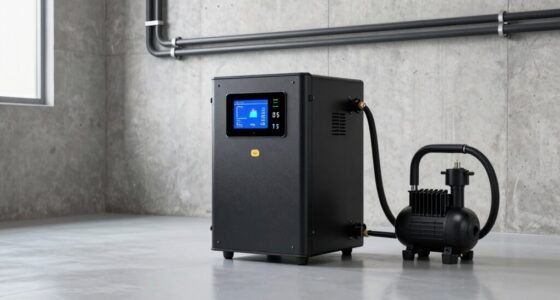
To perform a quick 10-minute audit on your inverter generator, start by inspecting the air filter and cleaning or replacing it if dusty. Check the fuel system for leaks or debris and confirm the fuel is fresh. Examine the exhaust and spark plug for buildup or wear, cleaning or replacing if needed. Tighten loose bolts, listen for unusual sounds, and verify the generator is on a level surface. Keep up with these checks, and you’ll uncover tips to enhance your generator’s performance and quietness.

Turn your quiet moments into listening time
- Thousands of audiobooks, podcasts and originals
- Listen on your phone, tablet or Echo — also offline
- Cancel anytime
Key Takeaways
- Conduct quick visual and auditory inspections for leaks, loose parts, or unusual noises.
- Check and clean or replace the air filter to ensure optimal airflow.
- Examine fuel lines and drain stale fuel; refill with fresh fuel for smooth operation.
- Inspect spark plug for wear or dirt; clean or replace as needed.
- Ensure the generator is level and tighten any loose bolts to reduce vibrations and noise.

If you want your inverter generator to perform reliably and efficiently, taking just 10 minutes for a quick audit can make a big difference. Regular checks guarantee your generator runs at the best fuel efficiency and maintains lower noise levels, which is especially important if you’re using it in noise-sensitive environments or during long periods of operation. Start by inspecting the air filter; a dirty or clogged filter restricts airflow, forcing the engine to work harder and burn more fuel. Clean or replace it if it appears dirty. When the engine isn’t breathing freely, it leads to decreased fuel efficiency and increased noise, so keeping this component in top shape is a simple yet essential step.
Next, check the fuel system. Look for leaks, cracks, or any signs of wear in the fuel lines and connections. A well-maintained fuel system ensures complete combustion, which not only improves fuel efficiency but also reduces noise caused by incomplete burning or engine strain. Make sure the fuel tank is clean and free of debris, as contaminants can clog injectors or carburetors, again decreasing efficiency and increasing noise levels. If you’re using stale fuel, drain it and refill with fresh, clean fuel to keep the engine running smoothly. Additionally, understanding the fuel efficiency of your generator can help you identify potential issues early on. Regularly monitoring airflow and cleanliness can prevent buildup that hampers performance. Maintaining proper engine performance is crucial for optimal operation and longevity. Checking the cooling system periodically can also prevent overheating and ensure consistent operation. An efficient cooling system is vital to prevent overheating, which can damage internal components and reduce lifespan.
Another quick check involves the exhaust system. Inspect for blockages or buildup that might restrict airflow and cause the engine to work harder. An unimpeded exhaust system helps maintain cleaner emissions, better fuel efficiency, and quieter operation. Additionally, examine the spark plug; a worn or dirty spark plug can cause misfiring or rough running, which affects fuel consumption and noise. If necessary, clean or replace it to keep the engine firing smoothly.
Finally, listen to the generator while it’s running. Unusual sounds, knocking, or excessive noise might indicate a mechanical issue or loose parts. Tighten any loose bolts or screws and verify that the generator is on a level surface to prevent vibrations that can increase noise. Keeping your inverter generator well-maintained with these quick checks guarantees that it operates quietly, uses fuel efficiently, and provides reliable performance when you need it most. Spending just a few minutes on this routine will save you time and money in the long run, extending your generator’s lifespan and enhancing your overall experience.
Products Worth Considering

Bose Lifestyle Ultra Soundbar and Ultra Subwoofer Bundle

Ring Battery Doorbell Plus – Home or Business Security with Head‑to‑Toe HD+ Video, Motion Detection & Alerts, Two‑Way Talk

LEVOIT Vital 200S-P Smart Air Purifier for Large Rooms up to 1875 ft², Quiet 27 dB Operation, AHAM Verifide, HEPA Sleep Mode, White
As an affiliate, we earn on qualifying purchases.
Frequently Asked Questions
Can I Perform This Audit on All Inverter Generator Brands?
You can perform this audit on most inverter generator brands, but brand compatibility matters. Check your generator’s manual to guarantee the maintenance checklist aligns with its specifications. Some brands may have unique features or components, so adapt the audit accordingly. Always follow safety guidelines and manufacturer instructions. This way, you’ll accurately assess your inverter generator’s performance and keep it running smoothly, regardless of the brand.
What Tools Are Needed for the 10-Minute Inspection?
Picture yourself quickly glancing over your inverter generator, tools in hand. For the 10-minute inspection, you need a basic tool checklist: a wrench, screwdriver, and possibly a flashlight for better visibility. Follow inspection steps like checking oil levels, inspecting filters, and ensuring connections are tight. These simple tools make the process smooth, helping you spot issues fast and keep your inverter generator running efficiently.
How Often Should I Conduct This Inverter Generator Audit?
You should conduct this inverter generator audit monthly, fitting into your maintenance schedule to keep it running smoothly. Regular checks help you spot issues early using troubleshooting techniques, preventing costly repairs down the line. Consistent audits guarantee your generator stays reliable, especially before periods of heavy use. Make it a habit, and you’ll maintain peak performance and extend your inverter generator’s lifespan with minimal effort.
Will This Audit Improve My Generator’s Fuel Efficiency?
Yes, this audit can improve your generator’s fuel efficiency. By checking key components, you identify issues affecting fuel consumption, such as dirty filters or worn parts. Performing this efficiency enhancement helps you maintain peak performance, reduce unnecessary fuel use, and extend your generator’s lifespan. Regularly conducting the audit ensures you catch problems early, keeping your inverter generator running smoothly and saving you money on fuel costs over time.
Are There Safety Precautions I Should Follow During the Audit?
While it’s wise to prioritize safety, you should always wear proper safety gear like gloves and goggles during the audit. You’ll also want to familiarize yourself with emergency procedures, such as knowing how to quickly shut down the generator if needed. Taking these precautions guarantees you stay safe while inspecting your inverter generator, making the process smoother and more secure. Remember, safety first keeps everything running without a hitch.
Conclusion
By taking just ten minutes to audit your inverter generator, you open the secret to longer-lasting, more reliable power. Think of it as a small investment with a big payoff—like planting a seed that grows into a sturdy tree. Don’t wait for a breakdown to remind you; act now and guarantee your generator’s performance stands tall when you need it most. After all, a well-maintained device is your best ally in any power outage.