
When searching for the best smart plug with energy monitoring for families, ease of use and robust features are key. The Kasa Smart Plug Mini stands out as the overall best choice because of its simple setup and compatibility with popular voice assistants. For those seeking more comprehensive smart home integration, the Kasa Matter Smart Plug offers advanced connectivity options. Meanwhile, the tradeoff often comes down to balancing affordability with features like detailed energy reports or multi-device control. Continue reading for a detailed breakdown of these top options and what makes each unique.

Turn your quiet moments into listening time
- Thousands of audiobooks, podcasts and originals
- Listen on your phone, tablet or Echo — also offline
- Cancel anytime
Key Takeaways
- The top picks balance ease of use with advanced energy monitoring features suited for families.
- Compatibility with major smart home platforms like Alexa, Google, and Matter is a key differentiator.
- Multi-pack options provide better value for larger households needing multiple outlets.
- Build quality and app reliability vary significantly, impacting long-term usability.
- Price often correlates with the level of energy data detail and smart home integration features.




More Details on Our Top Picks
Kasa Smart Plug Mini with Energy Monitoring, Wi-Fi Outlet Compatible with Alexa, Google Home & IFTTT
The Kasa Smart Plug Mini stands out for its straightforward setup and robust compatibility with Alexa, Google Home, and IFTTT, making it ideal for families new to smart home automation. Its energy monitoring feature provides useful insights without complicating the user experience, unlike some bulkier models. However, it relies solely on 2.4GHz Wi-Fi, which could limit connectivity in crowded networks, and it’s restricted to compatible ecosystems, meaning less flexibility if your smart home expands. Compared to the TP-Link Tapo P115, it offers a simpler interface but lacks advanced scheduling options. This pick makes the most sense for families prioritizing ease of use and reliable voice control, but less so for those wanting multi-network support or high-power device handling.
Pros:- Easy setup with the Kasa app
- Reliable voice control via Alexa and Google
- Energy monitoring provides useful consumption data
- UL safety certification ensures safety protections
Cons:- Requires 2.4GHz Wi-Fi only
- Limited to compatible smart home ecosystems
Best for: Families seeking a simple, reliable smart plug with energy monitoring and wide voice assistant compatibility
Not ideal for: Tech-savvy households with complex network setups or wanting support for high-power appliances
- Compatibility:Alexa, Google Home, IFTTT
- Connectivity:Wi-Fi 2.4GHz
- Safety Certifications:UL
- Warranty:2 years
- Safety Features:Overheating protection, fireproof shell, sliding safety cover
Bottom line: This is a great all-around choice for families new to smart home tech who want dependable control and monitoring.
Kasa Matter Smart Plug with Energy Monitoring (4-Pack)
The Kasa Matter Smart Plug offers the advantage of supporting Matter, Apple Home, Alexa, Google Home, and Samsung SmartThings, providing unmatched flexibility for families with diverse ecosystems. Its compact, flame-retardant design prevents outlet blocking, making it ideal for multiple devices in tight spaces. It also includes local LAN control, reducing dependency on cloud connectivity, a plus over less versatile models like the TP-Link Tapo P115. The main tradeoff is its 15A/1800W limit, which restricts high-power appliances, and it still relies on 2.4GHz Wi-Fi. This product is best for families who want future-proofing and multi-platform support but don’t need to power heavy-duty equipment.
Pros:- Supports multiple platforms including Matter
- Compact and safe design
- Local LAN control enhances reliability
- Includes energy monitoring
Cons:- Limited to 15A/1800W
- Requires stable 2.4GHz Wi-Fi network
Best for: Families with diverse smart home setups wanting a versatile, future-ready plug
Not ideal for: Users with high-power appliances or limited Wi-Fi networks lacking 2.4GHz support
- Max Power:15A/1800W
- Connectivity:2.4G Wi-Fi
- Compatibility:Apple Home, Alexa, Google Home, Samsung SmartThings
- Certification:UL
- Design:Compact, Flame Retardant
- Package:4-Pack
Bottom line: Ideal for multi-platform families seeking seamless integration and future-proof features without high-power demands.
TP-Link Tapo Smart Plug Wi-Fi Mini, Energy Monitoring, Compatible with Alexa & Google Home & Samsung SmartThings, Timer, 15A/1800W Max, ETL Certified, 2.4G Wi-Fi Only, Tapo P115 (2-Pack)
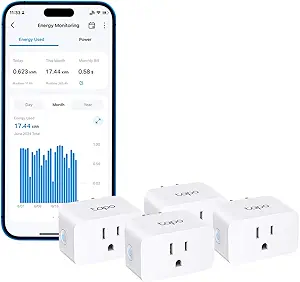
The TP-Link Tapo P115 provides detailed energy statistics and scheduling features, making it a solid choice for families interested in tracking and reducing power usage. Its auto-shutoff feature offers overload protection, which is a step above basic models like the Kasa Mini. Its design prioritizes safety and space efficiency, but it shares the common limitation of 2.4GHz Wi-Fi reliance and only supports up to 15A devices. The scheduling and energy cost estimation features make it especially appealing for households looking to actively manage their energy bills, but its app setup can be a bit cumbersome for some users. It’s a strong choice for families who value detailed energy insights and automation control.
Pros:- Detailed energy monitoring and charts
- Auto-shutoff for overload protection
- Supports scheduling and voice control
- ETL certified safety features
Cons:- Limited to 2.4GHz Wi-Fi
- Requires app setup for full functionality
Best for: Families focused on energy savings with keen interest in detailed consumption data
Not ideal for: Households needing support for high-power appliances or 5G Wi-Fi networks
- Max Power:15A/1800W
- Connectivity:2.4G Wi-Fi
- Certification:ETL
- Compatibility:Alexa, Google Assistant, Samsung SmartThings
- Package:2-Pack
Bottom line: This plug suits families eager to monitor and control energy use through detailed data and automation features.
TP-Link Tapo Smart Plug Wi-Fi Mini, Energy Monitoring, Compatible with Alexa & Google Home & Samsung SmartThings, Timer, 15A/1800W Max, ETL Certified, 2.4G Wi-Fi Only, Tapo P115 (4-Pack)
The TP-Link Tapo P115 4-Pack extends the features of its smaller sibling, offering energy monitoring, detailed cost estimation, and reliable scheduling for multiple devices. Its ability to track estimated energy costs helps families manage their electricity bills more effectively. The auto-shutoff feature enhances safety, and the 4-pack provides affordability for whole-house automation. However, its reliance on 2.4GHz Wi-Fi and the 15A/1800W limit make it less suitable for high-wattage appliances. Compared to the Tuya Smart Plug, it offers more detailed energy insights but with the same network constraints. It’s well-suited for families looking to monitor multiple devices and get a clear picture of their energy expenses.
Pros:- Provides energy cost estimation
- Supports scheduling and auto-shutoff
- Compatible with major voice assistants
- Affordable multi-pack for whole-home control
Cons:- Limited to 2.4GHz Wi-Fi
- Requires initial app setup
Best for: Cost-conscious families wanting to control multiple devices and see energy cost estimates
Not ideal for: Those with high-powered appliances or limited Wi-Fi networks without 2.4GHz support
- Power Rating:15A/1800W
- Connectivity:2.4G Wi-Fi
- Certification:ETL
- Compatibility:Alexa, Google, Samsung SmartThings
- Number of Units:4
Bottom line: This plug is a great choice for families aiming to budget and automate multiple household devices efficiently.
Tuya Smart Plug, Mini with Energy Monitoring, Pro Series 15A, 4 Pack
The Tuya Pro Series Smart Plug emphasizes automation flexibility, supporting scheduling, overload protection, and energy monitoring through the SmartLife app. It’s ideal for families that want to integrate smart plugs into broader custom routines, especially if they’re already using Tuya-compatible devices. Its safety features are comprehensive, and group control adds convenience. However, it shares the common limitation of 2.4GHz Wi-Fi and may involve a more complex app setup, which could be a barrier for less tech-inclined users. Compared to the Kasa Mini, it offers more customization options but requires more configuration effort. This product makes the most sense for families who want tailored automation and detailed energy insights, but are comfortable with a slightly steeper learning curve.
Pros:- Supports scheduling and group control
- Energy monitoring with detailed data
- Overload and safety protections
- Affordable 4-pack for extensive control
Cons:- Requires app setup and configuration
- Limited to 2.4GHz Wi-Fi
Best for: Families interested in deep customization and integration within the Tuya ecosystem
Not ideal for: Users seeking plug-and-play simplicity or with limited Wi-Fi infrastructure
- Power Capacity:15A/1800W
- Connectivity:2.4G Wi-Fi
- Certification:ETL & FCC
- Number of Packs:4
Bottom line: Best suited for tech-savvy households wanting detailed automation and energy tracking within the Tuya platform.
Emporia Energy Monitoring Smart Plug, WiFi Smart Outlet with Timer, App Control, and Home Energy Monitoring – 4 Pack
The Emporia Energy Monitoring Smart Plug excels at providing detailed energy insights, remote control, and scheduling, making it ideal for families who want to actively track and reduce household energy use. Compared to the Govee Smart Plug, it offers comprehensive monitoring with data analytics, helping families identify power hogs and optimize appliance use. Its compatibility with Alexa and Google Home enhances convenience, while its 10A load capacity covers most household electronics. The main tradeoff is its restriction to 2.4GHz WiFi, which could limit connectivity in some environments. Overall, this pick is perfect for families committed to energy awareness and smart automation.
Pros:- Provides real-time energy monitoring and detailed usage data
- Supports scheduling and timers for automation
- Works seamlessly with Alexa and Google Home
Cons:- Limited to 10A continuous load, unsuitable for high-power appliances
- Requires 2.4GHz WiFi network, may face connectivity issues
- No support for 5GHz WiFi networks
Best for: Families seeking detailed energy monitoring and smart control for multiple devices, with an emphasis on home efficiency.
Not ideal for: Households with high-power appliances exceeding 10A or with unstable 2.4GHz WiFi environments.
- Maximum Continuous Load:10A
- Peak Load:15A for up to 1 hour/day
- WiFi Frequency:2.4GHz only
- Power Supply:120V
Bottom line: An excellent choice for families wanting detailed energy insights combined with remote control and smart home integration.
Govee Smart Plug with Energy Monitoring, WiFi & Bluetooth, 15A, 4-Pack
The Govee Smart Plug stands out for its support of high-current appliances, with a 15A limit, making it suitable for larger devices like space heaters or kitchen appliances. It offers both WiFi and Bluetooth connectivity, providing flexibility in setup, unlike the Emporia plug which relies solely on WiFi. Its energy monitoring features deliver detailed usage data, helping families identify savings opportunities. The support for voice commands with Alexa and Google Assistant adds convenience, while its safety certifications (ETL & FCC) assure reliable operation. The main tradeoff is its reliance on a stable 2.4GHz WiFi connection, which could pose issues in some homes. This plug is best for families managing high-power devices who want energy data and voice control.
Pros:- Supports high-power devices up to 15A
- Provides real-time energy monitoring and detailed data
- Dual WiFi & Bluetooth connectivity for flexible setup
- Compatible with Alexa and Google Assistant
Cons:- Requires a stable 2.4GHz WiFi connection
- Limited to 15A and not suitable for very high-power equipment
- Bulkier design may take up more space
Best for: Families needing to control and monitor high-power appliances with voice commands and detailed energy data.
Not ideal for: Families with limited WiFi stability or who only need to control low-power devices.
- Max Current:15A
- Voltage:120V
- Connectivity:WiFi & Bluetooth
- Certification:ETL & FCC
Bottom line: A robust option for families with high-power appliances who want detailed energy management combined with voice control and flexible connectivity.
How We Picked
I evaluated these smart plugs based on their performance, ease of setup, app reliability, and compatibility with smart home ecosystems. Value for money and the ability to monitor energy use accurately were also key factors. I prioritized products that demonstrated durability and user-friendly interfaces, ensuring they are practical choices for families managing multiple devices. Rankings reflect a combination of these criteria, with a focus on usability for everyday family life and smart home integration.Factors to Consider When Choosing Best For Families Smart Plug Energy Monitor
Choosing the right smart plug with energy monitoring for a family involves balancing ease of use, integration capabilities, and data accuracy. Families often want a device that is simple to set up and manage, yet provides detailed insights into energy consumption to help reduce costs. Compatibility with existing smart home systems can simplify automation and control, making daily routines smoother. Additionally, considering the number of outlets needed and overall value helps ensure the investment serves your household well over time.Ease of Use and Setup
For busy families, a plug that is quick to install and straightforward to operate makes a real difference. Look for models with intuitive apps and clear instructions, as complicated setups can discourage regular use. Voice assistant compatibility is a bonus, enabling hands-free control, but ensure that the setup process is smooth and reliable to avoid frustration. Devices with physical buttons or simple app interfaces tend to be more accessible for all family members.
Compatibility and Smart Home Integration
Check whether the smart plug works with your existing smart home ecosystem—be it Alexa, Google Assistant, or Matter. Compatibility simplifies automation, such as scheduling or voice commands, which can be particularly beneficial for managing multiple household devices. Some models offer broader ecosystem support, which is advantageous if your smart home setup is expanding or already established. Be cautious of models that only support Wi-Fi or Bluetooth, as these might have limited integration options.
Energy Monitoring Features
Not all energy monitoring is created equal. Look for devices that provide detailed insights, such as real-time consumption, historical data, and cost estimates. Accurate energy data helps families identify high-usage appliances and optimize energy savings. Keep in mind that some models may offer basic tracking, which might suffice for casual monitoring, while others provide in-depth reports suitable for more proactive energy management.
Value and Multi-Pack Options
Families often need multiple smart outlets, so consider packs that offer good value per device. Multi-packs can reduce overall costs and streamline setup. However, verify whether the additional units include the same features and app support to ensure consistency across your household. When selecting, weigh the upfront cost against the long-term benefits of energy savings and convenience.
Build Quality and Reliability
Durability and consistent operation are vital, especially when devices are used daily. Poor build quality can lead to connection issues or safety concerns over time. Reading user reviews can reveal common reliability issues, which are often linked to cheaper components or subpar manufacturing. Investing in reputable brands with strong support can save frustration and replacement costs later.
Price and Long-Term Value
While budget models might be tempting, they often lack detailed energy data or seamless integration. Consider whether paying more upfront translates into better features, durability, and energy savings over time. A slightly higher cost for a reliable, feature-rich smart plug can be worthwhile for families aiming to reduce energy bills and simplify device control long-term.
Frequently Asked Questions
Can I use a smart plug with energy monitoring for all household appliances?
Most smart plugs with energy monitoring are suitable for small to medium appliances like lamps, chargers, or small kitchen gadgets. However, high-wattage appliances such as space heaters or air conditioners may exceed the plug’s rated capacity, which can pose safety risks. Always check the maximum load specifications before connecting larger devices and consider dedicated solutions for heavy-duty appliances. Properly selecting compatible outlets ensures safe, effective energy monitoring for your household.
Will these smart plugs work if I have a large smart home system?
Many of these models are designed to integrate seamlessly with popular platforms like Alexa, Google, and Matter, making them suitable for larger smart home setups. Compatibility depends on your existing system, so verify that the specific plug supports your preferred ecosystem. Devices with broad ecosystem support generally offer better automation options and fewer connectivity issues, which is essential for maintaining a cohesive smart home environment. Always check for firmware updates and app support to ensure ongoing compatibility.
How accurate is the energy monitoring on these smart plugs?
Energy monitoring accuracy varies among models, with some providing real-time data within a few percentage points of actual consumption. More advanced units often include features like historical tracking and cost estimates, which can help households identify high-energy devices. Keep in mind that external factors like Wi-Fi stability or firmware issues can affect data accuracy. Reading reviews and technical specifications can help you select a model with reliable energy insights for your needs.
Are multi-packs more cost-effective for families?
Yes, purchasing multi-packs generally offers better value per unit, making them a smart choice for families needing several outlets. They simplify setup and management, especially when automating multiple devices or rooms. However, ensure that all units support the same features and are compatible with your smart home system to maintain a consistent experience. Be cautious of packs that cut corners on build quality or energy features just to offer a lower price per unit.
What safety considerations should I keep in mind when choosing a smart plug?
Safety should be a top priority, especially when devices will be used around children or in high-traffic areas. Look for models with UL or ETL certification, indicating compliance with safety standards. Avoid cheap, unbranded options that may lack proper insulation or overload protection. Proper installation, adherence to load ratings, and regular firmware updates help ensure safe operation over time, reducing risks of electrical faults or fire hazards.
Conclusion
For families seeking the best overall balance of ease of use, smart home compatibility, and detailed energy data, the Kasa Smart Plug Mini makes an excellent choice. Those who want better integration and future-proofing might prefer the Kasa Matter Smart Plug. Budget-conscious households or those needing multiple outlets should consider multi-pack options like the TP-Link Tapo or Govee. For families prioritizing durability and safety, investing in reputable brands with strong certifications is advisable. Overall, your choice should align with your household’s size, automation needs, and energy monitoring goals.
Halloween Picks
halloween
As an affiliate, we earn on qualifying purchases.