

Spirituality and meditation journals fall into two camps: highly guided journals that walk you through prompts and reflections, and open-format notebooks that leave the structure entirely up to you. The right choice depends on whether you want a teacher on the page or a blank canvas for your own practice. My top overall pick is The 365 Spiritual Journal, because its full year of daily guided questions offers the deepest long-term value for building a consistent practice. For a more contemplative, philosophical angle, The Untethered Soul Guided Journal pairs beautifully with the book that inspired it, and The OM Within stands out among open-format options if you prefer freeform writing. Below, I break down all 14 journals by structure, guidance level, durability, and price so you can find the one that matches how you actually like to reflect. Keep reading for the full comparison.

Turn your quiet moments into listening time
- Thousands of audiobooks, podcasts and originals
- Listen on your phone, tablet or Echo — also offline
- Cancel anytime
Key Takeaways
- The 365 Spiritual Journal earned the top spot because it is the only option in this lineup offering 365 unique daily prompts, making it the strongest pick for sustaining a year-long practice without repetition fatigue.
- The Inner World series (Meditation, Gratitude, and Calm) dominates the entry-level price tier, but the three journals overlap heavily — buyers only need one, and the Meditation edition is the most versatile of the three.
- Open-format notebooks like The OM Within, the MVLJG Lotus, and the A5 Spiral Lotus cost less but require self-discipline; guided journals cost more per page yet dramatically reduce the odds of abandoning the habit.
- A Year of Zen and A Buddhist Journal are the only picks with a distinct tradition-specific framework (Zen and Buddhist respectively), which makes them excellent for practitioners of those paths but a weaker fit for general spiritual seekers.
- The A5 Meditation Journal and the Morning Meditations journal skew heavily toward short, time-boxed entries, which suits busy beginners far better than the deep-dive prompts in The Untethered Soul Guided Journal.
| Meditation: A Day and Night Reflection Journal (Inner World) |  | Best Overall | Format: Guided reflection journal | Structure: Day and night prompts | Focus: Mindfulness, self-awareness, meditation practice | VIEW LATEST PRICE | See Our Full Breakdown |
| MVLJG Spiritual Lotus Meditation Notebook for Women and Men 5.5×8.3 inches |  | Best Blank-Page Canvas | Size: 5.5 x 8.3 inches | Binding: Spiral | Cover: Hardcover with decorative artwork | VIEW LATEST PRICE | See Our Full Breakdown |
| The 365 Spiritual Journal: Daily Guided Questions to Expand Consciousness & Deepen Self-Trust |  | Best Long-Haul Commitment | Format: Guided journal with daily questions | Duration: 365 days | Focus: Consciousness expansion, self-trust | VIEW LATEST PRICE | See Our Full Breakdown |
| The Untethered Soul Guided Journal: Practices to Journey Beyond Yourself |  | Best Companion to a Book Practice | Format: Guided practice journal | Companion Work: The Untethered Soul by Michael Singer | Focus: Inner peace, personal growth, self-inquiry | VIEW LATEST PRICE | See Our Full Breakdown |
| The OM Within: A Spiritual Notebook for Mindfulness, Inner Peace & Meditation Practice |  | Best Gift Pick | Format: Blank spiritual notebook | Cover Design: Sacred Om symbol | Focus: Mindfulness, inner peace, meditation, gratitude, affirmations | VIEW LATEST PRICE | See Our Full Breakdown |
| Gratitude: A Day and Night Reflection Journal (Inner World) |  | Best for Gratitude Practice | Format: Day and night reflection | Structure: Guided morning and evening prompts | Theme: Gratitude and positive thinking | VIEW LATEST PRICE | See Our Full Breakdown |
| A5 Meditation Journal: Daily Reflection Notebook for Spiritual Serenity & Self-Discovery |  | Best for Beginners | Size: A5 (5.9 x 8.46 inches) | Paper Thickness: 100gsm | Binding: Twin-wire | VIEW LATEST PRICE | See Our Full Breakdown |
| Meditation Journal: Daily Meditation Tracking, Quotes on Mindfulness, Consciousness, and Oneness, Black and Gold Design, 6″x9″ | 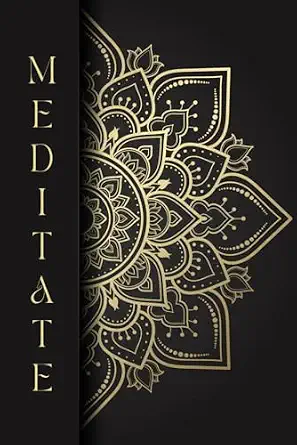 | Best Design Pick | Size: 6″ x 9″ | Design: Black and gold | Tracking: Daily meditation log pages | VIEW LATEST PRICE | See Our Full Breakdown |
| Calm: A Day and Night Reflection Journal |  | Best for Stress and Anxiety Relief | Format: Day and night reflection | Structure: Guided morning and evening prompts and exercises | Theme: Calm, relaxation, and self-awareness | VIEW LATEST PRICE | See Our Full Breakdown |
| A Year of Zen: A 52-Week Guided Journal |  | Best Long-Term Guided Journey | Format: 52-week guided journal | Structure: Weekly prompts and reflections | Duration: One year | VIEW LATEST PRICE | See Our Full Breakdown |
| A Journal for Morning Meditation: Finding Your Purpose Through Prayer |  | Best for Faith-Based Practice | Type: Guided prayer and meditation journal | Focus: Morning practice, purpose discovery, spiritual growth | Format: Prompted journal with reflection space | VIEW LATEST PRICE | See Our Full Breakdown |
| Journaling Notebooks for Women, Lotus Notebook – Meditation Yoga Spiritual Inspirational Planner Notebook Journal Gifts, A5 Spiral |  | Best Blank-Canvas Pick | Size: 8.3 x 5.8 inches (A5) | Pages: 80 sheets | Paper: Bleed-resistant, fountain pen and marker friendly | VIEW LATEST PRICE | See Our Full Breakdown |
| Morning Meditations: A Guided Journal to Start Each Day Feeling Calm and Energized (Volume 10) |  | Best for Beginners | Type: Guided morning meditation journal | Series: Everyday Inspiration Journals, Volume 10 | Focus: Calm, energy, morning mindfulness | VIEW LATEST PRICE | See Our Full Breakdown |
| A Buddhist Journal: Guided Practices for Writers and Meditators |  | Best for Deepening an Established Practice | Type: Guided practice journal | Tradition: Buddhist teachings | Audience: Writers and meditators | VIEW LATEST PRICE | See Our Full Breakdown |
| spirituality and meditation journal | Format | Structure | Focus |
|---|---|---|---|
| Meditation: A Day and Night Re | Guided reflection journal | Day and night prompts | Mindfulness, self-awareness, meditation practice |
| MVLJG Spiritual Lotus Meditati | Blank/unlined notebook | — | — |
| The 365 Spiritual Journal: Dai | Guided journal with daily questions | One guided question per day | Consciousness expansion, self-trust |
| The Untethered Soul Guided Jou | Guided practice journal | Practices and reflective prompts | Inner peace, personal growth, self-inquiry |
| The OM Within: A Spiritual Not | Blank spiritual notebook | — | Mindfulness, inner peace, meditation, gratitude, affirmations |
| Gratitude: A Day and Night Ref | Day and night reflection | Guided morning and evening prompts | — |
| A5 Meditation Journal: Daily R | — | Guided modules with progress tracking | — |
| Meditation Journal: Daily Medi | — | — | — |
| Calm: A Day and Night Reflecti | Day and night reflection | Guided morning and evening prompts and exercises | — |
| A Year of Zen: A 52-Week Guide | 52-week guided journal | Weekly prompts and reflections | — |
| A Journal for Morning Meditati | Prompted journal with reflection space | Guided prompts with open reflection areas | Morning practice, purpose discovery, spiritual growth |
| Journaling Notebooks for Women | Blank / unguided | — | — |
| Morning Meditations: A Guided | Daily guided prompts | One entry per morning | Calm, energy, morning mindfulness |
| A Buddhist Journal: Guided Pra | Guided prompts and exercises | Practice-based rather than date-based | Mindfulness, reflection, writing practice |
More Details on Our Top Picks
Meditation: A Day and Night Reflection Journal (Inner World)
This option earns the top spot because it solves the biggest problem in meditation journaling: structuring a habit twice a day without demanding you invent your own prompts. The morning and evening reflection format gives the day a clear arc, which is something single-session journals like The 365 Spiritual Journal don’t attempt. Compared with open-format notebooks such as The OM Within, the tradeoff is flexibility — you’re following someone else’s structure rather than free-writing. That structure is precisely what makes a practice stick, though. Where it falls short is transparency: no page count, paper quality, or dimensions are listed, so buyers relying on specs alone are taking a small leap of faith.
Pros:- Twice-daily structure builds a sustainable morning and evening ritual
- Guided prompts remove the intimidation of a blank page
- Works for all experience levels, from first-timers to longtime meditators
- Compact enough to keep on a nightstand or meditation cushion
Cons:- Minimal published specs — paper quality and page count are unspecified
- Fixed prompt structure limits creative or unstructured journaling
Best for: Beginners and intermediate practitioners who want a twice-daily guided habit without having to design their own prompts
Not ideal for: Free-form journalers who resist structure and want blank space for stream-of-consciousness writing
- Format:Guided reflection journal
- Structure:Day and night prompts
- Focus:Mindfulness, self-awareness, meditation practice
- Experience Level:All levels
- Publisher Series:Inner World
- Use Case:Daily meditation routine building
Our verdict“Buy this if you want a proven morning-and-evening format that turns meditation journaling into a habit you can actually keep.”
MVLJG Spiritual Lotus Meditation Notebook for Women and Men 5.5×8.3 inches
Unlike the prompt-driven entries in this roundup, this spiral-bound notebook is for people who already know what they want to write. Its real advantages are physical: a 5.5 x 8.3 inch travel-friendly footprint, a hardcover that protects pages in a bag, and a spiral binding that lays completely flat — a genuine quality-of-life feature the Meditation: A Day and Night Reflection Journal can’t match while you’re mid-practice. Compared with the Lotus Notebook A5 Spiral elsewhere in this guide, it plays a similar role, so the choice comes down to artwork preference and price. The honest weakness: paper quality and page count are unlisted, and fountain pen users should be cautious about bleed-through sight unseen.
Pros:- Spiral binding lays flat for comfortable writing during or after meditation
- Hardcover protects pages and makes it gift-worthy
- Portable size fits bags, backpacks, and nightstands
- Open format suits meditation notes, planning, and mixed journaling
Cons:- No listed paper weight or page count — quality is a gamble
- Decorative lotus artwork won’t suit minimalist or masculine-leaning tastes
Best for: Experienced journalers, meditation note-takers, and travelers who want a durable blank notebook rather than guided prompts
Not ideal for: Anyone seeking spiritual direction or structure — there are no prompts, exercises, or teachings inside
- Size:5.5 x 8.3 inches
- Binding:Spiral
- Cover:Hardcover with decorative artwork
- Format:Blank/unlined notebook
- Intended Use:Journaling, note-taking, planning, organizing
- Audience:Women and men
- Portability:Travel-friendly
Our verdict“This makes sense for self-directed practitioners who value a flat-laying, portable blank canvas over guided structure.”
The 365 Spiritual Journal: Daily Guided Questions to Expand Consciousness & Deepen Self-Trust
This is the marathon pick of the guided category. Where Meditation: A Day and Night Reflection Journal works well in shorter cycles, this journal commits you to a full year of daily questions aimed squarely at self-trust and consciousness expansion — a deeper, more introspective angle than gratitude-focused alternatives like the Gratitude: A Day and Night Reflection Journal. That depth is the draw and the risk: the questions push beyond comfort-zone reflection, which some will find transformative and others will find exhausting by week eight. There’s also a commitment-sustainability problem — miss a few days and the dated structure can create guilt rather than momentum. No binding or paper details are published, which matters more here than anywhere given the year-long use it must survive.
Pros:- Full year of daily prompts sustains long-term growth work
- Questions target deeper territory than typical gratitude journals
- Builds measurable self-trust through consistent reflection
- Strong companion for ongoing therapy or coaching work
Cons:- 365-day commitment is demanding and unforgiving of skipped days
- No published binding, size, or paper quality details
Best for: Dedicated self-development practitioners ready for a full year of challenging daily introspection
Not ideal for: Casual or inconsistent journalers — the year-long daily format punishes missed days and can breed guilt
- Format:Guided journal with daily questions
- Duration:365 days
- Focus:Consciousness expansion, self-trust
- Structure:One guided question per day
- Experience Level:Intermediate to advanced journalers
- Use Case:Year-long personal growth practice
Our verdict“Choose this only if you genuinely want a year-long daily interrogation of your inner life — half-commitment will defeat it.”
The Untethered Soul Guided Journal: Practices to Journey Beyond Yourself
This one occupies a distinct niche: it’s a practice extension of Michael Singer’s teachings, not a standalone journal. Readers of The Untethered Soul get structured exercises that translate the book’s ideas about inner peace and ego-watching into written practice — something the Meditation: A Day and Night Reflection Journal doesn’t attempt, since it’s philosophy-neutral. The tradeoff is obvious: without familiarity with the source book, the prompts lose much of their context and power. Compared with A Year of Zen, which teaches its own framework from scratch, this journal assumes you’ve already bought into one. It’s also lighter on day-by-day habit scaffolding, functioning more as a workbook of exercises than a daily ritual.
Pros:- Directly deepens engagement with a beloved spiritual text
- Practical exercises turn abstract concepts into written practice
- Flexible pacing suits both intensive and casual use
- High production quality typical of the publisher’s guided journals
Cons:- Dependent on familiarity with the companion book
- Less day-to-day structure than dated or daily-prompt journals
Best for: Fans of The Untethered Soul who want to convert the book’s concepts into an active written practice
Not ideal for: Readers who haven’t read the source book — the prompts will feel abstract and disconnected without that foundation
- Format:Guided practice journal
- Companion Work:The Untethered Soul by Michael Singer
- Focus:Inner peace, personal growth, self-inquiry
- Structure:Practices and reflective prompts
- Experience Level:Readers of the source book
- Use Case:Book-companion spiritual practice
Our verdict“If the book moved you, this journal is the natural next step; skip it if you haven’t read it.”
The OM Within: A Spiritual Notebook for Mindfulness, Inner Peace & Meditation Practice
Of everything in this lineup, this is the one I’d hand to someone as a present. The sacred Om cover design signals intention the moment it’s unwrapped, and its versatility across gratitude, affirmation, yoga, and meditation writing gives it the broadest appeal of the blank-format options. Compared with the MVLJG Lotus Notebook, which is similarly unguided, this leans more explicitly spiritual in its framing and covers more practice types — though like that notebook, it publishes no size, page count, or paper details, which is a real limitation for serious buyers. It also sits in an awkward middle ground: more intentional than a plain notebook, less structured than Meditation: A Day and Night Reflection Journal. Buyers wanting guidance should look elsewhere; buyers wanting a beautiful vessel will like it.
Pros:- Striking Om-symbol design makes it an impressive gift
- Flexible format accommodates gratitude, affirmations, meditation notes, and yoga reflections
- Spiritual framing resonates with Hindu and yoga-influenced practices
- Open pages suit practitioners who already have a writing routine
Cons:- No published dimensions, page count, or paper quality
- No guidance or prompts for beginners building a habit
Best for: Gift-givers shopping for yoga practitioners or spiritually inclined friends who enjoy mixed free-form writing
Not ideal for: Structure-seekers — there are no prompts or guidance, and the sparse specs leave serious journalers guessing
- Format:Blank spiritual notebook
- Cover Design:Sacred Om symbol
- Focus:Mindfulness, inner peace, meditation, gratitude, affirmations
- Compatible Practices:Yoga, meditation, gratitude, daily reflection
- Guidance:None — open format
- Gift Suitability:High — decorative spiritual design
Our verdict“A strong gift choice for established practitioners who want a beautiful open notebook, not a teaching tool.”
Gratitude: A Day and Night Reflection Journal (Inner World)
While most options in this roundup track meditation sessions, this one narrows the focus to gratitude as a daily discipline, with paired morning and evening prompts that bookend the day. Compared with the Calm: A Day and Night Reflection Journal, which spreads its prompts across general mindfulness themes, this title keeps its questions tightly centered on thankfulness and positive framing — a narrower but deeper approach. The structured two-entry format makes it easy to build a habit, since each page tells you exactly what to do. The tradeoff is that its scope is deliberately limited: meditators who want to log session length, techniques, or insights will find nothing here for that purpose, and the publisher offers little detail on paper quality or size, which matters if you plan to write with fountain pens or carry it daily.
Pros:- Simple twice-daily format builds a consistent habit fast
- Focused prompts remove the blank-page problem entirely
- Strong emotional-wellness orientation beyond just sitting practice
- Affordable and widely available compared with specialty journals
Cons:- No meditation tracking of any kind — sessions, duration, or technique
- Publisher discloses almost nothing about paper stock, size, or binding
- Fixed prompts can feel repetitive over months of use
Best for: Beginners and busy people who want a low-effort, twice-daily gratitude habit rather than a formal meditation log
Not ideal for: Serious meditators tracking sessions, techniques, and progress — this has no meditation-specific structure
- Format:Day and night reflection
- Structure:Guided morning and evening prompts
- Theme:Gratitude and positive thinking
- Guidance Level:Fully guided, prompt-based
- Best Use Frequency:Twice daily
- Paper Quality:Not specified by publisher
Our verdict“This is the pick for readers whose spiritual practice centers on gratitude rather than formal meditation tracking.”
A5 Meditation Journal: Daily Reflection Notebook for Spiritual Serenity & Self-Discovery
Of all the options here, this is the one that actually teaches you how to journal about meditation rather than assuming you already know. Its step-by-step structure and progress-tracking modules give newcomers a scaffold, which the Meditation Journal: Daily Meditation Tracking — a more bare-bones log — deliberately skips. The 100gsm paper is the standout spec in this batch: it resists bleed-through, so ink-heavy writers won’t ghost onto the next entry. Add a waterproof cover and twin-wire binding that lies flat, and it’s the most physically durable pick compared with the glued-spine Inner World series. The tradeoff is that experienced practitioners may find the hand-holding repetitive, and the A5 footprint is compact enough to frustrate anyone who writes long entries or likes creative sprawl — though the included drawing pages partially offset that.
Pros:- Step-by-step guidance removes guesswork for new practitioners
- 100gsm paper prevents ink bleed-through and ghosting
- Waterproof cover and twin-wire binding built for daily carry
- Creative drawing pages add a freer mode of reflection
Cons:- Beginner-oriented content may be outgrown within a few months
- A5 size limits space for long-form entries
- No quotes or inspirational content for those who want reading alongside writing
Best for: Meditation newcomers who want guided structure, progress tracking, and a journal that survives being tossed in a bag
Not ideal for: Experienced meditators with an established logging style — the beginner modules will feel redundant
- Size:A5 (5.9 x 8.46 inches)
- Paper Thickness:100gsm
- Binding:Twin-wire
- Cover:Waterproof
- Structure:Guided modules with progress tracking
- Extras:Creative drawing and reflection pages
- Skill Level:Beginner-focused
Our verdict“The most complete starter package for someone building a meditation journaling habit from zero.”
Meditation Journal: Daily Meditation Tracking, Quotes on Mindfulness, Consciousness, and Oneness, Black and Gold Design, 6″x9″
This is the journal you’ll actually want to leave on the coffee table. The black and gold aesthetic sets it apart from the pastel Inner World titles like Gratitude and Calm, making it a natural gift choice for someone whose taste runs more elegant than cutesy. Functionally, it splits the difference between two camps in this roundup: unlike the guided A5 Meditation Journal, it’s a self-directed daily log with space for sensations and insights, plus mindfulness quotes woven in for a bit of daily reading. The 6″x9″ size is a comfortable middle ground — roomier than A5 but still portable. The honest drawback is transparency: the listing says little about page count or paper stock, so if you write daily with wet ink, you’re gambling a bit compared with the A5 pick’s documented 100gsm pages.
Pros:- Striking black and gold design suited for display or gifting
- Combines daily tracking with inspirational quotes
- Dedicated space for recording sensations and insights
- Versatile 6″x9″ size balances portability and writing room
Cons:- No published details on paper quality or page count
- Self-directed format offers no guidance for beginners
- Quote-heavy pages reduce usable writing space compared with pure logs
Best for: Style-conscious meditators and gift-givers who want an elegant, self-directed log rather than guided prompts
Not ideal for: Anyone who values detailed specs — undisclosed paper quality and page count make it a bit of a gamble
- Size:6″ x 9″
- Design:Black and gold
- Tracking:Daily meditation log pages
- Extras:Quotes on mindfulness, consciousness, and oneness
- Recording Space:Sensations and insights sections
- Guidance Level:Self-directed
- Page Count:Not specified by manufacturer
Our verdict“The best-looking meditation log in the lineup, best suited to practiced journalers who don’t need hand-holding.”
Calm: A Day and Night Reflection Journal
Where Gratitude (its sibling in the day-and-night format) hones in on thankfulness, Calm aims squarely at relaxation and emotional regulation, using morning and evening prompts built around introspection and stress release. For buyers whose meditation practice is really about managing anxiety rather than logging sits, this framing matters — the prompts nudge you toward noticing tension and letting it go, something the tracking-focused Meditation Journal in black and gold doesn’t attempt. The structured two-session-a-day rhythm is its greatest strength and its ceiling: like the other Inner World titles, it discloses almost nothing about materials, and long-time journalers have noted the content can run shallow once the prompt patterns become familiar. Compared with A Year of Zen, it demands more frequent engagement but offers less depth per entry.
Pros:- Prompts specifically oriented toward relaxation and stress relief
- Morning and evening structure supports consistent habit formation
- Fully guided format requires zero journaling experience
- Gentle, accessible tone suited to emotionally taxing periods
Cons:- Content depth runs thin for experienced journal users
- No disclosed specs on paper, size, or binding
- Less meditation-specific than tracking journals in this roundup
Best for: Readers using journaling primarily to manage stress and anxiety, who want short twice-daily check-ins
Not ideal for: Advanced journalers or serious meditators — the prompts are gentle and can feel repetitive or shallow
- Format:Day and night reflection
- Structure:Guided morning and evening prompts and exercises
- Theme:Calm, relaxation, and self-awareness
- Guidance Level:Fully guided
- Best Use Frequency:Twice daily
- Paper Quality:Not specified by publisher
Our verdict“The right choice when the goal is winding down and managing anxiety, not building a formal practice record.”
A Year of Zen: A 52-Week Guided Journal
This is the only journal in this batch structured around weekly reflection rather than daily entries, and that single difference changes who it’s for. Instead of the rapid twice-daily check-ins of Calm or Gratitude, A Year of Zen asks for a slower, more deliberate weekly rhythm — which makes it a better fit for people who find daily journaling exhausting and abandon it by February. The prompts build progressively across the year, giving a sense of journey and accumulation that standalone prompt journals can’t match. The tradeoff is flexibility: the 52-week structure is fixed, so finishing late means either cramming or abandoning the arc, and it expires — there’s no continuing beyond a year the way an open-ended log like the A5 Meditation Journal allows. Like the other published titles here, material specs are thin.
Pros:- Weekly format suits people who burn out on daily prompts
- Progressive prompts create a sense of a year-long journey
- Approachable entry point into Zen and mindfulness concepts
- Lower time commitment than day-and-night formats
Cons:- Hard 52-week limit with no way to extend the program
- Weekly cadence may feel too infrequent for daily practitioners
- Sparse published details on features and materials
Best for: People who want a structured year-long mindfulness program but can’t sustain daily journaling
Not ideal for: Daily-habit builders or open-ended journalers — the fixed 52-week arc ends whether you’re finished or not
- Format:52-week guided journal
- Structure:Weekly prompts and reflections
- Duration:One year
- Theme:Zen, mindfulness, and inner peace
- Guidance Level:Fully guided
- Best Use Frequency:Weekly
- Paper Quality:Not specified by publisher
Our verdict“Ideal for the self-improver who wants a defined, year-long mindfulness project with a clear beginning and end.”
A Journal for Morning Meditation: Finding Your Purpose Through Prayer
Most journals in this roundup keep spirituality vague; this one does the opposite by centering prayer and purpose discovery as the backbone of the morning routine. Compared with Morning Meditations: A Guided Journal, which leans secular and calm-focused, this option suits readers whose meditation is inseparable from their faith life, and it works across denominations rather than locking you into one tradition. The reflection prompts are structured enough to build a habit without feeling like homework. The tradeoff is transparency: there are no detailed specifications about page count or layout, so you’re buying the concept more than a known format. Unlike the Lotus Notebook, it isn’t a blank-canvas journal — the guidance is the point — which is either its strength or its limitation depending on how much structure you want.
Pros:- Bridges prayer and meditation in one morning routine
- Purpose-discovery prompts give direction beyond generic mindfulness
- Suitable for all faiths, not tied to a single tradition
- Encourages consistent daily reflection
Cons:- No published page count, size, or layout details
- No customer ratings to verify quality or content depth
- Too religious in framing for secular users
Best for: Practitioners of any faith who want a purpose-driven morning ritual blending prayer with reflection prompts
Not ideal for: Secular meditators or buyers who want a blank notebook for freeform writing — the faith framing shapes every page
- Type:Guided prayer and meditation journal
- Focus:Morning practice, purpose discovery, spiritual growth
- Format:Prompted journal with reflection space
- Faith orientation:All faiths
- Best use time:Morning routine
- Structure:Guided prompts with open reflection areas
- Level:All levels
Our verdict“Buy this if your meditation practice lives inside a prayer life and you want prompts that point toward purpose rather than just calm.”
Journaling Notebooks for Women, Lotus Notebook – Meditation Yoga Spiritual Inspirational Planner Notebook Journal Gifts, A5 Spiral
This is the only option in this batch built for people who already know what they want to write. While A Buddhist Journal and Morning Meditations hand you prompts, the Lotus Notebook gives you 80 sheets of bleed-resistant paper that handle fountain pens, markers, and even watercolor — something no guided journal here can claim. The lay-flat twin-wire spiral is a genuine quality-of-life upgrade over glued bindings when you’re writing at a desk or on a cushion. It sits closest to the MVLJG Spiritual Lotus Meditation Notebook in the roundup, but its hardcover and media-friendly pages push it ahead for serious journalers. The real drawback: no guidance at all. If you’re new to meditation journaling, blank pages become blank stares, and 80 sheets fills faster than a year-long practice demands.
Pros:- Thick, bleed-resistant pages work with fountain pens, markers, and watercolors
- Lay-flat spiral binding makes writing comfortable anywhere
- Attractive vintage botanical and animal cover art
- Compact A5 size travels well and makes a good gift
Cons:- Only 80 sheets — too small for a sustained daily practice
- No prompts, pockets, elastic closure, or organizational features
- Bold design aesthetic won’t suit minimalist tastes
Best for: Experienced journalers and artists who want a durable, pretty blank notebook for freeform meditation and yoga notes
Not ideal for: Beginners who need daily prompts — there’s zero structure to help build a habit
- Size:8.3 x 5.8 inches (A5)
- Pages:80 sheets
- Paper:Bleed-resistant, fountain pen and marker friendly
- Binding:Twin-wire spiral, lay-flat
- Cover:Hardcover
- Design:Vintage botanical and animal motifs
- Format:Blank / unguided
- Audience:Women; gift-friendly
Our verdict“The right pick if you don’t need hand-holding and want a blank, media-friendly book you’ll enjoy filling on your own terms.”
Morning Meditations: A Guided Journal to Start Each Day Feeling Calm and Energized (Volume 10)
Of the guided options in this batch, this is the gentlest on-ramp. The simple daily prompts ask for small commitments, which matters if you’ve abandoned journals before — unlike A Journal for Morning Meditation, which pushes toward big questions of purpose, or A Buddhist Journal, which assumes familiarity with contemplative practice. Coming from the well-established Everyday Inspiration Journals series (Volume 10), it benefits from a publisher track record the other three picks lack, sitting stylistically alongside Calm: A Day and Night Reflection Journal in the wider roundup. The tradeoff is depth: the content description is thin, there are no instructions or supplementary features, and experienced meditators will likely find the prompts too basic to sustain interest past a few weeks.
Pros:- Low-friction prompts that build a daily habit quickly
- Accessible to complete beginners with no meditation background
- Backed by an established journal series and publisher
- Focused morning format fits short routines
Cons:- Minimal content detail available before purchase
- No instructions, tracker, or extra features
- Too shallow for practitioners beyond beginner level
Best for: Meditation newcomers who want an easy, low-pressure daily prompt habit focused on calm and energy
Not ideal for: Experienced meditators or deep-practice seekers — the prompts are entry-level and won’t grow with you
- Type:Guided morning meditation journal
- Series:Everyday Inspiration Journals, Volume 10
- Focus:Calm, energy, morning mindfulness
- Format:Daily guided prompts
- Structure:One entry per morning
- Level:Beginner-friendly
- Approach:Secular mindfulness
Our verdict“Choose this as a first guided journal if your goal is a calm, energized start to the day with prompts that never feel intimidating.”
A Buddhist Journal: Guided Practices for Writers and Meditators
This is the most demanding — and potentially the most rewarding — option here. Unlike Morning Meditations, which optimizes for ease, this journal pairs guided practices rooted in Buddhist teachings with exercises that serve both sitting meditation and writing practice, making it the only pick in the batch aimed at people doing both. It shares contemplative depth with The Untethered Soul Guided Journal and A Year of Zen elsewhere in the roundup, but carves its own niche by treating writing itself as a meditation discipline. The tradeoff is a steeper entry: readers without prior exposure to Buddhist concepts may find the framing dense, and like several smaller-press titles here, it ships with no specifications and no customer ratings to set expectations. This is a commitment journal, not a casual one.
Pros:- Guided practices grounded in authentic Buddhist teachings
- Uniquely serves the writer-meditator combination
- Exercises deepen reflection rather than just log it
- Supports long-term personal development
Cons:- Steeper learning curve for readers new to Buddhist concepts
- No specifications or customer reviews available
- Too specialized for general-purpose journaling
Best for: Writers and seasoned meditators who want structured Buddhist-rooted exercises to deepen both practices
Not ideal for: Casual or faith-based journalers outside the Buddhist framework — the teachings assume interest and some background
- Type:Guided practice journal
- Tradition:Buddhist teachings
- Audience:Writers and meditators
- Focus:Mindfulness, reflection, writing practice
- Format:Guided prompts and exercises
- Level:Intermediate to experienced
- Structure:Practice-based rather than date-based
Our verdict“The clear choice if you already meditate and write and want a journal that treats both as one serious, evolving practice.”

How We Picked
I evaluated each journal across four criteria: guidance quality (how useful and varied the prompts are, and whether they deepen over time), structure and pacing (daily, weekly, morning/night, or fully open), build quality (paper weight, binding durability for daily handling, and lie-flat design), and value for money (cost per month of use, not just sticker price). Because a meditation journal only works if you keep using it, I weighted sustainability heavily — a journal with 90 days of evolving prompts ranked above a cheaper blank notebook that relies entirely on your own motivation.
The ranking also reflects audience fit. Guided journals for beginners and returning practitioners placed higher on versatility, while tradition-specific journals like A Buddhist Journal and A Journal for Morning Meditation were judged on how well they serve their narrower audiences. Where two journals were nearly identical — as with the three Inner World titles — I consolidated my recommendation around the single strongest edition rather than treating them as separate wins, which is why the rankings sometimes diverge from raw quality scores.
Factors to Consider When Choosing Spirituality And Meditation Journals
Before choosing a journal, it helps to understand the broader landscape of spirituality and meditation journaling — the common dead-ends, the tradeoffs between structure and freedom, and where spending more actually pays off.Guided Prompts vs. Blank Pages
The single biggest decision is whether you want structured prompts or open pages, and most buyers get this wrong by overestimating their discipline. A blank spiritual notebook feels freeing in week one, but without a question to answer, many people simply stop writing by week three. Guided journals solve the blank-page problem by giving you a starting point every day, at the cost of less room for your own tangents. My honest advice: if you have never journaled consistently before, choose a guided format first, and graduate to a blank notebook only after six months of habit. Practiced journalers who already have a rhythm usually find prompts constraining and should go open-format immediately. Neither approach is spiritually superior — the one you finish is.
Duration and Commitment Windows
Journals vary enormously in length: 90-day reflection journals, 52-week programs, and full 365-day volumes each imply a different commitment. The common mistake is buying a 365-day journal on day one of a practice, feeling behind by week two, and quitting out of guilt. Shorter formats like the 90-day Inner World journals let you prove the habit before you invest in a year-long volume. Weekly formats such as A Year of Zen work well for people whose reflection naturally happens on weekends or after longer sits. Match the journal’s duration to a commitment you have actually sustained before, not the one you aspire to. You can always buy the longer volume next.
Morning and Evening Structure
Many journals in this category split entries into morning and evening sections, and this design choice matters more than it looks. If your meditation happens at inconsistent times, a rigid AM/PM format can feel like a chore on days when you only sit once. Morning-focused journals suit people who front-load their practice, while day-and-night formats create a bookend ritual that many find stabilizing. Consider when you actually have five quiet minutes — commuters often prefer evening-only reflection, while parents of young children may only get the morning. The wrong timing structure is one of the most common reasons perfectly good journals go unused.
Tradition-Specific vs. Universal Spiritual Language
Some journals are written within a specific framework — Buddhist, Zen, Christian contemplative — while others use universal language about consciousness, presence, and inner peace. Neither is better, but mixing them creates friction: a Christian practitioner may find Buddhist terminology alienating, and a secular meditator may chafe at prayer-based prompts. Read the sample pages before buying and ask whether the vocabulary matches your inner life. Universal journals make safer gifts, which is why they dominate bestseller lists. Tradition-specific volumes reward the right reader with far more depth than generic alternatives can offer.
Physical Build and Daily Handling
A journal you write in every day takes real abuse — thrown in bags, opened flat, written in with fountain pens or cheap ballpoints. Binding and paper weight determine whether it survives the year. Lay-flat bindings and spiral formats are easier to write in at a desk or in bed, while tightly bound hardcovers look beautiful but fight you on every page. Thin paper bleeds through with gel pens, which ruins the reflective experience; look for 100 gsm or heavier if you prefer ink-heavy writing. Size matters too: 5×8 inch journals travel well, while larger A5 formats give room for longer entries but stay home. A gorgeous journal you are afraid to write in defeats its purpose.
When to Pay More (and When Not To)
Prices in this category range from under ten dollars for simple notebooks to twenty-five or more for year-long guided programs. The premium is almost always paying for content, not materials — a well-designed year of prompts by an experienced teacher is genuinely worth more than blank pages with a lotus on the cover. However, do not pay premium prices for decorative journals whose only differentiator is artwork; the inspiration fades in a week. Where spending more pays off: longer durations, prompts that evolve in difficulty, and authors with credible teaching backgrounds. Where it does not: gilded edges, embossed covers, and gift-box packaging. If you are buying for yourself, buy the content. If you are gifting, aesthetics legitimately matter more.
Frequently Asked Questions
Should a beginner start with a guided or blank meditation journal?
Beginners almost always do better with a guided journal, because the prompt removes the hardest part of the practice: deciding what to write. A blank notebook assumes you already know what you want to reflect on, which is a skill that develops over months of journaling. Structured options like the Inner World Meditation journal or Morning Meditations offer small, time-boxed entries that build confidence without overwhelming you. The exception is a beginner who has prior journaling experience in another area of life — that person often finds prompts redundant. A reasonable path is to start with a 90-day guided journal, and once you finish it, move to an open format like The OM Within if you feel ready.
Are the three Inner World journals (Meditation, Gratitude, Calm) different enough to buy more than one?
Mostly no — they share the same day-and-night format, layout, and overall design, differing mainly in the thematic focus of the prompts. Buying all three at once usually results in one being used and two sitting on a shelf, because writing in three journals daily is unsustainable for nearly everyone. If you journal once a day, pick the single theme that matches your intention: Gratitude for positivity building, Calm for anxiety and stress, Meditation for practice tracking. Where a second one makes sense is if you deliberately want to run a morning entry in one and an evening entry in another. Otherwise, treat them as alternatives, not companions.
Is a 365-day spiritual journal too long a commitment for a new practice?
For most new practitioners, yes — and the failure mode is predictable: missing a few days, feeling behind, and abandoning the journal entirely out of guilt. A 365-day format rewards an established habit, not a new one. The better sequence is to prove consistency on a 90-day journal first, then upgrade to a full-year volume like The 365 Spiritual Journal once you have demonstrated the habit survives busy weeks and travel. One workaround if you already own a year-long journal: give yourself explicit permission to skip days and date each entry yourself, rather than following the printed dates religiously. The journal exists to serve your practice, not the reverse.
Can I use a meditation journal alongside an app like Headspace or Calm?
Yes, and the combination works well because they serve different functions — the app guides the sitting, while the journal captures what happened during and after it. Many practitioners find that app-only meditation fades because insights evaporate without somewhere to record them. Journals with brief daily formats, like the Meditation Journal with tracking pages and quotes, pair especially cleanly with app sessions because they add only three to five minutes of writing. The one caution is redundancy: if your app already includes a mood tracker, avoid journals that devote most of their space to mood logging. Look for journals that ask different questions than your app asks.
What makes a tradition-specific journal (Buddhist, Zen, Christian) worth choosing over a general spiritual journal?
A tradition-specific journal is worth it when the vocabulary and practices already resonate with you, because it can go much deeper than universal language allows. A Buddhist Journal assumes familiarity with concepts like impermanence and loving-kindness, so its prompts probe rather than introduce — a general journal has to stay accessible to everyone and therefore stays shallow. The tradeoff is real, though: if the framework is new to you, the prompts can feel foreign or academic rather than nourishing. If you attend a sangha, church, or sit group, a journal aligned with that community will reinforce what you hear there. Solo seekers without a tradition usually get more from universal journals like The 365 Spiritual Journal.
Conclusion
For best overall, The 365 Spiritual Journal delivers the most complete year of guided spiritual reflection in this lineup and suits the widest range of seekers. The best value pick is the Inner World Meditation journal — its 90-day day-and-night format costs little and gives beginners a realistic first commitment. For a premium, depth-first experience, The Untethered Soul Guided Journal offers the most substantive prompts, especially paired with the book. Beginners should start with Morning Meditations, whose short, energizing entries fit into even the smallest morning window. For specific needs: choose A Year of Zen for a weekly Zen framework, A Buddhist Journal for Buddhist practitioners and writers, A Journal for Morning Meditation for Christian prayer-based reflection, and The OM Within or the MVLJG Lotus notebook if you want a beautiful blank canvas and already have the discipline to fill it. Whatever you choose, pick the journal you will actually finish — consistency, not the cover, is what deepens a practice.
Fall Picks
fall essentials
As an affiliate, we earn on qualifying purchases.