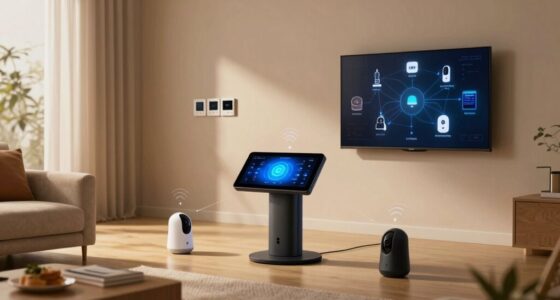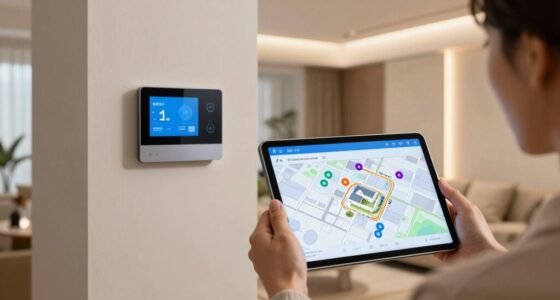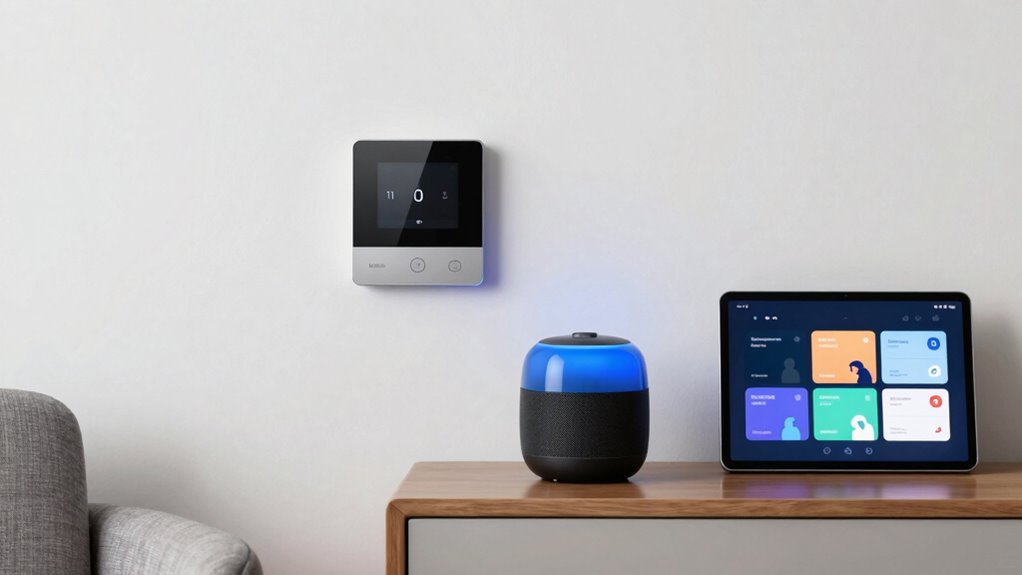

Interoperability in smart devices means different gadgets and systems can communicate and work together smoothly. It improves your experience by making daily tasks effortless and your smart home more efficient. However, challenges like incompatible protocols and security issues can get in the way. Standard protocols like MQTT, Zigbee, and industry alliances help address these problems. To learn how future trends will shape seamless smart environments, keep exploring what’s next.
Key Takeaways
- Interoperability allows smart devices from different manufacturers to communicate seamlessly, enhancing user experience and system integration.
- Standardized protocols like MQTT, Zigbee, and Z-Wave enable cross-platform device compatibility.
- Industry collaborations and adherence to standards reduce fragmentation and foster innovation in smart ecosystems.
- Security and privacy considerations are vital to protect data while ensuring effective device interoperability.
- Future developments aim for more integrated voice control, standardized communication, and secure, adaptable smart environments.
The Importance of Seamless Connectivity in Smart Ecosystems

Seamless connectivity is the backbone of effective smart ecosystems, enabling devices to communicate and work together effortlessly. When devices connect smoothly, your user experience improves, making daily tasks more efficient and enjoyable. However, security concerns often arise, as interconnected devices can become vulnerable to breaches if not properly protected. Ensuring robust security measures is essential to maintain trust and protect your personal data. A reliable connection also minimizes frustrations caused by dropped signals or incompatible devices, enhancing overall satisfaction. Without seamless connectivity, smart devices can feel disjointed, diminishing their benefits. Additionally, interoperability standards play a crucial role in ensuring that devices from different manufacturers can work together seamlessly. Implementing these standards promotes device compatibility and simplifies system integration. Prioritizing both security and user experience guarantees that your smart ecosystem functions harmoniously, giving you peace of mind and a truly integrated, efficient environment. Furthermore, embracing European cloud innovation can enhance the interoperability and security of your smart devices by leveraging cutting-edge, energy-efficient cloud solutions. Incorporating standardized communication protocols can further improve device interoperability and system robustness, leading to a more seamless user experience.
Common Challenges Hindering Device Compatibility
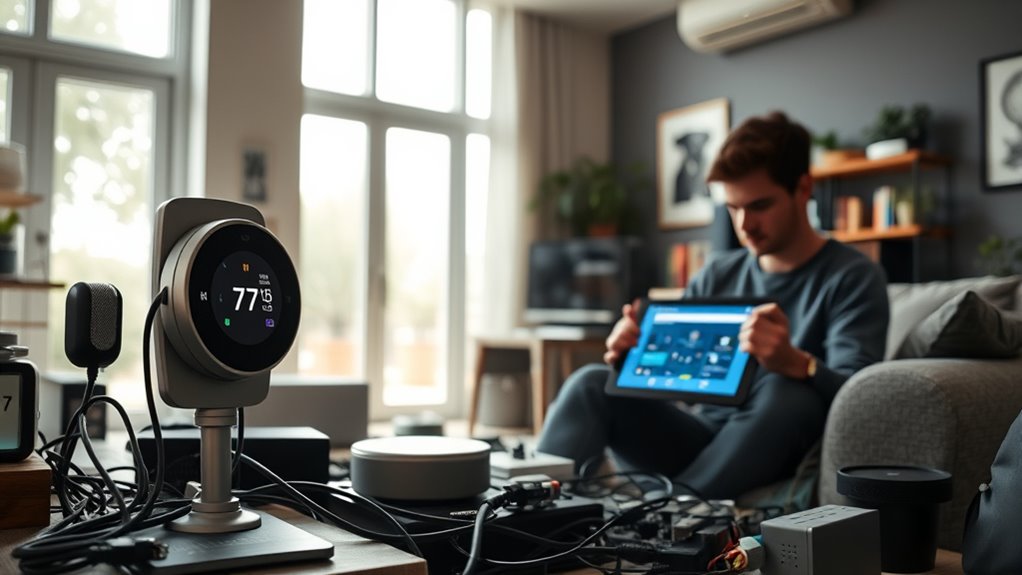
One of the main obstacles to achieving device compatibility in smart ecosystems is the lack of standardization across manufacturers. This inconsistency often leads to frustration, as devices may not communicate effectively or seamlessly integrate. Privacy concerns also play a significant role; manufacturers might restrict data sharing to protect user information, which hampers interoperability. Additionally, vendor lock-in discourages switching between brands or platforms because of proprietary protocols or limited support. You might find yourself stuck with one vendor’s ecosystem, making it difficult to add or replace devices without compatibility issues. These challenges create barriers to a truly unified smart environment, leaving you frustrated and limited in your options. Overcoming these issues requires concerted efforts toward common standards and open protocols. Free Floating
Standard Protocols and Frameworks for Interoperability
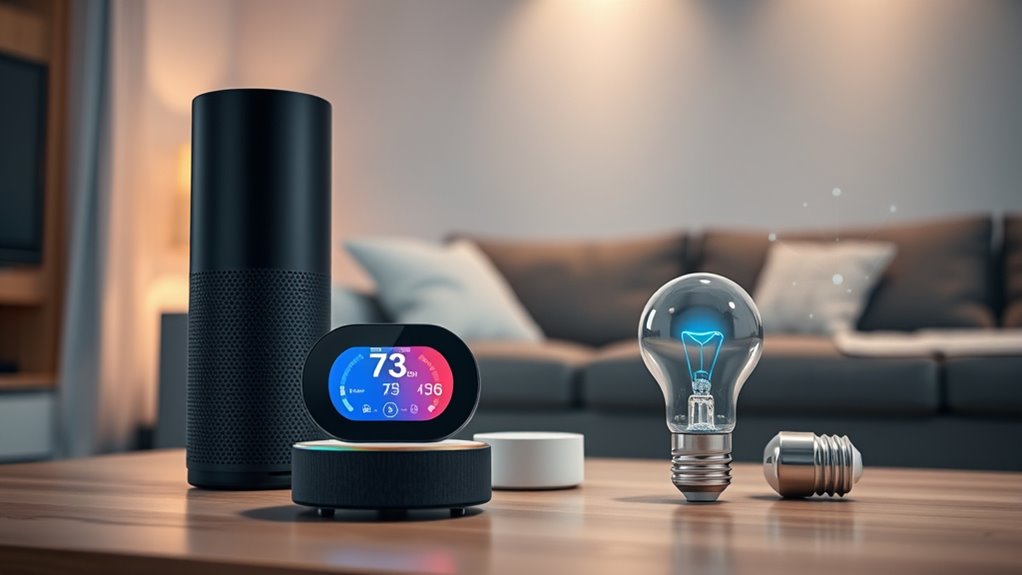
You need to understand the common communication standards that enable devices to work together seamlessly. Frameworks like IoT protocols help integrate diverse systems, making interoperability easier. Recognizing these protocols and frameworks is essential for building a connected smart device ecosystem.
Common Communication Standards
To guarantee smart devices can communicate effectively, industry standards have been established to serve as common communication protocols and frameworks. These standards ensure devices from different manufacturers can exchange data seamlessly, improving user experience. Popular protocols like MQTT, Zigbee, and Z-Wave facilitate this interoperability. However, you should be aware that adopting these standards can introduce security vulnerabilities if not properly managed. Hackers may exploit weaknesses to access personal data or control devices, risking user privacy. Thus, it’s essential to implement robust security measures alongside these protocols. By following established standards, you help protect your devices and data, making your smart environment safer. These communication standards lay the foundation for reliable, secure, and interoperable smart device networks. Additionally, understanding and applying security best practices can significantly reduce potential risks associated with standard protocols.
Frameworks Facilitating Integration
Frameworks designed to facilitate integration play a crucial role in enabling smart devices from different ecosystems to work together seamlessly. They provide standard protocols like MQTT, Zigbee, and Z-Wave, which guarantee reliable communication across platforms. These frameworks also emphasize data privacy, safeguarding your information during device interactions. By adopting open standards, you gain greater user customization, allowing you to tailor device settings and automation to your preferences. Interoperability frameworks help reduce compatibility issues, making device setup easier and more consistent. They also promote secure data exchange, protecting your privacy while enabling diverse devices to communicate effectively. Ultimately, these frameworks empower you to create a cohesive smart environment that respects your privacy and adapts to your personalized needs.
Strategies for Enhancing Cross-Platform Integration
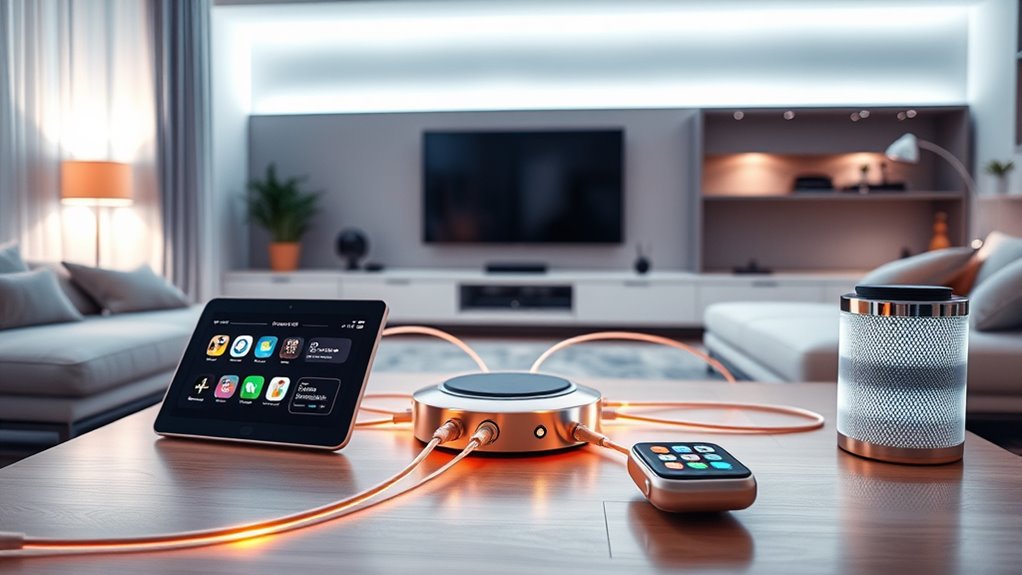
To improve cross-platform integration, you should focus on adopting standardized communication protocols that guarantee seamless data exchange between devices. Building unified device ecosystems can also simplify user experiences and reduce compatibility issues. These strategies help create a more interconnected and reliable smart device environment, ultimately fostering trusted caregiver support by ensuring consistent device performance and reliable data sharing. Additionally, implementing interoperability standards can significantly minimize security vulnerabilities and enhance user trust across various platforms. Incorporating common communication protocols can further streamline device interactions and promote broader compatibility across diverse systems. Furthermore, aligning with auditory processing techniques can improve device responsiveness to user commands, especially for users with sensory sensitivities. Adopting interoperability frameworks can facilitate smoother integration across multiple device manufacturers and software platforms.
Standardized Communication Protocols
Standardized communication protocols are essential for ensuring seamless interaction among diverse smart devices. They help you connect gadgets from different brands and ecosystems without compatibility issues. By adopting common standards like Zigbee, Z-Wave, or MQTT, you improve device security, reducing vulnerabilities from inconsistent security measures. These protocols also protect user privacy by enforcing secure data transmission and access controls. When devices communicate through standardized protocols, you gain better control over your data, minimizing exposure to unauthorized access. This consistency simplifies troubleshooting and updates, maintaining your system’s integrity. Additionally, industry collaboration plays a crucial role in developing and updating standards that promote interoperability and future-proof connectivity. Incorporating interoperability standards into your setup ensures smoother integration and enhances device compatibility over time. Moreover, adopting these protocols can facilitate system scalability, allowing your smart setup to expand effortlessly as new devices and features become available. Overall, standardized communication protocols are the backbone of reliable, secure, and privacy-conscious smart device integration, making your smart home safer and more efficient. Effective implementation of these protocols also supports scalability, enabling your smart system to grow and adapt with evolving technology and increasing device diversity.
Unified Device Ecosystems
Unified device ecosystems streamline how your smart gadgets work together across different brands and platforms. By using a common hub or platform, you can control devices through voice control commands seamlessly, regardless of the manufacturer. This integration simplifies managing smart homes and enhances user experience. However, as you connect more devices, privacy concerns may arise, especially with voice-controlled assistants constantly listening for commands. It’s crucial to choose ecosystems that prioritize security and give you control over your data. To improve cross-platform integration, look for solutions that support multiple protocols and standards, reducing compatibility issues. Ultimately, a unified ecosystem makes your smart devices more intuitive and efficient, but always balance convenience with privacy and security considerations to protect your information. Incorporating navigation and mapping explainers can further enhance device coordination and effectiveness within your smart environment.
The Role of Manufacturers and Industry Alliances

Have you ever wondered how smart devices from different brands work seamlessly together? It all comes down to manufacturer collaboration and adherence to industry standards. When manufacturers team up, they create protocols that guarantee their devices can communicate smoothly, regardless of brand. Industry alliances play a vital role by setting these standards, making interoperability possible across diverse ecosystems. These alliances encourage shared development efforts, reducing fragmentation and making it easier for consumers to mix and match devices. Without such cooperation, devices might operate in silos, limiting functionality and user experience. Your ability to control multiple devices effortlessly depends on these collaborative efforts. By aligning on common standards, manufacturers help build a cohesive smart environment that’s user-friendly and adaptable—paving the way for a more integrated future. Incorporating interoperability in smart devices ensures consistent performance and broad compatibility across different systems. Additionally, establishing clear industry standards can streamline product development and support innovation in the smart device market. Understanding how device protocols are developed and adopted is essential for fostering a truly interconnected ecosystem. Moreover, adopting standardized communication protocols facilitates easier integration and enhances overall system reliability. Strengthening interoperability frameworks can further accelerate the development of smarter, more responsive devices that meet evolving consumer needs.
Future Trends Shaping Interoperability in Smart Environments

Advancements in technology and evolving consumer demands are driving new trends that will shape the future of interoperability in smart environments. Voice control will become more integrated, allowing seamless communication between devices, making interactions more intuitive and hands-free. As voice assistants grow smarter, they will enable better device coordination and personalized experiences. However, data privacy remains a key concern, prompting manufacturers to adopt stronger security measures and transparent policies to protect user information. Future interoperability will focus on balancing ease of use with robust privacy controls, ensuring users feel safe while enjoying enhanced connectivity. Standardized protocols will also emerge, facilitating smoother integration across diverse devices and platforms. Overall, these trends will create smarter, more secure environments that adapt to your needs effortlessly.
Frequently Asked Questions
How Does User Privacy Impact Device Interoperability?
Your user privacy substantially impacts device interoperability because data privacy concerns make manufacturers cautious about sharing information. You must give clear user consent for data exchange between devices, ensuring your privacy is protected. When privacy is prioritized, devices may limit interoperability features to prevent data leaks, which can hinder seamless integration. Balancing data privacy with interoperability requires transparent policies and user-controlled settings to maintain your trust and security.
Can Interoperability Improve Energy Efficiency in Smart Homes?
Yes, interoperability can substantially improve energy efficiency in your smart home. By enabling seamless device coordination, your smart devices can work together to optimize energy consumption, such as adjusting thermostats, lighting, and appliances based on real-time needs. This coordinated approach reduces unnecessary energy use, saving you money and lowering your carbon footprint. When devices communicate effectively, your home becomes more energy-efficient, smart, and responsive to your lifestyle.
What Are the Costs Associated With Implementing Interoperability Standards?
Implementing interoperability standards involves costs like a thorough cost analysis to understand expenses and benefits. You’ll need to take into account vendor integration costs, which can include updating or replacing hardware and software to guarantee compatibility. These investments might seem high initially, but they often lead to long-term savings and improved system performance. Be sure to evaluate these factors carefully to determine if the benefits outweigh the costs for your smart device ecosystem.
How Do Regional Regulations Influence Device Compatibility?
They say, “The devil is in the details,” and regional regulations prove this true. Regional standards and regulatory compliance directly influence device compatibility, as manufacturers must adapt their products to meet local rules. These regulations can either promote seamless interoperability or create barriers, depending on how flexible and harmonized the standards are across regions. Staying aware of regional requirements guarantees your devices work smoothly and remain compliant worldwide.
Are There Any Open-Source Solutions for Smart Device Interoperability?
Yes, there are open-source solutions for smart device interoperability. You can explore open-source frameworks like Home Assistant and OpenHAB, which support multiple standard protocols such as Zigbee, Z-Wave, and MQTT. These platforms allow you to connect and manage various devices seamlessly, giving you control without relying solely on proprietary systems. By using these tools, you can create a more flexible and interoperable smart home environment tailored to your needs.
Conclusion
Just like the legendary Tower of Babel aimed for unity, your smart devices can achieve seamless harmony through better interoperability. Embrace standard protocols, collaborate with industry allies, and stay ahead of emerging trends. By doing so, you’ll transform your smart ecosystem into a symphony of connected devices, where everyone works together effortlessly. Remember, the future belongs to those who build bridges, not barriers—so take charge and shape a truly interconnected world.