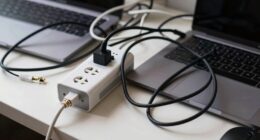
Power quality issues like brownouts and surges can seriously damage your electronics by causing unexpected voltage drops or spikes that lead to data loss, overheating, and device failures. Brownouts reduce voltage, making equipment behave unpredictably, while surges send sudden high voltage through your system. Both disrupt normal operation and can shorten your devices’ lifespan. If you want to understand how to protect your electronics better and prevent these problems, there’s more to uncover.

Turn your quiet moments into listening time
- Thousands of audiobooks, podcasts and originals
- Listen on your phone, tablet or Echo — also offline
- Cancel anytime
Key Takeaways
- Brownouts are voltage drops that cause equipment malfunctions and data loss in electronics.
- Surges are sudden voltage spikes that can immediately damage sensitive devices.
- Both brownouts and surges create electrical stress, accelerating wear and reducing device lifespan.
- Power fluctuations and harmonic distortions increase internal heat and degrade electronic performance.
- Monitoring and protective devices like surge protectors help prevent damage from these power quality issues.

Have you ever experienced equipment malfunctions or flickering lights without understanding why? Chances are, it’s due to issues with your power quality. Two common culprits are voltage fluctuations and harmonic distortion, both of which can cause headaches for your electronics. Voltage fluctuations happen when the electrical supply’s voltage varies unexpectedly, often dropping below or surging above the normal range. These sudden changes can stress sensitive devices, leading to unexpected shutdowns, data loss, or even permanent damage. Harmonic distortion, on the other hand, involves distortions in the waveform of the electrical current caused by non-linear loads like computers, LED lights, and industrial equipment. Instead of a smooth sine wave, the current becomes distorted, which can cause overheating, reduced efficiency, and premature failure of electronic components.
Power quality issues like voltage fluctuations and harmonic distortion can damage your electronics and cause unexpected failures.
Understanding how these issues impact your devices is key. Voltage fluctuations may occur due to a variety of reasons, such as nearby heavy machinery, faulty wiring, or issues with the power grid itself. When voltage drops too low—a condition called a brownout—your equipment may not operate correctly, and in extreme cases, it might shut down completely. Conversely, voltage surges—spikes above the normal voltage—can instantly damage sensitive electronics, causing them to fail or malfunction. Harmonic distortion exacerbates these problems by creating irregular current flows that make power supplies work harder, generate excess heat, and increase electrical noise. Over time, this can degrade your devices’ internal components, reducing their lifespan. Power quality issues can also impact the efficiency of your entire electrical system, leading to higher energy costs.
These power quality issues are often invisible until symptoms appear—like flickering lights, unexpected resets, or hardware failures. That’s why monitoring voltage levels and current waveforms is essential. Using tools such as power quality analyzers, you can identify whether your electrical supply suffers from harmful fluctuations or excessive harmonic distortion. Once identified, solutions like power conditioners, surge protectors, or harmonic filters can help stabilize your supply. Investing in these measures not only extends the life of your electronics but also saves you money on repairs and replacements.
In essence, understanding the impact of voltage fluctuations and harmonic distortion helps you take control of your electrical environment. When you recognize the signs of poor power quality, you can act before costly damage occurs. Ensuring your power supply is stable and clean isn’t just about protecting your devices; it’s about maintaining reliable performance and peace of mind in a world increasingly dependent on electronics. Don’t wait for problems to arise—be proactive, monitor your power, and keep your equipment running smoothly.
As an affiliate, we earn on qualifying purchases.
Frequently Asked Questions
How Do I Choose the Right Surge Protector for My Electronics?
To select the right surge protector, first consider its features like joule rating, number of outlets, and surge protection type. Look for devices with a high joule rating for better protection against strong surges. Make sure it has essential features like EMI/RFI filtering and enough outlets for your electronics. By comparing these features, you can confidently select a surge protector that offers ideal protection and suits your needs.
Can Power Quality Issues Damage My Appliances Permanently?
Power quality issues can be like silent saboteurs, slowly wearing down your appliances. Electrical component degradation from frequent power fluctuations impacts their lifespan, potentially causing permanent damage over time. Surges and brownouts strain circuits, leading to overheating, wear, or even failure. So, yes, if you ignore power quality concerns, your appliances might suffer lasting harm, turning minor hiccups into costly repairs or replacements down the line.
What Signs Indicate My Home Has Poor Power Quality?
You’ll notice signs of poor power quality through frequent power fluctuations and voltage irregularities. Your appliances might turn off unexpectedly, flicker, or make weird noises. You could also experience computer crashes, data loss, or lights that dim or brighten unexpectedly. These issues signal unstable power, which can harm your electronics over time. Monitoring your electrical system and investing in surge protectors can help prevent damage and improve your home’s power quality.
Are Certain Devices More Vulnerable to Brownouts and Surges?
You should know that sensitive devices like your computer or home theater system are more vulnerable to brownouts and surges. For example, during a voltage fluctuation, these gadgets can experience data loss or damage. Their device sensitivity makes them especially prone to power quality issues, so investing in surge protectors and voltage regulators can help shield your electronics from harm. Always prioritize protecting your most critical devices.
How Often Should I Have My Electrical System Inspected for Power Issues?
You should have your electrical system inspected annually to guarantee safety and performance. During these inspections, prioritize electrical panel maintenance and circuit breaker testing to identify potential issues early. Regular check-ups can prevent unexpected power problems, protect your electronics, and keep your system running smoothly. Don’t wait until you experience power surges or brownouts—consistent inspections help maintain peak power quality and extend the lifespan of your electrical components.
As an affiliate, we earn on qualifying purchases.
Conclusion
Understanding power quality issues like brownouts and surges is vital to protect your electronics. Did you know that nearly 80% of electrical failures are caused by power disturbances? By investing in safeguards like surge protectors and uninterruptible power supplies, you can prevent costly damage and extend your device’s lifespan. Stay proactive, and remember: good power quality isn’t just a convenience—it’s essential for keeping your electronics safe and reliable.
As an affiliate, we earn on qualifying purchases.
harmonic filter for electrical system
As an affiliate, we earn on qualifying purchases.
As an affiliate, we earn on qualifying purchases.
Halloween Picks
halloween
As an affiliate, we earn on qualifying purchases.