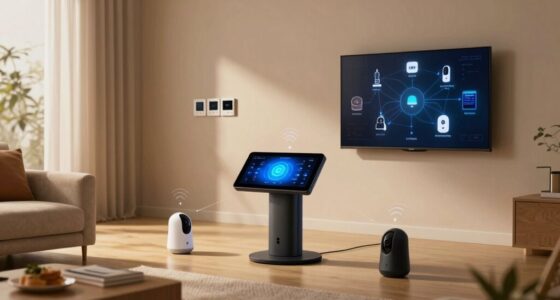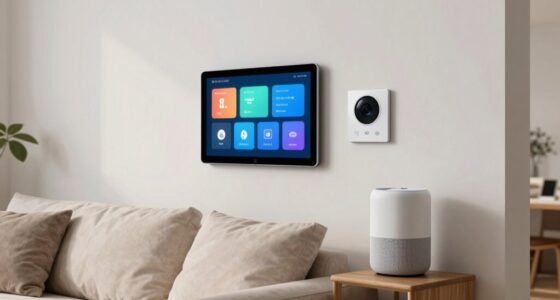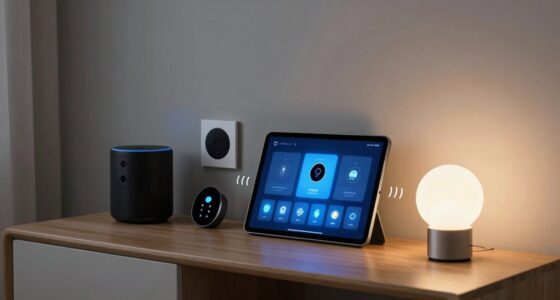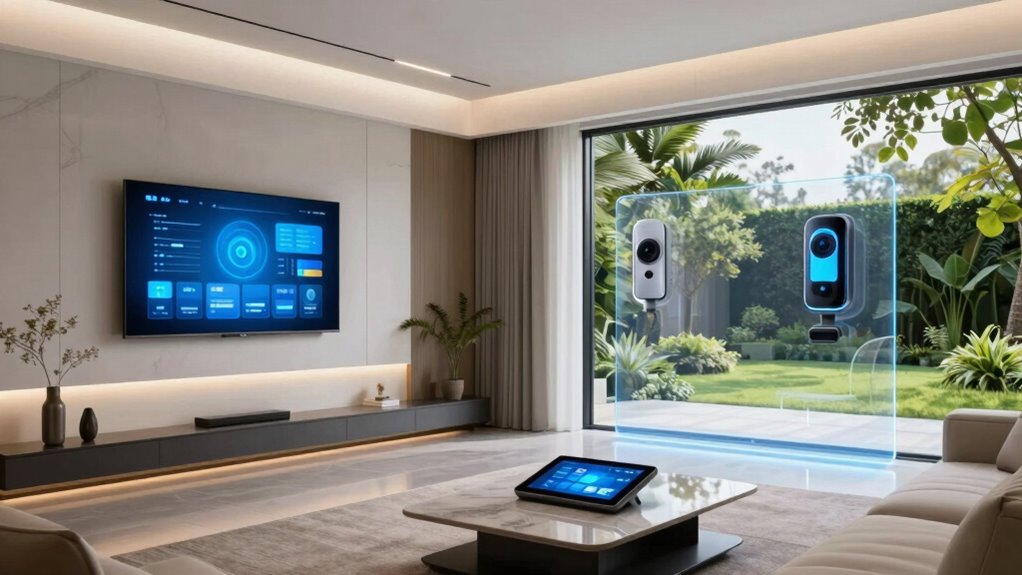

To future-proof your smart home, focus on open standards like Zigbee or Z-Wave for seamless compatibility across devices. Invest in modular systems that let you easily upgrade or expand over time. Prioritize strong security measures and build a scalable network infrastructure. Keep an eye on emerging trends and new technologies to stay ahead. If you want to create a flexible, adaptable smart home, consider these fundamentals to help you stay prepared for the future.

Turn your quiet moments into listening time
- Thousands of audiobooks, podcasts and originals
- Listen on your phone, tablet or Echo — also offline
- Cancel anytime
Key Takeaways
- Prioritize open standards like Zigbee, Z-Wave, or Thread for seamless device compatibility and future compatibility.
- Invest in modular, scalable systems that allow easy upgrades and expansion over time.
- Maintain robust security and a reliable network infrastructure to protect against emerging cyber threats.
- Incorporate cloud-based solutions and plan for physical expansion to accommodate future device integrations.
- Stay informed on industry trends and emerging technologies to adapt your smart home system proactively.
As an affiliate, we earn on qualifying purchases.
Prioritize Open Standards and Compatibility

To guarantee your smart home remains adaptable and future-proof, prioritizing open standards and compatibility is essential. Open standards allow devices from different brands to communicate seamlessly, giving you flexibility and avoiding vendor lock-in. When choosing new gadgets, look for widely accepted protocols like Zigbee, Z-Wave, or Thread. These ensure your system can integrate with future devices without needing costly replacements or complex workarounds. Compatibility also means easier software updates and troubleshooting, maintaining system stability over time. By focusing on open standards, you create a flexible ecosystem that can grow with your needs. This approach minimizes obsolescence, saves money, and simplifies upgrades, helping your smart home stay cutting-edge and reliable well into the future. Color accuracy and other key specifications should also be considered to ensure your devices deliver optimal performance and visual consistency. Additionally, selecting devices with robust security features can protect your privacy and data integrity as your system evolves. Incorporating energy-efficient components can further enhance sustainability and reduce long-term operational costs. Building your system with interoperability in mind ensures all components work together smoothly, making future upgrades more straightforward. Moreover, choosing devices with market acceptance can help ensure ongoing support and compatibility as technology evolves.
As an affiliate, we earn on qualifying purchases.
Invest in Modular and Upgradable Systems

Investing in modular and upgradable systems guarantees your smart home can adapt to changing technology and evolving needs. By choosing flexible components, you guarantee your setup remains relevant without complete overhaul. Modular designs allow you to add, replace, or upgrade devices easily, saving time and money. Prioritizing upgradability also extends your system’s lifespan, protecting your investment. Here’s a visual guide:
| Feature | Benefit | Example |
|---|---|---|
| Interchangeable parts | Easy upgrades and repairs | Swapping smart bulbs |
| Compatibility | Future-proof integration | Compatible hubs |
| Scalability | Expand as needs grow | Adding new sensors |
This approach keeps your smart home adaptable, efficient, and ready for future innovations. Understanding networking hardware ensures your system remains reliable and capable of supporting all your connected devices. Furthermore, incorporating outdoor transformation essentials can enhance your home’s exterior, making it more functional and aesthetically pleasing. Additionally, selecting upgradable components can help ensure your system stays current without significant replacements. Regularly reviewing your system’s expandability options can also help you plan for future upgrades and avoid obsolescence. To maximize long-term value, it’s important to consider system maintenance and updates as part of your upgrade strategy.
As an affiliate, we earn on qualifying purchases.
Focus on Robust Security Measures

As smart homes become more integrated into daily life, safeguarding your devices and data is essential. You should prioritize strong security measures to protect against cyber threats and unauthorized access. Use complex, unique passwords for all your devices and change them regularly. Enable two-factor authentication where possible to add an extra layer of security. Keep your firmware and software updated to patch vulnerabilities promptly. Consider installing reputable security solutions, like firewalls and antivirus programs, tailored for smart home environments. Additionally, segment your network so that smart devices are isolated from your main computers and personal data. Regularly monitor device activity for suspicious behavior. Employing vetted wave and wind security measures can further enhance your protection against emerging cyber risks. Implementing security best practices can also help prevent potential breaches. Staying informed about cybersecurity threats and adopting proactive measures can significantly strengthen your smart home’s defenses. Using network segmentation techniques is especially effective in limiting the impact of potential breaches. Incorporate continuous monitoring to quickly detect and respond to security incidents. By implementing these security practices, you reduce risks and ensure that your smart home remains safe and resilient against cyber threats.
future-proof smart home security
As an affiliate, we earn on qualifying purchases.
As an affiliate, we earn on qualifying purchases.
Plan for Scalability and Future Expansion

To guarantee your smart home can grow with your needs, prioritize modular hardware design that allows easy upgrades and additions. Cloud-based integration offers flexibility, making it simple to update systems and add new features over time. Planning with these strategies in mind helps your home stay current and adaptable for the future. Incorporating device compatibility considerations ensures seamless integration as new technologies emerge. Additionally, selecting systems with scalability options can further facilitate expansion and customization as your smart home evolves. Considering future-proofing features during setup can help ensure your smart home remains functional and relevant as technology advances. Emphasizing interoperability between devices also enhances your system’s ability to adapt to innovations without major overhauls. Understanding standardized protocols can further improve system flexibility and ease of integration over time.
Modular Hardware Design
Designing smart home hardware with modularity in mind guarantees your system can grow and adapt over time. By choosing modular components, you can easily add or replace devices without overhauling the entire setup. This approach simplifies upgrades, allowing you to incorporate new technologies as they emerge. Modular designs also help you troubleshoot issues quickly, since individual modules can be isolated and repaired independently. When selecting hardware, look for compatibility standards and standardized connectors to ensure seamless integration. Planning for future expansion means considering power supplies, communication protocols, and physical space. With a modular setup, your smart home remains flexible, reducing long-term costs and minimizing disruptions. Additionally, adopting interoperability standards can further enhance compatibility across diverse devices and brands. Incorporating nanotechnology into smart home components can further enhance durability and efficiency, leading to smarter, more resilient systems. Emphasizing scalability considerations during the initial design phase can save significant effort and resources as your smart home grows, especially when designing for future expansion and integration.
Cloud-Based Integration
Implementing cloud-based integration in your smart home setup guarantees your system can handle future growth and new functionalities effortlessly. By connecting devices to the cloud, you ensure scalability without replacing hardware. This setup allows you to add new devices or features seamlessly, as updates are managed centrally. Cloud platforms also enable remote access, giving you control from anywhere. To maximize benefits, choose a reliable provider that supports future standards and offers ongoing updates. Consider compatibility with your existing devices and the security measures in place.
| Feature | Benefit |
|---|---|
| Remote Access | Control from anywhere |
| Scalability | Easily add new devices or services |
| Automatic Updates | Stay current without manual effort |
| Security Protocols | Protect your data and privacy |
Stay Informed on Emerging Technologies
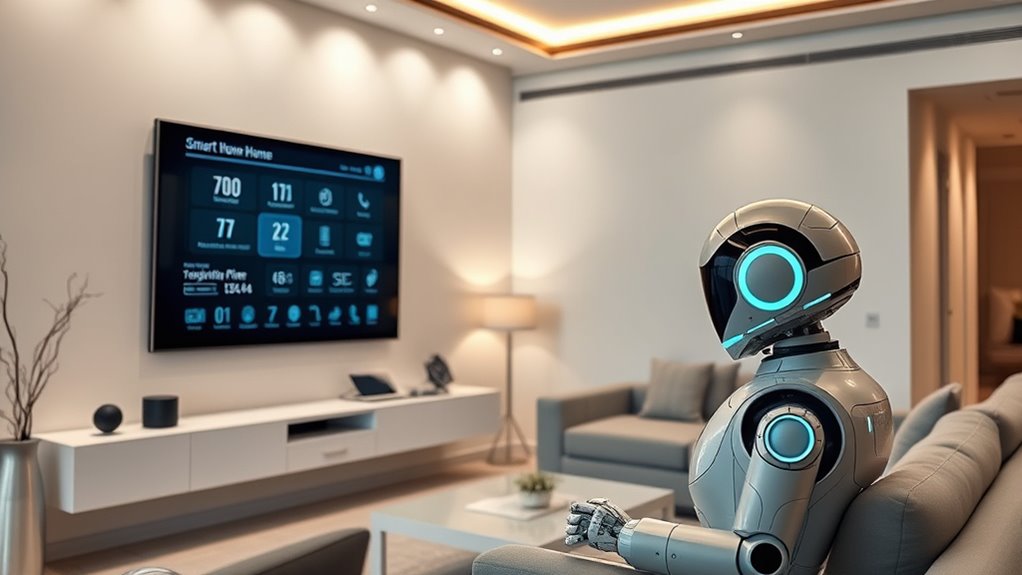
To keep your smart home ahead of the curve, you should follow industry news and stay updated on the latest trends. Attending tech events and subscribing to journals can give you firsthand insights into emerging innovations. Staying informed helps you make smarter decisions and guarantees your system remains cutting-edge.
Follow Industry News
Are you staying up-to-date with the latest advancements in smart home technology? Following industry news helps you spot emerging trends and innovations before they become mainstream. Subscribe to reputable tech blogs, newsletters, and social media channels dedicated to smart home developments. Regularly reading these sources keeps you aware of new products, updates, and security concerns. Engaging with industry reports and press releases gives you insights into where the market is headed. By staying informed, you can make smarter decisions about upgrades and integrations, ensuring your home remains cutting-edge and adaptable. It also prepares you to respond quickly to disruptive technologies and avoid obsolescence. Keeping pace with industry news transforms you from a passive consumer into an informed participant shaping your smart home’s future.
Attend Tech Events
Attending tech events provides a valuable opportunity to see emerging smart home innovations firsthand and connect with industry experts. These events showcase the latest products, prototypes, and trends, giving you a competitive edge in understanding what’s coming next. You can ask questions directly to developers and manufacturers, gaining insights into their future plans and technological advancements. Networking with other smart home enthusiasts and professionals helps you learn from their experiences and share ideas. Events such as trade shows, conferences, and expos expose you to cutting-edge solutions, enabling you to evaluate which innovations best suit your needs. Staying active in this environment assures you’re aware of industry shifts and new opportunities, making your smart home future-proof and adaptable to rapid technological change.
Subscribe to Journals
Building on your experience at tech events, staying informed about emerging smart home technologies requires regular reading of industry journals. Subscribing to reputable publications keeps you updated on the latest innovations, trends, and best practices. These journals often feature expert insights, product reviews, and case studies that help you understand what’s coming next. By dedicating time to reading these sources, you’ll identify new gadgets, software updates, and integration strategies before they hit the mainstream. This proactive approach enables you to make smarter decisions, avoid outdated solutions, and future-proof your home effectively. Set up subscriptions to key journals, whether digital or print, and prioritize reading them regularly. Staying informed ensures your smart home remains cutting-edge, secure, and adaptable to evolving technologies.
Establish a Flexible Network Infrastructure

To future-proof your smart home, establishing a flexible network infrastructure is essential. Start by choosing a robust, high-speed router that can handle multiple devices and prioritize bandwidth. Use wired connections where possible for critical devices to guarantee stability and reduce wireless congestion. Incorporate a mesh Wi-Fi system to extend coverage seamlessly as your smart home expands. Keep firmware updated regularly to protect against vulnerabilities and improve performance. Design your network with scalability in mind, allowing you to add new devices without overhauling the setup. Segment your network into separate channels for different device types, enhancing security and reducing interference. A flexible network ensures your smart home remains responsive, secure, and capable of integrating future technologies effortlessly.
Frequently Asked Questions
How Can I Ensure My Smart Home Remains Compatible With New Devices?
To make certain your smart home stays compatible with new devices, stick to popular, widely-supported brands and standards like Zigbee or Z-Wave. Keep your firmware updated regularly, and choose devices that support multiple ecosystems, such as Alexa, Google Home, or Apple HomeKit. Using a central hub or smart home platform can help manage various devices seamlessly. Also, read reviews and product documentation to confirm compatibility before purchasing new gadgets.
What Are the Best Practices for Maintaining Security Over Time?
You should regularly update your device firmware and software to patch security vulnerabilities. Use strong, unique passwords for each device and enable two-factor authentication whenever possible. Avoid connecting your smart home devices to public Wi-Fi networks, and segment your network to isolate them from your main devices. Keep an eye on security alerts from device manufacturers, and consider investing in a reputable security system that offers ongoing protection and monitoring.
How Do I Choose the Right Modular System for Future Upgrades?
You choose the right modular system by prioritizing compatibility, scalability, and flexibility. Look for systems that support standard protocols, allow easy component upgrades, and adapt to your evolving needs. Consider brands with a proven track record, user-friendly interfaces, and strong community support. Test the system’s integration options, read reviews, and consult experts. By focusing on these factors, you guarantee your smart home remains adaptable, efficient, and future-proof.
What Are Emerging Smart Home Technologies to Watch For?
You should watch for advancements like AI-powered assistants that improve automation and energy management. Keep an eye on smart security systems with enhanced facial recognition and integration capabilities. Wireless charging and IoT devices are also evolving, making your home more seamless. Additionally, look out for smart appliances that adapt to your habits and new interoperability standards that guarantee all your devices work smoothly together, making your home smarter and more efficient.
How Can I Future-Proof My Network Infrastructure Effectively?
You can future-proof your network infrastructure by investing in high-quality, gigabit-capable routers and switches that support the latest Wi-Fi standards like Wi-Fi 6 or 6E. Make certain your setup is scalable by choosing equipment with multiple ports and modular components. Regularly update firmware, use strong passwords, and implement robust security measures. Additionally, plan for increased bandwidth needs and consider wired connections for critical devices to maintain speed and stability.
Conclusion
Think of your smart home like a garden: the more flexible and open the soil, the easier it is to grow and adapt. By prioritizing open standards, security, and scalability, you’re cultivating a space that can evolve with technology’s pace. Just like a gardener plans for future seasons, planning ahead guarantees your smart home remains vibrant and functional for years to come. Stay informed and adaptable, and your home will flourish regardless of what’s next.
Fall Picks
fall essentials
As an affiliate, we earn on qualifying purchases.