In just ten minutes, you can guarantee your travel sleep kit is fully prepared for comfort and support. Check that your eye mask and earplugs are clean and intact, and replace or wash them if needed. Confirm your travel pillow offers proper neck support, and pack a lightweight blanket or aromatherapy for added relaxation. Make certain everything fits neatly into your bag without bulk. Want to know how to optimize your sleep setup even further? Keep going to find out more.

Turn your quiet moments into listening time
- Thousands of audiobooks, podcasts and originals
- Listen on your phone, tablet or Echo — also offline
- Cancel anytime
Key Takeaways
- Gather all sleep accessories and inspect for cleanliness, comfort, and functionality before packing.
- Confirm the supportiveness and fit of your travel pillow, replacing if necessary.
- Check that noise-canceling options and eye masks are clean, intact, and ready for use.
- Ensure all items are lightweight, compact, and fit efficiently into your travel bag.
- Review your sleep environment setup and routine to promote restful sleep during travel.
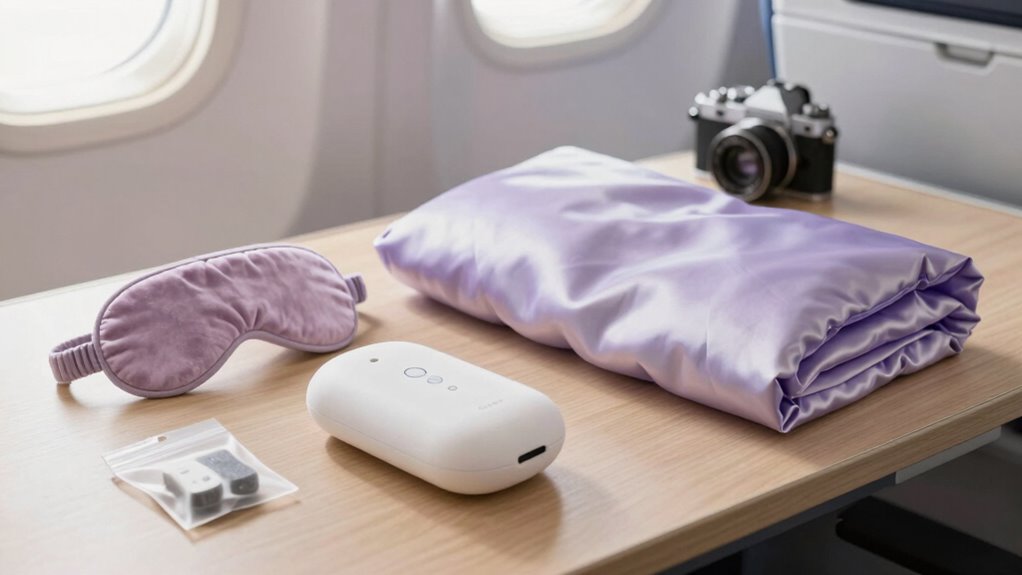
Getting restful sleep while traveling can feel like a challenge, but with a quick 10-minute audit of your sleep kit, you can guarantee you’re prepared for comfort on the go. The key lies in ensuring your travel accessories support good sleep hygiene, no matter where your journey takes you. Start by gathering all your sleep-related items in one place. Do you have a comfortable eye mask? An essential piece that blocks out light, helping you fall asleep faster. If you’re someone sensitive to noise, consider packing a set of noise-canceling earplugs or headphones. These small travel accessories can markedly improve your sleep quality, especially in noisy environments like airports or busy hotels.
Prepare your sleep essentials to ensure restful travel and arrive refreshed wherever you go.
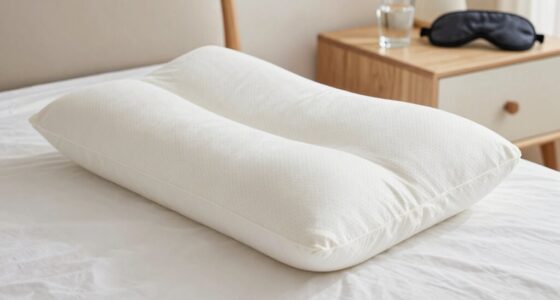
Next, check the condition of your sleep accessories. Are your eye mask and earplugs clean and intact? If not, replace or wash them. Dirty or worn-out items can hinder sleep hygiene and cause discomfort or irritation. Also, look at your travel pillow. Is it supportive enough? Does it fit comfortably around your neck? Proper neck support prevents stiffness and makes it easier to rest during long flights or train rides. If your pillow isn’t ergonomic, consider swapping it for one that offers better support or packing a compact, memory foam version.
Then, assess your sleep environment preparedness. Do you have a lightweight blanket or shawl? Sometimes, airplane cabins or hotel rooms can be chilly, and a small blanket can help you stay warm and cozy. Also, think about your sleep routine. Do you carry any aromatherapy products like lavender spray? These can promote relaxation and help establish a calming pre-sleep routine, supporting sleep hygiene even when you’re away from home. Incorporating a consistent sleep environment can further enhance your rest while traveling. Additionally, choosing eco-friendly and sustainable sleep accessories can contribute to a more environmentally conscious travel routine. Being mindful of sleep hygiene practices when packing can also improve your chances of restful nights on the road. To strengthen your sleep routine, consider incorporating relaxation techniques, which can be easily used on the go to help you unwind before bed.
Furthermore, selecting high-quality sleep products can make a significant difference in your overall sleep quality during travel, making your audit even more effective.
Finally, review your overall readiness. Are your sleep accessories lightweight and easy to pack? Do they fit into your travel bag without taking up too much space? If not, prioritize multi-functional items or compact versions. Ensuring your sleep kit is streamlined and complete can make a notable difference in maintaining consistent sleep habits. Remember, a well-prepared sleep kit isn’t just about comfort; it’s about creating an environment conducive to quality rest, no matter your surroundings. By dedicating just ten minutes to this quick audit, you’re setting yourself up for better travel sleep, arriving refreshed and ready to enjoy your trip. Prioritizing sleep hygiene and having the right travel accessories on hand transforms travel from a sleep-deprived ordeal into a restorative experience.
Products Worth Considering

Sonos Era 100 SL Wireless Speakers, Black, Pack of 2

TCL 32-Inch R3D Series QLED Full HD Roku Smart TV (32R3D, 2026)

Hisense E6 Cinema Series 55-Inch 4K UHD QLED Smart Fire TV
As an affiliate, we earn on qualifying purchases.
Frequently Asked Questions
What Are the Most Common Sleep Kit Mistakes Travelers Make?
You often neglect good sleep hygiene and sacrifice travel comfort, leading to restless nights. Common mistakes include packing the wrong sleep aids, ignoring your sleep routine, or failing to create a cozy sleep environment. You might also overlook essentials like earplugs or eye masks, disrupting your rest. To improve, focus on maintaining your sleep hygiene, choose comfortable sleep accessories, and customize your sleep kit for better travel comfort.
How Often Should I Update My Travel Sleep Kit?
Think of your travel sleep kit as a garden, needing regular tending. You should update it every few months or whenever your packing essentials change, ensuring your sleep hygiene stays ideal. Regular checks help refresh items like eye masks, earplugs, or medications, so you’re always prepared. Keep your kit current to maintain comfort, eliminate clutter, and adapt to new travel needs, making every trip a restful journey.
Can a Sleep Kit Improve Jet Lag Recovery?
Yes, a sleep kit can improve your jet lag recovery. By optimizing your sleep environment—such as using blackout masks or earplugs—you reduce disruptions. Incorporating relaxation techniques like calming scents or guided breathing helps signal your body to relax. When your sleep environment is comfortable and you practice relaxation strategies, your body adjusts faster to new time zones, making jet lag less disruptive and helping you recover quicker.
Are There Any Health Risks With Certain Sleep Accessories?
Sleep accessory safety is important, as some items may pose health risk factors. For example, 15% of users report skin irritation from certain sleep masks or gels. While most accessories are safe when used properly, poor-quality or unapproved products can cause allergic reactions or breathing issues. Always check for certifications and consult with a healthcare professional if you have allergies or respiratory conditions to minimize health risks.
What’s the Best Way to Pack a Travel Sleep Kit Efficiently?
To pack your travel sleep kit efficiently, start with your travel pillow and eye mask, placing them at the top of your bag for easy access. Roll your pillow to save space and keep your eye mask in a small pouch or pocket. Use compression bags for clothes to free up room, and make certain liquids are in clear, travel-sized containers. This way, you’ll stay organized and ready for restful sleep on the go.
Conclusion
Think you’ve got your travel sleep kit perfected? A quick 10-minute audit can reveal what’s missing or unnecessary, ensuring you’re truly prepared for restful nights on the go. Are you ready to take control of your sleep quality wherever you travel? Remember, a well-optimized kit isn’t just about comfort — it’s about making every trip a chance to recharge. So, why settle for less when better sleep is just an audit away?